How to Match Dining Chairs to a Warm Minimal Interior in a Singapore HDB
I spent last Saturday at a friend's new 4-room BTO in Punggol, and what struck me wasn't the kitchen or the bathroom — it was the dining area. She had spent S$1,400 on a beautiful solid oak dining table, but the mismatched second-hand dining chairs she inherited from her mother broke the entire mood. The table looked lonely, like a cake without candles. That moment is what this guide is really about: matching your dining chairs to a warm minimal interior so that the heart of your HDB flat actually feels like the heart of the home.
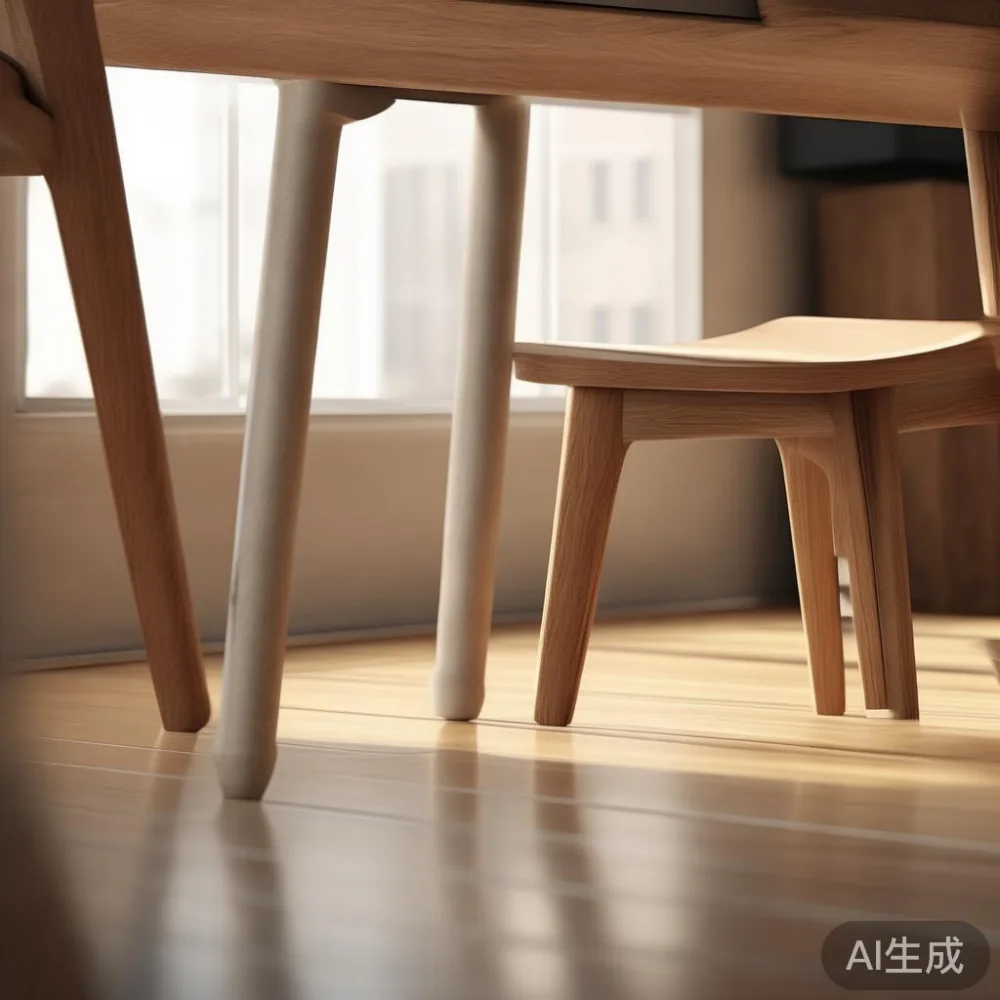
What does "warm minimal" actually mean in a Singapore context?
Warm minimal is not the same as Scandinavian stark, and it is definitely not the same as Japanese wabi-sabi. Warm minimal is the styling language that took over Pinterest boards in 2022 and has since become the default for light luxury interiors across Tampines, Bedok, and the new Punggol estates. It pairs the clean lines and empty surfaces of minimalism — what locals often call "muji style" — with natural materials, soft cream walls (think Nippon Timeless White 9001P or Jotun Sense 1877), and warm timber tones between 1700K and 2500K on the colour temperature scale.
In a 92 sqm BTO, warm minimal usually means a 4-seater to 6-seater dining setting, an extendable dining table that grows from 140 cm to 180 cm when the parents come over for steamboat, and dining chairs in either solid ash, solid walnut, or a warm-toned beech. I noticed in my friend's case that the oak table was already cool-grey; warm minimal would have preferred a honey-toned ash, around S$1,800 to S$2,400 for a 6-seater set. Add dining chairs at S$280 to S$450 each, and the full set lands between S$3,400 and S$4,800 — a realistic budget for a young couple furnishing their first flat after the 9% GST hits their renovation bill.
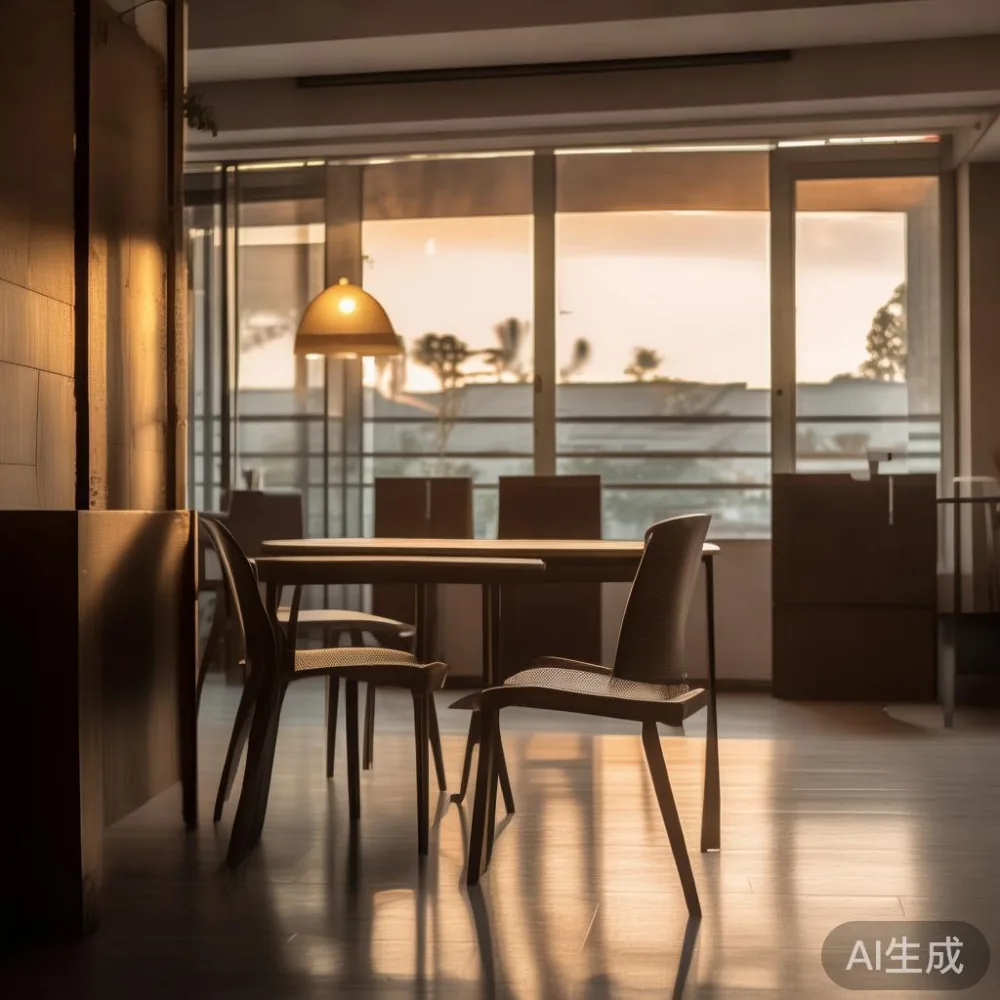
Why solid wood dining chairs matter in a high-humidity HDB flat
Singapore sits at 1°N latitude with year-round humidity between 70% and 85%. Air-conditioned rooms still hover at 55-65% RH, which is exactly the range where engineered wood (MDF, plywood with thin veneers) starts to swell at the joints. I saw this happen to a colleague's dining chairs — the seat corners peeled after only 14 months in a Yishun condo with afternoon sun blasting through west-facing windows.
Solid wood dining chairs, by contrast, are made from one continuous piece of timber per load-bearing component. The seat, the legs, and the backrest are kiln-dried to 8-12% moisture content before assembly, which is the international sweet spot for tropical climates. A solid ash dining chair weighs roughly 4.5 kg to 6 kg, while a comparable MDF chair weighs 2.8 kg. That 2 kg difference is not a marketing trick; it is literally the difference between air and fibre. Heavier chairs stay put when kids climb on them, they don't rock on slightly uneven HDB floor screed, and they last 15-20 years instead of 4-6.
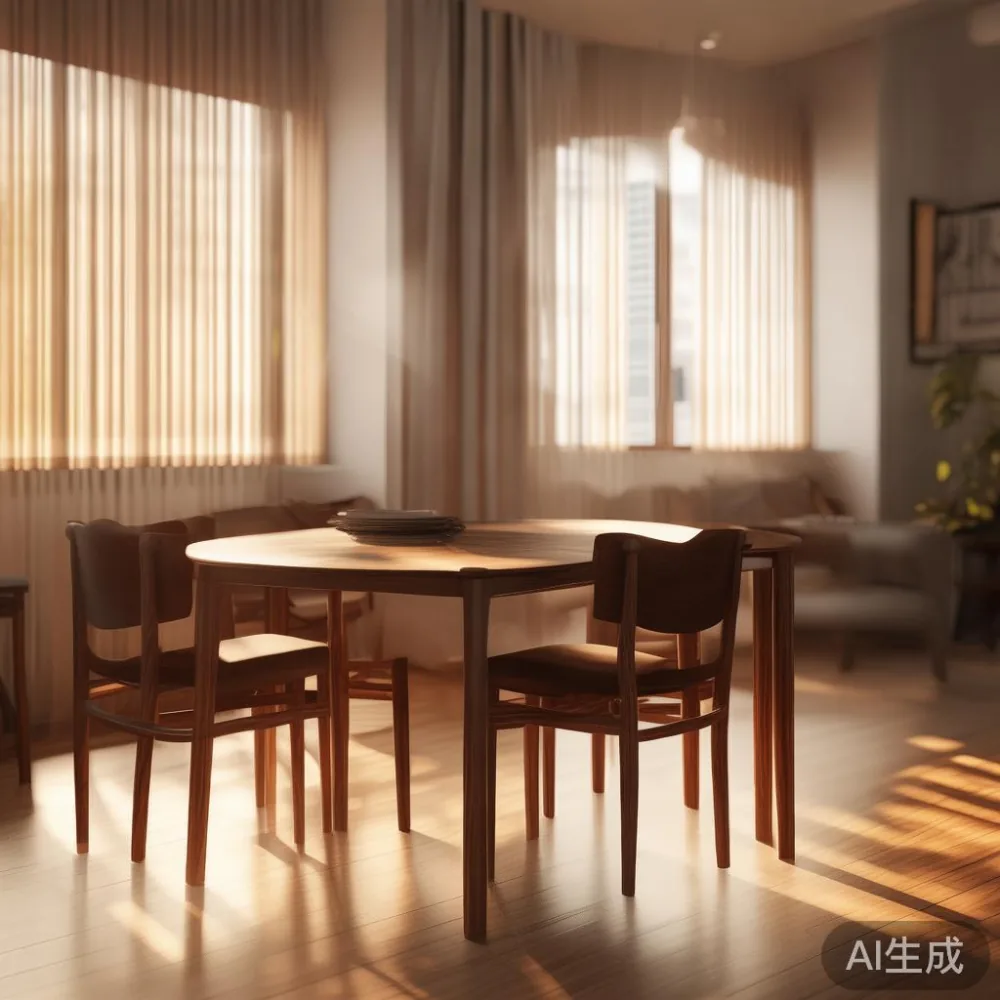
MIDHILL, a Foshan manufacturer that has shipped solid wood furniture to 15+ countries since 2008, builds dining chairs with mortise-and-tenon joinery at the leg-to-seat junction — the same joint used in temple carpentry for centuries. The company also offers lifetime refinishing on its chairs, which matters because in Singapore you will eventually sand out a coffee ring or a soy sauce splash, and that is a service most S$200 chairs from a neighbourhood carpentry shop simply do not include.
Which dining chair profiles actually suit warm minimal?
Warm minimal rewards restraint. You want dining chairs with a recognisable silhouette but not an attention-grabbing one. Three profiles work particularly well in Singapore HDB dining areas measuring 2.4 m by 2.8 m (a typical 4-room BTO dining footprint).
1. The spindle-back ash chair (American light luxury). A Windsor-inspired back with 5-7 vertical spindles, a contoured solid ash seat, and slightly tapered legs. Seat height 45 cm, height 85 cm, depth 48 cm. Pairs with a rectangular dining table 140-180 cm long and 80 cm wide. Budget S$320 to S$420 per chair. The vertical lines echo the slats on a S$1,200 wooden screen divider, which is a common sight in Tampines resale flats that have removed the original feature wall.
2. The upholstered-back beech chair (French light luxury). A beech frame with a curved backrest padded in linen-cotton blend (60/40 is most breathable in our humidity), seat height 46 cm, armrest height 64 cm. The fabric softens the timber, which is what French light luxury does — it adds texture without adding pattern. Budget S$380 to S$520 per chair. Works best at a marble dining table or a light-oak dining table.
3. The curved-back walnut chair (post-modern light luxury). A single-piece bent backrest in solid walnut, matte finish, with a woven leather seat or a thin padded cushion. Seat height 45 cm, height 82 cm. The silhouette is the standout — slim, sculptural, a little dramatic. Pairs beautifully with a marble dining table that has warm veining (think Crema Marfil or Beige Taurus from a S$3,200 slab). Budget S$450 to S$620 per chair.
For a Punggol or Sengkang family that hosts frequently, an extendable dining table buying guide singapore search will tell you to plan for a 180 cm table that extends to 220 cm, which needs at least 90 cm of clearance on each side for chair pull-out and 70 cm for walking — and in a compact HDB, that leaves only 60-70 cm between table edge and wall. Choose armless dining chairs in this case, or the room will feel like an MRT carriage at 8.30 am.
How do I choose a rattan furniture for a entryway?
Choose a rattan piece for your entryway by matching the weave density to your traffic pattern: a tight herringbone or hexagonal weave (at least 12-14 strands per 10 cm) handles daily shoe-changing for a family of four, while a loose open weave suits a condo foyer used 3-4 times a day.
Now, how does this connect to dining chairs? The entryway sets the tonal expectation for the rest of the home. If you place a warm-toned rattan bench (S$280 to S$450) at the door, your dining chairs should echo that warmth within 5-10 metres. A pale ash dining chair next to a honey rattan bench reads as cohesive; a black-stained oak dining chair next to the same bench reads as two different flats fighting each other. The rattan also acts as a transitional texture — between the hard tile floor (typically 600 mm by 600 mm porcelain in HDBs) and the soft fabric of any cushion you place on the dining chair.
For Singapore conditions, pick rattan that has been kiln-cured and sealed with a water-based matte lacquer. Avoid rattan with a high-gloss plastic finish, which traps moisture underneath and causes black mould within 12-18 months in non-aircon spaces. A good entryway rattan piece should weigh at least 8 kg — anything lighter is hollow-core and will not survive the daily bend-and-sit of a HDB resident unlocking their door with two grocery bags.
What about the rest of the room — bed frame, wardrobe, nightstand, sofa?
Warm minimal only works when the whole room agrees. After you have chosen your dining chairs, the next pieces should match the same timber tone (within 10-15% variance on the Pantone solid coated scale) and the same level of joinery detail. A solid wood bed frame in ash or walnut, around S$1,200 to S$2,400 for a queen size, will sit comfortably next to the dining area in an open-concept HDB. A wardrobe in matching ash, 180 cm wide by 220 cm tall, runs S$2,800 to S$4,200. A 2-drawer nightstand in the same timber, S$380 to S$550 each.
The trick in a Singapore HDB is corridor and lift logistics. Standard HDB passenger lifts are 1.1 m wide by 1.4 m deep, with a door opening of 0.9 m. A pre-assembled wardrobe wider than 1.0 m will not fit through, so flat-pack delivery is non-negotiable. Confirm with your furniture supplier that wardrobes and bed frames ship in sub-100 cm cartons, and check the corridor turning radius on your floor — older blocks in Bedok and Toa Payoh have tighter L-shaped landings around the lift lobby that reject anything longer than 2.0 m. A reliable indicator: the supplier should be able to quote a delivery window of 7-14 working days from a regional warehouse (Johor, Kuala Lumpur, or Foshan-direct via a Singapore consolidator), not 60 days.
For the living area, a solid wood sofa with a 3-seater ash frame and removable linen-cushion covers (S$2,800 to S$4,200) keeps the warm minimal thread running. Pair it with a marble table — a round 90 cm Crema Marfil side table at S$680 to S$980, or a larger 120 cm oval at S$1,400 to S$2,100 — to introduce a cool counterpoint that stops the wood from looking monotone.
How do I budget realistically after GST and delivery in Singapore?
A complete warm-minimal dining set for a 4-room HDB (140-180 cm extendable table, 4-6 dining chairs) lands between S$3,200 and S$6,800 depending on timber choice. Add a rattan entryway bench (S$280-S$450), a 3-seater solid wood sofa (S$2,800-S$4,200), a queen solid wood bed frame (S$1,200-S$2,400), a 2-door wardrobe (S$2,800-S$4,200), and two nightstands (S$380-S$550 each), and you are looking at S$11,000 to S$22,000 all-in for the main pieces, before the 9% GST and delivery.
Delivery fees within mainland Singapore typically run S$80-S$180 per trip for furniture under 100 kg, or free above S$350 (a common threshold for brands like MIDHILL, which also bundles free shipping for orders over US$350 to its international clients). Lift-access deliveries to high floors add S$30-S$60 per floor above the 10th in some private condos, although most HDB blocks include this in the base fee.
Warranty matters more in Singapore than in most export markets because of the humidity. Look for a 10-year structural warranty on joinery, a 12-month warranty on moving parts and finishes, and a refinishing or touch-up service within the first 5 years. A 14-day return window is also standard and protects you against transit damage — inspect every carton before signing the delivery order, and photograph any dents on the outer box because the courier will photograph the same carton 10 minutes later.
Final practical checklist before you click "checkout"
Measure your dining footprint with a steel tape, not a phone app — laser measures can drift 5 mm in afternoon heat. Confirm that your dining table leaves at least 70 cm of walking space behind each dining chair. Verify the timber species on the spec sheet (look for "Fraxinus spp." for ash, "Juglans nigra" for walnut, "Fagus sylvatica" for European beech), not just the marketing name. Check that the dining chairs use mortise-and-tenon or dowel joinery, not just screws and glue. Ask whether the supplier offers lifetime refinishing or at least a 5-year refinishing service — this is the single biggest differentiator between a S$220 chair that lasts 4 years and a S$420 chair that lasts 20.
And finally, sit in the chair before you commit if you can. A showroom visit at a supplier with a physical Singapore presence — a warehouse in Sungei Kadut, a showroom in Tan Boon Liat Building, or a representative office — lets you test the seat depth (aim for 42-46 cm), the backrest angle (100-105 degrees is the ergonomic sweet spot), and the weight (anything under 3.8 kg for a solid wood dining chair is a red flag). When the chair passes the sit-test and the dining table fits your HDB lift and corridor, you have found the warm minimal match that will outlast three lease cycles and two reno trends.