How to Read a Furniture Warranty Without Getting Caught Out
Last month I visited a friend's new 4-room HDB flat in Punggol and watched him wrestle an instruction leaflet the size of a peanut-butter sandwich. He had just bought a pair of dining chairs from a local IG shop, paid S$689, and was trying to find the warranty. The seller swore there was a "lifetime" guarantee. The leaflet said ninety days. He learned the hard way that the words on the sofa page and the words on the back of the receipt are very different animals — and that is exactly why I wrote this guide. The same trap catches shoppers buying a solid wood dining table, a marble table, or a bed frame, so the rules below apply well beyond a single seat at the table.

What does a furniture warranty actually cover?
A warranty is a manufacturer's promise to repair or replace defective parts within a defined window. It is not the same as a return policy, and it is definitely not the same as a service plan. Most Singapore shoppers blur the three together, and that is where the disappointment begins. For a piece of solid wood furniture, what you want covered is structural failure: joints loosening, frames cracking under normal use, drawer runners collapsing, veneers delaminating. What a warranty usually does not cover is cosmetic wear, colour fade, water rings, pet scratches, or the wobble that appears after you have dragged the chair across a vinyl floor 400 times. Read that list twice. Then read it again after you finish your kopi.
A solid piece of furniture, say a 1.8-metre solid wood sofa frame or a 2-metre dining table in white oak, can weigh between 45 kg and 95 kg. Because the material moves with humidity — HDB corridors in Tampines and Bedok run around 28–32°C most afternoons, with humidity hovering near 80% — even a properly built chair can develop a 1–2 mm joint gap in the first six months. That is not a defect; it is wood behaving like wood. A good warranty anticipates the natural moves.

How long should a real solid wood warranty last?
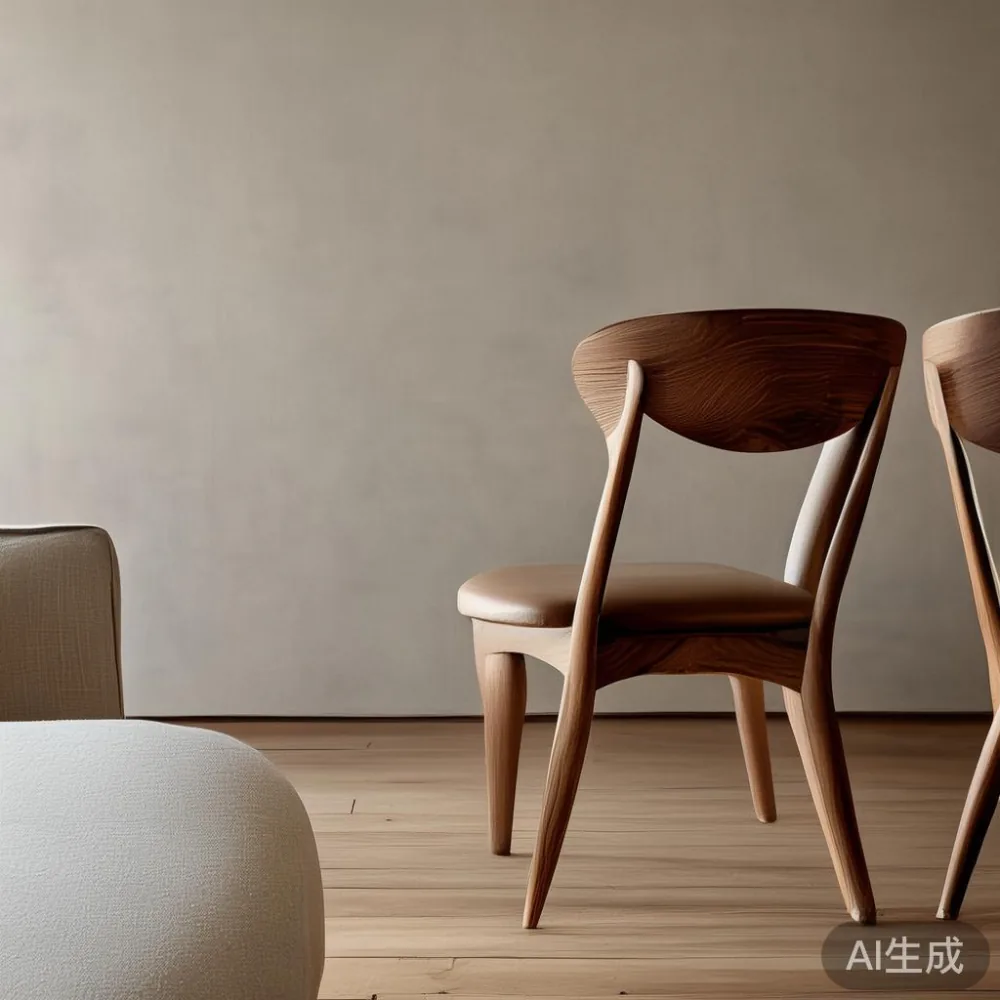
For dining chairs made of solid hardwood — oak, ash, walnut, rubberwood — a structural warranty of 5 to 10 years is the honest baseline. Anything shorter, and you are buying a piece that the maker themselves does not trust. Anything "lifetime," and you should ask whose lifetime: yours, theirs, or the product's. I asked the team at midhill.co about their 10-year structural coverage on dining chairs, bed frames, and wardrotes, and they were blunt: they only extend that promise where the joinery is mortise-and-tenon or dowelled, never where it is stapled or glued alone. That is the kind of clarity you should demand from any seller, including the small ones at a Tampines furniture fair.
For comparison, fabric sofas and post-modern light luxury dining chairs often ship with only 1 to 3 years of frame coverage because their skeletons are plywood, metal, or engineered board. Engineered boards are not bad — they just behave differently. A plywood dining chair can still serve you for a decade, yet most makers will not put that in writing. The piece you fall in love with on the showroom floor and the piece the warranty covers are sometimes two different objects. Always check which is which.
What is usually hidden in the fine print?
Four clauses cause 90% of disputes. I have read roughly forty warranty cards this year for a piece I was writing on French light luxury headboards, and the same four traps appear everywhere.
1. The "original buyer" clause. Many warranties are non-transferable. If you gift it to your parents in a Yishun condo, the cover dies with the receipt. Some brands — and yes, the stricter ones here include the post-modern light luxury makers, not just the budget ones — will void coverage if the item is moved out of the original delivery address.
2. The "proportional depreciation" clause. After 20 years, your S$1,200 chair is worth S$120 to the warranty team, and they will offer you that discount on a replacement. Read the depreciation schedule before you sign.
3. The "proof of care" clause. You must show proof that humidity was kept between 40–60%, that no direct sunlight hit the chair, and that you used coasters. If you cannot produce a hygrometer log, the maker can refuse.
4. The "self-install" clause. Assemble it yourself with a power drill and the warranty evaporates. Many Singapore delivery teams assemble on-site for free above S$350; that free service is also your warranty armour. Decline it at your peril.
The print is rarely longer than two pages, but those two pages are where the deal is actually made.
Is the 14-day return window the same as the warranty?
No, and this is where shoppers lose the most money. A return window — say, the standard 14 days offered by most reputable Singapore retailers — covers change-of-mind, wrong colour, wrong size, and obvious transit damage. It does not cover a wobble that shows up on day 30. Once day 15 arrives, you are officially in warranty territory, and warranty territory has paperwork, photos, and patience.
Here is the trick: stack them. Before you buy, ask the retailer three questions and write the answers on the invoice. "If the chair wobbles after 14 days, what is the email address for claims?" "Do I pay for return shipping if the item is faulty?" "What is the average claim turnaround — 7 days, 14 days, 30 days?" A retailer who can answer all three in under sixty seconds is a retailer who plans to honour the warranty. A retailer who fumbles is one you should walk away from, even if the chair is on a 50% discount.
Why do lift and corridor measurements matter more than you realise?
This is the Singapore-specific twist that nobody outside this little island worries about. A standard HDB lift door is 90 cm wide and 2.1 m tall. A standard corridor turn at a Punggol or Bedok block measures roughly 1.4 m across. If your dining chairs arrive assembled and exceed those numbers, the delivery crew will not dismantle them on the floor of level 12. They will simply refuse the drop, and many warranties will mark the refusal as "customer-side," voiding the structural cover entirely.
The fix is mechanical and boring: measure the lift door, the stairwell turn, and the corridor width on the way you order. For most solid wood dining chairs the seat height is 45 cm, the seat depth is 42 cm, and the back height is 85–95 cm — all of which fit. But a tall American-style bed frame at 1.6 m headboard can refuse to corner around a Punggol corridor, and you will only discover that on delivery day, when the warranty team has already classified the failure as access refusal. Plan ahead. Measure twice, buy once.
How does warranty differ between American, French, and European pieces?
The label on the box tells you almost nothing. Here is what 18 months of showroom-floor conversations taught me.
American light luxury furniture — think wide-seat dining chairs, chunky spindle backs, walnut tones — usually ships with a 5-year frame warranty and a 1-year finish warranty. The structural coverage is solid because the joinery is mechanical. The finish coverage is short because the pigmented lacquer and lacquer are designed to age visibly, and the maker knows you will ring up about scratches that are not defects.
French light luxury — slender cabriole legs, softer curves, paler woods — leans the opposite way. The frames are often beech or ash with engineered cores, so structural warranties tend to stop at 3 years, but the finish and craftsmanship warranties run longer because the makers want you to keep the patina intact.
Then there is the European sofa vs Japandi sofa conversation. A European sofa typically uses a hardwood frame with a 10-year guarantee and a separate 5-year cover on cushions and fabric. A Japandi sofa uses lower-profile frames with oiled wood, and most makers shorten the structural cover to 5 years because the oiled finish needs regular maintenance — without it, claims get tricky. Whichever side of that divide you pick, the warranty length is a quiet hint about the engineering underneath.
Are "lifetime refinishing" offers really worth the paper they are printed on?
Often, yes — and this is where a small Foshan workshop like MIDHILL can quietly outperform a glossy Singapore boutique. Lifetime refinishing usually means the maker will sand, re-stain, and re-lacquer the piece for a small handling fee (typically S$80–S$180 per chair) for as long as the brand exists. That matters because solid wood dining chairs will outlast three fabric refits and four trend cycles. A chair bought for your Tampines flat in 2025 will probably still be the chair your child uses in a Punggol BTO in 2050.
The risk is the opposite of what most shoppers assume. The bigger the brand, the harder it is to claim refinishing — you go through a chatbot, then a call centre, then a regional office. The smaller the workshop, the more likely you are texting the founder on WhatsApp. Ask, before you pay, who actually does the sanding. If the answer is "a third party," the lifetime claim is theatre.
How should you compare two warranties side by side?
Use a table. Literally. On your phone, before checkout, type these seven rows:
1. Structural years covered: ___ 2. Finish / cosmetic years: ___ 3. Labour included or parts only: ___ 4. Pro-rated or full replacement: ___ 5. On-site repair or workshop-only: ___ 6. Transferable to a new address: ___ 7. Average claim turnaround: ___
If the salesperson cannot fill in six of those seven, you do not have a warranty; you have a marketing line. Walk away, even if the S$1,400 price tag drops to S$1,050 in front of your eyes. The discount is the bait. The fine print is the hook.
Will GST change anything on January 1, 2024 and beyond?
Yes, marginally, and only because the GST rate step-up to 9% (and the planned move to 9% then 9% onwards in Singapore) means warranty service fees, replacement parts, and refinishing handling fees will all be GST-bearing line items. A S$120 refinishing will become roughly S$130.80. A S$2,400 replacement dining set will be S$2,616 at the till. The structural cover itself does not change with tax, but the cash you set aside for a claim absolutely does. Plan for an extra 8–10% buffer in your furniture budget. Ignore the buffer and the warranty becomes unaffordable to use.
How do you actually file a clean warranty claim?
Three habits save three weeks of back-and-forth.
Photograph the chair, the box, the invoice, and the warranty card the moment it arrives, in the lift, before you take it upstairs. Most claims are rejected because the buyer cannot prove transit damage happened before delivery. Two more photos after assembly, taken from two angles, complete the file.
Keep humidity logs if the warranty demands them. A S$25 hygrometer with a phone app is enough.
Email, do not call. Phone calls vanish into call-centre queues. Emails leave a trail, and trails win claims.
These three habits work for a S$380 nightstand, a S$4,200 marble table, a S$2,100 dining table, and a S$6,800 wardrobe. The price tag does not matter. The paperwork does.
Are extension warranties ever a good buy?
Only on three items: engineered wood pieces, anything with marble, and anything with electronic recliner motors. Solid wood dining chairs, a solid wood bed frame, and a solid wood sofa are almost always a pass on the extension — the base warranty is already the longest one, and the extension is usually 2 extra years for 12–18% of the purchase price. The math rarely works. On a S$4,800 marble dining table, however, an extension can pay for itself the day a hairline crack appears at the join with the pedestal. Marble is beautiful and brittle. Treat it accordingly.
What's the single smartest question to ask before you pay?
"If this chair breaks in year 6, what exactly happens, in order, on day one, day seven, and day thirty?" If the salesperson cannot walk you through those three dates, you are looking at marketing. If they can, you are looking at a warranty. Buy the warranty, not the chair, because the chair will fade, scratch, and reappear in a Punggol HDB in 2040 looking a little tired but still solid — exactly like a piece from a maker who understands wood.
So, is a longer warranty always a better one?
No, and that is the closing point most guides dodge. A 10-year warranty on stapled plywood is theatre. A 3-year warranty on mortise-and-tenon solid oak is engineering. Read the joinery, not the years. Read the labour terms, not the brochure. A small Foshan workshop that publishes its joint types, its wood species, its finish specs, and its refinishing rules will outperform a glossy brand with a flashy 25-year sticker every single time. That is the test. Run it before you pay, and you will never be caught out by a warranty again.