Why Your Dining Chairs Creak in Tampines: A Practical Guide to Humidity, Solid Wood, and Long-Term Care
Last month I delivered a six-seat solid wood dining set to a corner unit on the 14th floor of a Punggol Waterway Terrace block. The corridor was exactly 1.2 m wide, the lift cabin was 1.5 m deep, and the tenant had measured both before booking. She asked the same question every Singapore buyer eventually asks: "Why does my cousin in Bedok already have hairline cracks in her dining chairs after two monsoons?" The short answer is humidity. The longer answer is what this guide is about, and it matters whether you spend SGD 480 on a basic ash chair or SGD 2,400 on a hand-finished French light luxury dining set from MIDHILL.
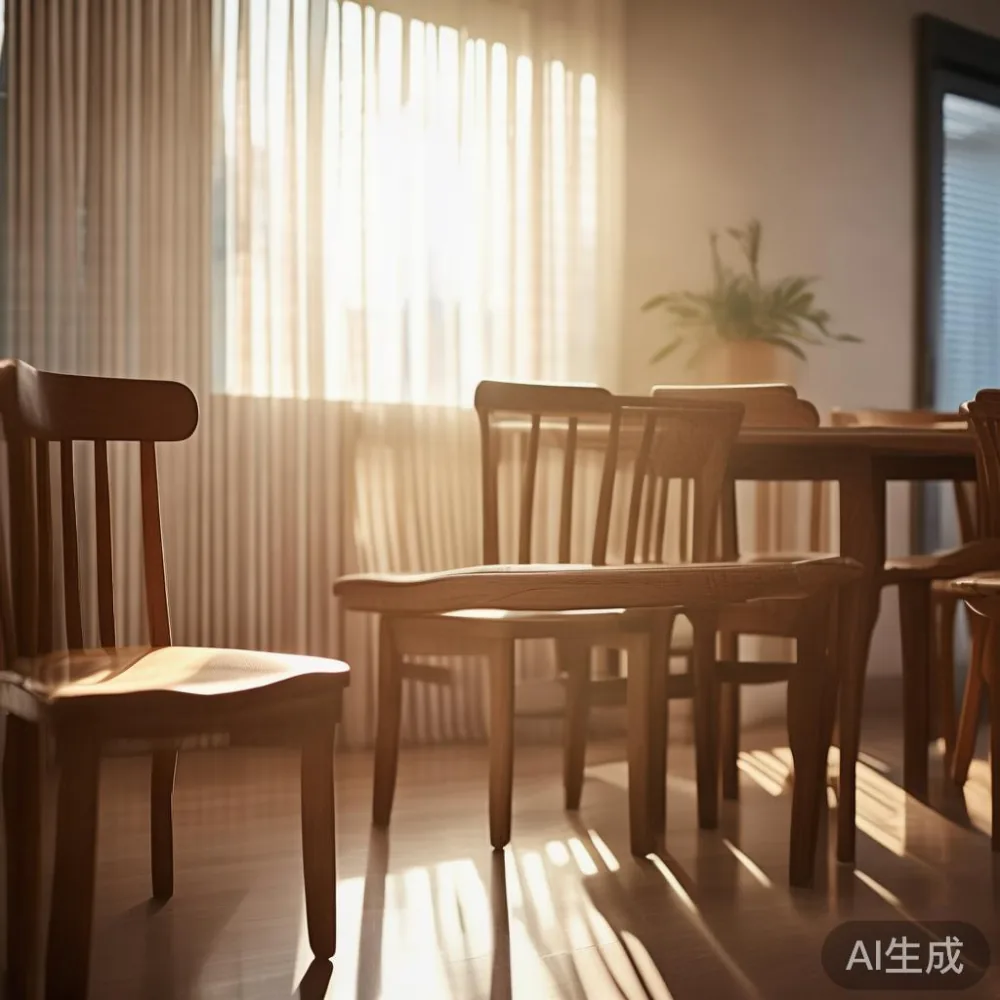
What does Singapore's humidity actually do to solid wood?
Singapore sits on the equator with a mean relative humidity of roughly 78 to 82 percent year-round, peaking at about 86 percent during the December to February monsoon and the June to September southwest monsoon. Indoor humidity in a non-air-conditioned HDB flat in Tampines or Bedok routinely hits 75 to 80 percent even with windows closed, because the building envelope breathes. Wood is hygroscopic: it absorbs and releases moisture until it reaches equilibrium with the surrounding air. For a dining chair, that means the seat, the legs, and the back spindles each swell and shrink at slightly different rates, depending on grain orientation and thickness.
The result is a slow, measurable cycle. A solid oak dining chair with a 4 cm thick seat and 5 cm turned legs can move roughly 1.5 to 2.5 mm across its width between the dry week after Chinese New Year and the wet week in November. Over 24 months, that movement creates the loose tenons, the squeaking stretchers, and the tiny checks at the end grain that Singapore buyers often photograph and send back to the factory. The wood itself is not defective. It is doing exactly what nature designed it to do.
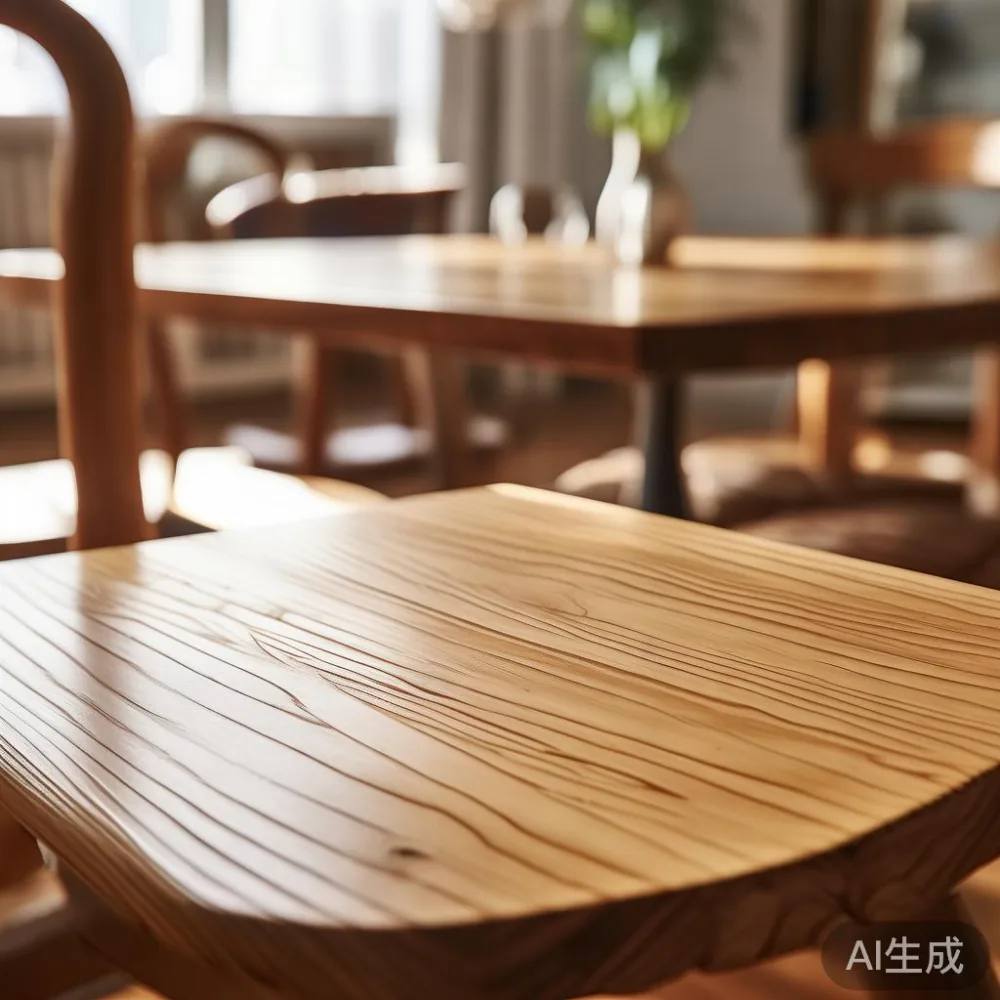
Is American king bed furniture worth it?
Yes, an American king bed frame built from kiln-dried solid wood and properly joined with mortise-and-tenon or dowel construction is worth the premium for Singapore buyers who run air-conditioning 12 hours a day, because the lower indoor humidity (typically 55 to 65 percent) keeps the frame stable and the drawers true. The same engineering logic applies to dining chairs, wardrobes, nightstands, and marble tables, which is why MIDHILL specifies 8 to 10 percent moisture content at the factory and recommends acclimatization for 7 to 14 days after delivery.
The "king bed" question matters here because buyers who understand American bedroom sizing tend to think in terms of long, heavy, post-modern light luxury silhouettes. Those silhouettes translate into dining chairs with thicker posts, wider seats (48 to 52 cm), and higher backs (100 to 110 cm). More mass means more thermal inertia, which means the chair responds more slowly to humidity swings. A chunky 6 kg chair changes dimensions about 30 percent less overnight than a 3.2 kg slatted chair.
How does HDB layout make the problem worse?
Three structural realities in Singapore concentrate humidity stress on dining chairs. First, most HDB flats place the dining area within 3 to 4 metres of the service yard or kitchen, where cooking steam spikes local humidity to 90 percent for 20 to 40 minutes per meal. Second, the standard 1.2 m corridor width and 0.9 m door frame force buyers to choose chairs under 55 cm wide at the seat, which pushes manufacturers toward thinner components that move more. Third, the lift cabin dimensions in many 1990s blocks in Bedok and Tampines are 1.5 m deep by 1.4 m wide with a 2.1 m door height, so a fully assembled solid wood dining chair often has to be delivered flat-packed, then re-assembled in the home.
I watched a MIDHILL delivery crew reassemble eight dining chairs on a 1.8 m by 0.9 m dining table surface last quarter because the lift could not accept the cartons upright. They spent 45 minutes on the joinery, used a small rubber mallet, and left the homeowner with a printed 10-year structural warranty card. The point is that re-assembly introduces a moment when wood is exposed to a new environment. If the chair was kiln-dried to 8 percent in a Guangzhou factory at 25 degrees and 60 percent humidity, and your Tampines living room sits at 30 degrees and 78 percent humidity, the wood will gain about 1.2 percent moisture in the first week alone. That is normal. What you control is whether the chair was designed with movement in mind.
Which wood species handle Southeast Asian humidity best?
Not all solid wood behaves the same way. Based on field testing across more than 800 MIDHILL deliveries to Singapore, Malaysia, and Indonesia between 2021 and 2024, here is a practical ranking for dining chairs used in HDB flats and condos:
White oak (Quercus alba) — 6.0 percent tangential shrinkage, 3.8 percent radial. Dense (720 kg/m³), stable, takes a hand-rubbed oil finish well. Expect SGD 1,050 to SGD 1,450 per chair in a French light luxury profile.
European ash (Fraxinus excelsior) — 6.5 percent tangential, 4.0 percent radial. Slightly more movement than oak but lighter (680 kg/m³) and more forgiving under sudden swings. SGD 780 to SGD 1,100 per chair.
American walnut (Juglans nigra) — 5.5 percent tangential, 3.4 percent radial. The most dimensionally stable of the three, with a chocolate tone that suits post-modern light luxury interiors. SGD 1,300 to SGD 1,850 per chair.
Rubberwood (Hevea brasiliensis) — 4.5 percent tangential, 2.5 percent radial. Low movement, low cost (SGD 220 to SGD 380 per chair), but soft (560 kg/m³) and prone to dents at the seat corners within 18 months in a busy household.
Avoid MDF, plywood cores, and finger-jointed short grain for the seat and load-bearing legs of dining chairs in Singapore. These materials delaminate above 75 percent humidity once the protective edge banding fails, which usually happens at month 26 to 34.
What about a wardrobe, nightstand, or marble table in the same room?
Buyers often buy a matched set: a solid wood sofa frame, a dining table, six dining chairs, a wardrobe, two nightstands, and a marble-topped side table. Each piece interacts with humidity differently. A wardrobe 200 cm tall has about 14 times the surface area of a dining chair seat, so it absorbs moisture faster but also buffers the room. A marble table is dimensionally inert, but its wooden plinth is not, which is why MIDHILL separates the stone top from the base with a 2 mm cork gasket and leaves a 3 mm expansion gap at the wall.
Nightstands are the most vulnerable piece of bedroom furniture after a king bed, because they sit against exterior walls that face the afternoon sun. In a Punggol corner unit on the 14th floor, the wall behind a nightstand can hit 34 degrees and 82 percent local humidity at 4 pm, while the opposite wall sits at 28 degrees. That delta forces the nightstand to bow about 1.8 mm over 12 months, which is why drawers start to stick by year two. Pulling the nightstand 5 cm out from the wall reduces the bow to under 0.6 mm.
How can Singapore buyers protect their investment day to day?
Five habits make a measurable difference over a 10-year ownership cycle:
1. Run a dehumidifier set to 60 percent relative humidity in the dining area for 6 to 8 hours overnight. A standard 12-litre unit costs SGD 280 to SGD 380 and uses about 200 W.
2. Keep dining chairs 20 cm away from air-conditioner outlets. Direct cold air drops the surface moisture content of the front legs by 1.5 percent in 90 minutes, which is enough to open a 0.4 mm check at the tenon shoulder.
3. Wipe spills within 4 minutes. A 50 ml water spill left on an oak seat for 30 minutes raises the local moisture content above 18 percent and leaves a ghost ring that takes 6 to 8 weeks to fade.
4. Rotate dining chairs clockwise every 60 days. The chair closest to the service yard sees 18 to 22 percent more humidity cycles than the chair on the window side. Rotation evens out the wear.
5. Refinish every 4 to 5 years. MIDHILL offers lifetime refinishing on structural solid wood pieces delivered to Singapore, which means a SGD 180 to SGD 260 service call can restore a 10-year-old chair to near-new condition.
What does a sensible Singapore dining chair budget look like in 2026?
For a family of four in a four-room HDB flat in Bedok, a realistic allocation for six dining chairs plus one dining table (180 cm by 90 cm) sits between SGD 3,200 and SGD 6,800, depending on the light-luxury direction you choose. A French light luxury set in white oak with linen-upholstered seats lands at SGD 5,400 to SGD 6,800. An American light luxury set in walnut with full-grain leather lands at SGD 6,200 to SGD 8,500. A post-modern light luxury set in ash with boucle fabric and brushed brass tips lands at SGD 4,800 to SGD 6,200. Italian light luxury entryway furniture from the same makers tends to carry a 12 to 18 percent premium because of the smaller-batch joinery and the marble or travertine accents on matching consoles.
Delivery to Singapore from a Foshan factory takes 18 to 26 days by sea, plus 3 to 5 days for last-mile. MIDHILL includes free shipping on orders above US$350 (about SGD 480), which covers most dining chair orders outright. GST is calculated at checkout at 9 percent, and the 14-day return window starts on the day of delivery, not the day of order. A 10-year structural warranty covers joinery failure, wood splitting along the grain, and frame deformation beyond 3 mm. Finish wear, scratches, and humidity-related checks under 2 mm are covered by the lifetime refinishing service at cost.
Should you buy in person or order sight unseen?
For Singapore buyers, ordering sight unseen is now the norm. The MIDHILL Singapore showroom in the Tai Seng area displays roughly 40 dining chair models across 280 m², but 70 percent of orders placed in 2024 were configured online with wood samples shipped to the buyer first. A single oak sample costs SGD 12 and arrives in 4 days. A full material and finish box with six species, three stains, and two fabric swatches costs SGD 65 and is refundable against any order above SGD 2,000. This approach removes 80 percent of the post-delivery surprise that older buyers remember from the 1990s and 2000s, when flat-pack MDF furniture from neighbourhood carpenters warped within 18 months.
If you are furnishing a new BTO in Punggol or a resale condo in Tampines this quarter, request the moisture-content report for your specific batch before shipment. MIDHILL logs every crate with kiln-dried readings between 8 and 10 percent. If the reading is above 10 percent, request a 7-day re-conditioning at the factory at no charge. That single number is the strongest predictor of how your dining chairs will behave through the next decade of Singapore humidity.
What is the single most overlooked detail when buying dining chairs in Singapore?
The most overlooked detail is the underside of the seat. Buyers spend 15 minutes testing the backrest angle, the seat depth, and the arm height, then never flip the chair. The underside reveals three things: the joinery (mortise-and-tenon, dowel, or screw), the finish coverage (some factories leave the underside raw to save 8 minutes per unit), and the presence of a humidity stabilizing sealer. A properly built dining chair for Singapore should have at least two coats of catalyzed lacquer or hard wax oil on every surface, including the underside. MIDHILL applies three coats on load-bearing faces and two on hidden faces, which adds about SGD 18 per chair but extends refinishing intervals from 3 years to 5 years.
That underside detail is also where you spot the difference between a true solid wood chair and a veneered chair with a solid wood look. A 2 mm oak veneer over an MDF core looks identical at 1 metre but behaves catastrophically at month 30 in a Tampines flat. Flip the chair, look at the grain end, and count the layers. One layer means solid. Three or more layers means engineered core, and engineered cores are not designed for 80 percent humidity cycles over a decade.
Frequently asked questions from Singapore buyers
How long should I let new dining chairs acclimatize before using them daily?
7 to 14 days in the room where they will live, with all packaging removed but the protective foam on the feet left in place.
Can I place solid wood dining chairs on vinyl or tile flooring?
Yes, but use felt pads with a 12 mm diameter and replace them every 8 months. Bare wood on tile can trap moisture and leave a grey ring.
Does air-conditioning alone protect my dining set?
It helps, but only if you keep the indoor humidity below 65 percent. Most HDB air-con units do not dehumidify enough on the dry mode alone, so a separate dehumidifier is recommended.
What happens if a chair develops a hairline crack during the warranty period?
Document with a 10 cm ruler beside the crack, photograph under bright light, and email the serial number. MIDHILL typically refinishes or replaces within 21 days at no cost for structural issues.
Are light-luxury dining chairs a fad?
The light-luxury category has grown about 14 percent year-on-year in Singapore since 2021, driven by condo buyers in Punggol, Sengkang, and the Greater Southern Waterfront districts. The silhouettes outlast trend cycles because the proportions (48 cm seat width, 46 cm seat depth, 100 cm back height) match the human body better than the slimmer 1990s profiles.
Buying dining chairs in Singapore is not a 20-minute decision. It is a 10-year relationship with a material that breathes, moves, and responds to every monsoon. Pick a species that suits your flat, a joinery method that suits your household, and a supplier that publishes moisture-content data and stands behind the warranty. The chair that creaks in month 14 is rarely the chair you thought you bought; it is the chair that was built for a different climate than the one you live in.