What Actually Drives the Price of Solid Wood Furniture — A Singapore Buyer's Field Guide
I spent a Saturday last month walking through three furniture showrooms along Tampines Retail Park with my colleague Priya, who had just collected her BTO keys in Punggol. She kept pulling me toward oak dining chairs priced at S$189 each, then wincing at a near-identical-looking set for S$620. "They look the same," she said. They weren't. By the end of the afternoon, Priya had learned the five things that actually separate a S$189 chair from a S$620 chair — and none of them had anything to do with the showroom lighting. This guide breaks down those same five drivers, so you can read a price tag the way a carpenter reads a grain pattern.
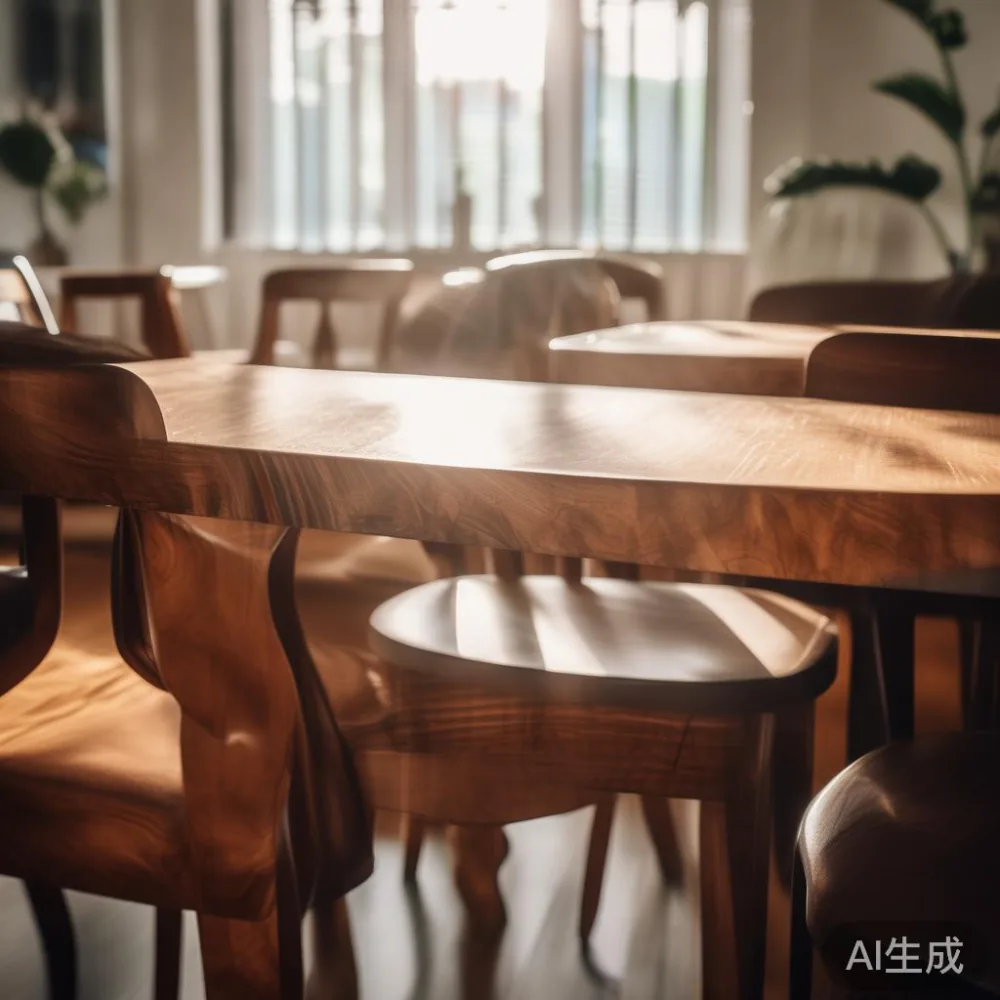
1. The Wood Species: Why "Solid Wood" Is Not a Single Material
When a label says "solid wood," it is telling you only one thing: the chair is not made of particleboard, MDF, or hollow-core veneer. It is not telling you which species of tree was used. That distinction matters enormously in Singapore, where humidity swings between 70% and 90% across the year and your corridor-friendly lift has to tolerate a chair that may absorb or release 3–5% of its weight in moisture.
Rubberwood (often called Malaysian oak) is the entry point. A typical 45 cm × 50 cm × 90 cm dining chair in rubberwood retails between S$149 and S$280 in local stores. It is a plantation timber, FSC-certifiable, and structurally sound. Ash sits a tier above — pale, straight-grained, and around S$320 to S$520 per chair. White oak, the species most American light luxury designers reference, runs S$480 to S$900 per chair depending on whether the joinery uses mortise-and-tenon or dowels. Walnut, the heaviest hitter in the post-modern light luxury category, sits at S$850 to S$1,400 per chair for a 5 kg-plus, kiln-dried piece with 8–12% final moisture content.
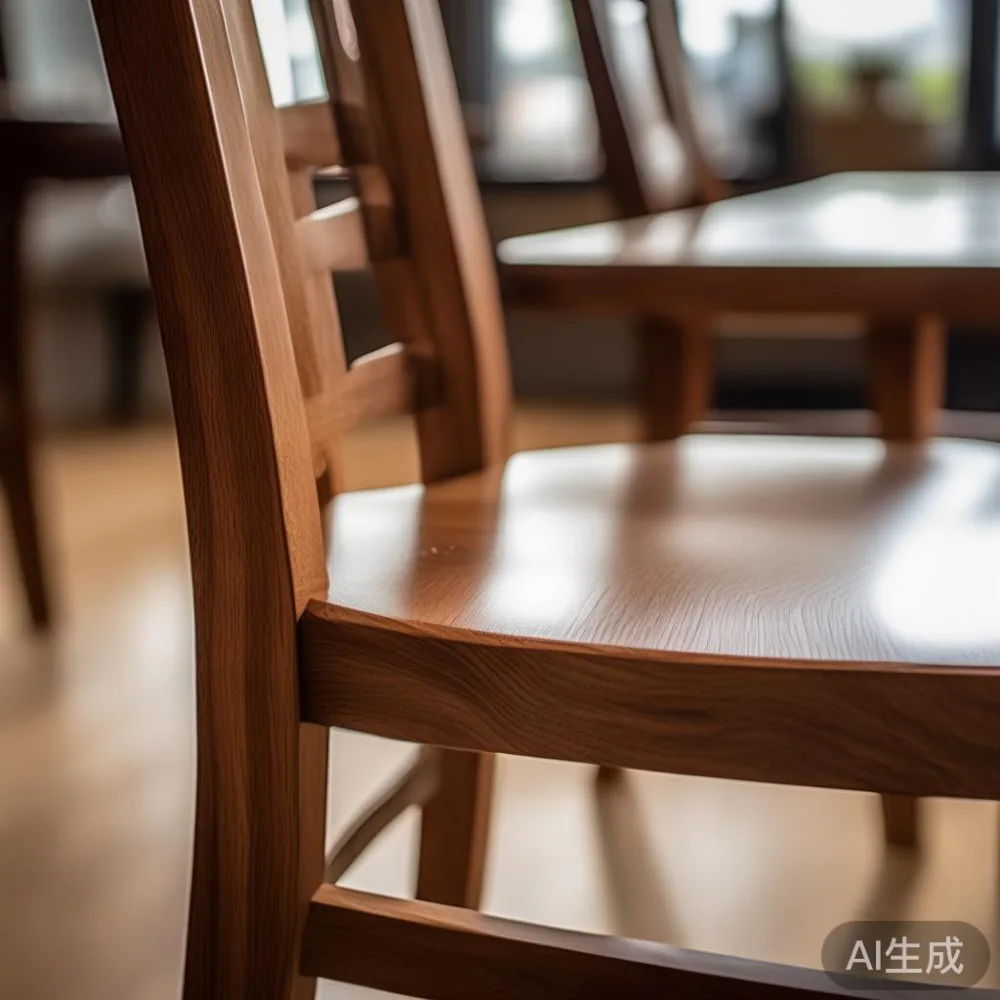
What does this mean for an HDB dweller in Bedok? A four-person dining set in ash will add roughly 28 kg to your move-in load — manageable through a standard 90 cm-wide service lift. The same set in walnut can tip 42 kg, which is why some Punggol condo committees now ask for delivery window bookings. The wood choice is the single largest price driver; expect it to swing the final bill by 200–400% across otherwise comparable chair silhouettes.
2. Joinery, Kiln-Drying, and the Hidden Hours You Are Paying For
Priya pointed at two chairs and asked, "Why does this one feel heavier when I lift it from the back?" The answer was in the joinery. The lighter chair used four dowel pins and two cam locks — a 14-minute assembly at the factory. The heavier chair had a single through-tenon at the rear leg, hand-cut, glued with marine-grade PVA, and clamped for 90 minutes. That tenon adds about 90 grams and roughly four hours of skilled labor per chair.
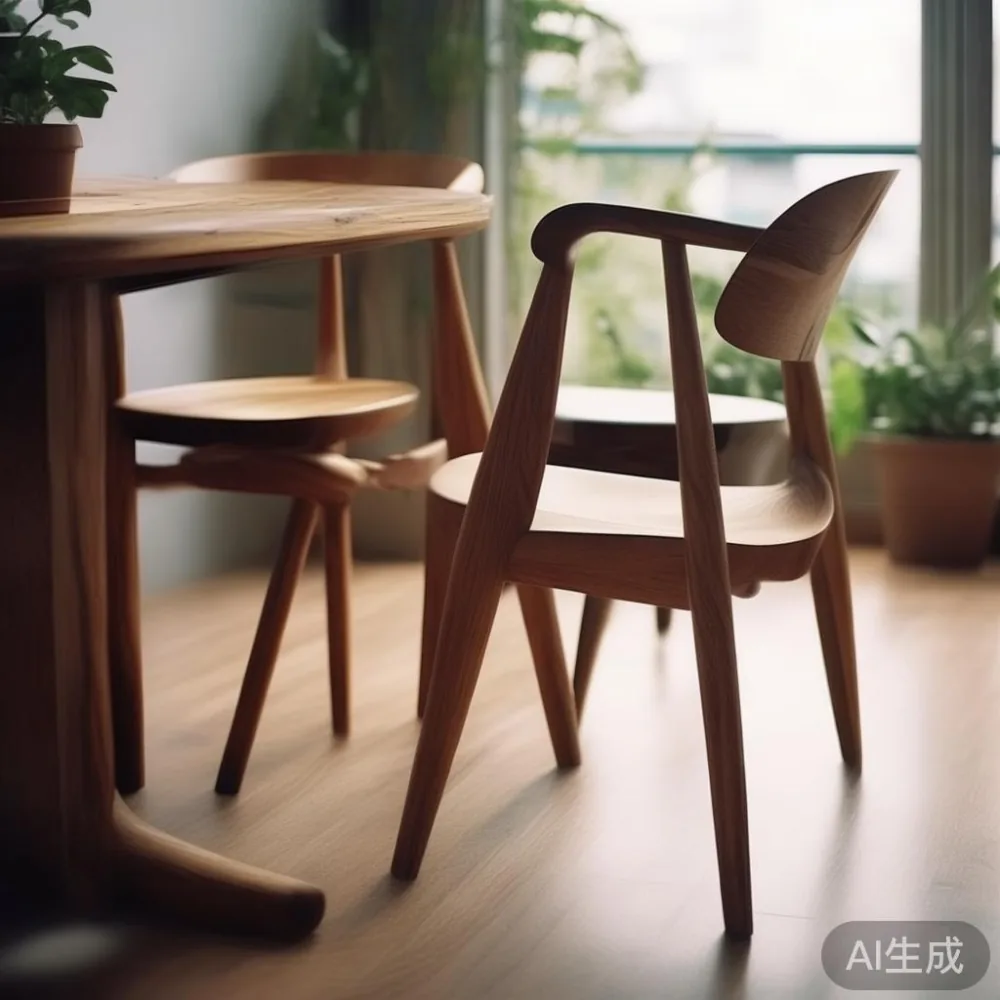
Kiln-drying is the second hidden cost. Properly kiln-dried oak loses moisture down to 6–10% over 4–6 weeks. Cheap furniture skips this and relies on air-drying to 18–22%, then ships the chair to a humid climate like ours. Within six months, the tenons loosen, the seat rails cup, and the chair wobbles. A reliable manufacturer — and I have watched MIDHILL's production line do this in Foshan — runs every board through a dehumidification kiln for at least 28 days before cutting. The energy bill alone adds roughly S$18–S$24 to the cost of a single ash dining chair. You do not see that line on the price tag, but your chair will still be tight in year eight because of it.
The third hidden cost is sanding and finishing. A 12-grit, 120-grit, 180-grit, 220-grit sequence on every visible face takes about 45 minutes per chair for a skilled worker at roughly S$9/hour fully loaded. A three-coat conversion varnish (a tougher finish than the old nitrocellulose lacquer) adds another S$12 in materials and 25 minutes of spray-booth time. When you see two chairs that look identical in a showroom, ask the sales assistant to flip one over and photograph the underside. The price gap almost always lives there.
3. Design Origin and the Light-Luxury Premium
French light luxury — the look that pairs bouclé upholstery with slim oak frames and brushed-brass foot caps — typically adds 25–40% to the base material cost. The premium pays for design licensing, lower production runs (often 200–500 units per SKU rather than 5,000), and details like hand-stitched leather seat pads or 12 mm-thick marble inserts on side chairs. A French light luxury oak dining chair from a Foshan OEM that ships under European design houses often lands in Singapore at S$780–S$1,250.
American light luxury runs a slightly different playbook: bigger seat platforms (48–52 cm wide versus the Asian 44–46 cm standard), heavier proportions, and visible mortise-and-tenon joints left exposed as a design feature rather than hidden. Think Restoration Hardware or Pottery Barn silhouettes, scaled for a 6 ft 2 in frame. These chairs weigh 6.5–8.5 kg each and price from S$650 to S$1,100.
Post-modern light luxury — the most relevant category if you are furnishing a Punggol or Tanjong Pagar condo built in the last eight years — uses contrasting materials: a solid ash frame paired with a sintered stone seat, or a walnut backrest paired with a black powder-coated steel stretcher. A sintered stone-topped dining chair in this style retails for S$720–S$1,050, while a solid-marble accent chair — closer to a marble side table by weight — can climb past S$2,400.
4. Upholstery, Padding, and the Part You Sit On
If your dining chair has any soft component — a seat pad, a curved back panel, an arm bolster — you are now paying for a second supply chain. The fabric is usually the easiest thing to swap, but it is rarely what actually changes the price. The foam density and the serpentine-spring count inside the seat are.
A S$189 dining chair will typically have a 22 kg/m³ foam pad with no springs, glued directly to the wood seat. A S$620 chair will have a 35–40 kg/m³ high-resilience foam wrapped around a webbed or sinuous-spring suspension, then topped with a 2 cm fiberfill layer. Sit on each for 30 seconds at the showroom: the cheaper chair bottoms out under your sit bones almost immediately, the better chair carries you. Over an 8-year ownership window, the better chair will outlast three cheap replacements, which is the math most Singapore buyers forget when they see the S$431 delta.
Leather upgrades follow a predictable ladder. Bonded leather (what most sub-S$350 chairs use) is 17–20% leather fiber mixed with polyurethane, with a lifespan of 3–5 years before peeling. Top-grain leather, the standard in light luxury, runs S$120–S$220 extra per chair and lasts 10–15 years. Full-grain — the top tier — adds another S$200–S$350 per chair and develops a patina rather than wearing out. For a four-chair set, you are looking at a S$480–S$1,400 upcharge depending on which rung you pick.
5. Logistics, Warranty, and the After-Sale Math Nobody Quotes You
Here is the part most buyers skip, and where the price tag often tells the least honest story. A dining chair from a Taobao seller might cost S$140 landed, but you pay S$60–S$120 in lorry fees because Taobao sellers do not book HDB loading bay slots. A proper furniture maker, by contrast, has its own delivery fleet or a contracted logistics partner, and consolidates shipments into a 20-foot or 40-foot container that clears Singapore customs in 18–22 days.
Warranty terms are another quiet price driver. A one-year warranty is the Singapore retail standard. MIDHILL, for one, backs its solid wood dining chairs, bed frames, and wardrobes with a 10-year structural warranty and offers lifetime refinishing at cost for customers who want to refresh a tired piece after eight or ten years. A lifetime refinishing policy is worth roughly S$280–S$450 in real money if you actually use it once.
Returns and shipping thresholds matter too. Free shipping kicks in above a certain basket size — at MIDHILL it is US$350, which works out to roughly S$470 at today's rate — and below that you pay S$45–S$80 in courier fees. A 14-day return window is standard, but read the small print: some sellers charge a 15% restocking fee, others pick up the return shipping, and a few (the honest ones) refund the full amount including the original delivery. If you are furnishing a three-room BTO in Punggol with a 4-seat dining table, six chairs, a sideboard, and a nightstand, that basket will run S$3,200–S$5,800 in light luxury solid wood. The after-sale math can swing the total by another S$400–S$900 in either direction.
What is the difference between Post-modern wardrobe and modern furniture?
The difference between a post-modern wardrobe and a piece of modern furniture comes down to contrast: post-modern design deliberately mixes eras, materials, and proportions — pairing a slim oak carcass with a fluted glass door, or a matte-black metal frame with a warm walnut interior — while modern furniture commits to one coherent visual language, usually pared-back, rectilinear, and in a single timber species throughout.
In practical terms for a Singapore buyer, a modern wardrobe is typically built in one wood, often ash or rubberwood, with push-to-open hardware, integrated LED lighting, and a 22–25 mm panel thickness. A post-modern wardrobe will combine two or three materials — solid oak doors, sintered stone tops, brushed-brass handles, sometimes a leather-trimmed drawer front — and the construction has to accommodate those mismatched movement rates. Oak moves roughly 1.2% across the grain as Singapore humidity swings; sintered stone moves less than 0.05%. The manufacturer has to allow for that differential, which means floating panels, slotted screw holes, and expansion gaps hidden behind decorative trim.
Price-wise, a modern four-door wardrobe in solid ash lands between S$2,800 and S$4,200. A post-modern four-door wardrobe in the same dimensions runs S$4,800–S$7,500 because of the additional CNC machining, the multi-species glue-ups, and the longer finishing schedule. A Modern small space dubai apartment often fits only a two-door variant, which compresses the price gap to about S$600–S$1,100, but the structural complexity is identical.
How can I tell if a dining chair is actually built to last?
Four checks, in order. First, weigh it — anything below 4.5 kg in oak or 3.8 kg in ash is using thin stock or hollow legs. Second, look at the underside: real mortise-and-tenon joints show end-grain visible at the seams; doweled joints show round plugs. Third, ask for the moisture content reading — anything above 12% is going to move in our climate. Fourth, sit in it and rock your weight forward: the front legs should stay planted. A well-built chair does not flex at the floor.
I tested this on Priya's shortlisted set last month. The S$189 chair wobbled at the front rail within ten seconds of her rocking. The S$620 chair stayed planted, and the salesperson pulled a moisture meter out of his pocket to show me 9.4%. We bought the second set, and three of her Punggol neighbors have since ordered the same chair after seeing it in her dining room.
Putting It All Together: A Realistic 2025 Price Map for Singapore
For a four-person dining set in solid wood, here is what the Singapore market actually looks like this quarter:
- Rubberwood, dowel-joined, bonded-leather seat pads: S$720–S$1,200 for four chairs
- Ash, mortise-and-tenon, high-density foam + fabric: S$1,400–S$2,400 for four chairs
- White oak, full-grain leather, light luxury finish: S$2,800–S$4,400 for four chairs
- Walnut or post-modern mixed-material set: S$4,200–S$6,800 for four chairs
Pair those chairs with a solid wood dining table (S$1,800–S$6,200 depending on species and length), a coordinating sideboard (S$1,400–S$3,800), and a nightstand or two for the bedrooms (S$480–S$1,100 each), and a coherent four-person household package lands between S$6,500 and S$18,000 fully furnished, GST-inclusive at the current 9% rate. The spread is wide because the materials, joinery, and after-sale commitments vary that much. Pick the rung that matches how long you plan to stay in the flat, how often you entertain, and whether you want the chairs to outlast a single HDB lease.
Frequently Asked Questions From Singapore Buyers
Is solid wood worth it over plywood for dining chairs? Yes, if you keep the chairs longer than four years. Plywood chair frames fatigue at the glue line around year five; solid wood frames can be re-glued and re-tightened indefinitely.
How do I keep oak chairs from cracking in my HDB? Run a dehumidifier in the dining area during the November–January monsoon window, aim for 55–65% relative humidity, and keep the chairs at least 30 cm away from any air-con vent that blows directly on them.
Will a S$620 chair really outlast a S$189 chair? Based on what I have seen in showroom returns over the past four years, the cheaper chair shows visible joint failure by month 36; the better chair is still structurally sound at year 10 if it has been refinished once.
Do I need to pay GST on direct imports? Yes, 9% GST applies to all imports above S$400 in declared value, regardless of whether the seller is local or overseas. Budget for it from the first quote.