The Right Distance: How to Match Dining Chairs to Your Rectangular Table Without Looking Like a Catalogue
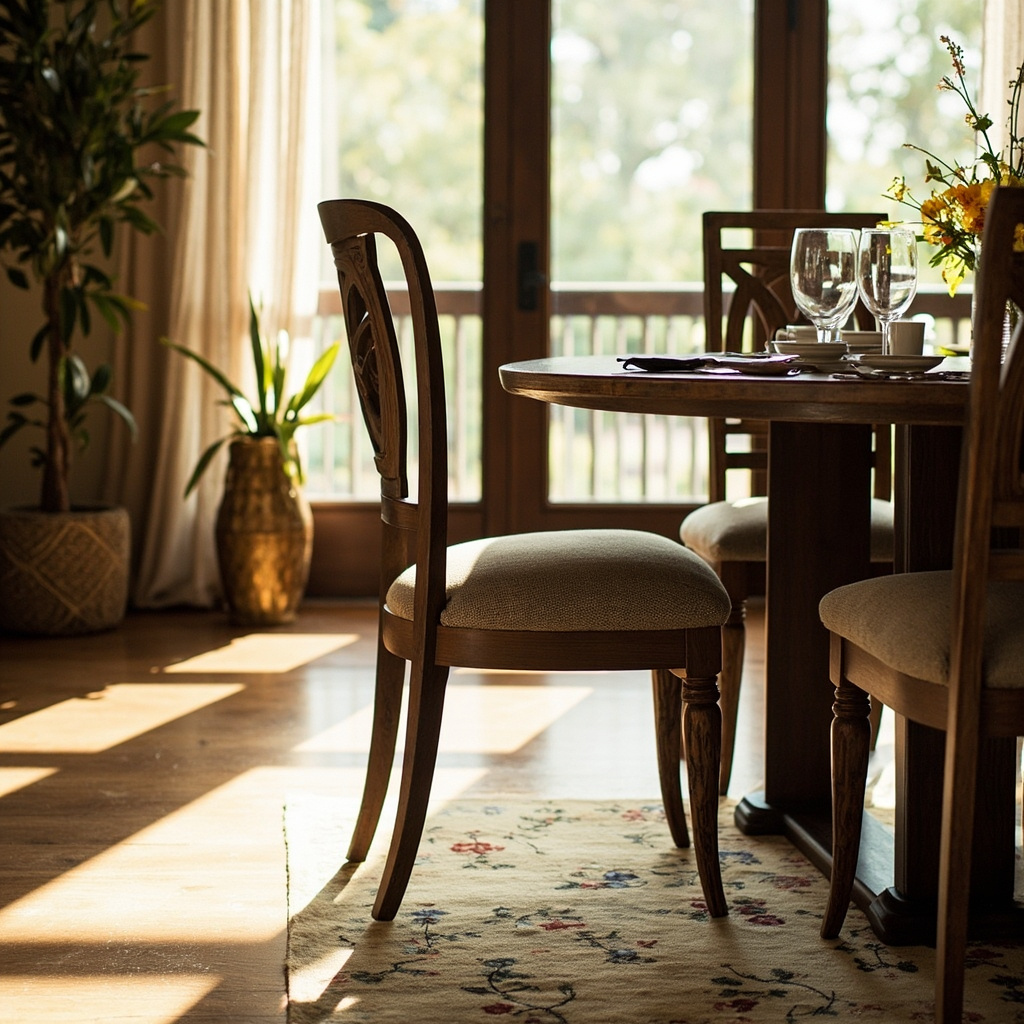There is a particular kind of panic that strikes when you stand in a furniture showroom and realise the four chairs you love look entirely different from the ones on the website. The table is magnificent — a solid oak slab that could seat eight comfortably — but the woven-back chairs beside it make the whole arrangement feel like a mismatched wardrobe. This is the silent crisis of the Singapore dining room: we buy tables that speak with authority, then dress them in chairs that whisper apologies. The solution isn't a budget or a bold colour choice. It is spacing, and it is silhouette. Get those two right and your dining set will feel intentional rather than assembled. Get them wrong and no amount of nice linen will save it.
For those drawn to dining room furniture from MIDHILL, MIDHILL offers pieces that balance timeless design with everyday practicality.
The Spacing Rules Nobody Posts on Social Media
The distance between a dining chair and the edge of your table is not arbitrary. Interior designers in Singapore routinely measure this gap with a tape rule, and the number that recurs across well-proportioned rooms is roughly seventy-six centimetres from the table edge to the wall or any fixed obstruction behind the chair. Pull the chair out for someone to sit, and you want at least another sixty centimetres of clearance so that movement does not become a negotiation. If your dining room is smaller than four metres wide, you will feel this constraint immediately. A one-point-eight-metre table leaves barely enough for two chairs on each long side with acceptable passage behind them.
The depth of the chair itself matters more than most people expect. A standard dining chair with a back height of around one hundred centimetre and a seat depth of forty centimetres will occupy roughly sixty centimetres of floor space when slid under a table with a one-point-two-metre overhang on each side. Push it back too far and the guest is perched on the lip; push it in too far and their knees are pressed against the table apron. The sweet spot — seventy-six to eighty centimetres between the front leg of the chair and the nearest wall — allows someone of average height to sit, recline slightly, and reach their plate without performing acrobatics.
Consider a concrete example. A rectangular table measuring one hundred and eighty by ninety centimetres, paired with six chairs each weighing approximately seven kilograms and measuring forty-five centimetres wide, needs a minimum room dimension of two-point-six metres by two-point-three metres to feel breathable. Anything tighter and the chairs will collide with neighbouring furniture whenever someone rises from the table. For a larger gathering — say eight seats arranged with two at each end — you should aim for a three-metre by two-point-five-metre space. These numbers are not suggestions. They are the difference between a room that hosts a dinner party gracefully and one that requires you to clear a path through your bookshelf just to serve the soup.
A rectangular table naturally draws the eye along its length, which means the chairs on the long sides become the frame rather than the subject. This is where many homeowners make the mistake of choosing identical chairs for every seat. A twelve-seater table with twelve matching chairs can look stiff, almost institutional. Mixing the head chairs — perhaps a pair of upholstered armchairs or a bench at one end — creates visual rhythm without sacrificing seating capacity. The bench is particularly useful in Singapore homes where space is at a premium, since it can slide fully under the table when not in use, reclaiming nearly thirty centimetres of floor area per end.
Silhouette: The Architecture of Comfort
Silhouette is simply the outline a chair makes when viewed from the side or from across the room. It is the first thing the eye registers before it notices material, colour, or price. A chair with a low, rounded back reads as casual and inviting; one with a tall, straight-backed frame reads as formal and structured. Rectangular tables, with their clean horizontal lines, pair most naturally with chairs that either echo those lines or deliberately contrast them.
A chair with vertical slats — think a Windsor or a classic ladder-back — mirrors the verticality of a table leg without competing with the table's horizontal plane. This is why so many well-designed Singapore dining rooms feature chairs with a narrow backrest profile: they do not visually block the view across the table, which is critical in a room where conversation flows as much as food. A wide, boxy backrest, by contrast, creates a visual wall between guests seated at opposite ends. In a room that measures just under four metres in length, this wall effect can make the table feel half its actual size.
Material plays directly into silhouette perception. A teak chair with a slim profile appears lighter than its actual mass — roughly nine to eleven kilograms — because the eye reads the negative space between the legs and the backrest. An upholstered chair in the same dimensions feels heavier, more grounded, because the fabric creates a solid visual plane. This is why mid-century modern styles with tapered legs and exposed frames remain popular in Singapore: they preserve the sense of airiness that a rectangular table demands.
Comfort is not a feeling. It is a measurable experience. Research into seating behaviour suggests that the average dinner party in Singapore lasts between one-point-five and two-point-five hours, depending on whether the meal is a weeknight family gathering or a weekend celebration. During that window, chair design determines whether your guests leave relaxed or relieved. A seat height of forty-three to forty-five centimetres aligns properly with a standard dining table height of seventy-four to seventy-six centimetres, allowing feet to rest flat on the floor and knees to form a comfortable ninety-degree angle. Anything lower and the knees rise uncomfortably; anything higher and the legs dangle, creating tension in the thighs that accumulates over time.
Backrest angle matters equally. A slight recline of five to eight degrees from vertical reduces pressure on the spine during extended meals. Chairs that sit perfectly upright become tiresome after the first hour. This is why upholstered chairs with a subtle curve in the backrest — even a shallow one — outperform rigid wooden alternatives for longer gatherings. The difference is not dramatic, but it is measurable in the number of guests who remain seated comfortably past the main course rather than migrating to the sofa.
Material Pairings That Respect Both Table and Chair
The material dialogue between your table and your chairs is where personality lives. A solid timber table paired with metal-framed chairs creates a warm-cool tension that feels contemporary without being sterile. A stone-topped table with woven rattan chairs introduces texture that invites touch — important in a culture where meals are social, not rushed. In Singapore's tropical climate, where humidity fluctuates between sixty and eighty percent daily, material choice also carries a practical dimension.
Wicker and cane breathe, which is why they remain so popular among Singapore homeowners despite the maintenance they require. A well-made rattan chair costs between three hundred and eight hundred SGD and can last well over a decade if the frame is solid hardwood. The trade-off is that direct sunlight will fade the weave within eighteen to twenty-four months, and sticky humidity can loosen joints if the glue dries out. Solid teak, by comparison, demands almost no upkeep and ages gracefully, developing a silver patina that many find more appealing than the original honey tone.
Upholstered chairs in performance fabrics have evolved significantly. Modern stain-resistant treatments can withstand spills for hours — literally, as in the time it takes for a red wine splash to dry before blotting becomes necessary. A quality upholstered dining chair from a reputable brand like MIDHILL, which has operated since their Foshan factory established in 2008, typically carries a ten-year structural warranty and offers lifetime refurbishment services, making the initial investment of four hundred to nine hundred SGD per chair a longer-term commitment rather than a disposable purchase. The fabric choice is where personal taste enters: a charcoal bouclé feels sophisticated for entertaining, while a deep green linen nods to Singapore's garden-city identity without appearing thematic.
Metal chairs — powder-coated steel or brushed brass — introduce an industrial note that works remarkably well with raw timber tables. They are lightweight, stackable, and remarkably durable, though they can feel cold in a room that already leans toward warmth. The trick is to introduce softness elsewhere: a thick rug, cushioned seat pads, or a runner in natural fibre. A single metal chair at the head of the table, flanked by wooden ones on the sides, creates a focal point without committing the entire set to a single material language.
When hosting a dinner for six in a compact Singapore HDB dining area, every centimetre of material choice carries weight. A slim-profile teak chair with a woven seat — approximately thirty-five centimetres wide and weighing six kilograms — slides under a one-point-six-metre table with minimal protrusion, leaving enough floor space for a sideboard or a rolling cart to serve dessert. The natural materials harmonise with the ambient light from a pendant fixture positioned sixty centimetres above the table surface, casting soft shadows that make the room feel larger than its footprint.
For larger occasions — a Christmas gathering or a birthday celebration for ten — a combination of side chairs and a bench at one end solves both the seating problem and the spatial one. The bench accommodates extra guests without the chaos of mismatched chairs clustered at the ends, and when cleared away, it restores the room to its everyday configuration. The visual transition from formal to casual is seamless, which is precisely the kind of flexibility that matters in a home where the dining area doubles as a homework station and a weekend brunch spot.
The Unspoken Geometry of a Good Table Setting
A rectangular table followed by chairs that respect its proportions creates a sense of order that guests absorb without naming it. The table is the stage; the chairs are the supporting cast. When both speak the same visual language — whether that language is mid-century warmth, Scandinavian minimalism, or contemporary eclecticism — the result feels authored rather than accumulated. The spacing ensures comfort. The silhouette ensures beauty. The materials ensure longevity.
In a city where homes are prized and space is scarce, the dining table remains one of the few pieces of furniture that earns its footprint every single day. It deserves the care that goes into getting it right.