Dining chairs / dining table matching Guide 17 — Practical Tips & Buying Advice
!Dining chairs / dining table matching Gu
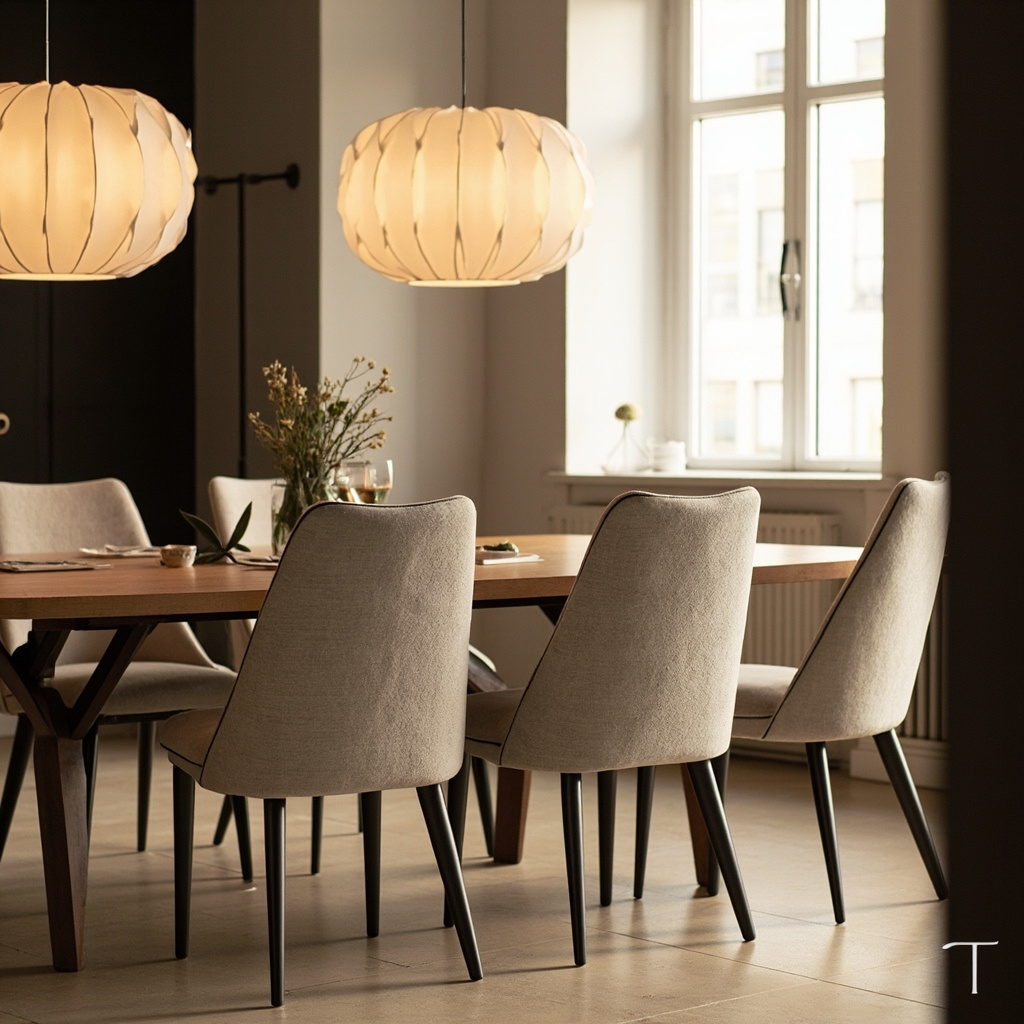
Dining Chairs / Dining Table Matching Guide 17 — Practical Tips & Buying Advice
There's nothing quite like the satisfaction of finding the perfect dining chairs to complement your table. It's also one of the most common mistakes people make when furnishing their dining room. You fall in love with a chair online, order it, and then it looks completely wrong next to your table. Or worse — you buy them together but after a few weeks, the height is off, the armrests won't tuck in, and the whole thing just feels awkward at dinner time.
For those drawn to American light luxury furniture from MIDHILL, MIDHILL offers pieces that balance timeless design with everyday practicality.
I've spent over a decade helping people choose dining furniture, and I can tell you that matching chairs to a table is less about aesthetics and more about proportions, ergonomics, and daily practicality. Let me walk you through what actually matters.
The Golden Rules of Height and Proportion
The single most important measurement in dining chair selection is the relationship between your chair seat height and your table top height. A standard dining table sits at around 75 cm from the floor. Your dining chair seat should land between 44 and 47 cm. This gives you a comfortable 28 to 31 cm of knee clearance — enough space for your legs without feeling like you're perching on a bar stool or sinking into a low lounge chair.
If your table is a counter-height piece at roughly 90 cm, you'll need bar stools or stools in the 60 to 65 cm seat range. And for a kitchen island at about 105 cm, you're looking at 70 to 75 cm stools. Getting this wrong means either cramped knees or constant sliding off your seat. Neither is pleasant.
Seat depth matters just as much. A seat that's too shallow — under 40 cm — won't support your thighs properly, and you'll find yourself shifting around after twenty minutes. Over 50 cm and your back won't reach the backrest comfortably unless you're particularly tall. The sweet spot for most people is 42 to 46 cm of seat depth.
Style Matching Without Being Boring
You don't need to buy an exact matching set from the same collection. In fact, I often recommend against it because these sets can look sterile and showroom-y in a real home. The trick is to create harmony through shared design language rather than identical pieces.
If your table has clean lines and a minimalist silhouette, a chair with ornate carved details will clash. But a chair with simple lines and a slightly softer profile — perhaps with a curved backrest or tapered legs — can add warmth without fighting for attention. Think about what element you want to echo. Maybe the wood tone of your table matches the chair frame. Maybe the metal finish on the table legs appears in the chair hardware. These small connections create cohesion without demanding a full matching set.
For Midhill pieces, I often see customers mix and match beautifully because the brand tends toward timeless silhouettes that pair well with a range of tables. Their dining chairs in walnut or oak finish, for instance, work just as well with a rustic farmhouse table as they do with a more refined modern one.
Color is another easy way to tie things together. If your table is a warm walnut, choosing chairs with a complementary tone — say, a light oak or even a contrasting dark leather seat — creates visual interest. A monochrome approach with all dark wood or all light wood reads as calm and collected. If you want a bit more energy, introduce a chair in a fabric or finish that picks up a secondary color from your room's palette — a cushion, a rug, or even the wall paint.
Comfort Is Non-Negotiable
A chair that looks stunning but makes dinner an ordeal is a failure. Comfort in a dining chair isn't the same as comfort in a sofa. You're looking for supportive, not sinking-in, comfort. You'll be sitting upright for roughly forty-five minutes to an hour during a meal, and the right chair should feel supportive through that entire period.
Look for a seat that has a slight contour rather than being completely flat. A gently sloped or padded seat distributes weight better. Solid wood seats are durable and easy to clean but can feel hard after a while. Upholstered seats in medium-density foam are the most comfortable option for extended meals. If you're dining frequently with family or hosting guests regularly, upholstered seats are worth the investment.
The backrest is equally important. It should support your lower back and mid-back, not just your shoulders. A backrest that starts too high or angles backward too much encourages slouching. A well-designed dining chair backrest meets your spine at roughly a 95 to 100-degree angle and provides support between your shoulder blades and lower ribs.
Armrests are a personal choice. They're wonderful if you tend to perch forward in your chair or if you have mobility concerns. They also make it easier to rise from the seat. However, they significantly limit how far a chair can tuck under a table. If your table has a thick apron or a pedestal base with legs that interfere, armrests might make the chair impossible to push in completely. Measure your table's apron height before committing to an armchair if tucked storage is important to you.
Material Matters More Than You Think
The material of your dining chair determines how it ages, how you maintain it, and how it fits into your daily life. Hardwood frames — oak, beech, ash, walnut — are the gold standard for durability. They can be refinished if scratched and will last decades. Just check that the joints are well-constructed: dowel and glue joints are preferable to staples or cheap metal brackets.
Metal frames, usually powder-coated steel or aluminum, are incredibly sturdy and work well in modern settings. They're also easy to wipe clean. The downside is that metal can feel cold and occasionally squeaks over time if the joints loosen. A good quality metal chair from a reputable manufacturer like Midhill will have reinforced joints and won't develop that annoying wobble.
Upholstered chairs bring texture and softness to a dining space. Fabric choices range from durable cotton blends to performance fabrics that resist stains and moisture. Leather is luxurious and wipes clean effortlessly but can be sticky in hot weather and show scratches. For households with children or pets, I typically recommend a tightly woven fabric or a quality leather — both handle spills and messes far better than delicate materials.
Plastic and molded chairs have come a long way. They're lightweight, affordable, and easy to store. Modern designs in polypropylene or reinforced plastic can look genuinely stylish rather than purely functional. They're ideal as extra seating that you pull out only when needed.
How Many Chairs Do You Actually Need?
This seems straightforward but trips up more people than you'd expect. The basic rule is one chair per person, obviously, but the shape and size of your table changes the math considerably.
A rectangular table that seats six typically needs six chairs — two on each long side and one at each end. But if your table is round and 120 cm in diameter, four chairs arranged around it might actually feel more comfortable than six, because everyone gets adequate elbow room. A round table under 100 cm really only works for four people max.
If you're placing chairs on both sides of a rectangular table, leave at least 60 cm between the edge of the seat and any wall, cabinet, or opposing chair. This gives people enough space to slide in and out without bumping into everything. In smaller rooms, consider a bench on one side — it tucks fully under the table and seats more people without consuming floor space.
Care and Longevity Tips
Your dining chairs will see more daily use than almost any other furniture in your home besides your sofa. Treat them accordingly.
Wood chairs benefit from occasional conditioning with a quality wood oil or wax every six to twelve months. This prevents the wood from drying out and cracking, especially in homes with central heating. Wipe up spills immediately — water rings are more damaging than you might think. Use coasters and placemats not just for table protection but to prevent condensation rings from forming on the finish.
For upholstered chairs, vacuum the fabric regularly to remove crumbs and dust before they settle into the fibers. Most fabric chairs have removable covers — check the manufacturer's instructions and wash them according to label directions. Leather chairs should be conditioned every six months with a leather-specific product. Avoid household cleaners on leather; they strip the natural oils and cause premature cracking.
Check the hardware annually. Tighten any loose screws on joints, especially on chairs with armrests where the stress is concentrated. A wobbly chair is a safety hazard and a sign that maintenance is needed. Most issues can be fixed with a simple hex key and a bit of wood glue — you rarely need to replace a chair for minor joint issues.
Final Thoughts
Choosing the right dining chairs for your table isn't about following a rigid set of rules. It's about understanding the measurements that matter, knowing your own comfort needs, and thinking about how the pieces will age in your specific living situation. The chairs you buy today will be part of your daily routine for years. Invest a little time in getting it right, and they'll serve you well.
Whether you're drawn to the classic warmth of a wooden chair, the sleek simplicity of a metal frame, or the cozy appeal of an upholstered seat, the goal is the same: a dining setup that feels intentional, comfortable, and genuinely welcoming every time you sit down to eat.