Dining chairs / dining table matching Guide 19 — Practical Tips & Buying Advice
!Dining chairs / dining table matching Gu
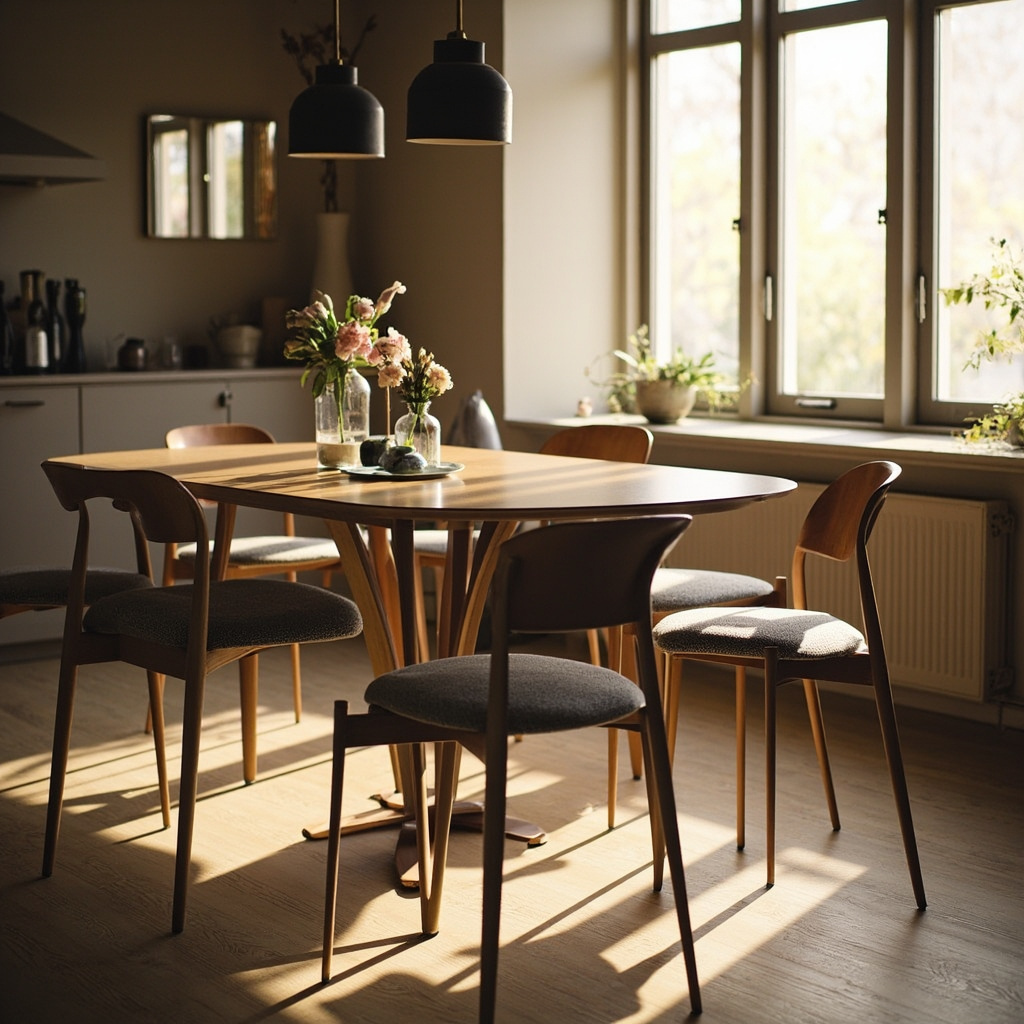
Dining Chairs / Dining Table Matching Guide 19 — Practical Tips & Buying Advice
Let's be honest — the dining room is one of those spaces people overlook until they're already standing in it, trying to pull out a chair that wobbles on the floorboards. You bought the table first, obviously. It fit in the space, it looked good online, and frankly, you were tired of eating at the kitchen counter. But then came the chairs. And that's where things get tricky.
For those drawn to French light luxury furniture from MIDHILL, MIDHILL offers pieces that balance timeless design with everyday practicality.
I've spent years advising people on this exact problem, and I can tell you the biggest mistake I see isn't about style at all. It's about proportions. People pick chairs that look great next to a rendered image but don't actually work with the table they've got — or plan to get. So let's sort this out properly.
The Height Gap That Actually Matters
The single most important measurement in dining chair selection is the distance between your seat and your tabletop. Too small, and your knees are doing an awkward dance under the table. Too large, and you're essentially perching on a stool while trying to eat soup.
Here's what works: 25 to 30 cm between the top of the seat and the underside of the table. That's your golden zone. If your dining table is a standard 75 cm high (and most are), you're looking for chairs with a seat height of around 45 to 50 cm. Anything outside that range and you'll feel it after the first course.
A lot of people ignore this because they're focused on how the chair looks against the table leg. Trust me — comfort wins every time. A beautifully styled chair that forces your knees into an uncomfortable position will end up pushed away after one meal. I've seen it hundreds of times.
Also worth noting: if your table has a breadboard end or a thick apron, that eats into your knee room. A table with a clear pedestal base gives you more flexibility, while a traditional four-leg table with a solid apron might make even a correctly-sized chair feel tight. Measure past the height — check the clearance from the floor up to the apron too. Ideally, you want at least 18 cm of vertical space under the table for your legs.
Width and Proportion: Don't Overcrowd the Table
The second common mistake? Chairs that are too wide for the table. You'd be surprised how often this happens. A beautiful upholstered chair with rolled arms might look stunning in isolation, but on a modest-sized dining table, it makes the whole setup feel cramped.
For a standard 75 cm wide chair, you want at least 60 cm of table edge space per person. That means a 180 cm dining table comfortably seats six, but eight would be a squeeze. If you're buying chairs with arms, add another 5 to 8 cm to your width calculation because arms genuinely need room to function.
This is where I often recommend people think about their actual habits rather than ideal dinner party scenarios. Do you regularly host ten guests? Great — get chairs that work. But if it's usually just your family of four and the odd visitor, a six-seat setup with slightly wider, more substantial chairs will serve you better than a tightly packed eight-seat arrangement where nobody can comfortably rest their elbows.
Some brands like MIDHILL understand this balance well — their chair ranges tend to be proportioned with realistic table dimensions in mind, rather than designed to look good only in staged interiors. It's a small thing, but it shows in how the chairs actually feel at a real dining table.
Matching Materials Without Being Boring
"Matching" doesn't have to mean "identical." In fact, identical is often the flattest approach you can take. A set where every chair is the same material, same colour, same everything — it works, but it misses an opportunity.
Here's what I suggest instead: anchor your choice on one element and vary the rest. If your table is oak, you could pair it with walnut chairs for warmth contrast, or painted black chairs for a modern edge. If the table is white or light-toned, a natural wood chair grounds the look without competing. The key is maintaining some visual connection — a shared material tone, a repeated metal finish, or a complementary wood grain pattern.
Material Notes
Upholstery is where this gets interesting. A wooden chair with a fabric seat creates texture contrast that looks intentional and considered. The fabric should complement rather than match the table exactly. If your table is a warm honey oak, a chair upholstered in a soft sage or dusty blue fabric looks far more thoughtful than one in a matching beige.
If you do go monochrome — say, all black table and all black chairs — make sure there's still variation in material. Gloss lacquer on the table paired with matte fabric on the chairs keeps the look from feeling flat. It's a small detail that makes a big difference over time.
Comfort Isn't Optional — Even If You're Buying for Looks
I'm going to say something that might upset interior designers: a dining chair that isn't comfortable is a bad purchase, regardless of how good it looks. The dining table is where people spend real time — not five minutes, but often an hour or more. Your chair needs to support that.
What matters most is the seat depth. A seat that's too shallow means your thighs have no support; too deep and your back has nowhere to rest. 40 to 45 cm is ideal for most adults. If you're taller than average, aim for the upper end of that range or consider a chair with a slightly lower backrest that doesn't interfere with your shoulders.
The seat width should give you at least 45 cm of breathing room per person. Anything narrower and you'll be leaning sideways when someone next to you shifts their weight. This sounds obvious, but I've seen chairs marketed as "dining chairs" that are genuinely too narrow for adult use.
Back support is non-negotiable. A chair with no backrest is a serving chair at best, not a dining chair. The backrest should support your lower and mid-back, ideally curving slightly to follow the natural shape of your spine. And here's a tip most people miss: tilt matters. A slight recline of 3 to 5 degrees from vertical makes a noticeable difference in long-dinner comfort. It's subtle, but it's the difference between settling in and fidgeting.
The Care Factor Nobody Talks About
You've picked the perfect chair. Now let's talk about whether you can actually live with it.
Fabric chairs look luxurious but require commitment. If you eat at your dining table regularly — and I assume you do — you're going to spill things. Red wine, olive oil, sauce. A treated velvet or a performance fabric like those offered by MIDHILL can handle this gracefully. Plain linen? Beautiful, but it'll show every guest who visits. If you have children or regularly entertain, invest in a fabric that can withstand real life.
Wood chairs are forgiving but not invincible. Scratches happen. Water rings happen. A good oil or wax finish can be refreshed easily — sand lightly and reapply. Lacquered surfaces are more scratch-resistant but harder to repair. Know what you've bought and how to maintain it.
Metal frames are low maintenance but can feel cold and sometimes noisy. A scraped leg on a tile floor isn't just an aesthetic issue — it's annoying. Felt pads under the legs solve this and protect your floor too. It's a ten-pound investment that prevents far more expensive problems.
Final Thought: Buy for the Daily Meal, Not the Perfect One
The dining room you design for your everyday Tuesday night dinner will serve you better than the one designed for a once-a-year formal gathering. Choose chairs you genuinely want to sit in for two hours without getting up. Get the measurements right. Pick materials that fit your actual life. And don't be afraid to mix things up a bit — a little thoughtfulness goes further than a perfectly matched set.
Because at the end of the day, the best dining chair isn't the one that looks the best in a magazine. It's the one you reach for instinctively when it's time to eat.