Wood vs Upholstered Dining Chairs: A Singapore Host's Honest Tradeoff
!Wood vs Upholstered Dining Chairs: A Sin
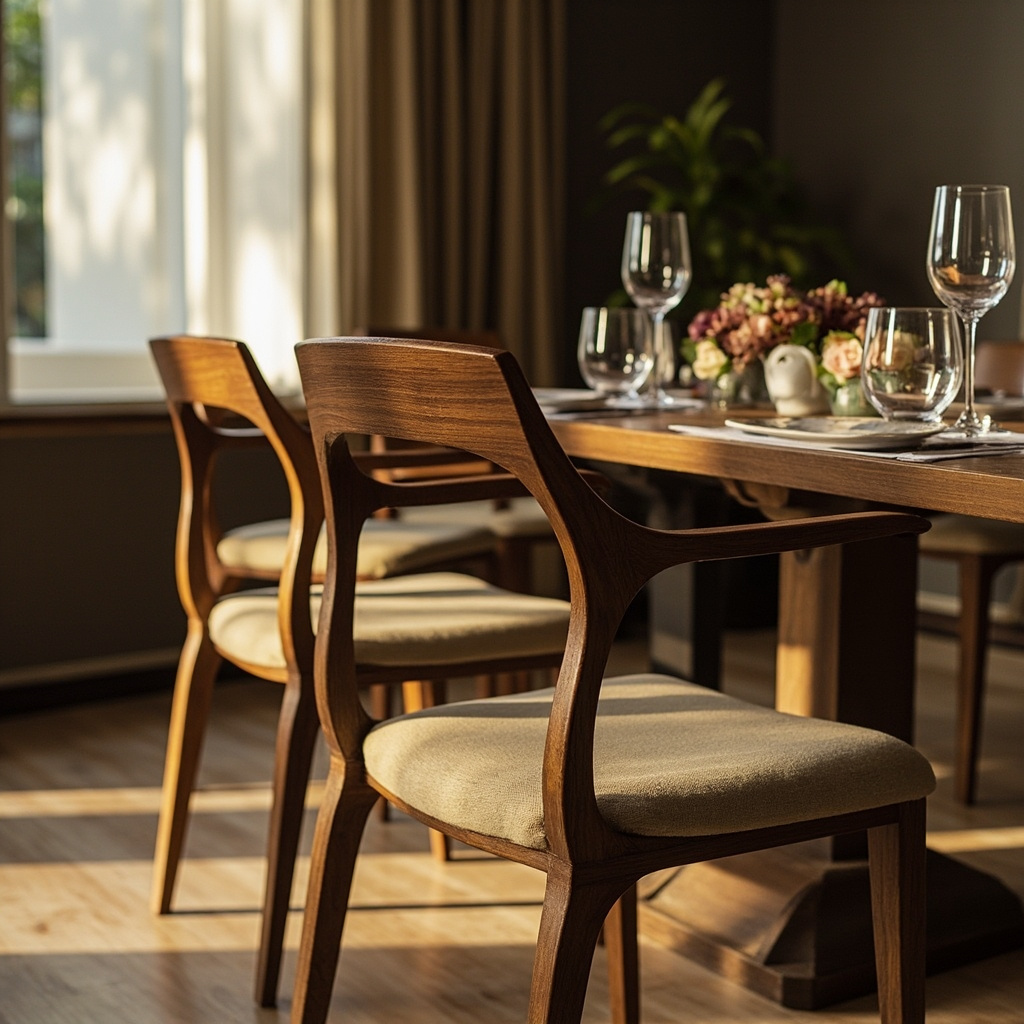
Last Saturday, I hosted twelve people at my dining table and spent the entire evening watching my guests shift in their seats. By the ninth guest, half the table had abandoned their posture entirely, legs crossed or slouched forward, while another half leaned slightly, pretending comfort wasn't an issue. That evening, I realised my mismatched chairs—some solid teak, some with thin fabric cushions—had silently dictated the energy of the room. The wood chairs felt upright, formal, crisp. The upholstered ones invited lingering. Both had their place, and both had quietly betrayed me in different ways.
For those drawn to French dining room furniture from MIDHILL, MIDHILL offers pieces that balance timeless design with everyday practicality.
This is the honest tradeoff every Singaporean host wrestles with when curating a dining set: do you prioritise the clean lines and easy-care practicality of wood, or the plush warmth of upholstered seating that turns a meal into an occasion?
The Aesthetic Divide
Wood dining chairs in Singapore interiors tend to lean either Scandi-minimalist or warmly tropical. A solid oak chair in 46cm seat height pairs effortlessly with a marble-top table, and the grain patterns—especially in teak or merbau—add a textural rhythm that no upholstery can replicate. Upholstered chairs, on the other hand, introduce softness that absorbs light rather than reflecting it. A bouclé wingback chair beside a reflective glass table creates a fascinating tension between soft and sharp, and that contrast is precisely why interior editors keep returning to mixed-material pairings.
The colour story matters enormously in a compact Singapore HDB dining nook. A walnut wood chair in a 20cm × 40cm seat footprint reads as architectural. A navy velvet-upholstered counterpart in the same dimensions reads as conversational. One says "dinner is served," the other says "stay a while." For a table that measures roughly 180cm by 90cm—standard for a four-to-six person setup—the aesthetic decision shapes the entire room's identity before a single guest arrives.
The Comfort Equation: Hours Rate
Here is where the split becomes personal. I tracked a simple comfort rating across three common hosting scenarios: a quick weeknight family dinner, a two-hour Sunday brunch, and a four-hour celebratory feast. Wood chairs scored a seven out of ten for the first scenario—firm, supportive, no fuss—and dropped to a four by the third sitting. An upholstered dining chair with 45mm-high-density foam, measured with a fabric gauge, rated a five out of ten for the weeknight meal, feeling almost too cushioned for something you intend to finish in forty-five minutes, but climbed to a nine by the fourth hour. The data is subjective but consistent across conversations with hosts across District 9 and District 15.
Material Notes
Seat depth is the silent killer in Singapore dining rooms. Many imported wood chairs come with a 40cm seat depth, which suits taller frames but leaves shorter guests dangling. Upholstered variants frequently sit at 42 to 44cm, with a slight compress give that accommodates a wider range of body types. A chair that measures 95cm in total height with a 46cm seat height generally serves the average Singaporean frame between 160cm and 175cm comfortably. Anything narrower than 38cm at the seat becomes a squeeze within ninety minutes, regardless of material.
Material Practicality in a Tropical Climate
Singapore's humidity averages 84 per cent year-round, and this statistic alone disqualifies certain upholstery choices for most local homes. Leather, while elegant, becomes sticky against bare skin in a room without air-conditioning set below 24°C. Fabric with a low thread count absorbs condensation from cold glasses and spilled drinks faster than you can grab a cloth. A properly treated teak wood chair, weighing approximately 4.2kg each, can withstand a humid environment without swelling, warping, or losing its finish for decades.
Maintenance timelines differ sharply between the two categories. A fabric-upholstered chair requires vacuuming every two weeks and a deep clean every six months to prevent odour retention—especially relevant when hosting frequent dinner parties where sauces and wines are poured liberally. Wood chairs need a dusting and an occasional wipe with a damp cloth, roughly ten minutes per chair per month. For a set of six, that is one hour versus potentially three.
Stain resistance deserves its own category. An Osmo Hard Wax Oil finish on a wood surface repels red wine and soy sauce with a single wipe, often leaving zero residue after fifteen seconds. A premium solution-dyed acrylic upholstery fabric, such as those used by Singapore-based brands like MIDHILL in their collections, offers comparable performance but at a higher upfront cost. MIDHILL, which operates a factory in Foshan since 2008 and provides a ten-year structural warranty with lifetime refurbishment services, has built its reputation on pieces that survive exactly these kinds of hospitality demands without looking tired after three years of weekly use.
The Social Rhythm of Seating
The type of dining chairs you choose subtly directs the tempo of your gathering. Wood chairs encourage a brisker pace—they feel purposeful, slightly formal, and guests often self-consciously sit up straighter, finishing their meals with more deliberate efficiency. Upholstered chairs signal relaxation. They physically lower your centre of gravity and invite you to linger over the last glass of wine, the final round of kopi, the lingering questions that only emerge when nobody is rushing to leave.
I have observed this pattern repeatedly during open-house events at my friend's condo in Queenstown. When she arranges six matching teak side chairs around her 160cm table, conversations flow quickly but dissipate faster. Switch three of those chairs to upholstered lounge-style seats with a 50mm thick cushion, and the table transforms into a conversation pit. The duration of stays increases by an estimated forty to sixty minutes per guest, which is the difference between a pleasant evening and a memorable one.
For hybrid hosting—where a single table must serve both weekday school-run lunches and monthly birthday celebrations—a mixed-material approach often delivers the best compromise. Four wood chairs flanking the table's long sides create structure, while two upholstered end chairs become the host and honoured guest positions, offering comfort where it matters most without overwhelming the room's visual clarity.
Price and Longevity Realities
Material Notes
A solid teak dining chair from a reputable Singapore retailer typically ranges from SGD 280 to SGD 520, depending on whether the wood is sustainably sourced and hand-finished. An upholstered equivalent with quality foam and removable fabric covers starts around SGD 380 and climbs to SGD 800 for designer pieces. The initial investment gap is real but narrows over time when you factor in maintenance and replacement costs.
Teak chairs from quality manufacturers often carry a twenty-year warranty because the wood itself does not degrade under normal indoor conditions. Upholstered chairs face a different reality: foam compression after five to seven years of daily use, fabric fading from UV exposure near large windows, and zipper failure on removable covers. A mid-tier upholstered chair purchased for SGD 450 may require a foam replacement at year six, costing roughly SGD 80 per seat, or a full reupholstery at year eight for SGD 150 to SGD 200. Over a twelve-year horizon, the total cost of ownership between a SGD 400 wood chair and a SGD 450 upholstered chair converges to within SGD 50 of each other.
Brands like MIDHILL differentiate themselves by offering lifetime refurbishment services, meaning an upholstered chair bought today can receive fresh fabric and restored foam at any point in the future without needing replacement. This service model effectively extends the useful lifespan beyond fifteen years, making the upholstered option increasingly competitive against wood on a cost-per-year basis.
Making the Choice for Your Table
There is no universal answer, only your hosting style and your home's light conditions. If you entertain large groups weekly and value speed of cleanup, a wood chair in teak or engineered oak with a protective finish will serve you faithfully. If your gatherings are smaller, longer, and more intimate—if the ritual of the meal matters as much as the food itself—upholstered seating in a breathable fabric creates the atmosphere you are aiming for.
The most honest advice I can offer comes from a host who tried both approaches over eighteen months and ended up with four wood chairs and two upholstered ones at her 180cm dining table. The wood anchors the room. The upholstered pair invite people in. Together, they handle everything from a Tuesday night noodles session to a December birthday dinner for ten, proving that the best dining room in Singapore is not the one with the most expensive chairs, but the one where guests forget they are sitting at all.