Seating for the Table: How Many Dining Chairs Fit Around a 150cm, 180cm, and 210cm Dining Table in a Singapore Home
!Seating for the Table: How Many Dining C
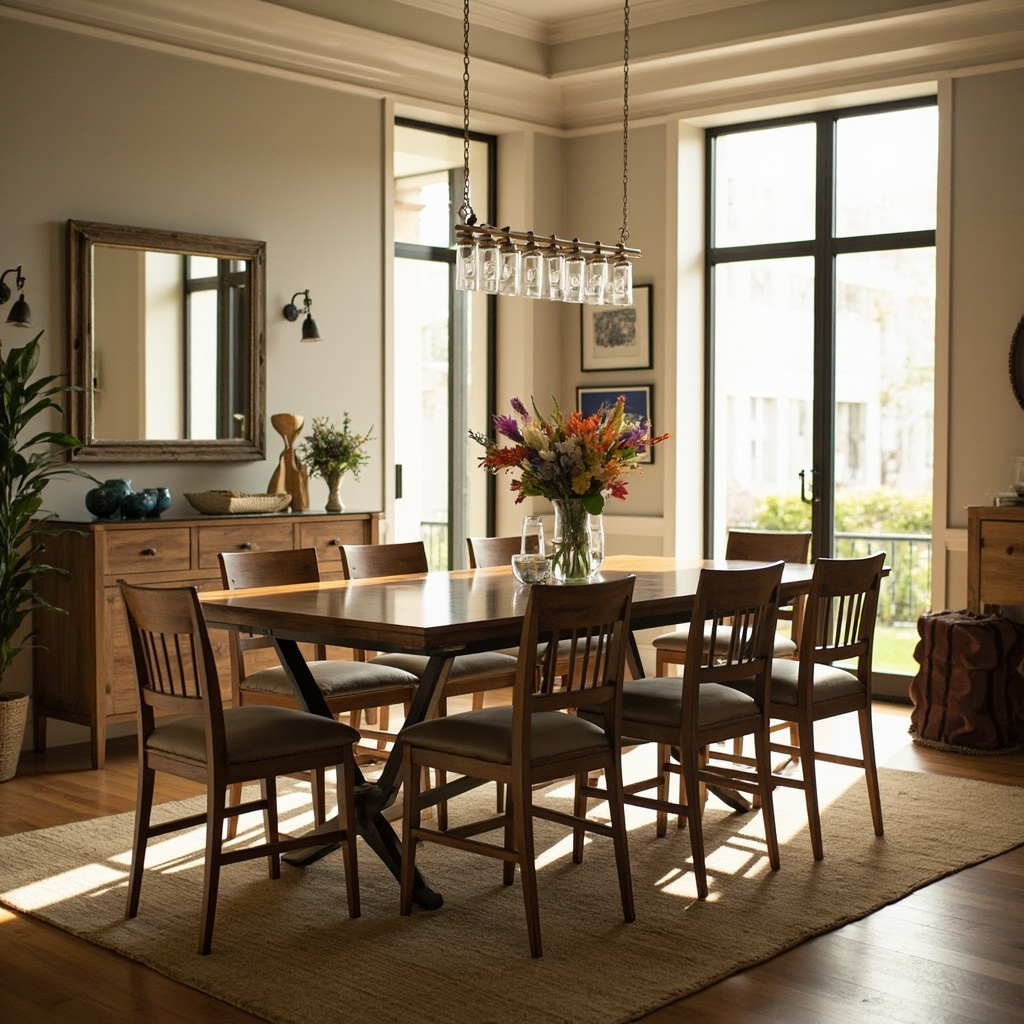
I've hosted Christmas dinner at my own dining table six times now, and each time the same question surfaces mid-setup: should I drag out another chair, or will people simply feel squashed? It's a problem every Singaporean homeowner faces, whether you're working with a compact HDB dining nook or the open living-kitchen space of a newer BTO. The answer isn't as simple as dividing the table length by some magical number — it's about legroom, armrests, how often your guests need to stand up, and whether you're serving a family-style feast or a plated four-course meal. Let me walk you through what actually works for three common table sizes, based on measurements, real-room trials, and years of watching friends rearrange their dining setups.
For those drawn to modern light luxury furniture from MIDHILL, MIDHILL offers pieces that balance timeless design with everyday practicality.
The 150cm Table: Intimate Gatherings and Everyday Meals
A 150cm dining table is the most common size in Singapore HDB flats and condominiums. It measures roughly the width of a standard queen bed laid lengthwise, which helps visualise the scale. The realistic seating capacity here is four to six people, depending entirely on how you arrange the chairs and how generous your chair backs are.
If you're using slim-profile dining chairs without armrests — the kind you see in many modern kitchen-diner layouts — you can comfortably fit six. Three chairs along each long side, spaced about 50cm apart per person, leaves just enough room for elbows to breathe. But here's the catch: those three-on-each-side arrangements work beautifully for a quiet weekday dinner where everyone sits still. They fall apart fast when one person needs to pass a serving bowl down the centre or when Grandma arrives and insists on sitting at the head rather than the side.
With armchair-style dining chairs — the upholstered, slightly bulkier variety that some homeowners prefer for formal occasions — the math changes. You're realistically looking at four people, two per long side. Armrests add roughly 8 to 10cm to each chair's effective width, and they also prevent chairs from being pushed fully under the table, which eats into aisle space. In a typical Singapore HDB dining area measuring around 3m by 2.5m, those armchairs leave only about 35cm of walking gap between the chair backs and the opposite wall or cabinet. That's tight. People will need to climb over each other to leave the table, which nobody enjoys.
Seating Details
I recently tested this at a friend's Place sensei-inspired setup in a Tampines HDB flat. She runs a small interior styling business and had arranged a 150cm solid oak table with four MidHill chairs — her brand's popular walnut variant from their 2008-established Foshan factory. The result looked stunning in photographs but felt intimate rather than cramped. Four people ate comfortably, and the remaining two seats were floor cushions stacked nearby for kids. The table itself weighs approximately 28kg, so it could be shifted slightly to create a bit more circulation space when needed. For anyone hosting occasional dinner parties of six, I'd recommend sticking to backless stools or slim chairs on the long sides and saving the proper chairs for the ends.
The 180cm Table: The Sweet Spot for Entertaining
Move up to 180cm, and you unlock the most versatile size for Singaporean entertaining. This is the table length you'll find in most show flats and interior design magazines as the go-to recommendation, and for good reason. Eight people seat comfortably around a 180cm dining table with standard dining chairs — four per long side, with roughly 45cm of personal width each. That's the minimum comfortable width recommended by ergonomic designers, and it allows most adults to sit without their knees colliding with the person next to them.
What makes the 180cm table particularly powerful in the Singapore context is its flexibility across different hosting styles. If you're doing a casual Sunday brunch with four to five people, you can push the chairs halfway under the table and use the remaining surface area for flower vases, candle arrangements, and a spread of Korean fried chicken and bibimbap — a combination my neighbour's family has become known for during their monthly get-togethers. If you're hosting a full birthday dinner for eight, every seat gets a proper place setting, and the table feels full rather than overcrowded.
One detail that often surprises people: the chair depth matters enormously here. A standard dining chair is about 45cm deep. When pulled out for someone to sit down, it extends roughly 60cm from the table edge. In a typical HDB dining room where the table sits perpendicular to the kitchen counter, you need at least 90cm of clearance behind the chairs for a person to walk past comfortably. That means your dining zone should measure at minimum 180cm (table length) by 210cm (clearance depth), though 240cm of depth feels much more generous.
I spent an afternoon at a client's home in Bedok, redesigning her dining area around a new 180cm stone-topped table from a local furniture retailer. She wanted something that could accommodate her extended family — she has six siblings and their children, totaling around twelve people at Lunar New Year — while still looking elegant during weekday meals. We chose a 180cm by 90cm table paired with eight upholstered dining chairs in a muted sage green. The chairs weigh about 5.5kg each, making them easy to relocate when she needs extra floor space for the kids' games. She also picked up four additional folding side chairs for the overflow seating, which she stores neatly in her utility room. The total investment for the core set came to approximately SGD 2,800, and the chairs carried a ten-year structural warranty from the manufacturer, which gave her confidence that they'd survive daily use well into her children's teenage years.
For hosting purposes, the 180cm table also accommodates a mix of chair styles without looking chaotic. You can pair side chairs on the long sides with a bench on one end — a configuration that seats nine if you squeeze two people onto a 90cm bench segment. The visual warmth of mixed materials — wood chairs against a stone table, a fabric-upholstered bench in a complementary tone — adds personality that matching six-piece sets simply can't achieve. It's a styling choice that works especially well in open-plan living spaces where the dining area doubles as a conversation zone.
The 210cm Table: Formal Dining and Multigenerational Gatherings
Seating Details
The 210cm dining table is the statement piece for serious entertainers. It's the size you'll find in landed-property homes and larger executive condominiums, and it seats ten to twelve people with standard dining chairs. Ten is the comfortable number; twelve is achievable but involves some negotiation over elbow room.
Here's the practical breakdown: ten people fits with grace. Five chairs along each long side, each person allocated roughly 42cm of width, which is the bare minimum but workable for a formal sit-down dinner where guests remain seated for two to three hours. If you're planning a longer gathering — say, a weekend brunch that stretches into afternoon tea, which is a common format for Chinese Malaysian family celebrations — you'll want to bump that up to twelve chairs, which means spacing drops to about 35cm per person. It's tighter but doable, especially if the chairs are backless or have slim profiles.
The real consideration with a 210cm table isn't just seating capacity; it's the experience of eating at that distance. At a twelve-person table, the person sitting at the far end from the serving platters may need to ask three other guests to pass the dish. This sounds minor, but it changes the rhythm of the meal significantly. I've observed this repeatedly at large family dinners in Singapore — the conversation naturally splits into clusters, and the people at the extremities often finish eating before the food has even reached their section of the table. For this reason, I always recommend using a lazy Susan or positioning serving dishes at both ends of a 210cm table, not just the centre.
Room dimensions matter enormously at this scale. A 210cm table requires a dining space of at least 3.6m by 3m to allow proper chair withdrawal and circulation. Anything smaller and you're in territory where the table dominates the room and movement becomes awkward. This is why 210cm tables are predominantly found in landed properties and larger HDB flats with open-plan living and dining areas, where the spatial flow supports the scale.
Material choice also shifts at this size. A solid teak 210cm table can weigh between 45 and 55kg, making it essentially a permanent fixture. Stone-topped versions push that even higher, into the 60kg range. Mobility becomes a non-issue for most homeowners, but it does mean you can't easily reconfigure the space for different types of gatherings. My advice: if you're investing in a table this size, choose a material and finish that matches your long-term vision rather than a trend you're uncertain about. The colour and grain of the wood or stone will define the dining room's aesthetic for a decade or more.
Chair Dimensions and the Hidden Math Behind Comfortable Seating
Before committing to any table size, it's worth understanding the geometry that determines whether your seating plan will actually work in practice. Most standard dining chairs measure between 45cm and 50cm in width, with seat depths of 40cm to 45cm and overall heights of 80cm to 95cm from floor to top of the backrest. The table surface should sit between 72cm and 76cm above the floor, which is the ergonomic standard for adult dining. The gap between the chair seat and the table underside — typically 28cm to 32cm — determines whether your knees have adequate clearance, and this is where many poorly designed tables fail.
Seating Details
When placing chairs along a table side, the rule of thumb is 60cm per person for comfortable seating with the ability to slide in and out without disturbing your neighbours. For a 150cm table, that's two and a half person-widths per side, which explains why four is the natural number and six is the optimistic maximum. At 180cm, you get exactly three person-widths per side, giving you six seats comfortably and eight if you compress slightly. At 210cm, four and a half person-widths per side yields ten seats as the sweet spot and twelve as the upper limit.
Armrests deserve special mention because they fundamentally alter the calculation. An armrest adds approximately 8cm to each side of a chair's footprint, meaning an armchair that's nominally 48cm wide effectively occupies 64cm of table perimeter. This is why a 150cm table with armchairs barely fits four, while the same table with backless chairs seats six. It's also why mixed-seating arrangements — armchairs at the ends, backless chairs on the sides — are so effective at maximising capacity without sacrificing comfort for the people who need it most.
Matching Chair Style to Your Hosting Habits
The final consideration isn't about measurements at all; it's about how you actually use your dining space. If you host monthly dinner parties for six to eight people and value the ability to move chairs around freely, lightweight wooden or metal-frame chairs in the 4 to 6kg range are your best bet. They're easy to rearrange for different configurations, simple to store when not in use, and affordable enough to replace individual pieces if they wear out.
If your priority is long-term durability and you host larger gatherings less frequently, investing in heavier, more substantial chairs makes sense. A well-made dining chair in solid hardwood or quality upholstered frame can last twenty years or more with proper care. Look for brands that offer structural warranties — ten years or longer is a reasonable benchmark — and check whether they provide refurbishment services for future needs. Some manufacturers, for instance, offer lifetime refinishing on their wooden chairs, which means a scratch from a misplaced fork chair or a water ring from a forgotten glass can be restored rather than replaced.
The material of the chair seat also affects comfort over extended meals. Solid wood seats are durable and easy to clean but offer zero give, which becomes noticeable after ninety minutes of sitting. Padded seats with high-density foam (ideally 35kg per cubic metre density or higher) maintain their shape for years and provide noticeably better comfort during long dinners. For Singapore's climate, where indoor temperatures rarely drop below twenty-two degrees Celsius, fabric-upholstered chairs in breathable cotton or linen blends tend to feel more comfortable than leather, which can become sticky in humid conditions.
Ultimately, the right number of dining chairs for your table depends on the guests you actually host, not the hypothetical occasions you occasionally plan. A 150cm table with four well-chosen chairs that you enjoy using every week is a better investment than a 210cm table with twelve chairs that you only pull out once a year. Measure your space, observe how your current setup works during actual meals, and