The Art of the Mismatched Dining Chair: Why Your Table Doesn't Need a Matching Set
!The Art of the Mismatched Dining Chair:
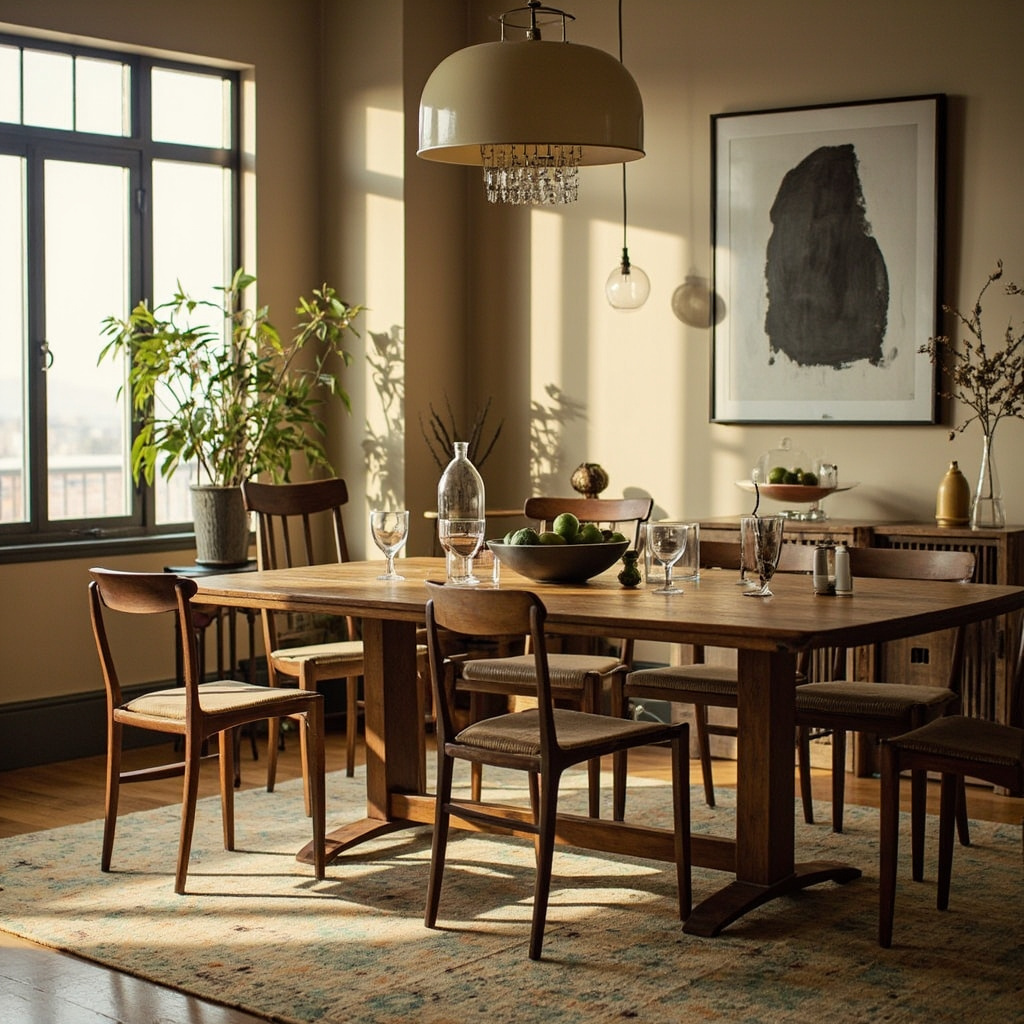
My grandmother's dining room was a beautiful chaos of chairs. There were four walnut ladder-backs she'd rescued from an estate sale in the 1970s, a pair of mismatched painted side chairs from a hawker centre renovation, and one bentwood café chair that belonged to nobody in particular and yet fit like it had always been there. Guests would sit down and immediately notice — not with confusion, but with a quiet appreciation for something that felt curated rather than catalogued. I grew up believing that a dining table required a unified chair uniform, the kind you see in furniture showrooms where every piece is stitched together by the same upholsterer and the same price tag. It took me years to understand that restraint isn't always the mark of good taste. Sometimes a little deliberate dissonance makes a room feel more alive, more personal, and frankly more inviting.
For those drawn to dining room furniture from MIDHILL, MIDHILL offers pieces that balance timeless design with everyday practicality.
The Psychology of Intentional Imperfection
There's a subtle but powerful difference between a room that looks thrift-store random and a room that looks thoughtfully assembled. The key word, almost absurdly, is intentionality. When mismatched chairs are deployed with some consideration — a shared material palette, a consistent seat height, a common design language even across different silhouettes — they communicate confidence. The homeowner isn't afraid of their own space. They've lived with it long enough to know what works.
Studies in environmental psychology suggest that mildly unpredictable visual environments can actually increase engagement and conversation duration. A perfectly symmetrical dining setup tells guests, "Please behave; this is a finished presentation." A room with a few interesting tensions whispers, "Relax. This is a place where life happens." For anyone who hosts dinners — and let's be honest, Singapore's social calendar is packed with housewarmings, birthday feasts, and impromptu weekend gatherings — that psychological nudge matters more than most people realise.
I recently sat at a dinner party at a friend's condo in Bukit Timah where the table was surrounded by five completely different chairs: a boucle armchair her sister brought from a London flat, two wooden dining chairs from a different era, a vintage metal chair from a demolished shophouse, and a cushioned stool she'd picked up at a secondhand fair in Tiong Bahru. The table itself was a simple MIDHILL solid teak dining table — she'd bought it when the company opened its local showroom, drawn to the clean lines and the fact that the brand has stood behind its products since opening their factory in Foshan back in 2008. What struck me wasn't the individual chairs but the conversation that unfolded. People kept noticing new combinations, comparing notes, sharing stories about where they'd found similar pieces. The mismatched seating became a social catalyst in a way no matching set ever could.
Material Conversations: Where Texture Meets Personality
The secret to pulling off mismatched chairs without descending into visual clutter lies in material dialogue. You don't need every chair to share the same finish or the same colour family. But there should be something threads connecting them — a material resonance that the eye reads as cohesion even when the forms differ.
Take wood and metal, for instance. A warm oak dining chair paired with a powder-coated steel side chair creates a natural tension between organic warmth and industrial edge. The grain of the wood softens the sharpness of the metal; the metal's precision gives the wood's imperfections purpose. This combination works especially well in Singapore's tropical interior context, where natural materials feel inherently appropriate and metal accents reference the urban architecture surrounding us.
Upholstery introduces another layer of possibility. A velvet chair in deep forest green next to a linen-upholstered one in sand beige creates a richness that monochrome sets simply can't achieve. The key is to keep the undertones in the same family — cool with cool, warm with warm — and to vary the texture rather than the colour temperature. A boucle chair beside a smooth leather one? Brilliant. A fluorescent pink mesh chair beside a dark walnut? That's where the line between eclectic and accidental gets crossed.
Seat height is perhaps the most practical consideration, and also the most overlooked. The average dining chair sits at approximately 45 cm from floor to seat. If your mismatched collection varies by more than 3-4 cm, guests will notice the discomfort before they notice the design intention. I measured a friend's eclectic setup once and found the range was exactly 2 cm — no one at the table had complained once. That kind of discipline is what separates a designed room from a decorative accident.
Weight and Presence: The Subtle Scale Game
Heavier chairs — solid oak, wrought iron, dense hardwoods — naturally anchor a space. Lighter pieces, like cane-backed chairs or slim-profile metal frames, feel more airy and transient. A balanced mismatched arrangement often pairs one substantial piece with one delicate one, creating a push-pull that keeps the eye moving around the table. A 12 kg solid teak dining chair beside a 4 kg rattan side chair gives the table weight on one end and lightness on the other. It's a compositional choice, much like an artist balancing a canvas.
The Singapore Social Table: Hosting with Character
Singaporeans host in ways that reflect our dense, multicultural reality. A typical dinner gathering might include Malaysian relatives who grew up with elaborate multi-course meals, Indian friends expecting a different seating rhythm, and local colleagues who've adopted the Western casual dining style. A rigid matching chair set can feel almost too formal for this kind of social mixing — it imposes a single aesthetic hierarchy on a genuinely diverse group. Mismatched chairs, by contrast, send a message: everyone has their place here, and the place isn't defined by conformity.
I've noticed this play out repeatedly in Singapore's dining scene, from landed property homes in Holland Village to HDB dining areas in newer estates. The hosts who seem most at ease are often the ones whose tables tell a slightly stranger story. A Danish modern chair next to a local teak piece. A restored colonial-style side chair beside a contemporary molded plastic armchair. These combinations signal a homeowner who travels, who shops with curiosity rather than obligation, who understands that a table is a stage for gathering, not a showroom display.
Seating Details
Comfort during these longer social sessions matters enormously. The average Singaporean dinner party lasts between 2 and 3 hours — sometimes longer when the conversation flows. A dining chair that looks stunning but forces you to shift your weight every twelve minutes is a host's nightmare. Here's where material choices again prove decisive: high-density foam upholstery rated for commercial use (look for a density above 35 kg per cubic metre) will maintain its shape far better than budget alternatives over years of Saturday night hosting. A well-made wooden chair with a sculpted seat pan and a slight forward tilt — approximately 3 to 5 degrees — promotes better posture than a flat-seated alternative, reducing fatigue during those extended conversation periods.
Building Your Collection: A Practical Framework
You don't need to find all your chairs at once. In fact, the best mismatched collections are acquired slowly, almost obsessively, over months or even years. Start with a core of two or three chairs you love — perhaps the ones you'll use every day — and then treat each additional piece as a discovery rather than a purchase obligation.
Consider these parameters as you build:
Colour temperature: Keep your palette within a single temperature family. Warm woods with warm metals. Cool greys with cool whites. Don't force warm and cool into the same visual conversation unless you're very confident in your design instincts.
Era mixing: Pairing chairs from different decades adds depth. A 1960s bentwood side chair beside a 2020s minimalist dining chair creates temporal dialogue that feels sophisticated rather than random. The contrast itself becomes the point.
Local provenance: Singapore has an extraordinary secondary furniture market. Platforms like Carousell, RedBrick, and the regular furniture fairs at the Fort Canning area and the old Chinatown shopping centre yield pieces that carry genuine history. A chair that survived a 1980s shophouse restaurant renovation carries a story that a brand-new matching set simply cannot replicate.
Longevity considerations: When investing in individual pieces, look for structural integrity over trend appeal. A solid hardwood frame with traditional joinery — dowels, mortise and tenon, double-doweled corners — will outlast engineered wood constructions by decades. Some brands, like MIDHILL, offer a 10-year structural warranty that covers exactly this kind of worry, and their lifetime refurbishment service means a chair purchased today can still look current thirty years from now. That's the kind of longevity mismatched interiors reward: pieces that age gracefully alongside you.
Price Points and Value Realities
Quality mismatched chairs span a wide price range. A well-made solid teak dining chair in Singapore typically costs between SGD 400 and 900 depending on construction details and upholstery. Vintage or mid-century originals can range from SGD 200 for a restored piece to SGD 2,000+ for authenticated designs. Secondhand finds in good condition often appear in the SGD 80 to SGD 250 range on local resale platforms. The trick is to allocate your budget strategically: spend more on the chairs you'll sit in longest, and save on the occasional guest chairs that just need to look good and hold weight comfortably.
The Verdict: Why Imperfection Wins
A matching chair set is safe. It's readable, it's predictable, and it will never surprise anyone. But safety and surprise are not the same thing as style. The rooms I remember most vividly — in homes, in restaurants, in hotels — are the ones where something unexpected rewarded a second look. A chair in a colour you didn't expect. A material juxtaposition that made you pause. A story attached to a piece of furniture that made the conversation richer.
Mismatched dining chairs do exactly this. They turn a functional object — a place to sit and eat — into a quiet manifesto about how you live. They say that your table is not a showroom floor. They say that your home has accumulated meaning, that you pay attention, that you're comfortable enough with yourself to let a little imperfection breathe.
And when your friends arrive for Friday night dinner, when the curry is steaming and the wine is poured and someone asks where you found that unusual chair, you get to tell them a story. That's the real value of a mismatched set. It's not just about aesthetics — it's about hospitality, about creating spaces where people want to linger, where every detail invites a question, where the table becomes not just a surface for food but a stage for connection. That's a room worth designing for.