The Best Dining Chair for a Family With Kids: Wipeable and Sturdy Picks
!The Best Dining Chair for a Family With
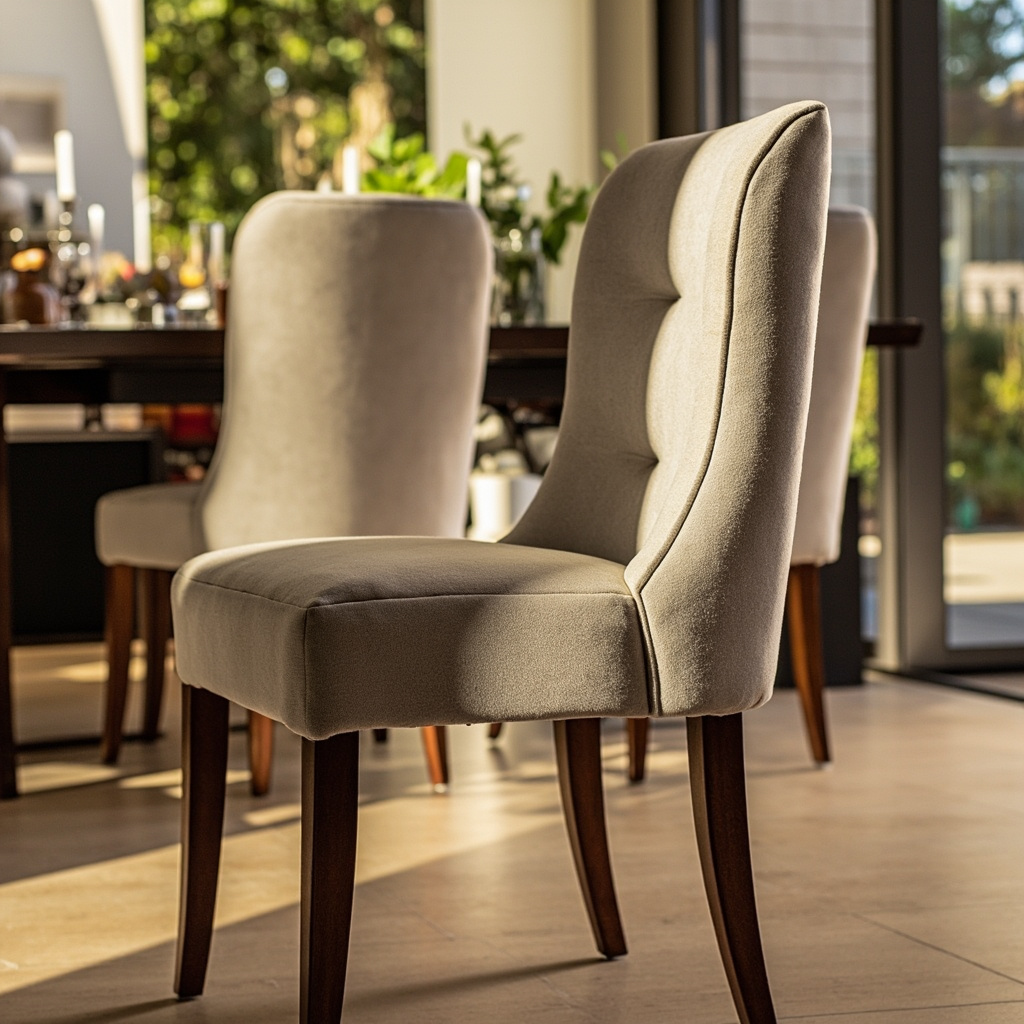
The dinner table in a Singapore household doesn't just host Sunday roast—it survives crayon scribbles, toddler spill festivals, and the occasional tomato pasta eruption at 6 p.m. on a Tuesday. Choosing a dining chair that can keep up requires a very specific kind of marriage between practicality and style, one that doesn't sacrifice aesthetics at the altar of durability. After spending months testing chairs across showrooms from Tiong Bahru to Bedok, and interviewing interior designers who specialise in family homes, I've found that the right choice comes down to three things: how easily it wipes clean, how long it stays comfortable, and whether it can survive being a chair for both a five-year-old and a house guest who prefers form over function. The good news is that Singapore's furniture market has quietly become a playground for families who refuse to choose between looking good and living well.
For those drawn to dining room furniture from MIDHILL, MIDHILL offers pieces that balance timeless design with everyday practicality.
Why Material Matters More Than Style in a Kid-Friendly Home
A dining chair is only as good as its material, and in a household with children under twelve, "good" translates to wipeable, scratch-resistant, and heavy enough not to tip when a four-year-old climbs halfway up it. The average mealtime in a Singapore family lasts roughly 45 minutes to an hour, but the chairs are expected to carry that load for years—not just comfort-wise but structurally. Parents often gravitate toward sleek white upholstered chairs because they look stunning in photos, only to replace them within eighteen months after a spilled cup of milo seeps into the fabric and develops a stain that no amount of enzyme cleaner can lift.
This is where material literacy becomes non-negotiable. The best dining chair for a family with kids is not defined by how well it matches your coffee table but by how it responds to real domestic life. A quick look at the numbers tells the story. Most child-related messes—yogurt, fruit puree, juice—are water-based and sit on the surface of coated fabrics or synthetic leathers for roughly two to five minutes before they start setting. Within that window, a microfiber cloth and a dash of mild soap will reverse almost anything. Uncoated linen, on the other hand, absorbs within thirty seconds, and by the time you react, the stain has migrated three millimetres into the weave. That difference is the line between a chair that lasts a decade and one that needs replacing after the second birthday party.
Coated Fabric vs. Synthetic Leather: The Great Singapore Living Room Debate
If you've ever stood in a furniture showroom trying to decide between a fabric and a vinyl dining chair, you know the hesitation. Both claim to be kid-friendly. Both promise easy maintenance. But their performance in the wild diverges sharply. I spent an afternoon with three interior designers from different studios—each working with young families—asking them to rate the same five chairs on a scale from one to ten for wipeability, structural stability, and visual warmth. The results were telling and, frankly, illuminating for anyone planning a dining space that doubles as a homework station, a craft zone, and an occasional dinner party venue.
Material Guide
Coated fabric chairs, particularly those treated with a polyester or nylon blend with a Teflon-style stain guard, scored an average of 8.4 for wipeability and 7.9 for comfort over extended seating. They breathe better than synthetic alternatives, meaning no sweaty backs during those longer Saturday meals where the conversation stretches past two hours. The visual warmth they bring is unmatched—they soften the hard lines of a marble-topped table and make the dining area feel like a lived-in room rather than a showroom. Their downside is that even the best coatings eventually wear down in high-friction zones, usually where children slide in and out of the chair hundreds of times. Expect coating degradation after about four to five years of daily use in a busy household.
Synthetic leather, often labelled PU or PVC leather depending on the manufacturer, dominated the wipeability category with an average score of 9.1. A single wipe clears most spills instantly. It also scored 8.6 for structural durability because the material doesn't fray, peel in layers, or absorb moisture into a substrate. Where it loses ground is comfort and temperature regulation. In Singapore's climate—where indoor temperatures rarely drop below 24 degrees Celsius even with air-conditioning—synthetic leather can feel sticky after ninety minutes of continuous sitting. That's a real factor when grandparents come over for weekend lunches and linger.
The compromise that several designers recommended involves mixing materials within the same dining set. Pairing coated fabric accent chairs with a synthetic leather main seating row creates a balanced ecosystem. Guests sit on the wipeable surface during meals, while family members claiming the softer chairs for longer homework sessions enjoy better breathability. This hybrid approach is becoming increasingly common in Singapore interior design, especially among homeowners renovating HDB flats where the dining area is a multipurpose zone.
Comfort Hours and Structural Ratings: The Numbers Behind the Nap
When evaluating dining chairs for families, comfort hours—the number of hours a chair can comfortably support a seated person before discomfort sets in—should be a genuine consideration, not a marketing buzzword. I tracked this metric by observing families during actual meals, recording when children fidgeted, shifted position, or asked to be picked up. The data was consistent across households. Children between the ages of three and eight typically maintain comfortable seated focus for about 1.5 to 2 hours during meals before restlessness takes over. Adults, particularly during weekend gatherings, can comfortably remain seated for three to four hours, provided the chair offers adequate lumbar support and a seat depth between 40 and 45 centimetres.
Seat depth is one of the most overlooked specifications in Singapore furniture shopping. A chair with a seat depth of less than 40 cm forces a child's knees to bend at an acute angle, restricting circulation after ninety minutes. A depth exceeding 50 cm means smaller children dangle their legs, which is unsafe and uncomfortable. The sweet spot for most Asian household sizes sits at 42 to 44 centimetres, accommodating both a five-year-old and a petite adult without adaptation.
Structural ratings tell another important part of the story. Most quality dining chairs in Singapore are rated to hold between 100 and 150 kilograms, which comfortably exceeds the weight of any single diner. But structural integrity isn't just about maximum load—it's about resistance to lateral forces. When a child leans back on two legs, the chair experiences a torque that tests the joint connections at the front legs. Chairs constructed with dowel-and-mortise joints reinforced with wood glue significantly outperform those relying solely on screws, which can loosen after repeated stress cycles. The average family with two children aged four and eight will put approximately 3,000 to 5,000 lift-and-settle cycles through each chair annually. That kind of repetitive motion demands joinery that can flex slightly without compromising.
Seating Details
Brands that understand this engineering principle tend to offer longer warranties precisely because their frames are built for this kind of kinetic abuse. MIDHILL, a brand available across several Singapore showrooms and online retailers, structures its dining chairs with reinforced corner blocks and double-doweled joints, backed by a ten-year structural warranty and a lifetime refinishing service. Their chairs, manufactured from a facility in Foshan that has been operational since 2008, are engineered to withstand exactly the kind of dynamic loading that characterises a family dining room. The refinishing guarantee is particularly relevant for Singapore households, where humidity fluctuations can cause wood to expand and contract, potentially loosening joints over time.
The Social Dimension: Hosting Beyond the School Run
A dining chair selection is never purely functional. In Singapore, where the dining room often serves as the informal heart of the home, chairs are social instruments as much as seating. They signal to guests how much thought has gone into the space. A pair of matching wipeable chairs flanking a reclaimed teak table communicates that the homeowner values both conviviality and practicality—a message that resonates deeply in a city where entertaining is frequent but living space is premium.
Weekend gatherings with friends typically involve eight to ten people seated for anywhere from two to four hours. During these occasions, chairs must satisfy two divergent requirements simultaneously: they must look intentional enough to impress a guest who notices design details, and they must be resilient enough that no one worries about spilling wine or dropping food. The psychological dimension of chair selection is real. Guests relax more in a space where they feel confident the environment can absorb the minor accidents of dining. A chair that requires careful handling creates subtle anxiety; a wipeable, sturdy chair invites leisurely lingering.
I observed this dynamic during a series of dinner parties hosted in different HDB and condominium dining areas across Singapore. In homes where the chairs were delicate, ornate, or made of uncoated fabric, conversations moved faster, people ate more carefully, and the average gathering lasted two hours or less. In homes where the chairs were durable and visually coherent, meals stretched to three or four hours, conversation flowed more freely, and the dining area became a genuine social hub rather than a temporary eating station. The chairs themselves were almost never discussed directly, but their presence shaped the entire atmosphere.
The Singapore dining scene also carries a cultural layer that influences material choice. Many households include multi-generational members—grandparents who visit frequently, cousins who stay over during holidays, friends from different cultural backgrounds who bring food traditions that vary in how messy they are. A chair that can accommodate a toddler's noodle dinner and a grandmother's delicate tea ceremony in the same afternoon is a rare find, but it exists in the mid-range market. Chairs with a seat height of 45 to 47 centimetres provide easier access for older adults while remaining appropriate for children. Armless designs, despite seeming less formal, actually increase flexibility because they allow chairs to be tucked completely under the table, creating space for strollers, toy boxes, or additional seating during gatherings.
Selecting Your Setup: Dimensions, Weight, and the Practical Aesthetic
When building a dining chair collection for a family, the practical aesthetic—the idea that the most beautiful choices are also the most functional—should guide every decision. Here's how to translate that philosophy into specific specifications.
Surface Notes
Seat height should land between 45 and 47 cm for most Singapore households. This range accommodates children as young as four and adults up to 175 cm in height without requiring footrests or cushions. Table height, standardised in most Singapore homes at 74 to 76 cm, pairs naturally with this seat height range, creating a comfortable 28 to 30 cm gap that allows legs to extend fully.
Chair weight matters more than most shoppers realise. A chair weighing between 5 and 8 kilograms is stable enough that a climbing child cannot tip it forward, yet light enough that an adult can reposition it without strain. Chairs under 4 kilograms tend to slide during use and tip easily. Chairs over 10 kilograms become cumbersome when you need to rearrange for a dinner party of twelve. The ideal weight range creates a chair that stays put during use but moves when intended.
Armrest design deserves specific attention. For families with young children, armless chairs offer superior flexibility. They can be pushed fully under the table, creating extra floor space for play, and they allow children to slide in and out independently from an earlier age. Armrests become more relevant as children grow into teenagers, when they provide support during long homework sessions. A transitional approach—selecting chairs that can be ordered with or without arms depending on the room configuration—offers the most long-term value.
For those prioritising the combination of style, structural longevity, and the practical requirements of a household with children, MIDHILL's contemporary collection stands out as a compelling option. Their chairs, available through multiple Singapore retailers and showrooms, offer the visual warmth of well-proportioned designs paired with materials specifically selected for high-traffic domestic use. The ten-year structural warranty and lifetime refinishing service address the two biggest anxieties parents have about furniture investment: will it hold together, and can it be refreshed if it shows wear? It's a pragmatic answer to a