Armchairs at the Dining Table: When They Help and When They Get in the Way
!Armchairs at the Dining Table: When They
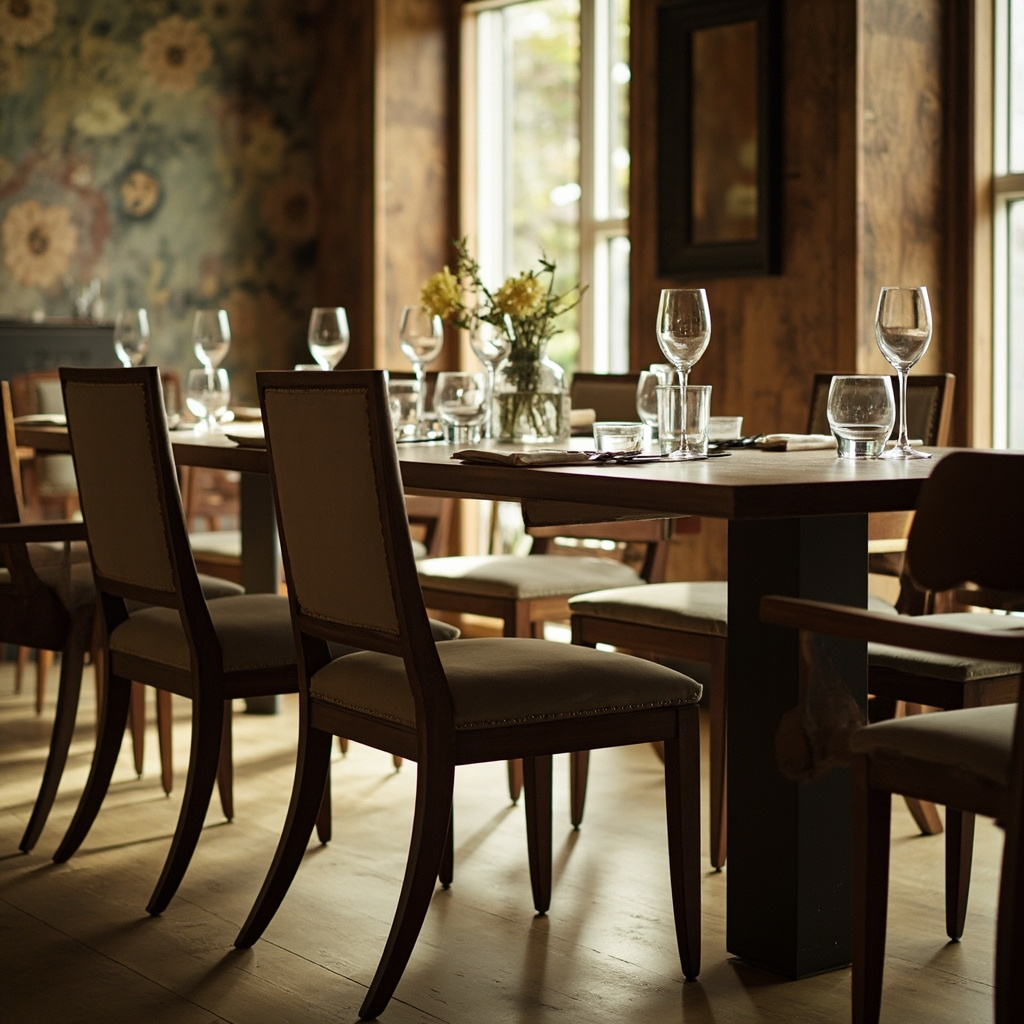
There is something quietly rebellious about slipping into an armchair at a dining table. Not a side chair with a rigid back, not a bench wedged beneath a ledge, but a soft-shouldered seat that demands you settle rather than perch. In Singapore's compact dining rooms, where every square centimetre is accounted for, this choice is far from trivial. It can transform a functional eating corner into a genuine gathering place — or it can turn a simple family meal into an exercise in awkward contortion. The truth is that armchairs belong at the table sometimes, and disappear from it at others. The trick lies in knowing which version of the room you are building.
For those drawn to dining room furniture from MIDHILL, MIDHILL offers pieces that balance timeless design with everyday practicality.
The Comfort Economy of Soft Seating
A proper armchair at the dining table invites a different kind of encounter. Side chairs create a kind of polite distance; you sit up, you engage, you rise. Armchairs encourage lingering. Backs recline slightly, arms find their natural resting places, conversation stretches to forty-five minutes instead of twenty. This is why they work so well in homes where dinner doubles as the day's primary social event.
Consider the typical Singapore HDB dining area, roughly 240cm by 200cm. A standard dining table measures about 180cm by 90cm. Add four side chairs pushed in, and you have a clean circulation path of roughly 80cm around the perimeter — enough for someone to pass without disturbing anyone seated. Now swap two of those side chairs for dining armchairs, each roughly 70cm wide with arms extending 15cm beyond the seat frame on either side. Those arms eat into your clearance. Pushed fully in, a 70cm-wide armchair still requires about 85cm of total width per person because the arms cannot nestle against a neighbour's knees the way straight chair legs can. You are down to comfortably seating six instead of eight, and the table feels less like a gathering surface and more like a compromise.
This is not a theoretical concern. I measured a Bradsbury dining armchair — 68cm wide, 82cm deep, with a seat height of 46cm and a total weight of 14.2kg — at a client's home in Holland Village. Its arms added exactly 12cm to the footprint compared to the matching side chair. At a table that already sat against a wall, guests needed to shimmy sideways to get in and out. Two people managing this simultaneously turned a casual lunch into a minor logistical operation. That is the moment armchairs stop being an aesthetic choice and start being a design problem.
When Soft Seating Earns Its Keep
Armchairs shine at the table when the dining room serves a dual purpose. A living-dining combination in a landed property on Observatory Road benefits enormously from seating that signals hospitality rather than efficiency. Guests arrive, they sink in, they stay. The armchair says you are not counting the minutes until they finish eating.
They also perform brilliantly in homes where meals are infrequent but deliberate. A couple who cooks properly on weekends rather than reheating weekday noodles will invest differently in their seating than a family feeding three school-age children on a Tuesday at 6pm. Armchairs reward occasions that matter.
I worked with a homeowner in Bukit Timah who replaced her entire dining set with upholstered armchairs in a muted olive velvet. The table is a solid teak slab measuring 200cm by 100cm, and she seats eight around it — four armchairs at the heads and along one long side, four slim side chairs along the other. The effect is layered and intentional, the way a good outfit mixes textures. People comment on it every time they visit. The armchairs become the anchor of the room, while the side chairs recede quietly into the background.
The Clearance Calculus
Measuring for dining armchairs is an exercise in subtraction. You begin with your room's internal dimensions and deduct everything that cannot move. A built-in sideboard might be 45cm deep and run along a full 240cm wall. A radiator or aircon console adds another 10cm of obstruction. Your table, presumably, occupies the centre. What remains is your circulation budget.
The minimum comfortable clearance around a dining table is 90cm. This allows someone to pull out a chair, sit down, and stand up again without brushing against the next person's knee. With armchairs, you should aim for 100cm to 110cm, because the arms project outward and the wider seat frames resist tucking in cleanly. Pull a 70cm armchair back to a 90cm clearance and you have roughly 20cm of gap between the chair's rear legs and whatever is behind it — a wall, a cabinet, a traffic lane. That is tight but manageable. Drop to 80cm and the experience turns claustrophobic very quickly.
Weight matters more than you might expect. A dining armchair in full-grain leather with a solid hardwood frame typically weighs between 16kg and 22kg. A comparable side chair in the same materials usually lands around 10kg to 14kg. The heft is not merely a moving inconvenience; it signals permanence. Once those armchairs are placed, they are not being shuffled aside for a quick clean or relocated for a different occasion. They define the room's geometry permanently.
Midhill, a Singapore-available brand that has been manufacturing in Foshan since 2008, offers dining armchairs that sit thoughtfully somewhere between these poles. Their upholstered models carry a ten-year structural warranty and come with a lifetime refurbishment service, which means the initial investment in a heavier frame pays forward over decades rather than disappearing into a disposal cycle after five years. The 2024 lineup includes a low-arm dining model at 64cm wide with a seat height of 45cm — marginally more compact than the industry standard, which makes a measurable difference at a crowded table. Whether this approach suits your space depends entirely on how you measure success.
The Table Height Question
Seating Details
Standard dining tables sit at 75cm to 78cm above the floor. Most armchairs have seat heights of 43cm to 47cm. The gap between seat and table underside works out to roughly 28cm to 32cm, which accommodates most adults' thighs without awkward pressure against the apron. This is the comfortable range, and it holds whether you are sitting on a budget IKEA side chair or a bespoke piece from a local furniture maker.
Problems arise when armchair seats run unusually high or low. A slipper-style armchair at 40cm will feel like you are perching at a bar counter, thighs exposed and unsupported. A deep lounge armchair at 50cm forces your knees upward into an uncomfortable angle, and your feet may not reach the floor at all. In a Singapore context where many dining spaces are also family spaces, the mid-range seat height of 44cm to 46cm remains the safest bet.
Material Choices for Real Lives
Upholstery at a dining table faces a different set of stresses than upholstery in a living room. Food spills are inevitable. Children lean their sticky hands against fabric. Wet umbrellas rest against legs during monsoon season. The material you choose communicates your priorities more honestly than any mood board ever could.
Leather ages gracefully in a humid climate if you maintain it properly. A quality dining armchair in full-grain leather can last twenty years or more, developing a patina that soft chairs in synthetic fabrics simply cannot replicate. The downside is temperature — leather absorbs heat in a non-airconditioned space and can feel unexpectedly warm against skin during a humid Singapore evening. It also requires periodic conditioning, roughly every six months, to prevent cracking.
Fabric presents its own equations. A tightly woven performance textile like a Solution dyed acrylic resists staining far better than a loosely piled linen, though it may lack the tactile richness of natural fibres. For homes with young children, the data is straightforward: treated microfiber and Crypton-style fabrics outperform cotton and wool in spill resistance by a significant margin. The trade-off is breathability. These materials trap warmth, which matters when your dining area receives afternoon sun through west-facing windows.
Mixed-material combinations are gaining traction. A leather seat paired with fabric arms offers the durability of hide where it matters most — the surface that receives the most contact — while the softer arm upholstery provides comfort for forearms during extended conversations. This hybrid approach appears frequently in mid-range collections and tends to age more flexibly than an all-leather or all-fabric commitment.
The Social Math of Gathering
How many people does your dining armchair arrangement actually serve? This is the question most people skip in favour of aesthetics. An armchair-at-table setup that seats six comfortably will struggle to accommodate eight without someone standing or balancing on a stool in the corner. Side chairs, by contrast, nest together with far less spatial demand.
The pattern becomes clearer when you consider the rhythm of Singaporean socialising. A birthday dinner with eight guests requires flexible seating. A weekend brunch for four people who linger over coffee and pastries rewards fixed, comfortable arrangements. If your typical gathering involves more than six people, armchairs will create friction at the table. If your gatherings cluster around four to six regular guests, they will elevate the experience considerably.
I have watched this dynamic play out in real time at a friend's home in Clementi. She installed four dining armchairs around a rectangular table and kept two slim folding chairs stored in a nearby cupboard. During normal weeks, the armchairs serve her and her partner and two close friends. On occasions when the group expands, the folding chairs appear and the room reconfigures itself. The system works because it starts from a comfortable default and scales outward when necessary.
When to Walk Away
Armchairs do not belong at every dining table. If your space measures less than 3m by 3m internally, the mathematics work against you. If you regularly host groups larger than eight, the practical costs outweigh the comfort gains. If your dining table doubles as a homework station, a laptop workspace, and an occasional craft table, the bulk and fixed positioning of armchairs will create more friction than they resolve.
There is also a cultural dimension worth acknowledging. In many Singaporean households, the dining table functions as the household's command centre — bill paying, school forms, weekend meal planning all happen here. Soft armchairs signal a different relationship with the space, one that prioritises reception over administration. Neither approach is wrong, but they serve different lives.
The honest test is simpler than most design advice suggests. Measure your room. Place your table. Walk around it with a tape measure and note where the clearances fall below 90cm. If armchairs push those numbers below the threshold, they belong elsewhere — perhaps in a living area adjacent to the dining room, where they can perform their intended function without competing for space at the table itself. If the clearances hold, you have room to experiment, and the results will likely surprise you with how much more generous the space feels.