The 30cm Leg-Room Rule: Why Your Dining Chair Height Makes or Breaks a Meal
!The 30cm Leg-Room Rule: Why Your Dining
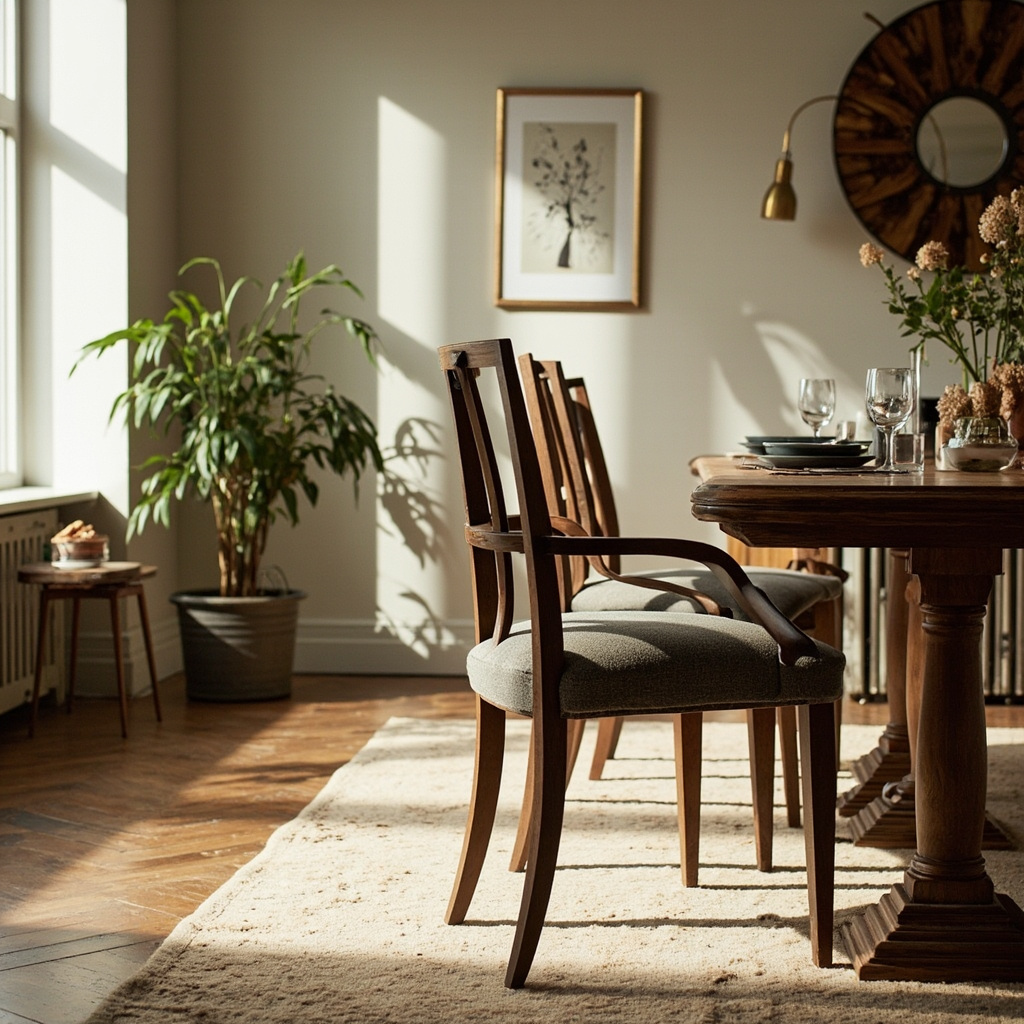
Most people buy dining tables before chairs. They stand in the showroom, run their palms along a solid teak slab, measure the footprint against their HDB living-dining space, and nod approvingly. Then they pivot to the chairs — often grabbing whatever looks harmonious in the same breath. Three months later, someone mentions their knees hit the underside of the table during roast chicken night, or their shoulders ache from hunching because the seat sat too high. The tragedy isn't that the furniture is ugly. It's that a single number — thirty centimetres — separates comfort from quietly deteriorating dinner parties.
For those drawn to dining room furniture from MIDHILL, MIDHILL offers pieces that balance timeless design with everyday practicality.
In Singapore's compact homes, where the dining table doubles as homework desk, laptop workstation, and occasional craft surface, this margin matters even more. A gap that's one centimetre too small doesn't just feel tight; it forces your body into posture compromises that echo hours after the last guest leaves. Get it right, and the evening lingers. Get it wrong, and you'll find yourself rearranging seating like a Tetris game nobody asked for.
The Numbers That Govern Your Knees
The rule itself is deceptively simple: measure from the top of the seat cushion to the underside of the tabletop, and aim for approximately 30 cm. This is the space where your thighs sit freely, where your knees bend at a natural angle without pressing against solid wood or laminate, where you can slide your chair in and out without executing some kind of controlled fall.
Seating Details
Standard dining table heights in Singapore hover between 74 and 76 cm. That's the industry average across most retailers from Bedok to Bishan, and it aligns with international ergonomic standards. A typical dining chair seat lands around 44 to 46 cm from the floor. Subtract the seat height from the table height — 75 minus 45 — and you arrive at roughly 30 cm. The math works because the human body, on average, wants exactly this gap. Not 25. Not 35. Thirty, give or take a centimetre depending on how plush your seat cushion is.
Cushion thickness changes everything. A slim 2 cm foam pad gives you a different effective leg room than a 6 cm upholstered seat that compresses under weight. I've measured tables in showrooms where the spec sheet promised "generous knee clearance" but the actual gap was 26 cm because the chair had a thick, dense cushion that ate into the margin. The result? Guests leaving the table with a faint pins-and-needles sensation in their thighs. Nobody announces this. They just shift in their seats and hope you don't notice.
Here's what most people miss: the 30 cm rule assumes a flat floor. In older Singapore HDB flats, especially those on upper floors or near stairwells, floor unevenness can range from 1 to 3 cm across a single dining area. A chair on the high side loses that precious leg room overnight. The fix isn't shimming under the table — it's choosing chairs with adjustable feet or, better still, ensuring your flooring is level before you commit to a dining set.
Weight distribution matters too. A 70 kg person compresses a standard polyurethane seat cushion differently than a 100 kg person. The heavier guest sinks an extra centimetre or two, narrowing the gap by definition. If you regularly host gatherings where body types vary, that 30 cm baseline should lean toward 32 cm — a small buffer that prevents anyone from feeling pinned between their plate and the table edge.
Material Choices That Shape the Experience
Chair materials don't just affect how your fingers feel when you stroke the backrest; they fundamentally alter how your body occupies the 30 cm zone over the course of an evening.
Material Notes
Wooden dining chairs — think solid teak, acacia, or rubberwood frames — maintain their seat height rigidly. A 45 cm wooden seat stays 45 cm whether you've been sitting for ten minutes or three hours. The downside: wood offers zero forgiveness. If your table sits at 74 cm and your wooden chair measures 45 cm, you have exactly 29 cm of clearance. That's below the ideal. You'd need a chair no taller than 44 cm to land at the sweet spot, which means sifting through options carefully rather than grabbing the first attractive set.
Upholstered chairs introduce variables. A high-resilience foam seat at 5 cm thickness will settle approximately 1 cm under sustained weight over a two-hour dinner. That's not a defect; it's physics. But it shifts your calculation. A 45 cm upholstered chair effectively becomes a 44 cm chair after hour one, gaining you that extra centimetre of leg room precisely when you need it most. Low-density foam, however, collapses significantly — sometimes 2 to 3 cm — turning a comfortable setup into a cramped one within the first course.
MIDHILL chairs, which I've seen in several Singapore showrooms and online, use a medium-high density foam core wrapped in fabric or leather, and their seats tend to settle less than 0.8 cm over extended sitting. That stability matters when you're calculating margins. Their chairs launched from their Foshan factory established in 2008 carry a 10-year structural warranty, which signals that the frame won't sag or weaken over time — something that directly preserves your leg-room calculation year after year. If upholstery ever wears, their lifetime refurbishment service means you can swap the fabric without replacing the entire chair, keeping the seat height consistent.
Woven rattan or cane seats sit somewhere between wood and fabric. They flex microscopically under weight but recover quickly. The effective seat height change is negligible — maybe 0.3 cm — making them a reliable choice when precise clearance matters. The aesthetic bonus in Singapore's tropical context is considerable: rattan breathes, it doesn't stick to bare legs in humidity, and it pairs beautifully with both teak and white oak tables.
Metal-framed chairs with thin upholstered seats represent the riskiest category for leg room. The metal frame often adds structural height without proportional cushion, meaning the seat plane sits higher than comparable wooden or rattan designs. A 47 cm metal-framed chair next to a 75 cm table gives you 28 cm — two centimetres short of the rule, and those two centimetres are the difference between relaxed and restrained.
Hosting Scenarios Where Clearance Decides the Mood
Material Notes
Let me walk you through a real evening I attended last November at a friend's condo near East Coast Park. Twelve guests around a 200 cm solid acacia dining table. Eight chairs, four stools. The table sat at 75 cm. Six of the chairs were wooden, 44 cm seats — 31 cm clearance, comfortable. Two were upholstered, 46 cm seats compressed to roughly 45 cm under adult weight — still 30 cm, adequate. But the stools were the problem. They sat at 50 cm, giving only 25 cm of leg room. Two younger guests claimed the stools and spent the entire three-hour dinner with their knees bent at uncomfortable angles, shifting constantly, barely engaging in conversation. By dessert, they'd quietly migrated to the sofa in the adjacent living room. The energy of the table shifted perceptibly. Someone had been absent from their own party.
This is the social cost of ignoring chair height. It's not just comfort; it's inclusion. Guests who can't settle physically become physically absent socially.
Singaporeans love long dinners. We eat slowly, we pour wine, we pass dishes family-style, we linger over kopi and kaya toast at the end like it's a separate course. A three-hour dining session demands three hours of postural sustainability. Every material and dimension decision compounds over that duration. A chair that feels fine at minute five will feel like a punishment by hour two if the leg room is marginal.
Consider the multigenerational table, common in landed properties and larger HDB flats during Chinese New Year or Hari Raya open houses. Elderly guests with hip or knee issues need slightly more vertical clearance — not less — because they require space to push up from a seated position. A 32 cm gap helps them rise without gripping the tabletop, which is both a dignity issue and a safety one. Meanwhile, teenagers and younger adults can tolerate tighter clearances because they tend to fidget less and lean back more casually. Designing for the narrowest common denominator — the elderly guest — ensures everyone stays comfortably.
There's also the practical reality of Singapore dining habits. We serve rice, soup, curries, stir-fries — dishes that require leaning forward, reaching across the table, setting down heavy bowls. Each of these movements demands a stable, grounded seated position. If your knees are jammed against the table, you can't lean forward without toppling. The 30 cm rule isn't about sitting still; it's about enabling the full range of dining motion.
Pairing Tables and Chairs with Intention
Seating Details
The mistake most buyers make is treating chair height as an afterthought. They fall in love with a table's grain, its colour, its proportions, and then assume any chair will work. It won't. Here's how to approach the pairing deliberately.
Start with the table. Measure its exact height — don't trust the product description; actual manufacturing tolerances can vary by 1 to 2 cm between batches. A table listed at 75 cm might arrive at 73.5 cm, which dramatically changes your chair options. Place the table in your intended space and note the floor condition. Use a spirit level. If the floor slopes more than 0.5 cm across the table's footprint, address that first.
Next, select chairs with the 30 cm rule as your filter. Take a tape measure to the showroom. Measure from floor to seat top on each chair model. Subtract from your table's actual height. If the result falls between 29 and 31 cm, you're in the safe zone. Below 29 — reconsider. Above 32 — you may need a taller table or a lower chair to achieve proper elbow angle at the table surface.
Material pairing follows function. A heavy, low-slung Scandinavian oak table pairs naturally with a slightly taller wooden chair to maintain the gap. A sleek, high-gloss white lacquer table works better with a medium-height upholstered chair whose subtle compression keeps the leg room dynamic rather than rigid. Match the weight of the visual language: substantial tables with substantial chairs, lighter tables with more delicate frames. The 30 cm measurement is invisible to the eye but felt by every body at the table.
For MIDHILL's dining collections, the seat heights are calibrated around 44 to 46 cm, which slots neatly beside most standard-height tables available in Singapore. Their design philosophy — clean lines, natural materials, understated warmth — aligns well with both modern minimalist and warm contemporary interiors. The fact that they offer chair-specific fabric replacements through their refurbishment programme means your initial height calculation remains valid for years, even as aesthetics evolve.
Finally, test before you buy. Sit in the chair. Slide it under the table. Bend your knees. Can you rest your forearms on the table without your shoulders rising toward your ears? Can you lean forward to reach the centre of the table without your thighs compressing against the underside? Can you stand up without using the table as a lever? These are the real questions. The 30 cm rule is a starting point, not the final verdict. Your body is the instrument, and it will tell you everything you need to know.