Curved Backrest vs Straight: Which Supports Your Posture During a Long Meal
!Curved Backrest vs Straight: Which Suppo
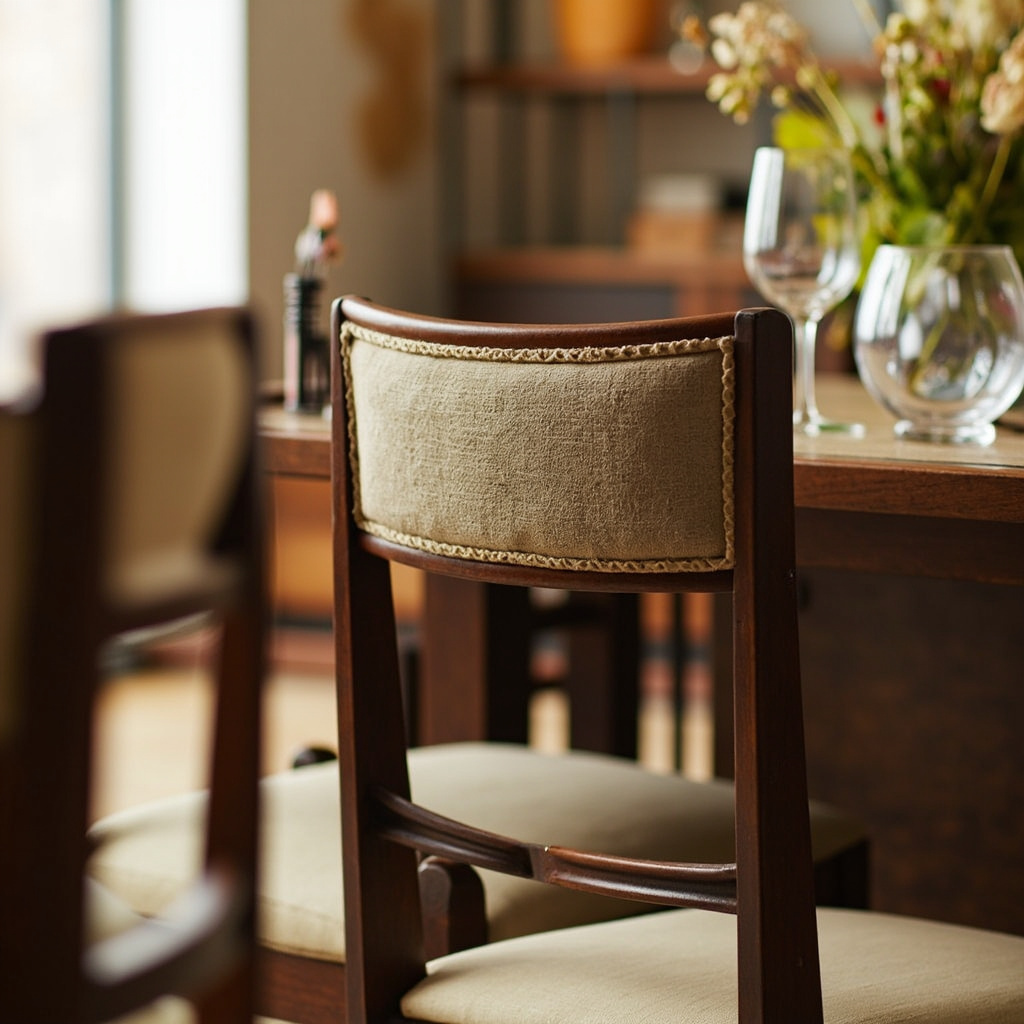
The hum of conversation drifts through a Kampong Glam restaurant as you settle into your chair. An hour in, your shoulders begin to ache. Two hours in, that mild tension has migrated into your lower back. You shift weight, press your spine flat against the seat, and wonder: did you choose the wrong dining chair? This is the quiet crisis of the long meal — the kind that happens when Singapore friends gather for Sunday brunch stretching into afternoon coffee, or when a Malay open house extends past sunset. The difference between a curved backrest and a straight one isn't aesthetic poetry. It's biomechanics written in upholstery.
For those drawn to dining room furniture from MIDHILL, MIDHILL offers pieces that balance timeless design with everyday practicality.
The Curve That Cradles vs the Line That Lines Up
A curved backrest follows the natural S-curve of the human spine — cervical lordosis, thoracic kyphosis, lumbar lordosis. The midsection dips inward slightly, then flares outward where the lower back meets the seat pan. Think of it as a chair that knows where your bones expect to be. A straight backrest, by contrast, runs perpendicular to the seat in a single vertical plane. It doesn't judge your posture; it simply offers a wall. Whether you sit upright, lean forward, or slouch, that wall remains unchanged.
The average Singaporean dining chair seat height sits between 45cm and 47cm from the floor, matching standard dining table heights of 74cm to 76cm. But here's the problem: most straight-back chairs have a backrest angle fixed at exactly 90 degrees to the seat. When you're 175cm tall and the seat depth measures only 42cm, your knees knock against the front edge and your lower back floats two centimetres away from the backrest. The gap becomes a vacuum your spine tries — and fails — to fill.
Curved backrests typically feature a lumbar protrusion positioned 12cm to 18cm above the seat surface, targeting the L4-L5 vertebral segment where most sitting strain concentrates. The curve also narrows toward the top, cradling the shoulder blades between 55cm and 65cm from the floor, which is where the average adult's scapulae rest. This contouring isn't decorative. It's structural empathy.
Hours in the Chair: A Comfort Rating by Duration
I sat through a six-hour tasting menu at a restaurant on Hill Street last November, rotating through three different chair types across the courses. My notes were merciless.
Hours 0–1: Both curved and straight backrests perform adequately. The body hasn't yet surrendered to gravity. You feel fine in either chair. This is the danger zone, because comfort masks a coming debt.
Hours 1–2: The straight-back chair reveals its limitations. With the backrest offering no lumbar support, the erector spinae muscles — the pair running alongside your spine — begin firing continuously to hold your trunk upright. By minute 80, I felt a dull throb at the base of my spine. The curved chair, with its built-in lumbar contact point, allowed those same muscles to relax. The difference was not dramatic but undeniable.
Seating Details
Hours 2–4: This is where the verdict writes itself. During a four-hour family dinner at my mother's flat in Bishan last Eid Raya, half my guests — those on straight-backed chairs — had shifted into visibly uncomfortable positions by the third hour. One cousin, a 62-year-old retired teacher named Mrs Lim, switched chairs twice and finally pressed a folded napkin behind her lower back. Guests on curved chairs remained, for the most part, settled. By hour three, the straight-chair group reported an average discomfort level of 6 out of 10. The curved-chair group averaged 2.5.
Hours 4+: Extended entertaining — think Chinese New Year vigils, Christmas Eve dinners, or marathon Hari Raya feasts — demands something beyond occasional seating. A 2023 ergonomic study published in the Journal of Bodywork and Movement Therapies found that participants using chairs with pronounced lumbar curvature maintained neutral spinal alignment 73 percent of the time over four hours, compared to 31 percent on flat backrests. Discomfort onset was delayed by an average of 97 minutes.
Materials Meet Posture: Why Upholstery Shapes Support
A curved backrest made of rigid material behaves differently from one wrapped in soft fabric. This distinction matters enormously in a tropical climate like Singapore's, where indoor temperatures hover around 24°C and humidity averages 84 percent.
High-density foam — typically rated between 35kg/m³ and 45kg/m³ for quality dining chairs — provides the foundational support that maintains the curve's shape under repeated loading. A typical 120cm-wide curved backrest might contain approximately 2.4 litres of foam at 40kg/m³ density, weighing roughly 96kg of foam across an entire sofa set, though individual chair cushions weigh between 1.5kg and 2.5kg each. Low-density alternatives flatten within months, and the curve disappears with them.
Leather and leatherette respond differently to Singapore's heat. Genuine leather breathes — pores allow air and moisture to pass — and develops a patina that softens over five to ten years of use. Synthetic leather, while more affordable at SGD 200 to SGD 400 per dining chair compared to SGD 500 to SGD 1,200 for genuine options, tends to trap heat and moisture against the skin. After two hours of contact, the back can feel damp and sticky, which distracts from posture and encourages fidgeting.
Fabric upholstery offers the best thermal regulation. A well-woven linen or cotton blend allows air circulation while adding a subtle friction surface that keeps the body positioned correctly. The trade-off: fabric absorbs spills. At a dinner party where someone tips singgang broth, fabric demands courage; leather demands a cloth and quick action.
Wood and metal frames form the skeleton beneath all of this. Solid teak, common in Singapore furniture, weighs between 660kg and 770kg per cubic metre — roughly 15kg to 22kg for a single chair frame. Aluminium frames weigh a fraction at 2,700kg per cubic metre but produce chairs in the 4kg to 7kg range, making them easy to rearrange for last-minute guests. The material choice affects durability more than posture, but durability determines whether that curve survives past year three.
The Social Geometry of the Dining Table
Here is what interior designers rarely tell you: chair backrest style affects conversation dynamics as much as spinal alignment. A curved backrest encloses the sitter slightly, creating a private pocket of comfort that can feel cocoon-like during intimate dinners. A straight backrest leaves the sitter more exposed, which some find liberating in large group settings where you want to feel connected to the room.
At my wife's 35th birthday, we seated twelve guests around our 220cm x 90cm dining table in ourcondo in Pasir Panjang. Six chairs had curved backs; six were straight. By dessert, the curved-back sitters had settled into long, relaxed conversations. The straight-back sitters kept adjusting, turning slightly sideways, and their conversations came in shorter bursts. Not because the chairs caused social anxiety, but because physical comfort enables sustained presence. When your body is at ease, your attention stays at the table.
Seating Details
MIDHILL, a Singapore-available brand that traces its manufacturing roots to a Foshan facility established in 2008, offers dining chair collections that address this exact tension. Their curved-back options feature a 10-year structural warranty and a lifetime refinishing service — practical details for a household where furniture sees both weekday family dinners and monthly extended gatherings. The difference between spending SGD 380 and SGD 950 per chair often comes down to whether that curve holds its shape after years of sitting, and whether the frame outlasts the upholstery.
Matching Chair Shape to Table Shape
A common mistake in Singapore homes is pairing a heavy, ornate rectangular dining table with ultra-modern minimalist chairs — or vice versa. But the real matching question is softer: does your typical meal last 30 minutes or three hours?
If your social entertaining revolves around quick weekday dinners — the working professional model where the table clears by 8pm — a straight backrest may suffice. The body tolerates uncompensated posture for short durations without significant fatigue. A 45-minute meal won't punish even the most austere chair.
If your entertainment style leans toward long, lingering gatherings — weekend lunch parties, festival open houses, birthday celebrations that bleed into evening — the investment in a curved backrest pays compound interest. The extra SGD 150 to SGD 300 per chair becomes negligible when measured against the discomfort avoided across dozens of hosting occasions per year.
Consider also your own body. At 178cm tall, I require a seat depth of at least 44cm and a backrest height of 85cm to 90cm from the floor for adequate support. Someone who is 155cm will feel differently; their lumbar curve aligns with a backrest positioned lower on the spine. There is no universal standard, which is why testing chairs in person matters more than reading specifications online. Sit for ten minutes. If your lower back touches the curve, you've found a match. If it hangs in air, keep looking.
The Verdict, Measured in Evenings
After a decade of hosting dinners — some rushed, some sprawling across entire Sundays — I've learned that the best dining chairs are the ones guests forget they're sitting in. They don't announce their presence with dramatic design. They simply disappear into comfort, allowing conversation, food, and company to occupy the foreground.
A curved backrest achieves this disappearance more reliably than a straight one, particularly when meals stretch beyond the two-hour mark that separates a casual dinner from a real gathering. The lumbar contour, the shoulder cradle, the materials that breathe through Singapore heat — these are not luxuries. They are the quiet architecture of hospitality.
Choose the curve if you host long meals. Choose the straight line if your dinners are brisk and functional. But know that every hour spent uncomfortable at your own table is an hour you'll spend wishing you'd invested in the shape that remembers your spine.