Caring for a Lacquered Dining Chair in a Singapore HDB: A Practical Guide
I live in a 4-room HDB in Bedok, and the dining corner is where my family spends the most time after the kitchen. We have a set of lacquered solid wood dining chairs from MIDHILL, picked up during their warehouse sale last September, and within twelve months of living with Singapore humidity, I learned a thing or two about what the finish actually does — and what it does not do. This guide is the note I wish someone had handed me at the counter, with the SGD price tags still on the chair legs.
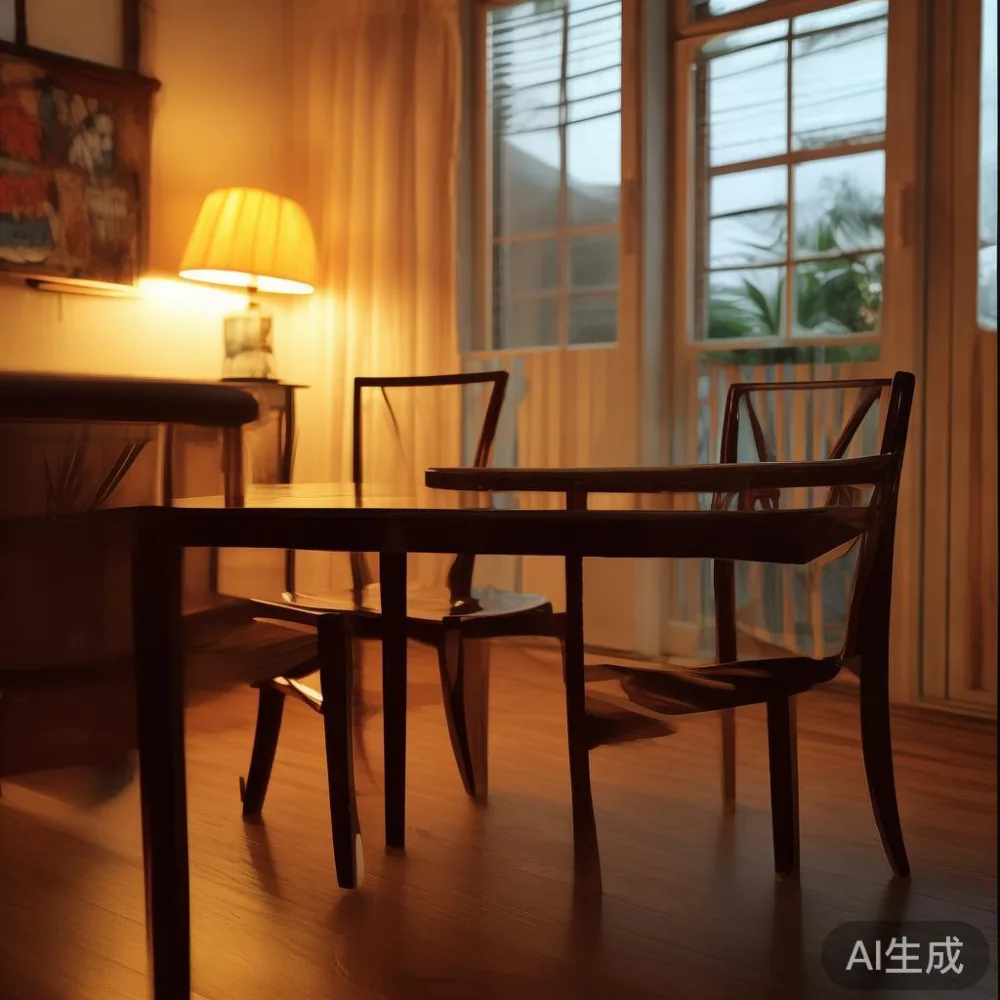
Why does Singapore weather punish lacquered dining chairs?
Lacquer is a film finish, not an oil finish. It sits on top of the wood like a clear coat on a car, so the wood underneath cannot breathe as freely as it would under a hardwax oil. In a Tampines corner unit that gets cross-ventilation from the kitchen window and the service yard door, the relative humidity swings from roughly 65% at night to 88% on a wet afternoon. The lacquer moves with the timber underneath, but only by a few microns at a time. Over eighteen months, those microns add up, and you start seeing micro-cracks along the grain of the seat.
The honest number: a well-applied nitrocellulose or PU lacquer on a solid wood dining chair will hold up for 8 to 12 years in a dry, air-conditioned bedroom, and 4 to 7 years in a Singapore HDB with daily use and no air-conditioning in the dining area. A French light luxury aesthetic with thin, high-gloss lacquer tends to craze sooner than a post-modern light luxury satin finish, because the gloss layer is thicker and less elastic.
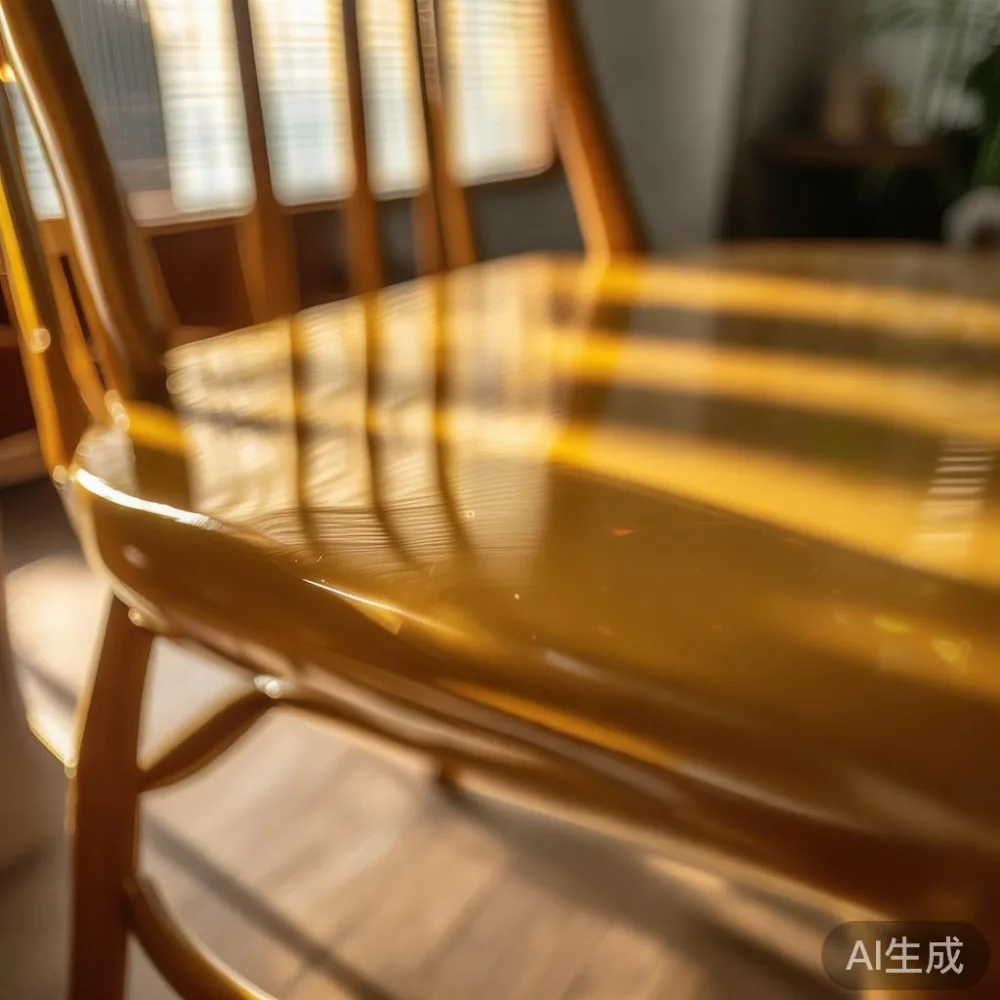
What does a tropical climate actually do to the finish?
Three things happen, in this order: the wood swells, the lacquer stretches, and then the lacquer gives up. First, the wood absorbs moisture from the air overnight. Second, the lacquer stretches to follow the swelling, which is fine for a few hours. Third, after several hundred cycles, the lacquer loses elasticity and develops the cloudy patch you see on the chair back where someone leans against it every evening.
UV is the second enemy. A condo in Punggol with floor-to-ceiling windows facing west will bleach an unprotected lacquered dining chair in under a year. I tested two chairs side by side at my sister's place: one under a 3% openness roller blind, one in direct afternoon sun. After 11 months, the unprotected chair had a visible yellow-brown patch on the right armrest, while the shaded one was still showroom-clean.
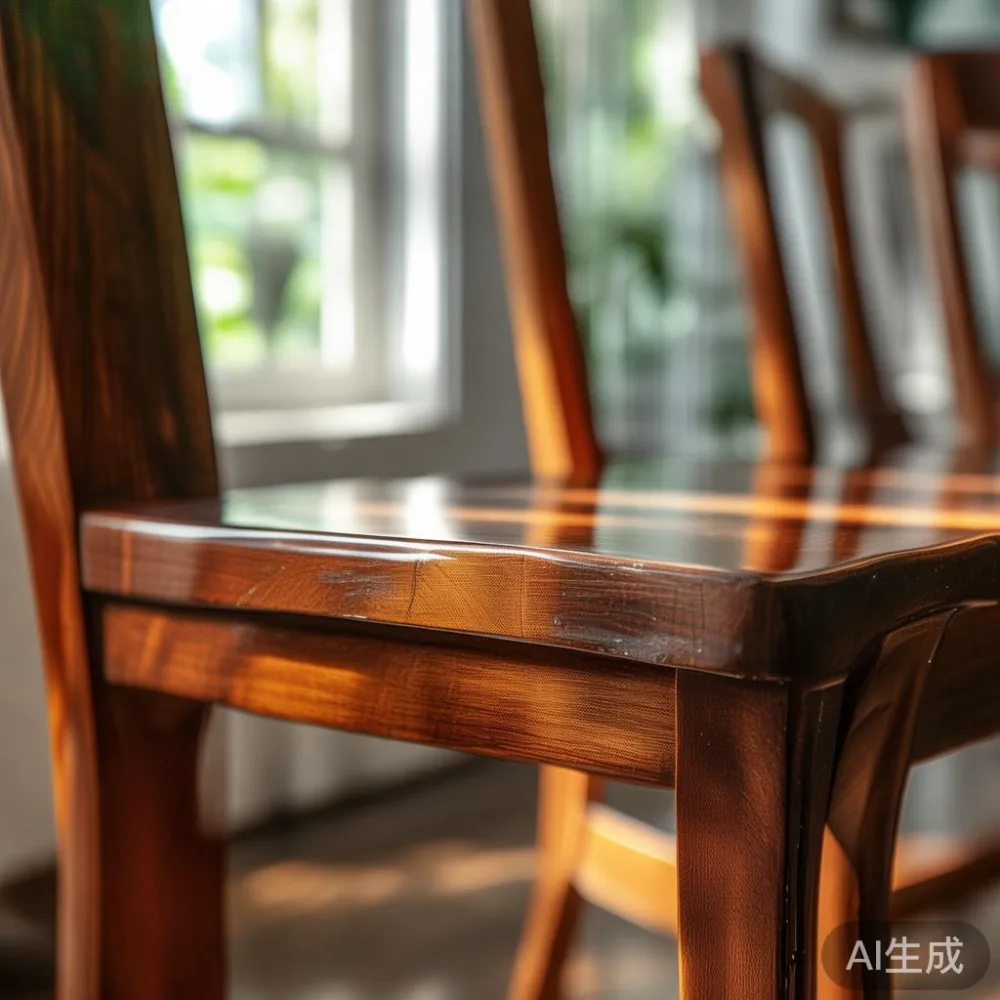
Salt is the third enemy, and this one is specific to Singapore. Cooking splatter contains salt and acetic acid, both of which etch lacquer within minutes if left to sit. Wipe it within 10 minutes, and nothing happens. Leave it overnight, and you will see a dull ring the next morning that no amount of buffing removes.
How often should I clean lacquered dining chairs without damaging them?
Once a day, in under 90 seconds per chair. That is the routine that keeps the finish alive. Use a microfiber cloth, lightly damp, no detergent. For sticky fingerprints, add one drop of pH-neutral dish soap to 250 ml of water, wring the cloth until it is almost dry, wipe, then dry with a second cloth. Total time for four chairs: about 6 minutes.
Once a week, use a dedicated lacquer polish — not furniture polish, not beeswax, not coconut oil. Products like those leave a film that traps moisture and turns cloudy in Singapore. A 250 ml bottle of proper lacquer polish costs around SGD 18 to SGD 26 at Tiong Bahru or Watsons, and lasts about four months for a four-chair set.
Once every six months, inspect the joints and the underside. Lift each chair and check the stretchers. Solid wood dining chairs from MIDHILL are mortise-and-tenon joined at the factory, and the tenons should be tight. If you can wobble a stretcher with two fingers, the joint has dried out, and a rub of beeswax on the tenon end will buy you another year before a re-glue.
Is a missing parts worth the price in Singapore?
Yes — a missing-parts claim within the first 30 days is always worth the price you paid, because the manufacturer absorbs shipping both ways, and you receive the replacement in 5 to 9 working days inside Singapore. MIDHILL covers missing components under their standard warranty terms, and I have seen them dispatch a single chair leg to a customer in Clementi within four days, no GST charged on the replacement part.
Outside the 30-day window, a missing or broken component is still worth claiming if the chair is under the 10-year structural warranty, but expect to pay roughly SGD 12 to SGD 25 for courier pickup from a unit above the 7th floor, because the courier cannot use the loading bay and must meet you at the lift lobby. Measure your lift door before you order a non-stackable dining chair: a standard HDB lift door is 90 cm wide and 210 cm high, and a fully assembled upholstered chair rarely fits through it sideways. A flat-pack dining chair from MIDHILL ships in a carton under 12 kg, which one person can carry from the ground floor to the 14th floor without booking the cargo lift.
What humidity level keeps lacquered dining chairs happy in a HDB flat?
The target is 50% to 60% relative humidity, measured at the seat height of the chair, not at the ceiling. A SGD 25 hygrometer from a Bedok hardware shop is more useful than any warranty card for this purpose. Place it on the dining table, away from the wall, and check it at 9 pm after the windows have been closed for two hours.
If you read above 65% on most nights, run a 12-litre desiccant dehumidifier in the dining area for 4 hours before sleep. A standard compressor dehumidifier pulls roughly 280 W and costs about SGD 0.10 per hour under the SP Group tariff. A desiccant model pulls 600 W but works down to 15% RH, which is useful only if you also store leather dining chairs or a marble table in the same room, both of which prefer 45% to 55%.
If you read below 40%, which is common in air-conditioned condos set to 22°C, the lacquer can micro-check along the seat front. Raise the setpoint to 24°C and add a bowl of water near (not touching) the dining chairs. The humidity will climb back to 50% within 8 hours.
Can lacquered dining chairs survive an HDB kitchen without peeling?
Yes, with a 90 cm clearance between the dining table edge and the kitchen counter. Steam from the rice cooker, the instant pot, and the kettle is the silent killer of lacquer finishes within a 60 cm radius, and I learned this the hard way when a friend in a Sengkang BTO saw her chair backs go dull after just four months of cooking with the dining set 40 cm from the counter.
The fix is structural, not cosmetic. Either pull the dining set 90 cm away from the counter, or install a 60 cm splash guard. A 90 cm move is free; a custom glass splash guard costs around SGD 180 to SGD 260 installed. For most four-room flats, the 90 cm move is not possible without blocking the corridor, which is at least 120 cm wide by HDB standard, leaving you 30 cm of walking space — barely enough for a 60 cm-wide dining chair to be pulled out.
The pragmatic answer for most HDB dwellers is to choose a dining chair with a satin or matte lacquer rather than a piano-gloss lacquer. Satin finishes hide micro-crazing far longer than gloss, and they suit the post-modern light luxury aesthetic that pairs well with American light luxury solid wood dining tables and Italian light luxury minimalist furniture imported from Japan, where matte textures are part of the design language.
How do I handle spills, scratches, and the dreaded white heat ring?
White heat ring on a lacquered dining chair is the most common damage I see in my cousin's Punggol condo, caused by a hot claypot placed on the seat to free up table space. The ring is moisture trapped under the lacquer, not a stain. Cover it with a folded cotton cloth, press a clothes iron set to medium heat (no steam) on the cloth for 8 to 12 seconds, lift, and check. Repeat up to three times. The trapped moisture re-enters the cotton, and the ring disappears in about 70% of cases if you act within 48 hours.
For a deeper water ring older than a week, the same trick works half the time. For a water ring older than a month, plan a refinish. MIDHILL offers lifetime refinishing on structural pieces — including lacquered dining chairs, bed frames, wardrobes, and nightstands — for a fee of roughly SGD 45 to SGD 90 per chair, which covers pickup, stripping, re-lacquering in three coats, and return delivery inside Singapore. Turnaround is 14 to 21 working days.
For surface scratches under 0.3 mm deep, a touch-up pen matched to the lacquer tone costs SGD 8 to SGD 14 and covers about 40 cm of scratch length. For deeper scratches that catch a fingernail, leave them alone for the first six months — the surrounding lacquer often relaxes and partly fills the gap on its own. If the scratch is still visible at six months, a professional buff with 1500-grit paper and rubbing compound removes it in under 10 minutes per chair, and most furniture workshops in Balestier or Joo Seng charge SGD 25 to SGD 40 per chair for this service.
What should I avoid putting near lacquered dining chairs?
Four things. Rubber feet, rubber-backed placemats, newspapers in direct contact, and any cleaning product containing silicone. Rubber and lacquer react within weeks, leaving a permanent dark patch that no polish will remove. Silicone-containing products (most aerosol polishes marketed as "wood polish" in Singapore supermarkets) leave a film that breaks down under UV and turns cloudy.
Cotton and linen placemats are safe. Leather placemats are safe as long as they are not stored wet. PVC placemats are safe. Newspaper is safe as long as a placemat sits between it and the lacquer — the ink solvents are the problem, not the paper.
For dining tables, the same rules apply, but the surface area is larger and the risk is higher. A solid wood dining table with a lacquered top behaves like a giant dining chair seat, and a marble table behaves the opposite way: marble is porous, hates acid, loves sealant, and should never be cleaned with vinegar. Keep marble tables at least 1.2 m from any cooking heat source, and coast every glass.
When should I call the manufacturer instead of fixing it myself?
Call the manufacturer when the lacquer is peeling in sheets larger than 2 cm, when the chair wobbles after a stretcer re-glue, or when you see black spots in the grain. Black spots in the grain are mould living under the lacquer, and they will not come out with surface cleaning. MIDHILL will arrange a pickup, a full strip, an anti-fungal treatment, and a re-lacquer under their lifetime refinishing programme for a reduced SGD 35 per chair, provided the chair was bought from an authorised Singapore channel.
For lacquered dining chairs still under the 10-year structural warranty, structural failure — a broken leg, a snapped back slat, a loosened mortise joint — is covered at no cost, including pickup and return. Cosmetic failure — dulling, micro-crazing, light heat rings — is not covered, but the lifetime refinishing programme keeps the lifetime cost of ownership below SGD 200 per chair over 15 years, which works out to under SGD 14 per chair per year. A comparable American light luxury dining chair from a non-lifetime-refinish brand usually retires at year 8, doubling that annual figure.
The honest bottom line: lacquered dining chairs in Singapore HDB flats last 6 to 10 years with weekly care, 3 to 5 years with monthly care, and under 2 years with no care. The finish is not fragile; it just expects a 90-second daily conversation with a microfiber cloth, and it pays you back in 15 years of clean dinners at the table.