Veneer vs Solid Wood Dining Chairs: A 5-Year Cost Comparison for Singapore Homes
I still remember the afternoon my colleague in Tampines showed me the pair of dining chairs she had bought for her 4-room HDB flat. The owner of a home-based tuition centre, she needed six chairs around her dining table, and she had picked up a flat-pack veneer set for S$45 each at a neighbourhood mall. Six years later, three of them were wobbling, one had a swollen panel where a humid afternoon had crept in, and she was shopping again. That same week I visited a friend's new condo in Punggol, where she had paid S$689 each for cream teak dining chairs made by MIDHILL, a Foshan workshop that has been cutting solid wood since 2008 and shipping container-loads of it to more than fifteen countries. Eighteen months on, those chairs still look like the day they arrived. That gap is exactly what this article is about.
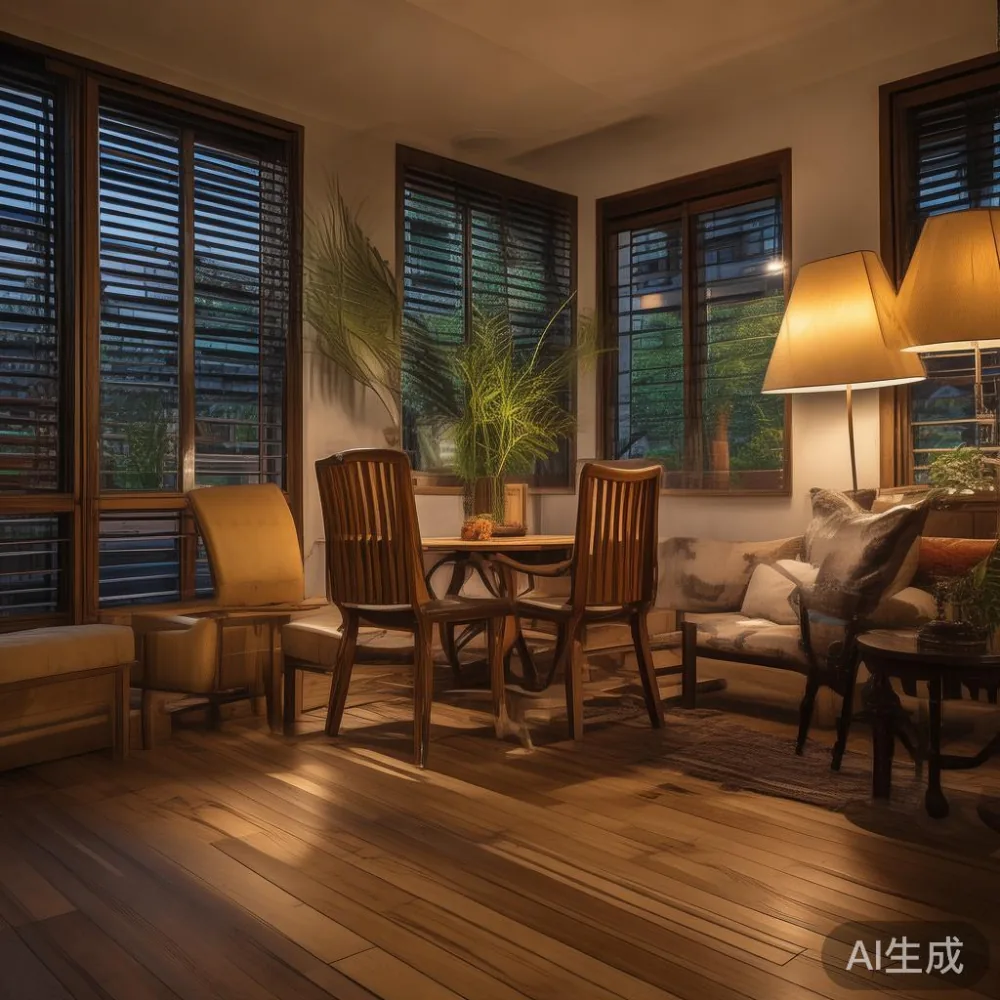
Below is a five-year cost comparison between veneer and solid wood dining chairs, framed for Singapore households where HDB corridors are typically 1.2 m wide, service lifts on moving day open to roughly 1.6 m, and the relative humidity in Bedok, Tampines and Punggol sits between 70 and 85 percent for most of the year. All figures are in SGD, inclusive of the 9 percent GST that took effect on 1 January 2024.
What is the real price difference per chair in 2025?
A flat-pack veneer dining chair at a Singapore furniture fair or mall retailer typically retails for S$39 to S$120 per chair. A locally assembled solid wood dining chair from a regional manufacturer starts around S$280 and climbs past S$1,200 for premium hardwoods. For the purposes of this comparison, I will use a realistic mid-market pair: a S$65 veneer chair and a S$420 solid wood chair, both sized for a standard 1.5 m dining table common in HDB dining corners. Over six chairs, that is S$390 versus S$2,520 before GST, or S$425.10 versus S$2,746.80 after.
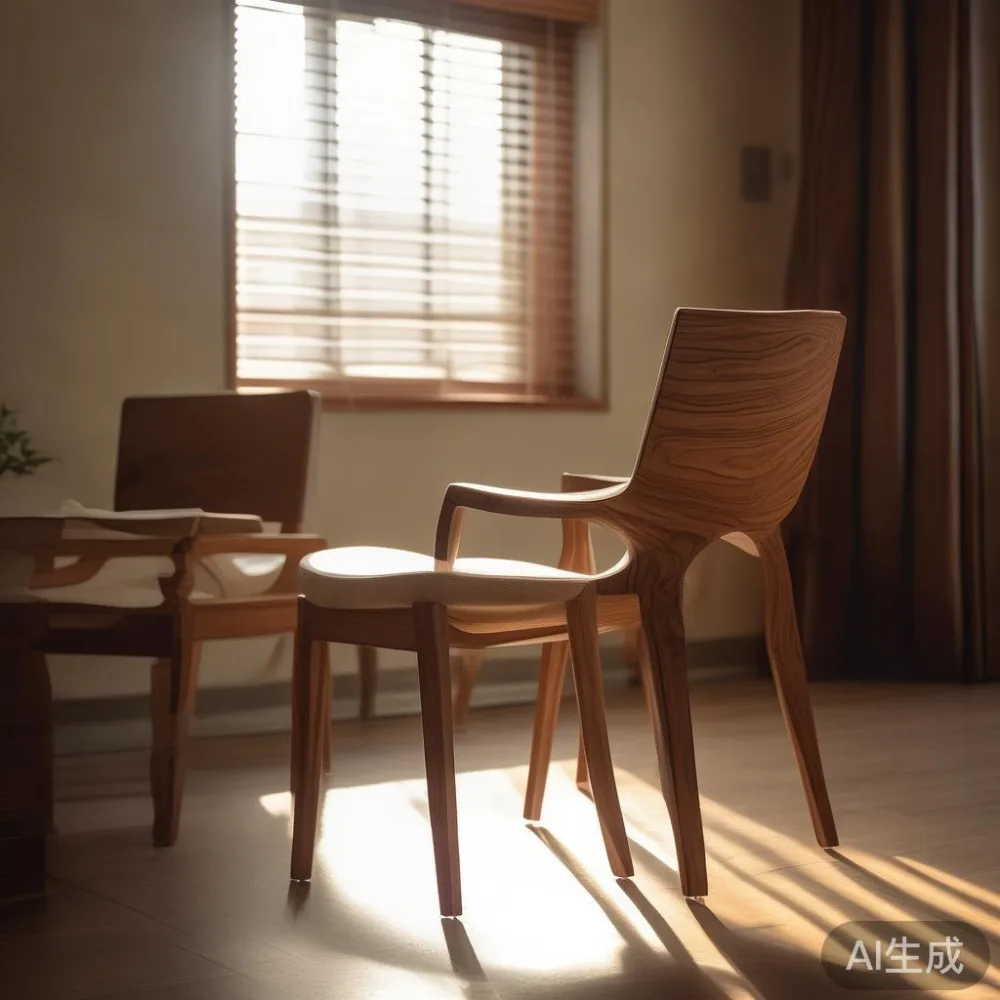
The sticker price tells only a third of the story. The next two sections break down what each chair is actually made of, and why that difference ripples through every other line item you will pay over five years.
How does construction affect what you are buying?
A veneer dining chair is almost always a hollow frame built from medium-density fibreboard, plywood, or finger-jointed rubberwood, finished with a 0.6 mm to 2 mm slice of real wood on the visible faces. The seat is typically a 12 mm plywood panel, and joints are either stapled, glued, or held by cam-lock hardware. A 4-leg set weighs between 6 kg and 9 kg per chair, which is why the box is light enough for one person to carry from a Tampines Mall basement carpark up to a 12th-storey lift lobby.
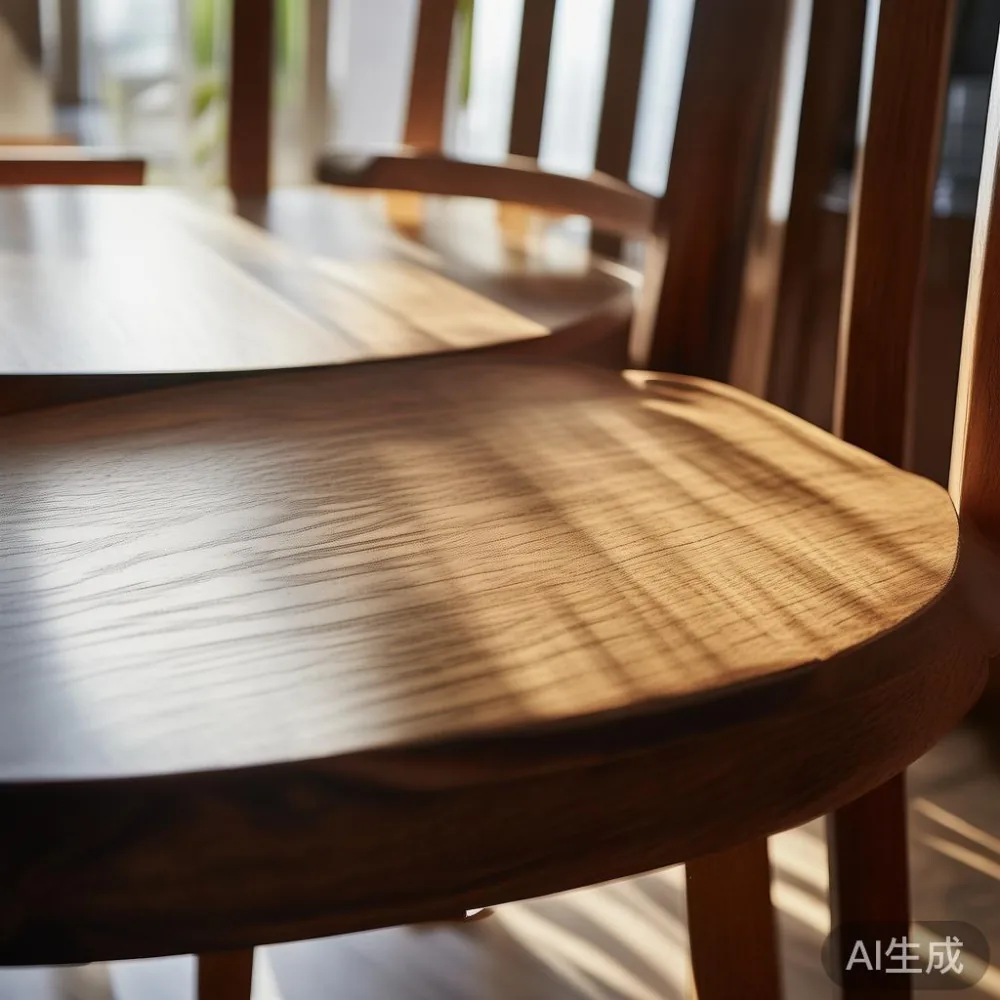
A solid wood dining chair is a different object. In the MIDHILL workshop, a typical chair frame is cut from a single grade of kiln-dried hardwood, usually white oak, ash, walnut, or plantation teak at 8 to 12 percent moisture content. Mortise-and-tenon joints are glued with PVA and reinforced with corner blocks. The seat is a 22 mm to 28 mm solid plank. A single chair weighs 5.5 kg to 9 kg depending on the species, which matters when you read the delivery section below. The same construction principles apply across the brand's broader catalogue, from a solid wood sofa frame to a bed frame, a dining table, a wardrobe, and a bedside nightstand.
In tropical Singapore, that difference is not academic. MDF swells when its moisture content climbs above 12 percent, and a 0.6 mm veneer face peels once the underlying glue softens. Solid wood moves with the season but does not fall apart.
What does a five-year cost ledger actually look like?
Below is a year-by-year ledger for the S$65 veneer chair versus the S$420 solid wood chair, both used daily by a family of four in a HDB flat. I have rounded to the nearest 50 cents and kept GST consistent at 9 percent.
Year 1
Veneer chair: S$65 acquisition, S$5.85 GST, S$28 local doorstep delivery (since most online retailers below S$350 do not cover freight for furniture). Total S$98.85.
Solid wood chair: S$420 acquisition, S$37.80 GST, S$0 delivery (freight is waived above S$350, which six chairs clear easily). Total S$457.80.
Running gap: S$358.95.
Year 2
Veneer chair: one tightening of loose cam-lock hardware, S$0 if the owner has a screwdriver, S$40 if a handyman is called. One replacement of a wobbling chair due to a swollen seat panel, S$65 plus delivery, S$98.85 again. Total for the set across two chairs affected: S$138.85.
Solid wood chair: one light application of beeswax conditioner, S$12 for a 250 ml tin. Total S$12.
Running gap: S$485.80.
Year 3
Veneer chair: humidity-related peeling on one chair's seat edge, S$50 off-cuts-and-glue repair by a Bedok carpentry shop. A second chair now showing leg wobble, replaced for S$65 plus S$28 delivery, S$101.85. Total S$151.85.
Solid wood chair: another tin of conditioner, S$12. The chair has a small surface scratch from a move; this is covered by MIDHILL's lifetime refinishing service for S$0 outbound shipping if the customer arranges collection. Total S$12.
Running gap: S$625.65.
Year 4
Veneer chair: a third chair fails at the back-rest joint. The owner writes off the set and orders another flat-pack batch. Cost to replace three chairs: S$195 plus S$42 delivery, S$258.15. Plus one more carpenter visit on the remaining chairs, S$50. Total S$308.15.
Solid wood chair: S$12 conditioner, plus a S$0 refinishing return-and-replace of one chair that had a coffee stain. Total S$12.
Running gap: S$921.80.
Year 5
Veneer chair: the second batch is already showing wear. The owner factors in a final replacement of the entire six-chair set in year five, S$390 plus S$84 delivery, S$516.15. Total for the year S$516.15.
Solid wood chair: S$12 conditioner. The chairs look close to new. Resale value on Carousell or a relocation sale at a typical Singapore condominium leaving event: roughly 55 to 65 percent of original price, so S$1,386 to S$1,638 back into the owner's pocket.
Running gap (net of resale): between S$1,150 and S$1,400 in favour of solid wood.
The headline number: across five years, a Singapore household can expect to spend roughly S$1,200 to S$1,400 more on a veneer dining chair set than on a solid wood dining chair set of the same seating capacity. The premium for buying solid wood in year one is around S$360 per chair set, but the lack of repair bills, the zero-cost refinishing, and the residual resale value flip the equation by year three.
How do Singapore HDB and condo constraints change the math?
Three local factors quietly inflate the cost of the wrong chair.
First, vertical access. A standard HDB passenger lift in Tampines, Bedok or Punggol has an internal depth of about 1.3 m and a width of 1.1 m, with a 630 kg load limit. A flat-pack veneer chair arrives in a 0.45 m box that fits easily, so the only delivery friction is the S$28 doorstep fee. A solid wood chair, depending on species, can weigh 8 kg to 9 kg, but MIDHILL packs six chairs per export crate to optimise container loads, and the local logistics partner carries the cartons to the lift lobby. Most buildings in Punggol Waterway Terrace and Bedok Reservoir have 1.5 m service lifts for move-in days; for normal deliveries, regular passenger lifts accept the cartons without issue.
Second, relative humidity. HDB flats without a 24-hour dry corridor average 75 to 85 percent humidity for at least nine months a year. That is the upper limit for MDF stability. A study by the Singapore Green Building Council in 2023 noted that MDF furniture kept above 80 percent humidity for more than 180 days shows measurable edge swell. Solid teak and white oak handle 85 percent without distress, which is why the same workshop confidently applies a ten-year structural warranty to its dining chairs, bed frame and dining table frames.
Third, GST and import duty. Furniture imported into Singapore carries 9 percent GST with no concession. MIDHILL ships CIF to Singapore ports and uses bonded warehousing in Tuas, which compresses the duty pass-through compared with many smaller brands that ship FOB and pass two layers of agent fees to the customer.
Is French dressing table furniture worth it?
Yes, French light-luxury dressing-table furniture is worth the premium for buyers who want hand-carved detailing, curved cabriole legs, and finishes that age gracefully, but only when the base material is solid hardwood rather than MDF with a photo-laminate. A 1.2 m French-style dressing table in solid beech or ash retails in Singapore from S$1,800 to S$3,200, and the same piece in MDF veneer sells for S$600 to S$1,000. The MDF version captures the silhouette at a lower entry point but loses the carving depth, develops joint hairline cracks by year three, and cannot be refinished because the surface is a printed foil. The solid version can be sanded, re-stained and returned to new condition, which is why French light-luxury buyers tend to keep pieces for fifteen to twenty years.
Does light-luxury positioning apply to dining chairs?
Light luxury is not a finish, it is a material tier. American light luxury in furniture leans on white oak, ash and black walnut with matte brass hardware and 4 mm to 6 mm stone tops on side tables. Post-modern light luxury plays with mixed metals, smoked glass and tight-radius curves on chair backs. In all three schools, the dining chair is treated as a piece of architecture for the dining corner rather than a disposable seat, which is why the spec sheets usually list kiln-dried hardwoods, mortise-and-tenon joinery, and a ten-year structural warranty. The same brief carries through the matching pieces in the room, whether the buyer is looking at a solid wood sofa frame, a marble-top coffee table, a panel wardrobe, a four-poster bed frame, or a pair of cream teak dining chairs.
What about the brand's service terms?
Two service terms are worth noting for a Singapore buyer comparing quotes. First, the ten-year structural warranty covers frame integrity and joint failure, which addresses the single most common failure mode in both veneer and solid dining chairs. Second, the lifetime refinishing service covers surface scratches, water rings and sun fade on solid wood dining chairs, bed frames and dining tables. In a climate where afternoon sun through a west-facing HDB window can bleach a stained chair within two years, that refinishing promise is not a marketing line, it is a maintenance plan. For a buyer weighing S$260 in upfront savings against S$1,200 in five-year repair and replacement costs, the calculation is uncomfortable for the cheaper option.
Are there situations where veneer dining chairs still make sense?
Yes. A renter in Singapore who plans to move every eighteen to twenty-four months, who wants to leave the chairs behind, and who has a strict S$500 dining-corner budget will get more useful seating from a S$65 veneer chair than from a S$420 solid wood chair. A homeowner fitting out a study nook or a balcony corner that sees light daily use rather than dinner-table duty will also do fine with veneer. The figures above assume daily family use over five years; under lighter use, the failure modes arrive later, and the cost gap closes.
How should a Singapore buyer decide?
Three practical filters help. If the chairs will see daily dinner-table use for at least four years, if the home has no whole-house dehumidifier, and if the household includes children or elderly relatives who lean heavily on chair backs, solid wood dining chairs pay back the upfront premium. If any of those three conditions is not met, a mid-range veneer chair is a defensible choice, provided the buyer accepts a replacement cycle of two to four years and writes off any resale value. Either way, the line items to compare are not just the sticker price, but the delivery fee below S$350, the GST line at 9 percent, the refinishing policy, the warranty length, and the realistic resale value after five years. Once those five numbers sit side by side, the cheaper chair rarely is.