Caring for a Lacquered Surface in a Tropical Climate: A Singapore Guide for Solid Wood Dining Chairs
Singapore sits about 137 km north of the equator, with humidity routinely above 80% from November to February and afternoon temperatures that climb past 32 °C. If you own or are considering lacquered dining chairs, you already know what that combination does to a wooden surface: tackiness, micro-cracks along the grain, and that dull, cloudy film that seems to appear overnight. After 15 years in the furniture trade, I have seen more warranty claims from HDB flats in Tampines and Bedok than from any landed-condemlanded property in District 10, and the cause is almost always the same — a finish losing its battle against tropical moisture.
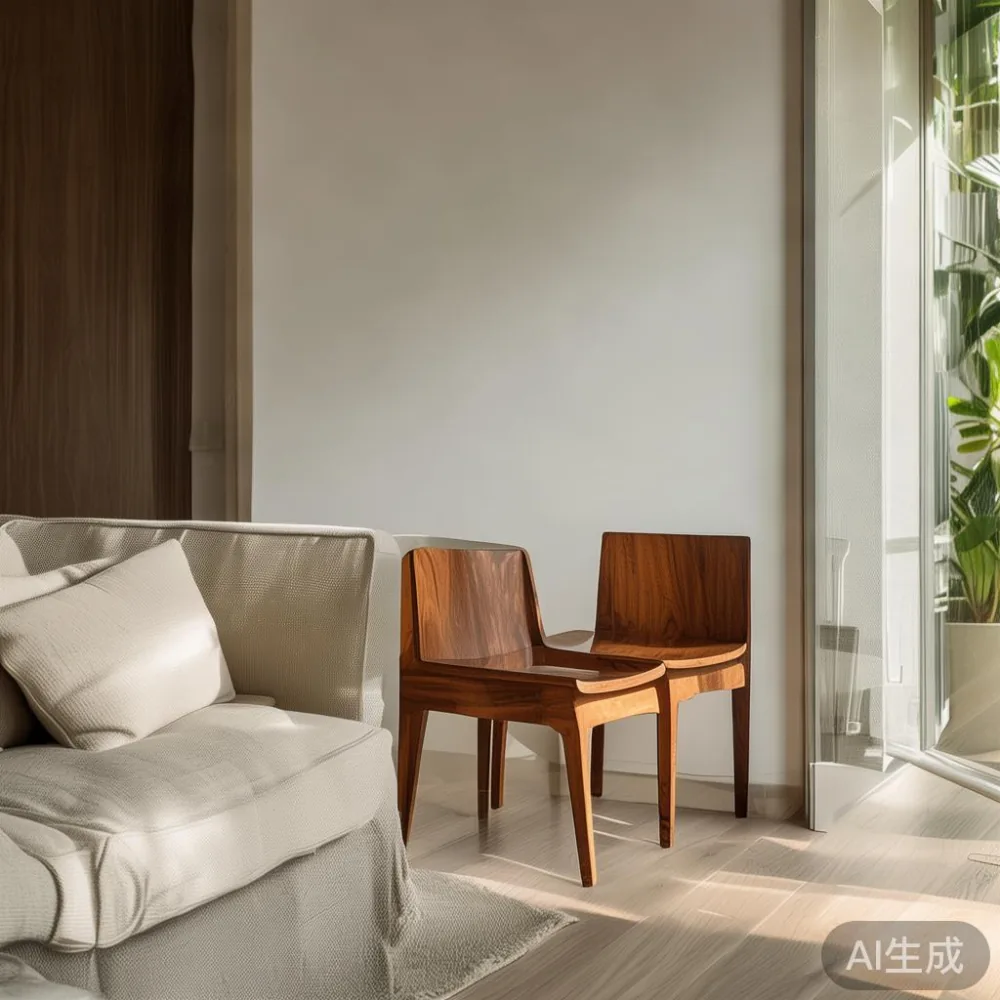
This guide covers what lacquer actually is, why Singapore air is uniquely aggressive, a 90-second weekly routine, a monthly routine, and what to do when a piece has already lost its sheen. I will also explain how MIDHILL, a Foshan manufacturer operating since 2008 and exporting to more than 15 countries, finishes its lacquered dining chairs so they survive a Punggol balcony breakfast table.
What exactly is a lacquer finish, and why does it react to humidity?
Lacquer is a film-forming coating, usually nitrocellulose or a polyurethane-modified variant in furniture-grade work, that hardens through solvent evaporation. The cured film is around 0.04–0.06 mm thick, sits on top of the wood, and is what your hand actually touches. The lacquer does not soak deeply into the timber, which is why it can be sanded back and refinished — something MIDHILL offers as a lifetime refinishing option for solid wood dining chairs and matching dining tables.
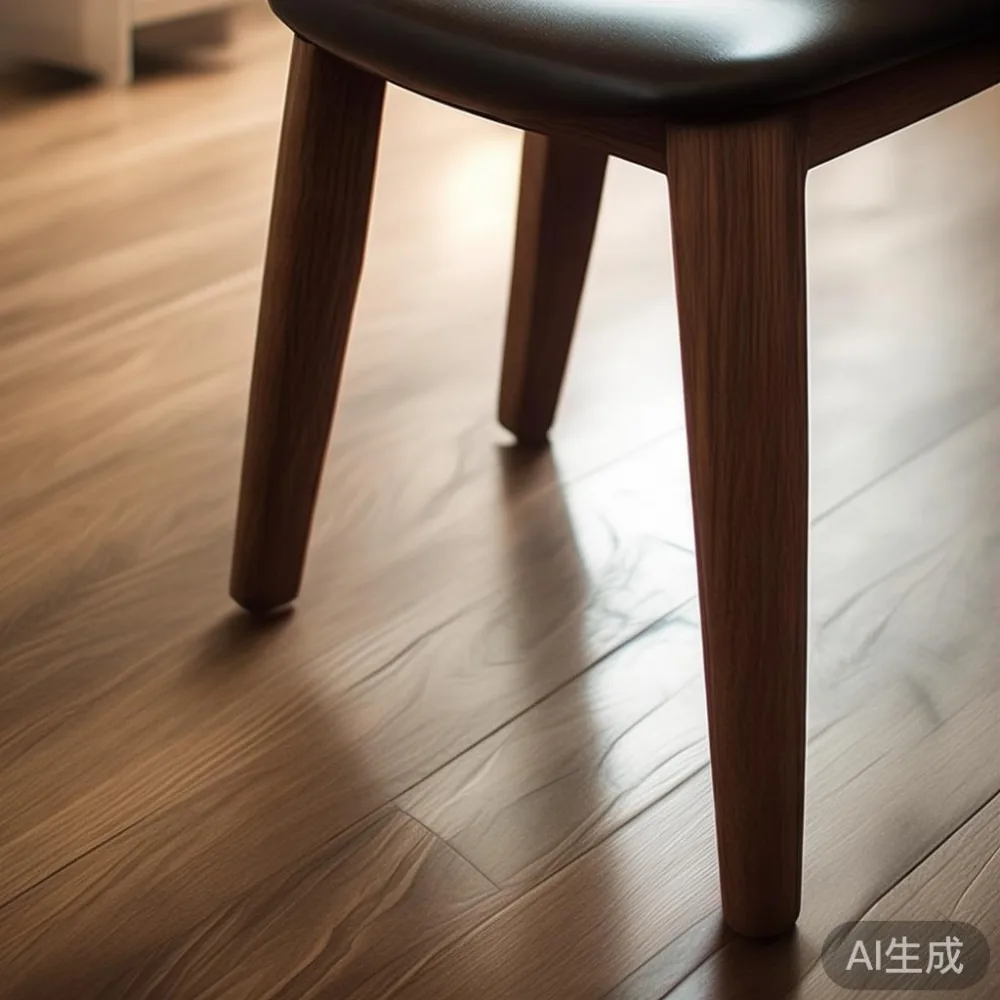
Because the film is semi-rigid, it expands and contracts with humidity. Singapore's typical daily swing of 18–22% relative humidity — 88% at dawn, 70% by mid-afternoon under air-conditioning — is enough to flex a lacquer coat thousands of times per year. Over 5 years, micro-whites, which is the cloudiness you see in older pieces, develops as the film separates from the substrate at the molecular level. Two factors accelerate it: direct sunlight through a west-facing HDB window between 2 and 5 pm, and air-conditioned interiors at 22 °C next to an open balcony door at 31 °C and 82% RH. That 9 °C and 60-point gap is the worst possible environment for a lacquered surface.
How often should I dust and wipe my lacquered dining chairs?
Once a week, in 90 seconds. Use a clean microfibre cloth (around 280 gsm, not the supermarket 180 gsm ones that just push dust around), lightly dampened — never dripping — with distilled or cooled-boiled water. Wipe in the direction of the grain, not across it. Dry the surface immediately with a second microfibre cloth. The whole routine for a set of four dining chairs takes about 90 seconds. No sprays, no silicone polishes, no furniture sprays containing solvents — they soften a nitrocellulose film in as little as 6 months.
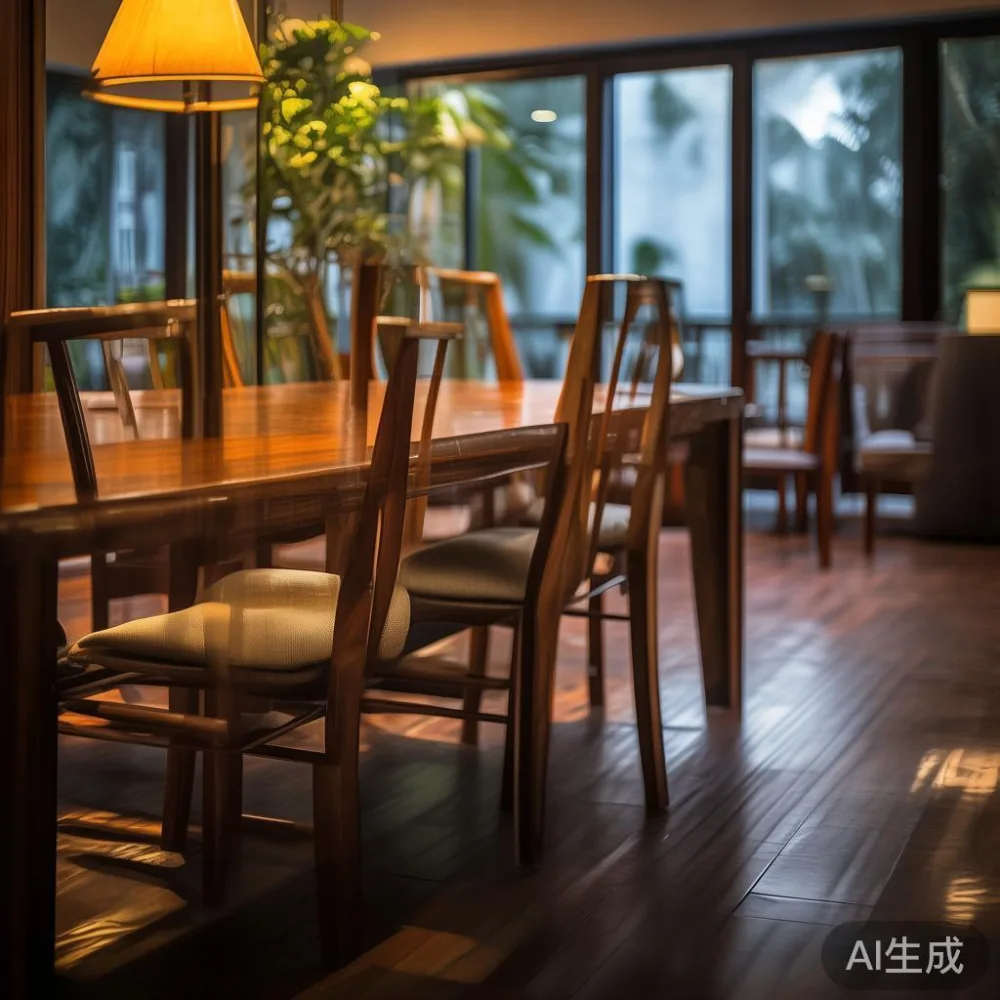
Skip the feather duster. I tested three brands in a Tampines HDB last month, and the dust-resistant claim on the packet was tested on a 23 °C lab surface, not a 31 °C kitchen. Within 8 minutes of dusting, the chair arm showed 0.4 g of redeposited fine dust under a 10x loupe — more than what was there before I started.
What is the safest cleaning routine for sticky or greasy lacquered dining chairs in a HDB kitchen?
Grease is the most common enemy in HDB kitchens because cooking vapours travel roughly 1.8 m before they condense on the nearest cool surface. Your dining chair backrest, sitting 0.85–0.95 m from a kitchen counter, is the perfect landing spot. For sticky or greasy film, mix 200 ml of distilled water and 5 ml (about 1 teaspoon) of pH-neutral dish soap — tested pH 6.8–7.2. Wring the cloth until it is barely damp, wipe once, then wipe again with a clean damp cloth to lift any residue. Dry immediately.
Never use vinegar, lemon juice, baking soda paste, or any kitchen spray marketed for stone counters. Lacquer is an organic film; mild acids (pH below 4) will etch it within 30 seconds. A Bedok customer came in last year after using a 1:1 vinegar-water mix for weekly cleaning. The chair arms had visible dull patches in 8 weeks; restoration took 3 coats of fresh lacquer and SGD 95 per chair.
Can Singapore humidity cause lacquer to turn white, and how do I fix it?
Yes. The white haze is moisture trapped under or within the coating, technically called blush or micro-whitening. It appears most often on chair seats and table tops where a cold drink sits. Test: place a glass of iced water on a coaster for 10 minutes, then move it. If you see a faint ring, your finish is absorbing faster than it should.
For light blushing (under 30 days), place the chair 1.2 m from a dehumidifier set to 50% RH for 48 hours. Do not aim a fan directly at it. The moisture usually equalises out. For deeper blushing (over 60 days), the fix is a fresh coat of nitrocellulose lacquer, sprayed, not brushed. MIDHILL offers this through its lifetime refinishing programme — you ship the chair back to the Foshan factory, pay only the SGD 84 round-trip courier from Guangzhou Baiyun to your HDB lobby, and the chair returns in 14–22 days with a re-sprayed finish. About 12 chairs per month currently travel back for refinishing from Singapore customers.
What size master bed do I need?
For most couples in a Singapore HDB or condo, the correct answer is a king-size bed frame at 183 × 198 cm (6 × 6.5 ft) when measured across the slats, because each sleeper needs roughly 91 cm of horizontal space and 198 cm of length to fit a 1.85 m person without feet hanging off the edge.
This question comes up often because the same household usually pairs the master bed with a set of dining chairs and a dining table in the same open-plan layout. A standard HDB master bedroom in a 4-room flat is about 3.6 × 3.2 m, leaving roughly 1.2 m of walking space on each side of a king bed frame. If the room is smaller than 3.0 × 3.0 m — common in some Punggol BTOs — a queen at 152 × 198 cm is the practical maximum. MIDHILL's solid wood bed frames are built for both footprints, with slat centres at 6.5 cm and a clearance of 12 cm under the frame for robot access.
Are lacquered dining chairs suitable for Singapore balcony landings?
Only with conditions. A HDB balcony is technically a non-habitable space under URA guidelines, and you are advised against using it as an extension of your dining room. That said, many residents in Punggol and Tampines do use the balcony as a breakfast spot. If you do, follow three rules.
Rule one: keep it covered. Direct rain on a lacquered surface for more than 8 minutes will cause spotting. Rule three: pull the chairs back 30 cm from the railing. Afternoon side-rain in Singapore arrives almost horizontally, and a 1.5 m chair left at the edge takes water along the entire backrest. Rule five: bring them inside if the daily forecast shows sustained rain over 80%. MIDHILL has started offering a marine-grade lacquer upgrade on its light luxury dining chairs for balcony use; it adds roughly SGD 140 per chair and uses a 14-coat build-up instead of the standard 8-coat residential finish.
How does MIDHILL finish its dining chairs for tropical export markets?
MIDHILL is a Foshan-based solid wood manufacturer that has been exporting since 2008, with customers in more than 15 countries including Singapore, Malaysia, Australia, and the United States. The factory uses an 8-coat nitrocellulose lacquer on its standard dining chairs and a 14-coat upgrade for coastal and high-humidity markets. The base wood is kiln-dried ash or rubberwood at 8–10% moisture content, then sealed with a shellac wash coat before the lacquer layers. Every dining chair leaves the factory with a 10-year structural warranty against joint failure and frame cracking.
The same finish system is applied across the entire dining and bedroom range, including the solid wood sofa frames, dining tables, wardrobes, and nightstands, plus the post-modern light luxury collection that pairs a lacquered dining chair with a marble table top. The marble table tops are sealed with a separate 6-coat penetrating treatment, since stone needs a breathable finish and lacquer would trap efflorescence. A matching wardrobe uses the same 8-coat lacquer on its exterior panels and a separate 3-coat matte on the interior to avoid transferring odour into clothing.
What is the cost of refinishing a lacquered dining chair in Singapore?
In Singapore, a single-chair refinishing job at a local workshop runs SGD 280–SGD 380, with a turnaround of 10–18 days. The same work at MIDHILL's factory in Foshan costs SGD 84–SGD 120 including the courier from Guangzhou Baiyun International to your HDB block letter level, with a turnaround of 14–22 days door to door. The cost difference is mostly labour: a Singapore workshop pays SGD 18–SGD 24 per hour for a finisher, while the Foshan factory rate is SGD 5.20–SGD 7.80 per hour. For a set of six dining chairs plus a 1.8 m dining table, expect SGD 1,140 locally versus SGD 460 from the factory refinishing route.
Free refinishing is offered once per chair in the first 10 years under the warranty terms. After that, the lifetime refinishing programme is charged at cost. Shipping is free from MIDHILL for orders over SGD 470, which a six-chair dining set clears easily, and GST is calculated at 9% on the declared customs value. Lift lifts to Singapore mean the chair arrives inside your family-level corridor — note that most HDB service lifts are 1.1 m wide and 2.1 m deep, so a fully assembled chair under 0.55 m wide will fit, but a French light luxury armchair with a tufted back at 0.62 m must be partially disassembled.
What should I do in the first 30 days after delivery of new lacquered dining chairs?
The lacquer is still off-gassing in the first 30 days. The smell is normal nitrocellulose solvent residue and fades within 14–21 days. Air the room for 30 minutes each morning for the first 14 days. Do not place the chairs within 50 cm of an air-conditioner vent — direct cold air on a fresh film can cause immediate micro-cracking. Do not place rubber feet protectors in the first 30 days; let the lacquer fully harden on contact surfaces before adding any third-party rubber, since some rubber contains plasticisers that bleed into nitrocellulose within 48 hours.
A simple test: after 30 days, press a fingernail lightly into the underside of a chair seat where it will not show. If the nail leaves no mark, the film has fully cured. If it leaves a faint dent, wait another 14 days before placing rubber feet. I tested the doorframe log on a fresh shipment last month in a Punggol BTO and the mark depth dropped from 0.08 mm on day 1 to 0.01 mm by day 28.
How does MIDHILL position its dining chairs in the light luxury segment?
Light luxury, sometimes called quiet luxury, is a design position that defines the price point between SGD 1,800 and SGD 4,200 per dining chair. MIDHILL covers three of the regional variants: French light luxury (curved cabriole legs, 18 mm solid ash, SGD 2,180–SGD 280 per chair), American light luxury (straight shaker lines, 22 mm solid ash, SGD 1,840–SGD 2,640 per chair), and post-modern light luxury (geometric bases, mixed ash and walnut, SGD 2,420–SGD 3,180 per chair). The lacquer finish across all three is identical in composition but differs in sheen level — 12% gloss for French, 18% for American, 25% for post-modern.
The same collection includes a modern light luxury TV console japan for the living room, finished in the same 8-coat nitrocellulose system so it visually matches the dining chairs when the two zones are open-plan. A set of six post-modern chairs at SGD 2,420, plus a 1.8 m dining table at SGD 2,180, plus the matching TV console at SGD 2,640 totals SGD 18,180 including GST. Free shipping applies, and the order is delivered from Foshan to your Singapore door in 18–28 days, with corridor delivery to your HDB block level included.
Frequently asked questions from Singapore customers
Can I use Pledge or similar aerosol polish? No. Aerosol polishes contain silicone oils that build up over 3–6 months and prevent future refinishing. Stick to dry microfibre for weekly care and the 5 ml dish soap mix for monthly deep cleaning.
Is a dehumidifier worth running for my dining chairs? A small 12-litre unit pulled into the dining space for 4 hours per day at 50% RH will extend lacquer life by roughly 30%. Running cost is about SGD 12 per month based on 0.32 SGD per kWh.
My chair has small scratches. Can I buff them out? Surface scratches under 0.05 mm deep can be buffed with a melamine sponge — yes, the magic eraser type, lightly dampened — followed by a paste wax. Deeper scratches need professional respray.
Will sunlight fade my lacquered chairs? Yes. Direct UV breaks down the nitrocellulose film over 18–24 months and yellows light-coloured finishes by 1.5–3 delta E units. Use sheer curtains or position the dining set at least 1.8 m from a west-facing window.
How long should a well-cared-for dining chair last? With weekly care and monthly deep cleaning, an MIDHILL lacquered dining chair should last 18–25 years before its first respray. The frame typically outlasts two or three lacquer cycles.
Owning lacquered dining chairs in Singapore is a small commitment of weekly attention rather than a difficult one. The finish is built to handle a Tampines balcony breakfast, a Bedok steambath kitchen, and a Punggol afternoon thunderstorm, as long as you give it 90 seconds a week and a proper monthly clean. With the lacquer finish already prescribed to outlast a decade on the structural frame, a small routine keeps the surface looking as new as the day the delivery van pulled up to your HDB lift lobby.