Dining Chairs Over 5 Years: Veneer or Solid Wood?
Choosing dining chairs for an HDB flat or a condo in Tampines, Bedok, or Punggol is rarely just a choice between two prices. It is also a decision about daily comfort, corridor access, humidity, maintenance, and what will still look presentable after 60 months of use. A veneer dining chair may cost S$180 today, while a comparable solid wood chair may cost S$320. Over 5 years, however, repairs, replacement parts, cleaning, and resale expectations can narrow that gap.
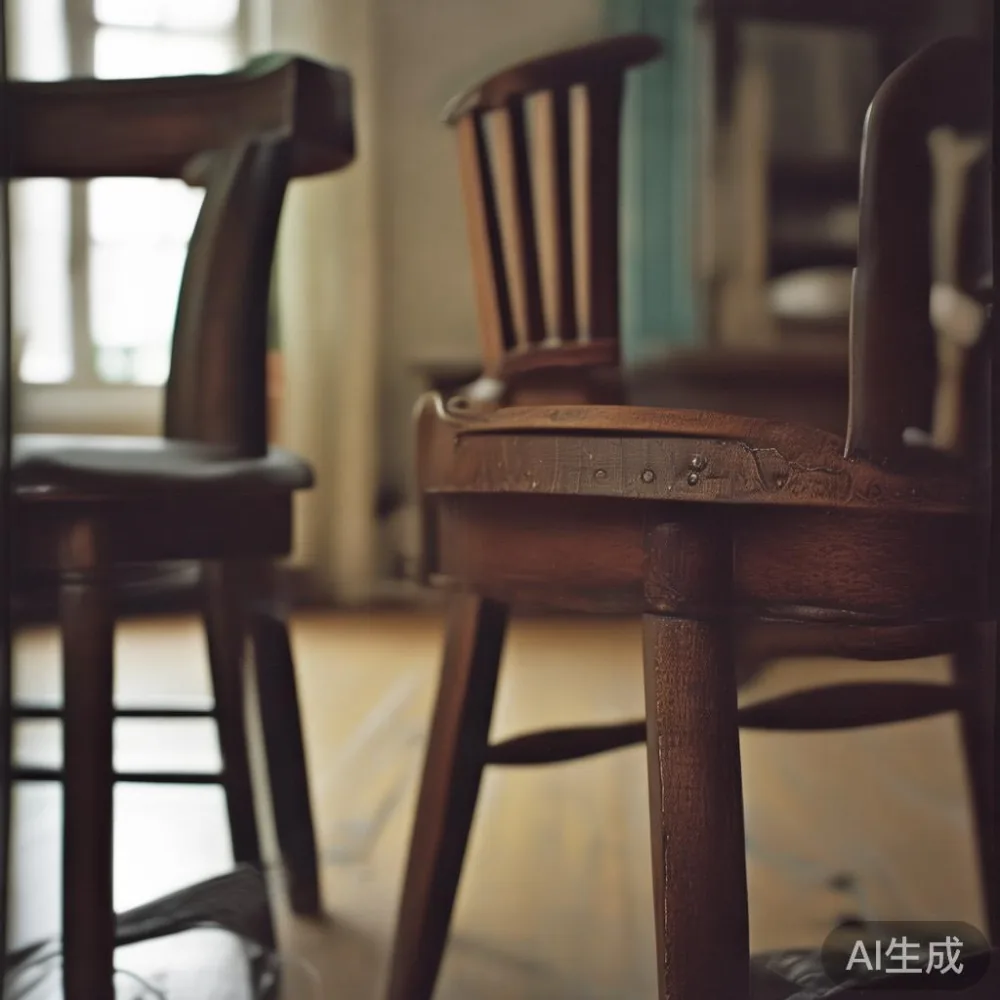
This comparison assumes 4 dining chairs per household, normal indoor use, and ownership rather than rental turnover. Prices are illustrative Singapore retail estimates in SGD and include GST where a business is GST-registered. For lift access, measure the chair's widest point, diagonal, and packaged depth before ordering; a 48 cm-wide chair can still fail on a tight corridor turn if its carton is too long.
What Is the 5-Year Cost of Veneer Dining Chairs?
<Veneer dining chairs use a thin layer of wood, usually 0.3–0.8 mm, bonded to a particleboard, MDF, or plywood core. The visible face may look like oak, walnut, or ash, but the structure is not solid timber throughout. A reasonable entry price is S$180 per chair, giving S$720 for 4 chairs before any delivery adjustment.
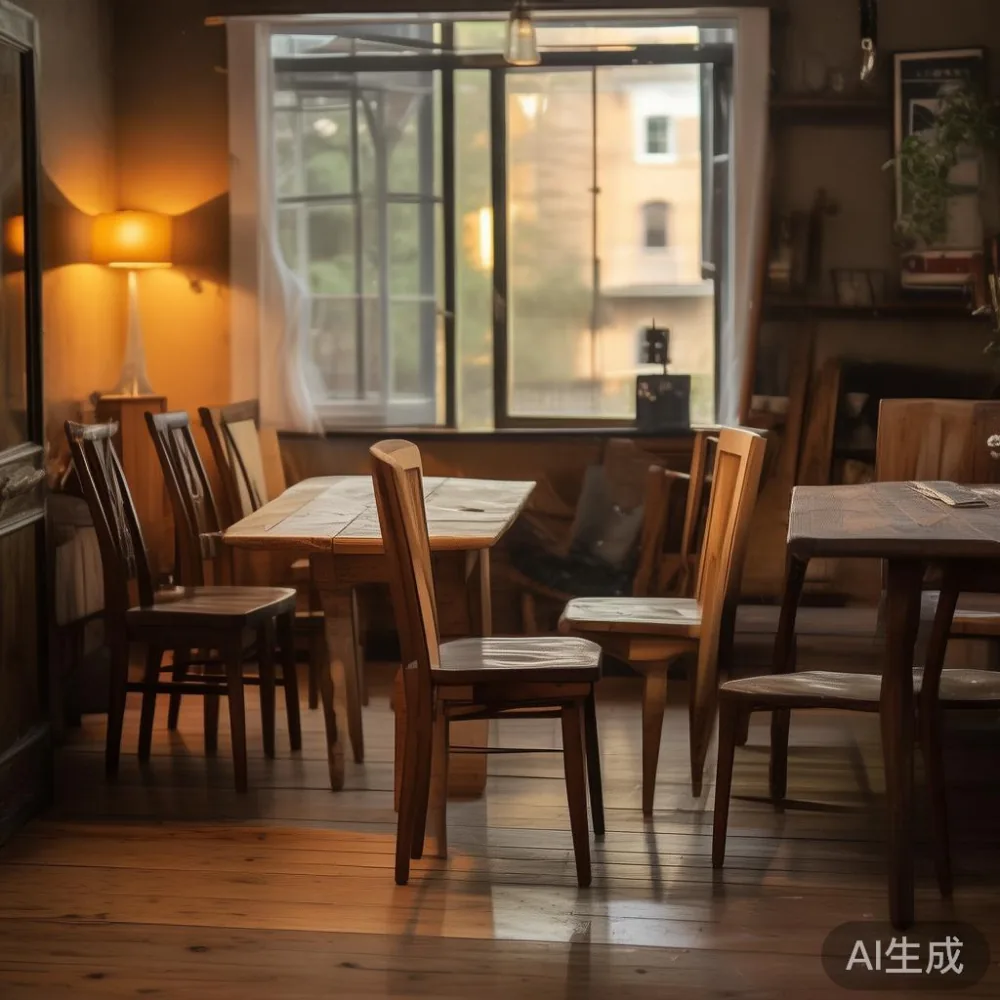
For this calculation, assume S$180 per veneer chair, or S$720 for a set of 4. Add S$30 for a 5-year supply of mild wood polish and S$45 for 2 small repairs or re-glue jobs. Delivery within Singapore is estimated at S$40, although a scheduled delivery window may add S$20. The initial outlay is therefore about S$765–S$805.
At month 60, a sound veneer chair may need one seat-surface touch-up costing S$25 per chair, or S$100 across the set. Add S$100 for contingency parts and S$60 for a second polishing session. Total 5-year expenditure is approximately S$965–S$1,065. If 1 chair has to be replaced at S$180, the total rises to roughly S$1,145–S$1,245.
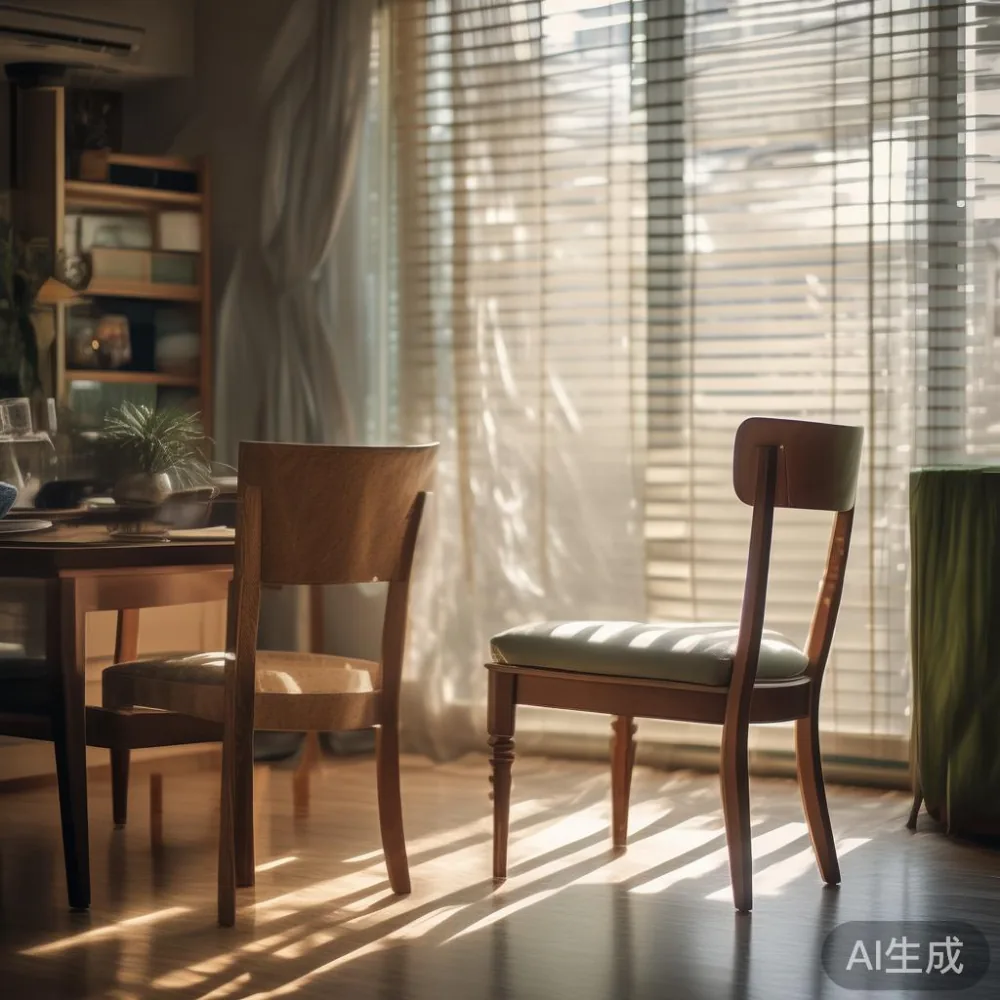
This is the appealing side of veneer: the purchase is easier on the budget. In a compact HDB dining area, 4 chairs can occupy only 1.6–2.4 sq m of floor space, so spending S$720 rather than S$1,280 leaves more room for a dining table or a narrow console. The trade-off is that veneer looks impressive at first but can be more sensitive to heat, water, and impact at the edges.
For a customer searching for under 2000 Boho furniture, a veneer set can make a warm, layered room affordable. Yet a Boho appearance does not guarantee stable chair construction. Check the rear joints, underside, and seat support rather than judging by the grain pattern alone.
How Much Does Solid Wood Cost Over 5 Years?
Solid wood dining chairs use timber through the visible structural parts, although some backs and seats may contain engineered panels. At MIDHILL, a comparable ash or oak dining chair can be around S$320 each, or S$1,280 for 4. A 10-year structural warranty makes the initial commitment easier to assess, but it is not the same as a guarantee against every scratch or finish change.
Assume S$320 per solid wood chair, S$1,280 for 4, S$45 for 5 years of care products, and S$50 for local delivery. The starting total is approximately S$1,375. In a condo where chairs will be moved between a dining area and a study, schedule a delivery window of 7–14 days; a Singapore stock item may arrive in 3–7 days, while a custom finish can take 30–45 days.
Over 60 months, solid wood chairs commonly need sanding and refinishing rather than wholesale replacement. Budget S$35 per chair for one careful refinishing cycle, or S$140 for the set. Add S$80 for minor hardware and S$60 for a second polish, producing a 5-year total near S$1,595–S$1,715. If the finish is renewed through MIDHILL's lifetime refinishing service, household labour and product costs may be lower, although transport and service terms should be confirmed for each Singapore order.
Solid wood can tolerate ordinary household life better when the finish is maintained. It also handles a lift and corridor move more securely if the chair is well proportioned. A 47 cm-wide, 82 cm-high chair weighs about 5.5–7.5 kg, compared with 4.0–5.5 kg for many veneer chairs. One person can lift a lighter chair, but 2 people should carry a solid wood chair around corners and through a narrow HDB corridor.
What Costs Are People Forgetting?
The largest hidden expense is often movement, not maintenance. Singapore homes have compact corridors, and a chair that fits a 90 cm doorway may not clear a 75 cm lift door when turned sideways. Measure the lift car at 110 cm wide by 140 cm deep, then check the chair's diagonal. A boxed chair with dimensions of 55 × 55 × 98 cm may require angling that many delivery workers do not expect.
Use S$20–S$80 as a realistic moving budget for a local set of 4 chairs. A carry-in service may cost S$25 per chair; a porter booked for a 2-hour minimum could cost S$80–S$120. For 2 moves across 5 years, that is S$160–S$240. A removable seat cushion can also cost S$25–S$70 per chair, so note that number before comparing finishes.
Humidity matters in coastal Singapore. Aim for 45–65% relative humidity where possible, keep chairs away from air-conditioning vents, and wipe spills within 10 minutes. Veneer may show edge lifting after repeated moisture exposure. Solid wood can swell or contract by roughly 1–3 mm across a season, but controlled indoor conditions reduce movement.
Cleaning products should be mild: a damp cloth, pH-neutral soap, and no soaking. Budget S$3–S$5 per month for chair care, which equals S$180–S$300 over 5 years. This applies to both materials; the difference lies in how the finish responds.
Which Option Gives Better Value for Singapore Homes?
For a first home, a compact dining area, and a strict renovation budget, veneer dining chairs can be sensible. Spend at least S$25 per chair checking that the joints are screwed or dowelled, the rear legs are braced, and the seat does not visibly flex. A chair under S$150 often has thinner timber and a less generous seat, while a well-made solid wood chair may justify S$280–S$420.
For a family that expects to keep the chairs for 8–10 years, solid wood often gives a clearer long-term value. The higher purchase price buys more repairable material and a surface that can be refinished. MIDHILL's 10-year structural warranty and lifetime refinishing policy are relevant here, provided the buyer follows care instructions and keeps proof of purchase.
Light-luxury styling changes the arithmetic. French light luxury often uses pale oak, linen upholstery, curved backs, and restrained brass details. A solid wood dining chair in that style might sit at S$340–S$460 each. American light luxury tends toward broad seats and darker walnut tones; post-modern light luxury may mix clean lines with one sculptural feature. In all 3 styles, material quality matters more than a decorative trend label.
Search terms such as for sale light luxury furniture or Italian light luxury dressing table may lead you toward broad catalogues, but check actual chair dimensions and timber composition. The same words can describe a S$220 veneer chair and a S$420 solid wood chair. Compare the frame, seat, finish, warranty, and delivery terms, not the marketing phrase.
Are Veneer Dining Chairs Good Enough for a 5-Year Singapore Household?
Yes, if they are well made and used indoors. A sound veneer dining chair can last 5 years without major failure, especially in a Bedok or Tampines HDB flat where the dining zone is not exposed to direct rain. Ask whether the supplier will replace 1 damaged chair within the first 2 years, and whether replacement parts are stocked locally.
Solid wood is usually the calmer choice for frequent use. It can be sanded when marks appear, and a full refinishing cycle may extend its useful life beyond 5 years. A veneer chair with a chipped laminate edge may need replacement because the thin face cannot be repaired as deeply. This difference becomes important when a family eats at the table every evening, about 7 days per week, for 60 months.
Style should support the room. If the home uses modern Mid-century modern furniture, select chairs with tapered rear legs and a seat height near 45–48 cm. If you are considering Nordic for guest room ideas, keep spare chairs light enough to move, with a width of 44–48 cm and a weight below 6 kg where possible. A separate dining chair should not be confused with a guest-room seat designed mainly for occasional use.
Do not let cross-category keywords distort the decision. A solid wood sofa, bed frame, dining table, wardrobe, nightstand, or marble table may share a design theme, but only dining chairs belong in this cost comparison. Likewise, a top 10 Vintage furniture list does not reveal the chair's core material or service history.
How Do You Compare Price, Comfort, and Delivery?
Start with a spreadsheet containing 8 numbers: unit price, 4-chair total, care cost, likely repair cost, delivery, moving cost, expected refinishing, and resale or replacement value. For example, veneer may show S$965–S$1,245 over 5 years; solid wood may show S$1,595–S$1,715. Divide the total by 60 months to compare monthly ownership cost: veneer is about S$16–S$21 per month, while solid wood is about S$27–S$29 per month.
Then test comfort. Sit for 10 minutes with your normal posture, using a table surface at 73–76 cm high. The seat should support you without a hard front edge. Leave 60 cm of circulation space behind the chair when possible, and 75–90 cm around a dining table for movement. In a small flat, a chair that is 55 cm wide may reduce the table area by 0.2 sq m compared with a 47 cm chair.
My colleague tested both constructions last month in a Tampines dining corner. She placed a 4.8 kg veneer chair and a 6.6 kg solid wood chair beside the same table, then moved each around a mock 80 cm corridor turn. The lighter chair was quicker to reposition, but the solid wood chair felt steadier when leaned back lightly. The veneer model's rear joint developed a small rattle after 15 repeated movements; the solid wood joint remained quiet after 30. That is one test, not a universal rule, but it shows why construction matters.
Which Material Fits Your 5-Year Budget?
Choose veneer dining chairs when the purchase budget is limited, the chairs will be used lightly, and you accept replacement sooner. Choose solid wood dining chairs when the family values repairability, a stronger tactile finish, and a longer ownership horizon. At 4 chairs, the initial difference of roughly S$560 is substantial, but the 5-year gap narrows after allowing for maintenance, moving, and possible refinishing.
For Singapore shoppers, compare the total in SGD, not just the sticker price. Include GST where applicable, local delivery, lift access, 2 possible moves, and one repair scenario. MIDHILL's free shipping threshold over US$350 may not map neatly to a Singapore order, so confirm the local quote and delivery days directly. A 14-day return policy can also reduce risk, but measure every doorway before the carton arrives.
The practical answer is simple: veneer can be financially disciplined; solid wood can be economically steadier over time. Sit in both, inspect the underside, ask for the exact wood species, and compare 5-year costs. If the room is a compact HDB dining space, prioritise clearances and chair weight. If it is a condo dining room designed to last, solid wood usually deserves the larger line in the budget.