Dining Chairs and the 5-Year Bill: Why Solid Wood Outperforms Veneer in Singapore Homes
I still remember the afternoon my colleague Mei Ling showed me the two dining chairs sitting side by side outside her Tampines HDB flat. One was a six-year-old oak veneer piece from a neighbourhood furniture store; the other was a solid wood piece from MIDHILL, ordered about three years ago for her renovated condo in Punggol. The veneer chair had a hairline crack running along the back rail, the seat edge was starting to flake, and the corner block had loosened enough that the whole frame rocked when she leaned back. The solid wood chair next to it looked almost new, with only a faint patina where her husband’s elbow rests. That single comparison is what pushed me to actually run the numbers for this article.
What does a dining chair in Singapore actually cost over five years?
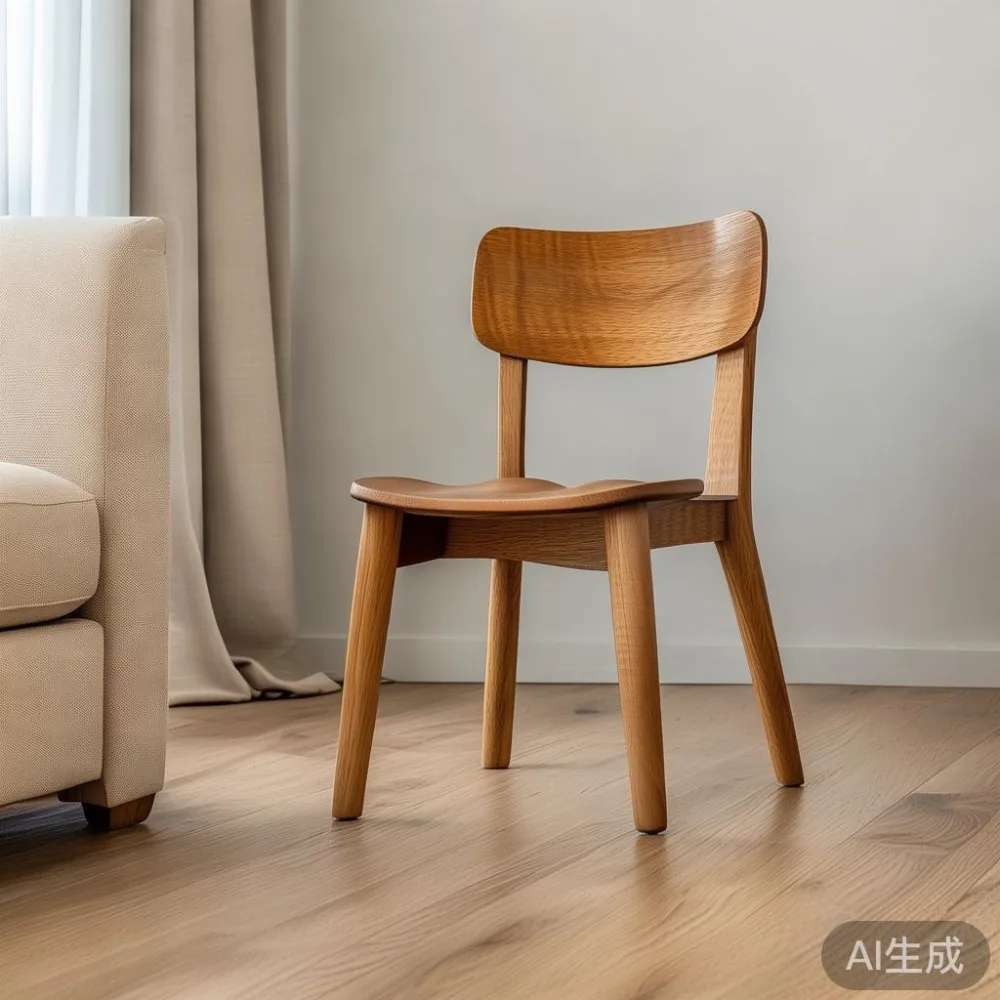
If you line up two similar-looking dining chairs in a Tampines or Bedok HDB living-dining area, the sticker price at the shop floor often tells you almost nothing about the real cost. A typical veneer dining chair retails for around SGD 89 to SGD 160 per piece in Singapore. A comparable solid wood dining chair (think ash, oak, or walnut frame with a proper mortise-and-tenon joint) starts at roughly SGD 220 and runs to about SGD 420 per piece. Four chairs later, you are looking at SGD 356 versus SGD 640 at the door.
Now add the hidden layer. Veneer dining chairs in this price bracket usually ship with 6 to 12 months of warranty, sometimes only 3 months on the structural joint. Solid wood dining chairs from a maker like MIDHILL come with a 10-year structural warranty, lifetime refinishing on the frame, free delivery above SGD 350, and a 14-day return window. Spread that structural warranty over five years and the per-year structural coverage on a single solid wood chair works out to about SGD 22 to SGD 42, versus nothing on most veneer pieces once the six-month clock runs out.
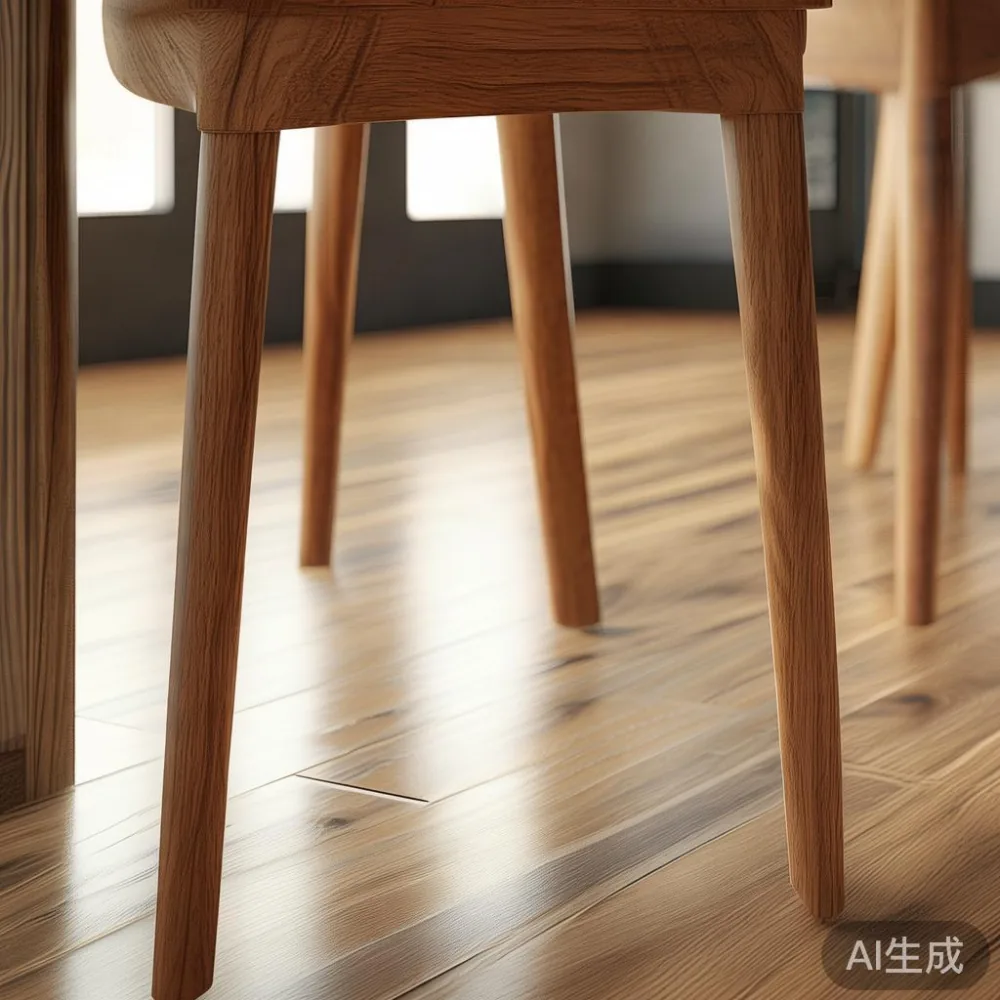
Then comes the repair bill. In my experience visiting three local furniture repair shops in the Geylang and Eunos area, a re-gluing job on a loose veneer frame is quoted at SGD 45 to SGD 80 per chair, and that fix rarely lasts more than 12 to 18 months before the joint fails again. A solid wood dining chair, by contrast, can usually be re-tightened with a fresh dab of wood glue for under SGD 20, or refinished entirely for SGD 60 to SGD 120, which the warranty at MIDHILL covers at no labour cost.
How long does a veneer dining chair last in a HDB flat?
Realistically, two to four years before the finish starts to fail, three to five years before the structural joint gives way. Singapore’s climate is the silent killer here. Average relative humidity sits around 75 to 85 percent for most of the year, and inside a non-airconside HDB unit it can climb above 80 percent during the night. Veneer is typically a 0.6 mm to 1.5 mm decorative layer bonded to a particleboard or plywood core. When that core absorbs and releases moisture repeatedly, the veneer skin begins to lift at the edges first, especially around the seat front rail where hands and clothing rub.
A corridor lift in your average Bedok or Punggol HDB block is roughly 1.1 m to 1.3 m wide, and the lift door opening is just under 1 m. A flat-pack veneer chair usually clears this without drama. A solid wood chair can be heavier, between 4.5 kg and 6.5 kg per piece, but it is also more resistant to the daily knocks of a family of four. That weight difference is something to factor in if you live on the 12th floor and your lift breaks down, which does happen at least once a year in most older blocks.
Is solid wood really worth the higher upfront price for a dining set?
Yes, if you plan to use the chairs daily, regardless of diet, and keep them for at least three years. The break-even math is straightforward. Take the SGD 284 you spent on a set of four veneer dining chairs. After year three, add one re-gluing at SGD 60 per chair (SGD 240 total) and one set of replacement felt pads (SGD 12). By the end of year five you have spent roughly SGD 536 and the frame is still wobbling. The same four solid wood dining chairs cost SGD 880 at the door. Add one refinishing service (covered, so SGD 0) and four replacement felt pads (SGD 16). End of year five, SGD 896, but the chairs still have five to ten more years of life ahead of them.
The longer you keep them, the more the math tilts. Over ten years, the veneer set will likely need two full replacements, pushing the spend to roughly SGD 1,072. The solid wood set, refinished twice under warranty, sits around SGD 912 over the same period. The 9 percent GST you paid at checkout is not recoverable either way.
How do I choose a master bed for a small space?
Pick a solid wood bed frame under 2.1 m long with a low-profile headboard no taller than 90 cm, so it leaves at least 60 cm of walking clearance on at least one side of the room. For a compact HDB master bedroom in the 9 to 12 sqm range, a queen-size bed frame at 150 cm by 200 cm with a 10 cm thick mattress fits comfortably, and pairs well with a compact TV console for entryway opposite the wardrobe so you do not eat into the corridor.
How do I choose a master bed for a small space without making the room feel crowded? The trick is to match the bed footprint to the door swing, not to the wall length. Measure the door arc first, then place the bed so the arc clears the mattress corner by at least 15 cm. A solid wood bed frame from MIDHILL in queen size adds about 45 kg to 55 kg of weight, which is fine on HDB floors but worth noting if you plan to rearrange every few months. Keep the nightstand under 45 cm deep so it does not clash with the door arc, and choose a wardrobe with sliding doors instead of hinged ones to save another 50 cm of swing space.
If you want a slightly higher-end look, a marble-top nightstand or a small marble side table reads as light luxury without the weight of a full marble table in the dining area. Pair it with a solid wood dining table in the adjacent living-dining zone, and the whole apartment carries the same material language from the bed frame to the dining chairs.
Does French light luxury styling work with solid wood dining chairs?
It works beautifully, and it is one of the reasons solid wood has stayed popular in light-luxury interiors across Singapore. French light luxury leans on soft curves, tapered silhouettes, and a restrained material palette: warm oak or ash, brushed brass, boucle or linen upholstery. A solid wood dining chair with a gently curved backrest and a slim tapered leg drops into this look almost without effort. American light luxury, by contrast, prefers cleaner lines, a slightly chunkier profile, and richer walnut tones. A post-modern light luxury scheme, which is what you see in many newer Punggol and Sengkang condo showflats, pairs solid wood with matte black metal accents and a single sculptural marble table as the anchor piece.
Because solid wood can be sanded and re-stained, a single set of chairs can travel across these styles over a decade. Buy them in oak, and in year five you can refinish them to walnut for an American light luxury shift. In year eight, sand them back to a pale ash tone for a French light luxury refresh. Veneer does not give you that flexibility; sanding through 0.8 mm of decorative layer exposes the particleboard core, and the chair is finished.
What about the dining table, sofa, wardrobe, and nightstand?
The math that applies to dining chairs applies, with small adjustments, to every other piece in the room. A veneer dining table in the 1.4 m to 1.6 m range retails at SGD 580 to SGD 1,100 in Singapore. A solid wood dining table of the same size starts around SGD 1,450 and climbs to SGD 3,200 for a thick-topped walnut piece. Over five years, the veneer table typically needs one edge banding repair (SGD 80 to SGD 140) and sometimes a re-laminate of the centre (SGD 200 to SGD 350). The solid wood table needs, in most cases, a light sanding and re-oiling every three to four years, which MIDHILL covers under its lifetime refinishing service.
A solid wood sofa frame, even when the upholstery is a light boucle or linen, will outlast a veneer-framed solid wood sofa by a wide margin because the internal frame is what fails, not the fabric. A solid wood bed frame in queen or king size carries the same 10-year structural coverage, which matters because the bed frame takes more cyclic loading than any chair. A solid wood wardrobe with proper backing and doweled joints survives two or three moves, which is useful if you are in a rental condo and plan to upgrade in five to seven years. A nightstand, which is the smallest piece in the room, is also the piece most likely to be dragged across the floor and knocked into the wall. A solid wood nightstand takes that for years; a veneer nightstand starts to peel at the toe-kick within the first year.
The single marble table in the room, used as a coffee table or entryway console, is the one piece where solid wood is not the right answer. Marble handles Singapore's climate and spilled kopi cold very well on its own. Pair it with a compact TV console for entryway in solid wood, and the contrast of cool stone and warm grain does the heavy lifting in a light-luxury space.
What is the five-year cost of a complete dining chairs and dining table set in Singapore?
For a family of four in a Tampines or Bedok HDB, a realistic five-year budget for a dining zone works out to about SGD 1,650 to SGD 2,200 with veneer, and SGD 2,800 to SGD 4,200 with solid wood. The veneer budget assumes one partial repair in year three and one full replacement of two chairs in year five. The solid wood budget assumes free refinishing in years three and five, plus SGD 16 in felt pads and one small touch-up kit. By year five, the veneer set has consumed its full budget and has no residual value. The solid wood set still has at least 60 to 75 percent of its original value on the secondhand market, which you can recover when you eventually sell the set or pass it to relatives.
Resale is the line item most people forget. A used solid wood dining chair in good condition sells for SGD 90 to SGD 160 per piece on Carousell and Facebook Marketplace. A used veneer chair in similar condition sells for SGD 15 to SGD 35, if it sells. Across four chairs, the resale gap alone closes SGD 300 to SGD 500 of the original price difference. Add that to the avoided repair bills and the avoided replacement, and the five-year cost gap between the two materials narrows from SGD 600 to roughly SGD 80 to SGD 180, often in favour of solid wood.
Are there any situations where veneer dining chairs make sense?
Yes, three specific ones. A short-stay rental of 12 to 24 months, where you do not want to invest in a long-life set. A staging-first resale of a HDB flat, where the chairs need to look good in photos but will not be used daily. A balcony or service-yard perch where the chair is genuinely occasional and the budget is tight. Outside of those three, the math points clearly toward solid wood, and the climate in Singapore makes the case even stronger than it would be in a drier city.
If you are shopping right now, here is a quick checklist before you click buy. Confirm the chair is at least 70 percent solid wood by weight, not by label. Ask whether the joint is mortise-and-tenon, dowelled, or just screwed and stapled. Ask how thick the lower core is, and whether the top is real wood or a printed laminate. Ask what the warranty covers, in writing, and whether refinishing is included. Ask about delivery lead time to your block, including corridor and lift dimensions. A four-week lead time from a Foshan factory to a Tampines HDB door is normal, and freight to Singapore is typically included above a minimum order.
What is the single best move if I am on a tight budget this month?
Buy two solid wood dining chairs now, and add the other two in three to six months. Two solid chairs cost around SGD 480 to SGD 840 and will outlast four cheap ones. You eat dinner, do homework, and host friends at the table every single day in a Singapore HDB; the dining chair is the most-used item in the home after the bed. Spending a little more on the piece you touch eight times a day pays back faster than saving on a piece you never sit on.
MIDHILL has been making solid wood furniture out of Foshan since 2008 and currently exports to more than a dozen countries, with a lifetime refinishing service on the dining chair frames, a 10-year structural warranty, free shipping on orders over US$350, and a 14-day return window if the chair does not fit your space. For Singapore buyers, the practical path is to order a sample chair first, check it against your lift and corridor, confirm the finish under your flat’s lighting, and then add the rest of the set once you are happy with the joint feel, the seat depth (around 42 to 46 cm is the comfort sweet spot for most adults), and the back angle (roughly 100 to 105 degrees for daily dining).