Dining Chairs, Sofa Lines, and Space-Smart Choices: Styling a Compact HDB or Condo Without the Clutter
I stood in a 92 sqm Punggol HDB last month, watching a couple argue about whether their fourth dining chair would still leave room for the helper to walk past with a tray of char kway teow. The space was clean, the renovation cost S$48,000, and the entire living-dining area was 4.2 m × 3.6 m. Every centimetre was doing a job. That visit is the seed of this guide, because the question Singapore renters and owners keep asking is the same one I keep getting asked at the Tampines studio: how do you make a small apartment feel generous without buying more furniture than it can carry?
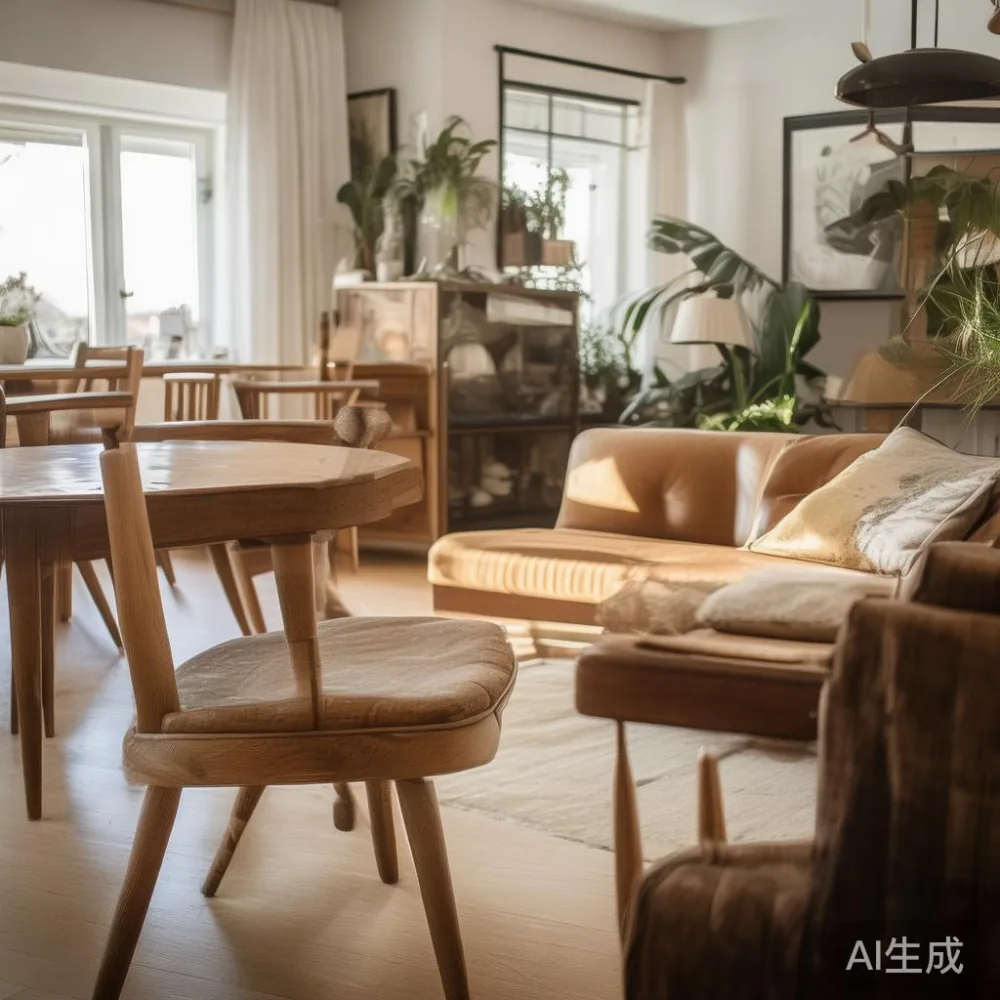
This is not a guide to buying less. It is a guide to buying pieces that earn their footprint, especially the dining chairs that sit at the literal centre of a HDB flat. Below I will walk you through the floor-plan realities of Singapore flats, the lift and doorway measurements that quietly decide what furniture you can even bring home, the light-luxury styling cues that make 80 sqm feel like a small Parisian pied-à-terre, and the way MIDHILL builds dining chairs, solid wood sofa frames, marble-topped accent tables, and bed frames that travel all the way from Foshan to your lift landing without drama.
What is the best chaise lounge for a small apartment?
A compact American country armchair with a built-in chaise extension is the single smartest lounge piece for a Singapore flat under 95 sqm, because it replaces a separate sofa, an ottoman, and a guest bed while occupying roughly 165 cm × 90 cm of floor. Look for a frame depth under 85 cm so it clears the standard 90 cm HDB corridor, an arm height of 62–66 cm so it slides under a 75 cm dining table overhang, and a seat height of 44 cm so your knees sit at a comfortable angle when paired with a 72 cm dining table. Skip anything with a sprung chaise mechanism that needs 15 cm of clearance to extend; a fixed, upholstered day-end saves space and cannot rattle at 3 a.m. when your neighbour is washing dishes.
How wide is a HDB lift landing, and why does that decide your dining chair?
A standard Singapore HDB passenger lift door opening is about 90 cm wide and 210 cm tall, and the cabin itself runs roughly 1.1 m × 1.4 m, with a diagonal clearance of about 1.7 m. That single number quietly caps what you can buy. A solid wood dining chair with armrests can easily measure 58 cm wide × 60 cm deep × 95 cm tall, and that is fine. But the moment you add a tufted wingback at 72 cm wide, or a fully upholstered armchair at 80 cm deep, you risk a delivery team dismantling the box in the corridor and charging you a re-delivery time of 5–7 working days for the next attempt. MIDHILL publishes the carton dimensions of every dining chair, sofa, and bed frame on its spec sheet, which is the kind of boring detail that saves a S$120 redelivery fee.
Door widths inside the flat matter too. Internal HDB doors run 76–82 cm, sofas and bed frames need to come apart or arrive in two cartons, and wardrobes above 180 cm tall should be assembled in-room rather than carried in whole. A 1.6 m solid wood dining table in one piece will not turn the corner of a 1990s Bedok block's U-bend staircase; the same table in two halves will.
What floor area do you actually have after you subtract walls, doors, and the kitchen?
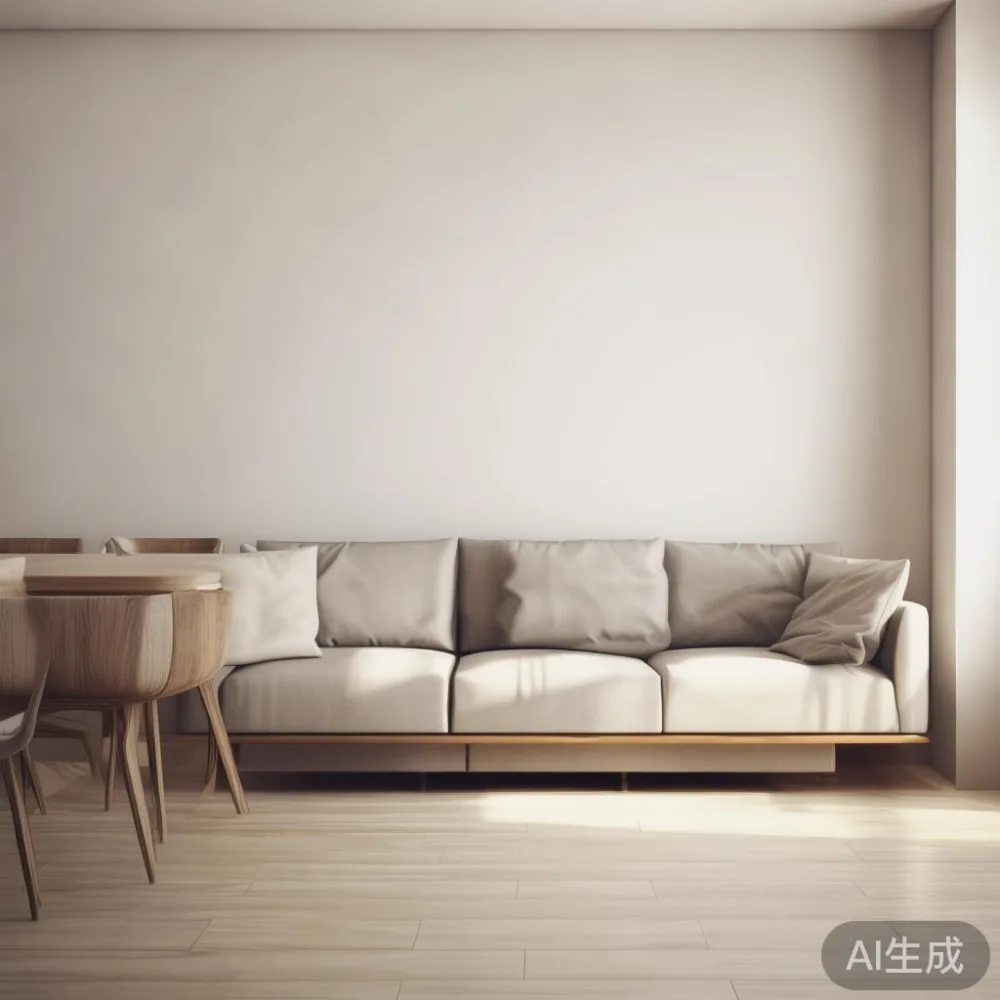
Singapore HDB three-room flats start at about 60 sqm, four-rooms at 90 sqm, and five-rooms at 110 sqm, but the liveable area after you subtract the kitchen, two bathrooms, the structural walls, and the air-con ledge is closer to 70–80% of that headline figure. A typical four-room at 93 sqm gives you roughly 65 sqm to actually arrange furniture in, and the dining-living rectangle inside is usually 4–4.5 m × 3.4–3.8 m. That rectangle has to hold a three-seater (180–240 cm), a coffee table (90–120 cm), a TV console (150–180 cm), a four-seater dining table (120–140 cm) with four dining chairs, and a circulation path of at least 70 cm on every walking side. Add it up and you have 480 cm of furniture lined against 400 cm of wall. Something has to give, and it is usually either the size of the sofa, the size of the dining chairs, or both.
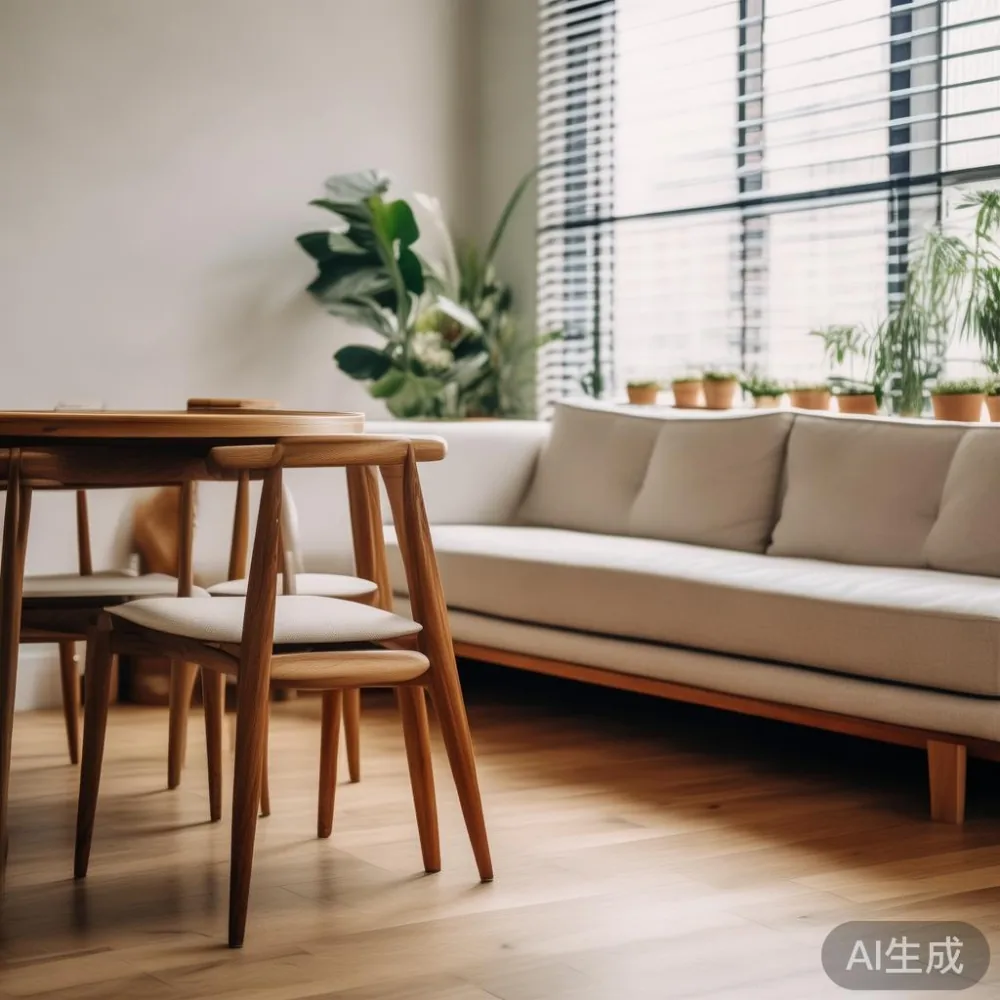
The trick is to choose dining chairs with a seat depth under 42 cm so they tuck fully under a 75 cm overhang, an armless or low-arm profile so they do not block the eye line from the kitchen to the window, and a back height under 92 cm so they read as furniture rather than as a wall. Four such chairs around a 120 cm round table occupy about 250 cm × 250 cm, leaving a 70 cm walking lane on two sides and a clear view of the window. Swap in 55 cm deep upholstered chairs and you lose 50 cm of perceived room.
Which light-luxury style suits a small HDB flat best?
Three styles travel well to a Singapore flat: French light luxury, American light luxury, and post-modern light luxury. They are not brands, they are visual languages, and picking the right one will save you from a flat that feels either too formal or too rustic for the resale market.
French light luxury leans on cream bouclé, slim brushed-brass legs, soft curves, and a marble top on the accent table to bounce light around the room. In a Tampines five-room with morning sun, a Bouclé dining chair with a 58 cm seat and a 75 cm back height will look like it was drawn for the space. The colour palette is warm white, taupe, soft gold, and one accent of muted forest green or burgundy. Avoid anything with deep buttoning; the shadows it casts make 65 sqm read as 55 sqm.
American light luxury is wider, lower, and more horizontal. Think a 220 cm three-seater in chestnut leather, a chunky 95 cm oak coffee table with a slight live edge, and dining chairs with a slatted back and tapered legs in white oak. This is the language for Punggol couples who entertain four people on a Sunday and want the dining table to double as a work desk during the week. The trade-off is footprint: an American-style dining chair often measures 55 cm across, faster to seat four people but harder to push in fully.
Post-modern light luxury is the most forgiving in tight spaces. Curved backs, asymmetric legs, mixed materials (travertine, walnut, brushed nickel), and one sculptural piece per room. A post-modern dining chair with a cantilever base and a 45 cm seat depth will tuck under a 70 cm overhang, freeing a full 15 cm of floor compared to a traditional four-leg chair. Pair it with a 130 cm oval marble dining table and you get a 6-seater footprint with the visual weight of a 4-seater.
How do you choose dining chairs that earn their floor space?
The test I use when I visit a flat is simple. I take a dining chair and ask three questions. Can I push it fully under the table with one hand? Can I sit in it for a two-hour dinner without my knees hitting the apron? And does it let the person next to me squeeze in to reach the window without standing up? If any answer is no, the chair is too big.
Concrete targets that work in 90% of HDB dining corners: seat width 44–48 cm, seat depth 40–44 cm, seat height 44–46 cm to match a standard 72–75 cm dining table, back height 86–92 cm so it does not block the eye line to a wall-mounted TV or a window, weight under 6 kg so the helper can move it for cleaning day, and a stackable or stack-nest design if you ever host more than four. MIDHILL's dining chair line runs from 4.8 kg to 5.9 kg per chair, and the spec sheet lists the exact stack height when four are nested together, which is usually 1.1 m. That fits a 1.2 m HDB storeroom shelf without a fight.
Material matters for acoustics. A fully upholstered dining chair absorbs the clatter of plates and the conversation bounce that makes a small room feel like a food court. A solid wood dining chair with a fabric seat pad reads as lighter, sounds livelier, and is faster to wipe down after a chilli crab spill. In a 65 sqm living-dining, I usually recommend two upholstered chairs for the head of the table and two wood-frame chairs on the sides, mixing weight and texture without mixing styles.
What about the rest of the room — sofa, bed frame, wardrobe, nightstand?
The dining chairs set the tone, but the sofa, bed frame, wardrobe, and nightstand set the budget. A 240 cm three-seater solid wood sofa in chestnut or walnut will eat S$2,400–S$3,600 of a typical 6,000-dollar furnishing budget, leaving around S$2,400 for a bed frame, a two-door wardrobe, two nightstands, the dining table, and the four dining chairs. That is tight, which is why light-luxury lines that sell complete packages from a single maker tend to come in below the cost of mixing three brands at a Tampines or Bedok ID's office. MIDHILL ships direct from Foshan to Singapore, and the full container share keeps landed cost per piece lower than what you would pay at a Balestier shop.
For the bedroom, a queen bed frame at 160 cm × 200 cm with a 110 cm headboard and under-bed clearance of 15 cm gives you hidden storage for suitcases without raising the sleep surface above 55 cm. A 180 cm three-door wardrobe with sliding doors saves 60 cm of swing clearance over a hinged version, which is the difference between a bed that fits and a bed that does not. Two 45 cm × 40 cm × 55 cm nightstands flank the bed, leaving 60 cm of walking lane on each side and a clear path to the door.
The marble accent table is the one piece where I tell people to spend a little more. A 90 cm round travertine or Carrara marble top on a slim brushed-brass or blackened-steel base reads as the most grown-up object in the room, costs roughly S$380–S$620, and weighs 18–24 kg. That weight matters: a heavier marble table does not shuffle when the vacuum cleaner bumps it, and the cool surface next to a warm solid wood sofa balances the room the way a glass of cold water balances a plate of nasi lemak.
How long does delivery take to a HDB in Tampines, Bedok, or Punggol?
From Foshan to a Singapore HDB door, a stocked dining chair or nightstand usually lands in 18–24 working days by sea-plus-last-mile, and a customised dining table, bed frame, wardrobe, or marble accent piece in 28–38 working days because the marble slab and the timber are cut to order. Lift-up delivery to the flat is included above US$350 of order value (about S$475), and the same-day booking window for the Tampines, Bedok, and Punggol postcodes is 9 a.m. to 1 p.m. or 1 p.m. to 5 p.m. on weekdays, plus a half-day Saturday slot that costs an extra S$45. The team will text a 30-minute ETA on the morning of delivery, which is the kind of detail that saves you from taking a half-day off.
GST is calculated at 9% on the landed cost and is shown as a separate line on the invoice, not folded into the headline price, so you can claim it back if you are furnishing a rental property registered for GST. There is a 14-day return window for unopened cartons and a lifetime refinishing service on the solid wood dining chairs, bed frames, wardrobes, and nightstands, which is honest value at no extra cost. The structural warranty runs ten years on the solid wood sofa and bed frame joinery, which is the kind of quiet promise you only get from a maker that has been cutting mortise and tenon joints since 2008.
What do you measure before you click buy?
Five numbers, in pencil order, written on the back of the renovation plan: the width of the lift door in cm, the diagonal of the lift cabin in cm, the width of every internal door in cm, the wall-to-wall distance of the dining area in cm, and the distance from the dining table edge to the nearest obstacle in cm. With those five numbers you can rule out 80% of the catalogue before you fall in love with a piece that physically cannot reach your flat.
Then add three soft rules. Leave 70 cm of walking lane on every side of the dining table. Leave 90 cm between the back of the sofa and the wall behind it, or 80 cm if the back is low and you never walk that way. And leave 30 cm between a dining chair and a wall when the chair is pulled out, so a seated guest can still stand up to take a phone call without reversing into the kitchen counter.
If the math works, the dining chairs will feel like they were always meant for the flat. If it does not, no amount of cushions will hide the fact that you tried to seat six people in a space built for four. The couple in Punggol, by the way, ended up with four dining chairs at 46 cm wide, a 130 cm oval dining table, and a 220 cm American-style solid wood sofa in walnut. The helper still has room for the tray. The room reads generous. And the fourth chair is no longer the argument.