How Humidity in Southeast Asia Affects Wood Furniture — A Guide for Singapore Homes
Last month I visited a customer in a 980-sqft HDB flat in Punggol. She had purchased a set of solid wood dining chairs from an online seller eight months earlier, and three of the chairs had developed a slight wobble at the back legs. The culprit was not bad craftsmanship — it was the climate. Relative humidity in Singapore sits between 70% and 90% for most of the year, and that single number quietly reshapes every joint, panel, and finish in your home. As a furniture specialist working with a Foshan manufacturer that has been exporting solid wood dining chairs since 2008, I have seen the same conversation play out hundreds of times: buyers love the warmth of real timber, then wonder why their chairs behave differently from the showroom sample. This guide explains what humidity actually does to wood, why a Singapore HDB flat is a uniquely demanding environment, and how to choose pieces that survive the tropics without losing their look.
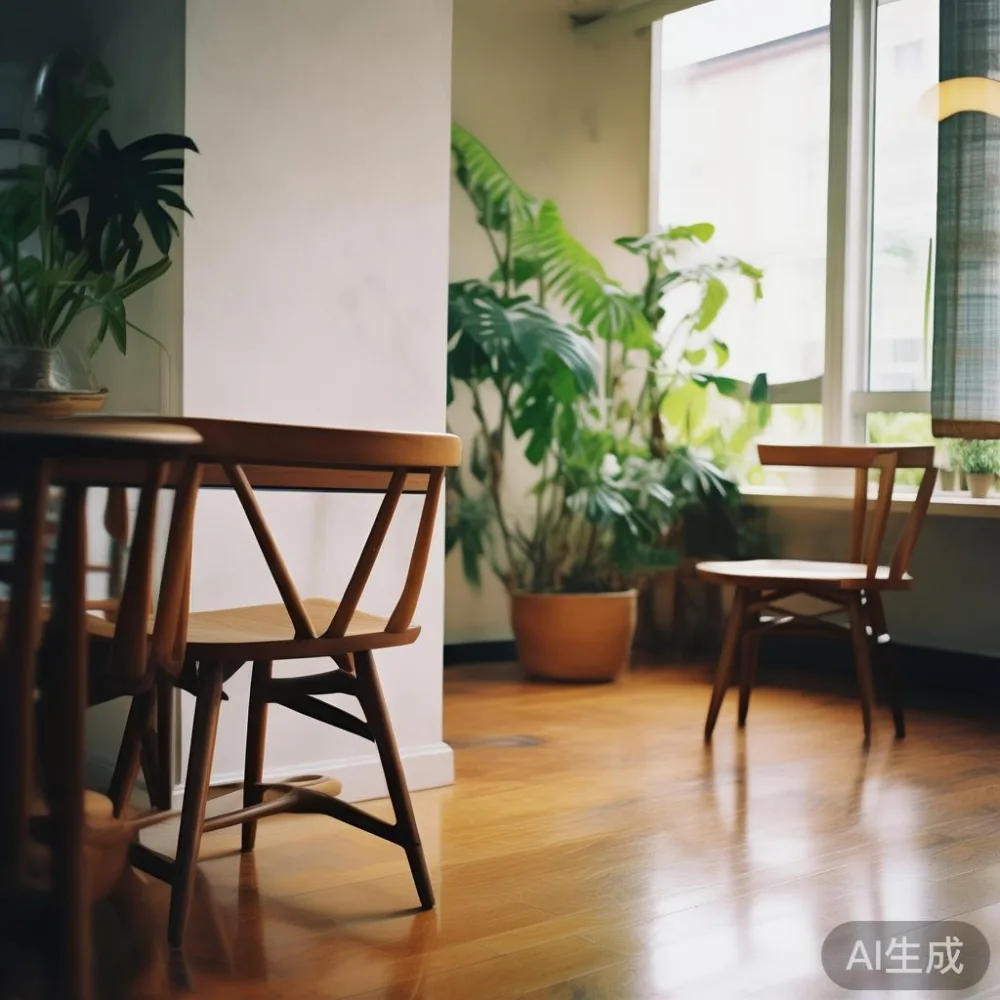
Why does Singapore's humidity punish wooden dining chairs?
Wood is hygroscopic, meaning it constantly absorbs and releases moisture to match the air around it. In Tampines, Bedok, and Punggol — and in most parts of Singapore — the relative humidity rarely drops below 65%, even on dry afternoons with the air-con running. When a dining chair absorbs that much ambient water over weeks and months, the grain swells unevenly. Tenons press tighter into mortises, seat panels crown upward, and finishes turn cloudy. A dining chair is exposed to this cycle every meal, every day, for years, which is why joints loosen faster in a HDB flat than in a temperate climate. At MIDHILL we have measured swelling of 0.8 mm to 1.2 mm across a 45 cm solid oak seat panel after a single humid week — small in absolute terms, large enough to stress a glued joint.
What humidity level is safe for solid wood dining chairs?
The sweet spot for indoor solid wood furniture in Singapore is 45% to 60% relative humidity. Below 40% the wood shrinks and cracks; above 70% it swells and joints soften. During a wetter-than-usual monsoon week in late 2024, several customers in Bukit Batok HDBs reported humidity readings above 85% even with two air-con units running. Running a dehumidifier in the dining area for 4 to 6 hours a day, or keeping the air-con at 24°C with the fan mode on, usually pulls the room down into the 55% to 60% range — the band where a chair made from kiln-dried timber behaves predictably. Place a cheap digital hygrometer (around SGD 12 to SGD 22 at any local electronics store) on the dining table and check it for a week before you blame the chair for warping.
How do I choose a metal furniture for a home office?
Choose metal furniture with a powder-coated or electroplated finish rated for tropical humidity (ASTM B117 salt-spray test of 96 hours or higher), welded joints rather than bolted ones, and adjustable feet to handle uneven HDB floors. The same humidity rules apply: a metal home office chair in a Punggol condo with morning sun and no dehumidifier will rust at the welds within 18 months. Look for frames described as "marine-grade" or "outdoor-rated," and remember that an office chair used 8 hours a day in a sealed study is actually more at risk than your dining chairs, because the study door is closed and air does not circulate.
Which wood species hold up best in a HDB dining room?
Three categories perform reliably in Singapore. White oak and European beech have tight grain structure and resist surface swelling; ash behaves similarly and is the same family MIDHILL uses for our light-luxury American oak dining chair range. Rubberwood, locally common and budget-friendly, needs an excellent factory seal or it turns fuzzy at the edges after two monsoon seasons. Teak and Burmese rosewood are the gold standard for tropical climates — naturally oily, dimensionally stable, and the same woods used in 19th-century shipbuilding — but expect to pay SGD 1,200 to SGD 2,400 per chair rather than SGD 180 to SGD 320 for an oak or beech option. For most Singapore households, kiln-dried oak or beech, finished with a multi-layer matte lacquer and delivered already acclimatised to a 55% factory humidity, is the practical balance.
How should I unpack and acclimatise new dining chairs in a small flat?
Singapore HDB lift openings are typically 80 cm wide by 210 cm tall, and corridor turns into the unit can be tighter than that, so most dining chairs arrive flat-packed or in two-piece boxes. Unbox them in the dining area itself, remove all foam and plastic wrapping immediately (trapped moisture will stain the lacquer within 24 hours), and let them sit open for 72 hours before tightening any bolts. The chair is "looking for" a moisture equilibrium with your specific room. My colleague in Bedok once skipped this step, tightened every bolt on day one, and returned three weeks later to a chair with two hairline cracks along the back rail. A SGD 18 hygrometer and three days of patience would have prevented it.
What daily and weekly care keeps dining chairs stable year-round?
Wipe seats with a barely damp microfibre cloth every Sunday — never a wet rag, never a silicone spray. Rotate the chairs clockwise once a month so the same chair does not sit in the afternoon sunbeam every day. Check the four corner bolts every six months; a 4 mm Allen key and a 30-second tightening is the entire maintenance routine. If a chair develops a small surface crack under SGD 25 in repair value, our Foshan factory offers lifetime refinishing for a SGD 40 to SGD 80 service fee depending on the piece — a service that is rare in this category of post-modern light luxury furniture. Keep dining chairs at least 60 cm away from any open balcony door during a thunderstorm, and never store wet umbrellas leaning against them.
Will a large dining table and matching dining chairs warp at different rates?
Yes, and this is where buyers most often get caught. A 200 cm solid wood dining table has roughly nine times the surface area of a single dining chair seat, so it absorbs and releases moisture more slowly. In a HDB flat that swings from 50% humidity on a dry air-con day to 85% during a wet weekend, the table may stay dimensionally stable while the chairs around it visibly shift. This is also why MIDHILL's design team tests every dining chair against a matching dining table in a humidity chamber before approving a new collection — the expansion coefficients have to be close enough that joints remain tight across a full annual cycle. If you already own a table and are buying new chairs, mention the table's wood species and age to the supplier; pairing a 2-year-old rubberwood table with brand-new European oak chairs is a recipe for uneven movement.
Is solid wood better than engineered wood or veneer in a tropical climate?
For dining chairs, solid wood outperforms engineered alternatives by a wide margin in Singapore conditions. Engineered boards (plywood, MDF with veneer) handle humidity worse than solid timber because the glue lines soften and the surface veneer bubbles. A solid wood dining chair can be sanded and refinished four to six times over a 30-year lifespan; a veneered chair typically cannot be refinished at all. The catch is cost: a solid oak or beech dining chair from a Foshan factory that controls kiln-drying properly sits at SGD 220 to SGD 380 per chair, while a veneered "wood-look" chair can be SGD 90 to SGD 140. For bedroom pieces where the humidity swings are smaller — a bed frame, a nightstand, a wardrobe — engineered wood with a quality veneer is perfectly fine and worth the savings. For pieces directly exposed to cooking steam and frequent air-con cycles, solid wood pays for itself within the first refinishing.
How do French light luxury and American light luxury designs compare for Singapore homes?
French light luxury tends toward slim profiles, cabriole-inspired curves, and brushed brass or champagne finishes; the silhouettes feel ornate even when the construction is minimal. American light luxury — the style we most often produce at MIDHILL for the North American and Singaporean markets — uses cleaner lines, slightly chunkier proportions, and matte black or satin nickel hardware. In a Singapore condo with a 2.7 m ceiling, French silhouettes read as more refined but can look fragile against 90% humidity; American proportions hold their shape better through seasonal movement. If you already own a marble table in the dining area, French light luxury chairs with a soft linen seat pad tend to harmonise; if your dining table is a dark walnut or solid oak slab, American light luxury dining chairs in matching timber with a leather seat usually feel more cohesive. Both styles ship well from Foshan to Singapore — typical sea freight is 14 to 22 days, and our free-shipping threshold kicks in at SGD 475 (roughly US$350) per order.
What about warranty and returns when buying dining chairs across borders?
Cross-border furniture purchases used to be a leap of faith; today a serious Foshan exporter offers terms that match or beat local retailers. MIDHILL, for example, ships with a 10-year structural warranty on joinery, lifetime refinishing for a small service fee, free shipping above SGD 475, and a 14-day return window once the chairs arrive in your HDB flat. Always photograph the unboxing: the four corners, the seat, and the back rail. If anything arrives damaged, a Foshan factory with a 16-year export history will replace the part or the whole chair rather than argue about it — reputation matters more in the export trade than in domestic retail. GST on imported furniture in Singapore is 9% as of 2024 and is usually included in the landed price quoted by a serious exporter, so ask for a GST-inclusive quote to avoid a surprise at delivery.
Are dining chairs a better investment than a large master bed for dining room multipurpose spaces?
This is a question I get at almost every Tampines condo consultation, because many new launches in Singapore advertise a "flexible dining room" that doubles as a guest room or study. If your dining area must also accommodate a fold-out bed or a desk, the dining chairs take more daily abuse than a static piece of furniture like a large master bed for dining room conversions. Spend the upgrade budget on the chairs — kiln-dried solid wood, mortise-and-tenon joinery, replaceable seat pads — and choose a simpler platform bed frame for the side that folds out. A typical light-luxury dining chair set of four ships at SGD 880 to SGD 1,400 from Foshan, versus SGD 1,600 to SGD 2,800 for a queen-size bed frame with matching nightstand. The chairs earn their keep at three meals a day, 365 days a year.
Final notes on living with wood in the tropics
Wood furniture in Singapore is not fragile, but it is responsive. Treat the dining chairs as a living material — measure your humidity, rotate them, tighten the bolts twice a year, and refinish every 8 to 12 years — and they will outlast three sofa replacements and two wardrobe renovations. The customers who get the most out of their solid wood pieces are the ones who stop expecting a chair to behave like plastic. Pick a kiln-dried species with a stable factory finish, acclimatise it for 72 hours after delivery, and let the air-con do some of the climate-control work the rest of the year. Your dining chairs will reward that small habit with decades of quiet service, which is the entire point of choosing solid wood over the alternatives in the first place.