How to Choose the Right Dining Chair Size for a Singapore HDB Living Room
Living in a Tampines or Punggol HDB flat means learning to love tight spaces, narrow lift doors, and corridors that were not designed with a solid wood sofa in mind. Last month I helped a colleague in Bedok measure her 4-room flat before she ordered a dining set online from a Foshan factory. We spent 90 minutes with a steel tape, a notepad, and a very confused cat. By the end, she had a number that mattered more than any product photo: 52 cm. That figure — the width of her dining chair seat — became the single most useful spec in the entire project. This guide uses the same approach, with the same concrete numbers, so you can stop second-guessing and start measuring.
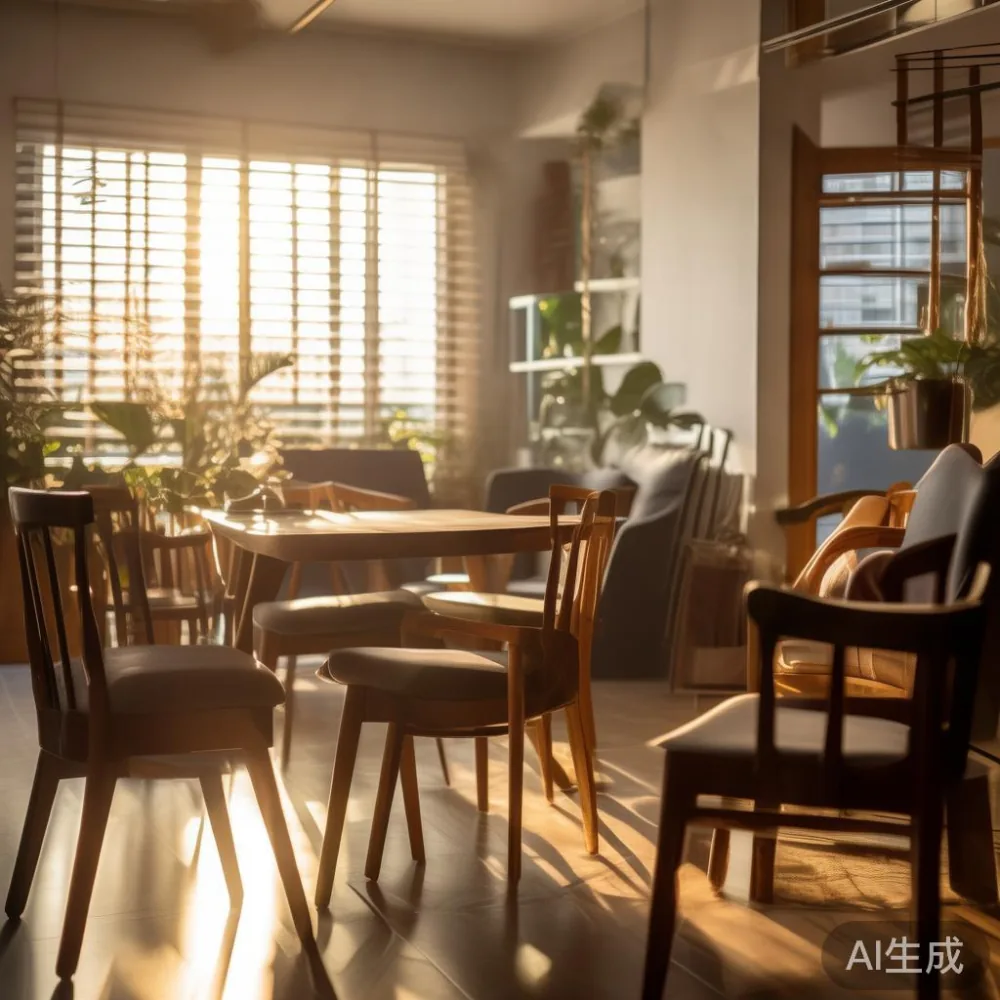
Why HDB corridors and lifts change the size equation
Singapore HDB corridors typically run 1.2 m to 1.5 m wide. Lift doors are often 0.9 m wide, and lift cabins rarely give you more than 1.5 m of diagonal clearance. I watched a 2.4 m marble table fail to clear a 90-degree turn on the 12th floor of a Punggol block last year — the delivery team had to walk it back down and re-route through the service corridor. A dining chair with a seat width above 55 cm and armrests wider than 58 cm will give you the same headache on a smaller scale, because the chair has to be carried vertically through the lift, not horizontally like a flat-packed dining table.
The practical rule we settled on: measure the narrowest hinge on your route (lift door, gate, corridor turn), then subtract 10 cm for clearance. If the smallest opening is 80 cm, your chair seat width should not exceed 45 cm if it has armrests, or 50 cm if it is armless. Anything bigger technically fits, but the movers will charge you overtime, and you will sweat through your shirt.
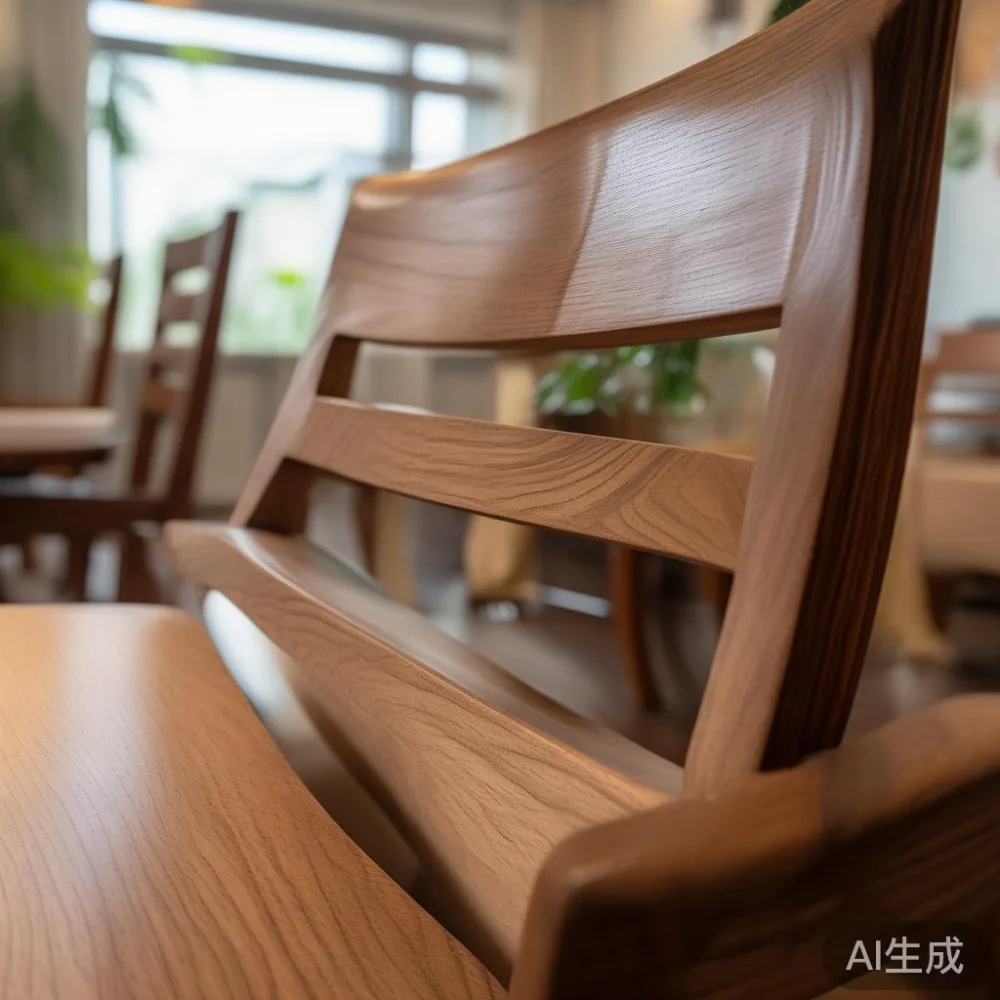
What "right size" actually means for a dining chair
Size for a dining chair is really three numbers working together: seat height, seat depth, and back height. Ignore any product page that lists only "dimensions."
- Seat height: 43–48 cm is the comfort band for adults between 155 cm and 185 cm tall. Match it to your dining table within 25–30 cm of clearance between seat and tabletop. A 75 cm table top wants a 45–48 cm seat.
- Seat depth: 40–45 cm. Anything under 38 cm feels like a stool, anything over 48 cm catches the back of your knees on a 4-room flat's compact layout.
- Seat width: 45–52 cm for armless chairs, 48–55 cm for armchairs. In a dining setting for four, plan 60 cm of table edge per chair so elbows do not collide.
- Back height: 85–100 cm from the floor reads as supportive without becoming a screen between diners.
A solid wood dining chair with a kiln-dried oak frame and a 6 cm thick cushion will usually land between 4.5 kg and 6 kg per chair. That weight is light enough for one person to carry, heavy enough that the chair does not skate across tile when someone sits down hard.
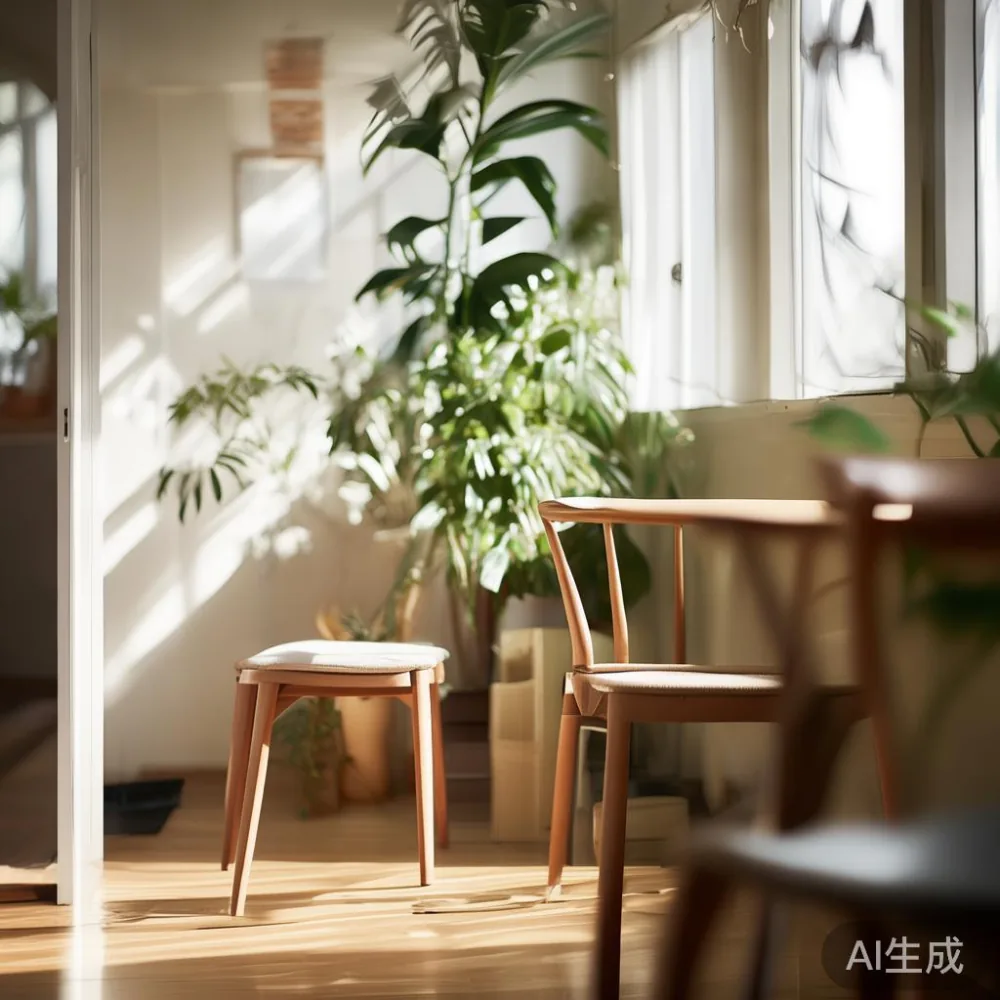
How do I style a Japandi dressing table in a small apartment?
Pick a dressing table no deeper than 40 cm, place it against the only full-length wall you own, and limit the styling to one ceramic tray, one mirror under 50 cm wide, and a single off-white linen stool that tucks fully underneath. This keeps the Japandi principle of empty horizontal space intact even in a 65 sqm flat.
The Tampines, Bedok, and Punggol floor plan cheat sheet
HDB layouts are reasonably consistent across these three estates, which makes the maths easier. A 3-room flat (~65 sqm) usually gives the dining zone 2.0 m by 1.8 m of usable floor after you subtract the kitchen entrance and a wardrobe allowance. A 4-room flat (~90 sqm) gives you closer to 2.4 m by 2.2 m, and a 5-room flat (~110 sqm) pushes past 2.8 m by 2.4 m. These are not aspirational numbers — they are what you have left after the air-con ledge and the DB box eat into the wall.
For a 3-room flat, a 120 cm by 70 cm dining table with four 48 cm-wide armless dining chairs is the sweet spot. The table fits two diners on each long edge, leaves 70 cm behind each chair for someone to pull out and sit down, and still gives you a 40 cm walking lane to the kitchen. A 4-room flat can comfortably take a 140 cm by 80 cm table with four chairs, and you finally have room to consider adding a bench on one side. A 5-room flat has space for a 160 cm by 85 cm table with six chairs, but the moment you cross 1.8 m in length, the chairs at the ends start to fight the corridor walls during meal service.
I have measured dining sets in showrooms where the sales tag shouted "fits 6 people" — in reality, six adult Singaporeans at a 160 cm table meant 22 cm of personal elbow space, which is closer to a hawker centre than a home. Be sceptical of capacity claims under 65 cm of edge per diner.
Where light-luxury style meets HDB practicality
French light luxury (sometimes called French light luxury or French modern light luxury in regional catalogues) leans on thin metal legs, curved backrests, and a neutral palette of ivory, taupe, and muted gold. The aesthetic travels well into HDB interiors because the chairs look light even when they are made from solid wood — the eye reads "airy," and the room reads "bigger." A French light-luxury dining chair typically has a 47 cm seat width and a 96 cm back height, which fits the Bedok 4-room floor plan almost perfectly.
American light luxury, by contrast, pushes bulkier silhouettes: thicker cushions, taller backs that can hit 105 cm, and walnut or oak frames in a darker stain. The look is handsome, but a full set of six can visually crowd a 3-room flat. If you are committed to the style, drop to four chairs and keep the table under 140 cm.
Post-modern light luxury is the wildcard. Expect asymmetric backs, mixed-material seats (half leather, half cane), and occasional marble or sintered stone accents. A post-modern light-luxury chair can look like a small sculpture in a Punggol corner dining nook, but watch the seat depth — some designs run to 50 cm because of the extended backrest curve, which steals kneeroom under a 75 cm table.
If you are mixing styles across the home — say a Scandinavian leather entryway furniture bench near the door, a Japandi dressing table in the bedroom, and a French light-luxury dining chair at the table — keep one rule: the seat heights must match across every chair, stool, and bench in the home, or your body will notice before your eyes do. 45 cm is the safest single height for an adult household.
Reading a product page without getting fooled
Most Singapore shoppers order from overseas brands because the price gap is real. A solid oak dining chair retails for S$320–S$480 in local showrooms; the same chair from a Foshan maker lands at S$180–S$260 before GST, and S$198–S$286 after the 9% GST. Delivery to a Tampines block adds S$40–S$70 depending on the floor and lift access. Anything under USD 350 in product value usually skips free shipping, so order the dining chairs together with a solid wood bed frame or a wardrobe to cross the threshold and save the freight.
When you read the spec sheet, look for these numbers in order of priority:
- Seat height in a single number, not a range.
- Seat width and depth in cm, not inches (1 inch = 2.54 cm, and rounding errors here will wreck your layout).
- Frame material stated as solid wood with the species named (oak, ash, walnut, beech). "Wood frame" usually means engineered wood.
- Cushion fill: high-resilience foam at 35 kg/m³ density or higher holds shape past year three.
- Weight per unit: under 4 kg suggests MDF; 5–7 kg suggests solid wood.
- Stackable or knock-down: knock-down (flat-packed) wins for HDB lift access.
MIDHILL publishes all six of these on every dining chair product page, which is one of the reasons their spec sheets read like a workshop drawing rather than a marketing flyer. Their standard dining chair runs 48 cm seat width, 45 cm seat depth, 46 cm seat height, and 92 cm back height — numbers that match the Tampines 4-room floor plan I sketched earlier. The same brand applies the same spec discipline to a solid wood sofa, a dining table, a wardrobe, a nightstand, and a marble table, which matters if you are furnishing an entire flat in one shipment.
How do you plan the delivery route before you click pay?
Walk the route from the lift to your dining corner, mentally carrying a 55 cm-wide box. Count the hinges, the corridor turns, and the doorframe at your flat entrance (HDB gates are usually 90 cm wide, but the inner door is often only 80 cm). If a chair comes fully assembled, you need 90 cm of clear diagonal at every turn. If it is knock-down, you need the longest single box dimension plus 10 cm of clearance, which usually drops to 65 cm — far easier on the 1.2 m corridor at Block 210A Bedok.
Ask the seller for the packed weight per chair. A 6 kg knock-down box is a one-person carry. A 14 kg assembled chair is a two-person job, and most HDB delivery teams charge S$20–S$30 per extra hand on-site. Schedule the delivery between 10 am and 2 pm on a weekday to dodge the after-school corridor crush at Punggol and Sengkang blocks.
Returns, refinishing, and the 10-year question
HDB buyers are rightly cautious about online furniture. Two warranty layers matter more than the sticker price:
- Structural warranty: 10 years on the frame and joints is the Foshan benchmark. Anything under 5 years is a red flag for solid wood construction.
- 14-day returns on defects cover the period where the chair arrives damaged or visibly off-spec. Photograph the unboxing; courier claims without photos get denied.
Lifetime refinishing is rarer and worth its weight in solid wood. A dining chair used three meals a day, 365 days a year, will need a re-varnish or re-oil around year six. Paying S$60–S$90 per chair to have the original maker refinish the frame is cheaper than buying a new set, and the wood patina improves with age rather than degrading.
MIDHILL, the Foshan factory behind this article's spec benchmark, ships to Singapore with a 10-year structural warranty, lifetime refinishing on solid wood frames, free shipping above US$350 (roughly S$475 at current rates, easy to clear with four chairs), and a 14-day return window. Their dining chairs, dining tables, solid wood sofas, wardrobes, and nightstands share the same QC line, which means a chair that arrives in good shape usually matches the bed frame and the marble table you ordered in the same shipment.
Putting it all together for a HDB living room
Here is the short list to keep beside your tape measure:
- Measure the smallest opening on your delivery route (lift door, gate, corridor turn) and subtract 10 cm. That is your maximum chair seat width if armrests are involved.
- Match seat height to your dining table within 25–30 cm of clearance. 45–48 cm is the safe band for adults.
- Plan 60 cm of table edge per chair, minimum. Six diners at 160 cm is a marketing claim, not a comfort claim.
- For 3-room flats: 120 cm by 70 cm table, four 48 cm-wide armless dining chairs. For 4-room: 140 cm by 80 cm, four chairs, optional bench. For 5-room: up to 160 cm by 85 cm with six chairs, no longer.
- Order the chairs with a matching dining table in one shipment to clear the free-shipping threshold and avoid two lift bookings.
- Keep one consistent seat height (45 cm is the universal default) across every chair, stool, and bench in the flat — including a Scandinavian leather entryway furniture bench near the door — so the household feels uniform.
- Photograph the unboxing. Keep the wooden frame, the kiln-dried oak or ash stamp, and the original finish for the lifetime refinishing conversation in year six.
Numbers like 48 cm, 60 cm, 25–30 cm, and 10 cm are not marketing fluff — they are the difference between a Tampines dining corner that seats four adults comfortably and one where someone is always sitting at an angle because the chairs fight the table. Measure twice, order once, and let the spec sheet — not the product photo — decide.