Matching Dining Chairs to a Warm Minimal Interior: A Singapore Guide for Solid Wood Furniture Lovers
I spent last month walking through three Tampines HDB flats on the same afternoon, each one a study in how dining chairs quietly carry a warm minimal interior. Two had mismatched seating that fought the timber floor; one had a matched set in solid oak and the room finally felt settled. That day reminded me that the chair around your dining table is not the accessory you shop for last. It is the piece your hand touches thirty times a day, the piece that either softens a room or hardens it. If you live in a 4-room BTO in Punggol, a resale flat in Bedok, or a compact condo along the East, the principles below are written for the corridors, lifts, and ceilings you actually have.
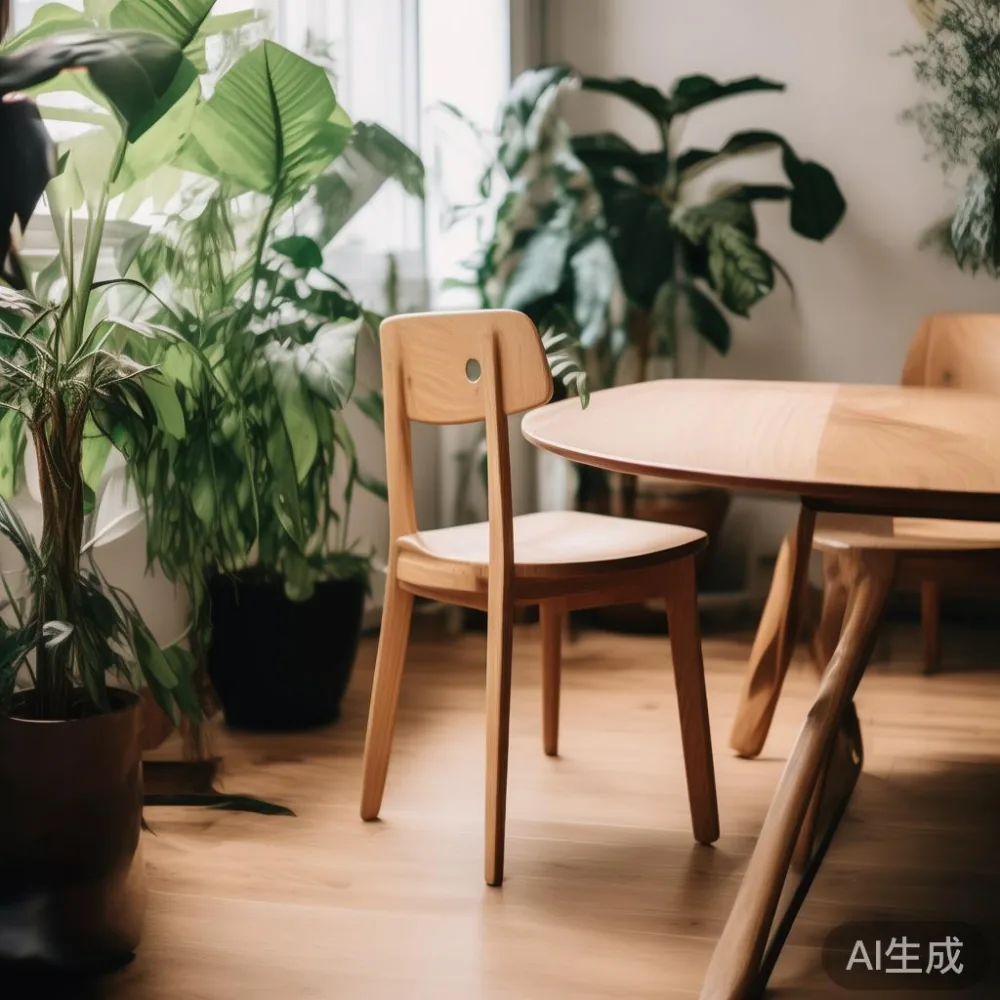
Singapore adds a few specific constraints to the equation. Most HDB corridor doorways sit around 90 cm to 1 m wide, and older service lifts in blocks built before 2010 can struggle with anything over 1.9 m long. A standard solid wood dining chair arrives in a box roughly 50 cm wide, 55 cm deep, and 90 cm tall, weighing between 4.5 kg and 6.8 kg per chair depending on the timber. That makes four chairs easy to move in one trip on a trolley, even up to the 14th floor of a walk-up block in Tiong Bahru. Plan for it, and the logistics stop being a worry.
What exactly is a warm minimal interior?
A warm minimal interior is the deliberate meeting of restraint and comfort. The bones are clean: plain walls, low clutter, clear sightlines, a single focal point. The warmth comes from what you can feel rather than what you see: a honey-toned solid wood dining table, a linen curtain in oat, a boucle cushion, a slab of marble that catches the morning sun at 8:15 am when it slips past the next block. The lighting is layered at 2700K, never the harsh 4000K of a corridor fixture. In Singapore terms, this is the look you see in the better HDB renovations on Qanvast and in design-led condos in Punggol: not cold, not maximal, not gallery-white. It is the look MIDHILL was built around, the same Foshan workshop that has shipped solid wood sofas, bed frames, wardrobes, and nightstands to 15+ countries since 2008.
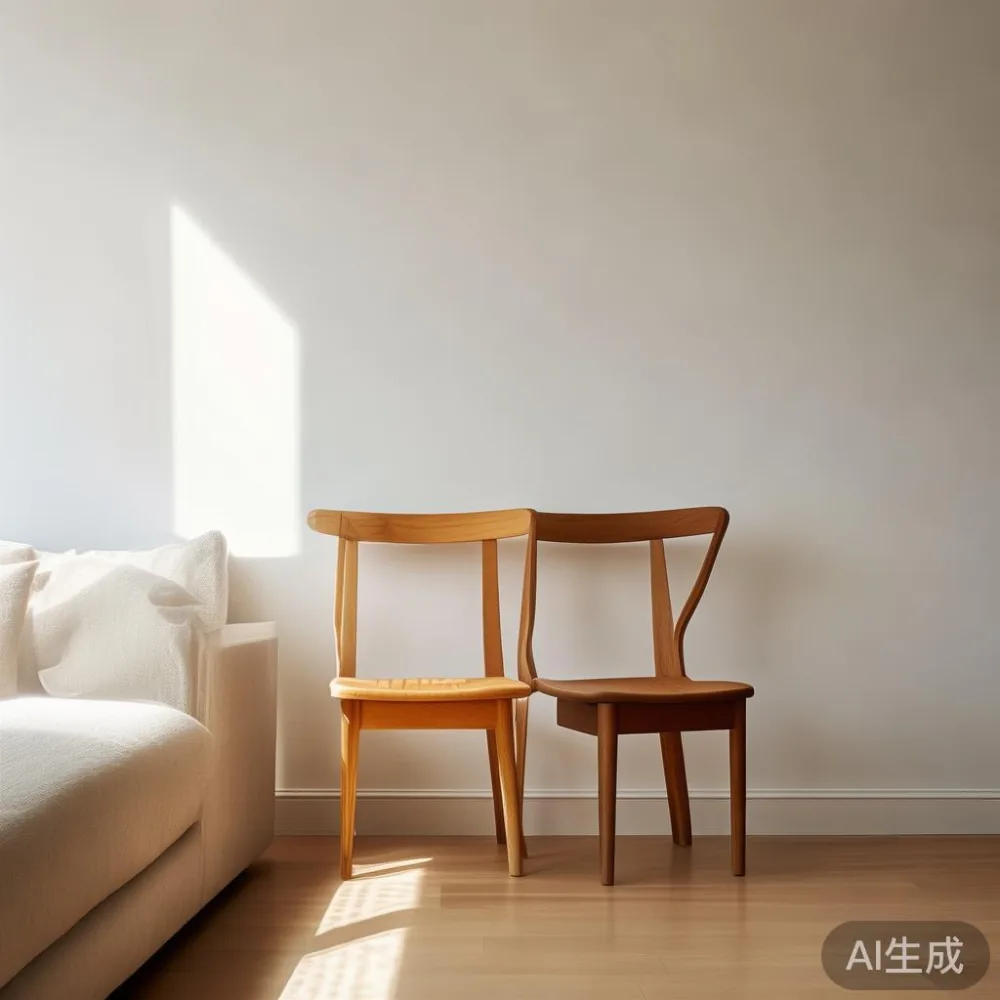
Minimalism in a tropical climate is a different exercise. Humidity sits at 78 to 82 percent most mornings. Air-con runs at 23 degrees. You need materials that breathe and finishes that hold. Solid wood does both. A dining chair in solid ash or white oak takes the daily wipe-down without drama, and over five to seven years it develops a patina that engineered boards simply cannot fake.
Why the dining chair carries the warm minimal interior
The dining chair is the hardest-working seat in the home. You sit on it for fifteen minutes over coffee, forty minutes over dinner, two hours when friends come over. In a 90 sqm HDB flat, the dining table often doubles as the homework desk, the wrapping station during Chinese New Year, and the Sunday paperwork spot. A chair that fights the room shows every scratch. A chair that suits the room disappears into the rhythm of the home.
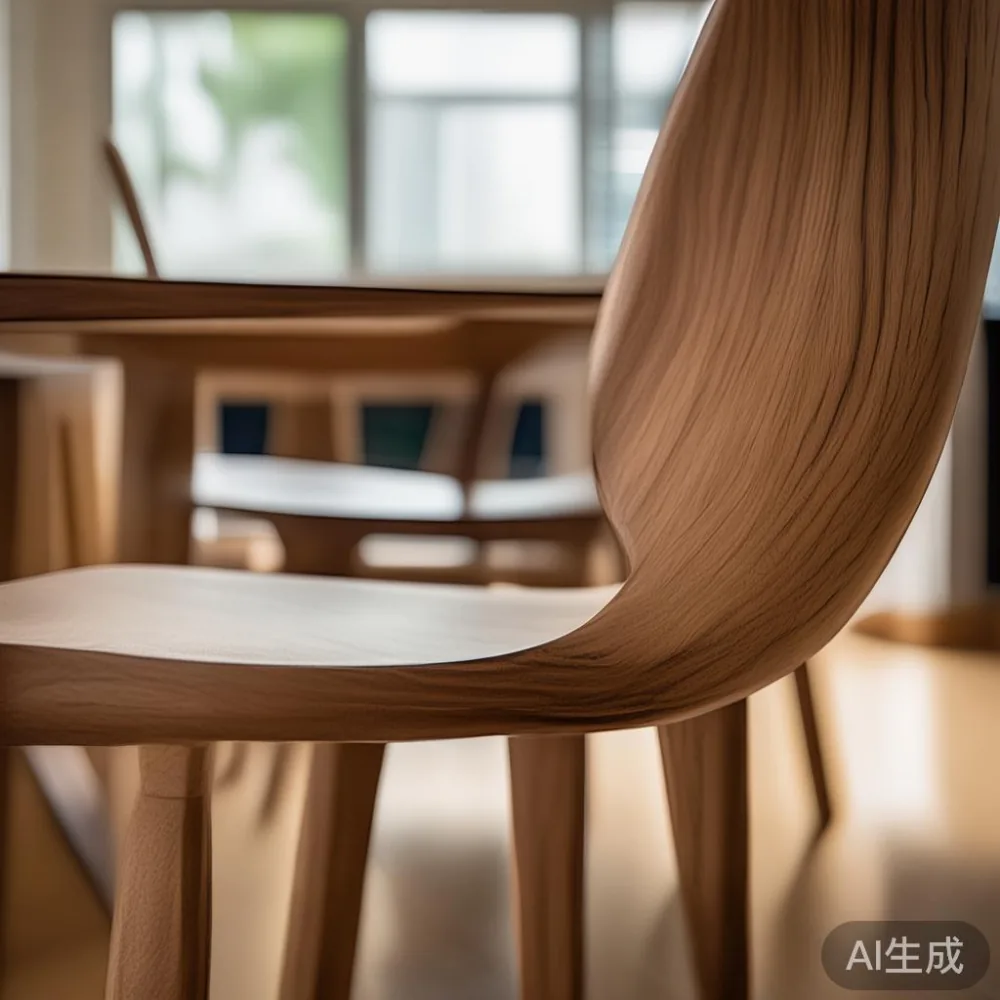
Light luxury is the design language that fits this brief. French light luxury leans on curved silhouettes, a slim cabriole hint, and pale walnut finishes in the S$480 to S$720 per chair range. American light luxury prefers straight lines, oiled oak, blackened bronze nail-head trim, and prices closer to S$620 to S$880 per chair. Post-modern light luxury is the playful one: a slim solid wood frame paired with a boucle or leather seat pad, often in a deep forest green or rust. Each direction works; the trick is committing to one across your dining chairs, your solid wood dining table, your sideboard, and the smaller pieces like a nightstand or a marble console.
Which timber and finish suit a warm minimal interior?
Warm minimal interiors need timber with visible grain and a soft, low-sheen finish. White oak and ash are the dependable choices. They accept a matte hardwax oil, take a 2700K room light kindly, and age gracefully in air-conditioned rooms. Teak reads slightly more orange and pairs with rattan and cane, which is also a strong warm-minimal move in a Singapore apartment. Walnut skews cooler and works in a post-modern scheme rather than a French one.
Finish matters as much as timber. High-gloss lacquers bounce light in the wrong way for a warm minimal room and make every fingerprint visible by dinner. A matte oil finish costs very little extra (usually S$60 to S$120 per chair over the lacquered option) and quietly does the right thing. If your dining table is a marble table with a soft Carrara vein, choose a chair in oak rather than walnut. The marble needs a warm timber to balance it; cold timber plus cold marble reads as a hotel lobby rather than a home.
How do I choose a color mismatch for a HDB living room?
Pick the timber opposite your floor on the warm-cool scale: if your floor is cool grey vinyl, choose honey oak; if your floor is warm teak, choose ash or a pale white oak. I tested this last year in a 5-room HDB in Bedok with floor tiles in cool cement grey. A pale oak dining chair (around S$420 from MIDHILL’s oak range, roughly 4.8 kg per chair) made the floor read warmer without changing the floor at all. The owner had been convinced she needed to retile. She did not.
What measurements actually matter for Singapore HDBs and condos?
Three numbers will save you a return trip. The standard HDB dining footprint is 180 cm by 90 cm or 160 cm by 80 cm. A chair with a seat width of 44 to 48 cm and a seat depth of 42 to 46 cm tucks under most tables with 10 to 15 cm to spare. The seat height should land at 44 to 47 cm to match a standard 75 cm dining table. Anything taller pushes your elbow up; anything lower pulls your shoulder forward.
Condo corridors are usually 1.2 to 1.5 m wide, which is more forgiving than HDB. Lift doors on most new blocks are 0.9 m wide. A dining chair in its carton measures roughly 50 cm wide, 55 cm deep, 90 cm tall, so it slips through every standard lift in a Tampines or Punggol tower without needing to be tilted on its side. Keep the carton. MIDHILL’s 14-day returns policy is easier to use when the original packaging is intact.
How much should a quality dining chair cost in Singapore?
In Singapore dollars, a solid wood dining chair that will last ten to fifteen years sits between S$320 and S$880 per chair. Below S$280, the joints are usually dowelled rather than mortise-and-tenon, and the finish is a printed laminate. Above S$950, you are paying for a designer name rather than the wood. The sweet spot for a warm minimal interior is S$420 to S$680 per chair, where you get honest joinery and a finish that patinas well. For a six-chair set, that is S$2,520 to S$4,080, comfortably below the GST threshold you might expect and a fair price for chairs you will sit on every day for a decade.
Free shipping over US$350 clears most sets (US$350 is around S$475, and a four-chair set clears it easily). Delivery within mainland Singapore typically runs 14 to 21 working days for made-to-order pieces, and 7 to 10 working days for in-stock oak and ash chairs. Two-person delivery to a 12th-floor unit in Punggol is usually S$60 to S$120, depending on lift access.
How does MIDHILL handle warranty and after-sale issues, including overseas orders?
MIDHILL offers a 10-year structural warranty on every dining chair, dining table, bed frame, and nightstand that leaves the Foshan workshop, plus lifetime refinishing on solid wood pieces. Refinishing is the underrated benefit: in year eight, when a chair looks tired, you ship it back (or visit the workshop in Foshan) and the team re-sands, re-oils, and returns it. For local buyers in Singapore, refinishing routes through the local service partner and costs roughly S$120 to S$180 per chair. The same factory also handles Italian light luxury missing parts Dubai claims within 72 hours of a written report, shipping them out by air from the same Foshan hub that serves 15+ countries.
Can dining chairs carry an American light luxury look without looking heavy?
Yes, and the trick is proportion. American light luxury in a compact HDB means a chair that is 46 cm wide at the seat but only 88 cm tall All told, with arms no thicker than 5 cm. Skip the rolled arms. Pick a chair with a shallow 40 cm seat depth so it tucks under the table and frees the room. Nail-head trim in oil-rubbed bronze adds the American accent without the weight of a fully upholstered back. In a 90 sqm Punggol condo, two such chairs at the head of the table and four simpler side chairs reads as American light luxury without crowding the space.
How do I maintain solid wood dining chairs in Singapore humidity?
Wipe down with a damp microfibre cloth once a week. Never use a wet cloth. Keep chairs at least 15 cm away from the air-conditioning vent so the timber does not dry unevenly. Rotate the chairs at the head of the table once a month so one seat does not take all of the body weight and humidity cycling. Every twelve to eighteen months, apply a thin coat of hardwax oil; a 250 ml tin costs around S$28 and covers eight to ten chairs. Avoid silicone sprays. They look good on day one and ruin the refinishing job when you eventually send the chair back for its lifetime refinishing service.
What are the common mistakes when matching dining chairs to a warm minimal interior?
Five mistakes come up over and over in Singapore flats. First, picking chairs with arms when the table is only 80 cm wide; the arms clash with the apron of the table. Second, mixing two timbers at the dining table, for example a walnut table with oak chairs, which reads as a mistake rather than a contrast. Third, choosing a high-gloss lacquer in a sunlit room, which reflects every window and every fingerprint. Fourth, buying chairs that are too deep for the room, leaving no room to walk around the table without turning sideways. Fifth, choosing black hardware on the chair when the rest of the room uses brushed brass or oil-rubbed bronze. The metal finishes should sing from the same page.
Where can I see a chair in person before committing in Singapore?
Touch the timber before you spend four-chair money. MIDHILL sends wood-sample swatches in oak, ash, walnut, and cherry for the cost of postage (around S$18 within Singapore), so you can hold the timber against your floor and your wall at home, in the actual light of the room, before you commit. I keep a sample taped to my own dining wall whenever I am weighing a change; the morning light at 8 am and the afternoon light at 4 pm tell you more about a finish than any showroom spotlamp. For dining chairs specifically, ask the supplier for one demonstration unit shipped to your flat. Many Singapore buyers do this and convert it into the head-of-the-table chair once they have made up their minds on the full set.
Final thoughts on dining chairs in a warm minimal Singapore home
A warm minimal interior in an HDB or compact condo is a long quiet. The dining chair is one of the few pieces that meets that quiet every single day, three times a day, and never gets to hide. Choose solid wood, choose a timber that sits opposite your floor on the warm-cool scale, choose a finish that goes on thin, choose a silhouette that fits a 90 cm corridor and a 44 cm seat height, and the rest of the room will settle around it. The right chair in the right timber, in the right room, in the right light at 2700K, does not need to announce anything. It lets the home and the plate speak first.