How to Match Solid Wood Dining Chairs to a Warm Minimal Interior (HDB & Condo Guide, 2026)
I spent the better part of last October walking through furniture showrooms in Tampines and Bedok with a friend who had just collected her keys to a 1,023 sq ft Build-To-Order flat in Punggol. She wanted warm minimal — that quiet, sun-baked look you see on the cover of Kinfolk, but built to survive a 900 mm corridor lift and a family of five eating bak chor mee at 7pm. The single question she kept asking was about dining chairs: how do you pick chairs that feel calm, look expensive, and still survive a five-seat HDB dining nook? This article is the answer I wish I had given her on day one, written for Singapore homes between 540 sq ft and 1,200 sq ft, with real numbers and real rooms in mind.
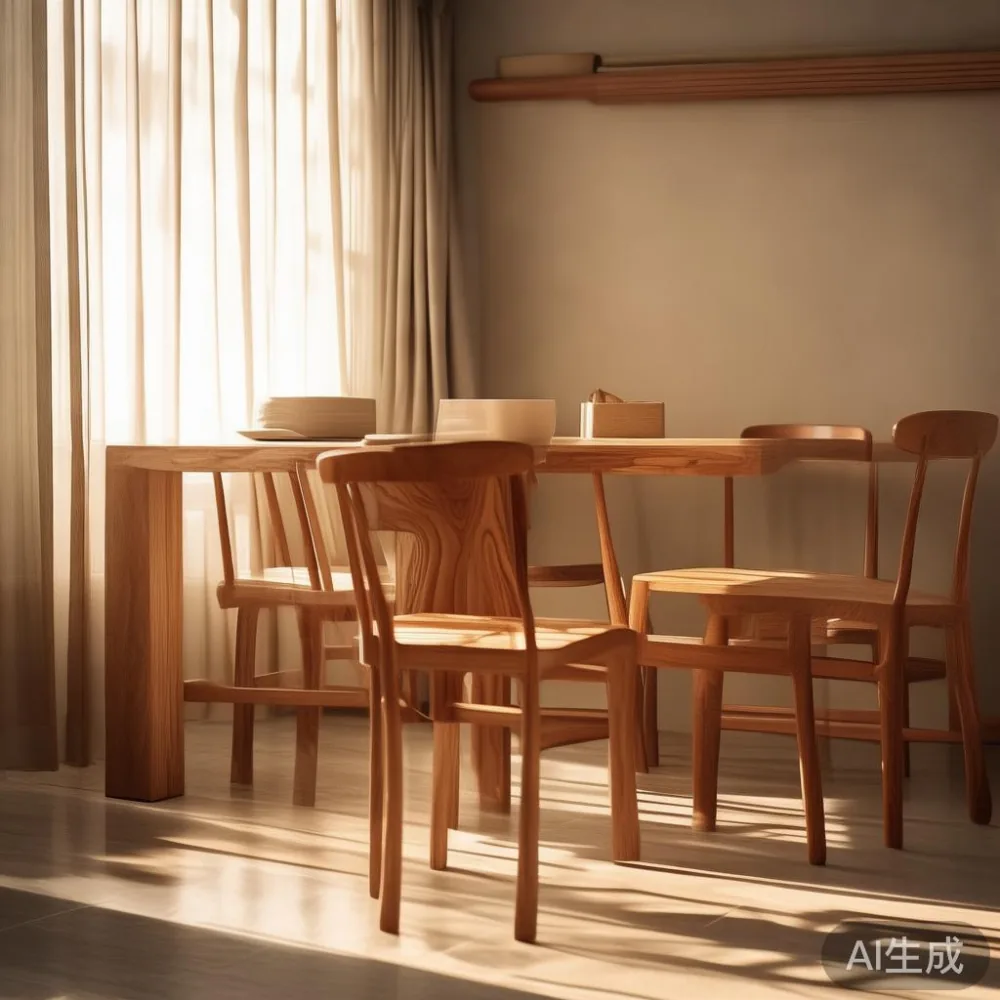
What does warm minimal actually mean in a Singapore flat?
Warm minimal is the post-modern light luxury approach: restraint in shape, generosity in material. In a Tampines 4-room HDB with 3.2 m floor-to-ceiling height, that usually means three solid wood pieces you can see from the entrance — a dining table, a bed frame, and one statement chair — and nothing else competing for attention. The palette is bone white (9YY 83/020 on the Nippon Vinilex chart) for walls, travertine or pale oak for floors, with one piece of furniture doing the warm heavy lifting. The mistake I see in Punggol ECs is people buying six coordinating pieces; warm minimal wants two.
For dining chairs specifically, that translates into a single design language. A 46 cm seat height, a 38–44 cm seat depth, and an upholstered or solid-wood back without ornamental carving. The warm tone comes from the wood — white oak (Quercus alba) at 6 % moisture content, or European beech at 8 % — not from stains or paint. If you cannot see grain on the chair, you are looking at French light luxury styling with a fabric cushion, which is also valid, but it changes how the rest of the room behaves.
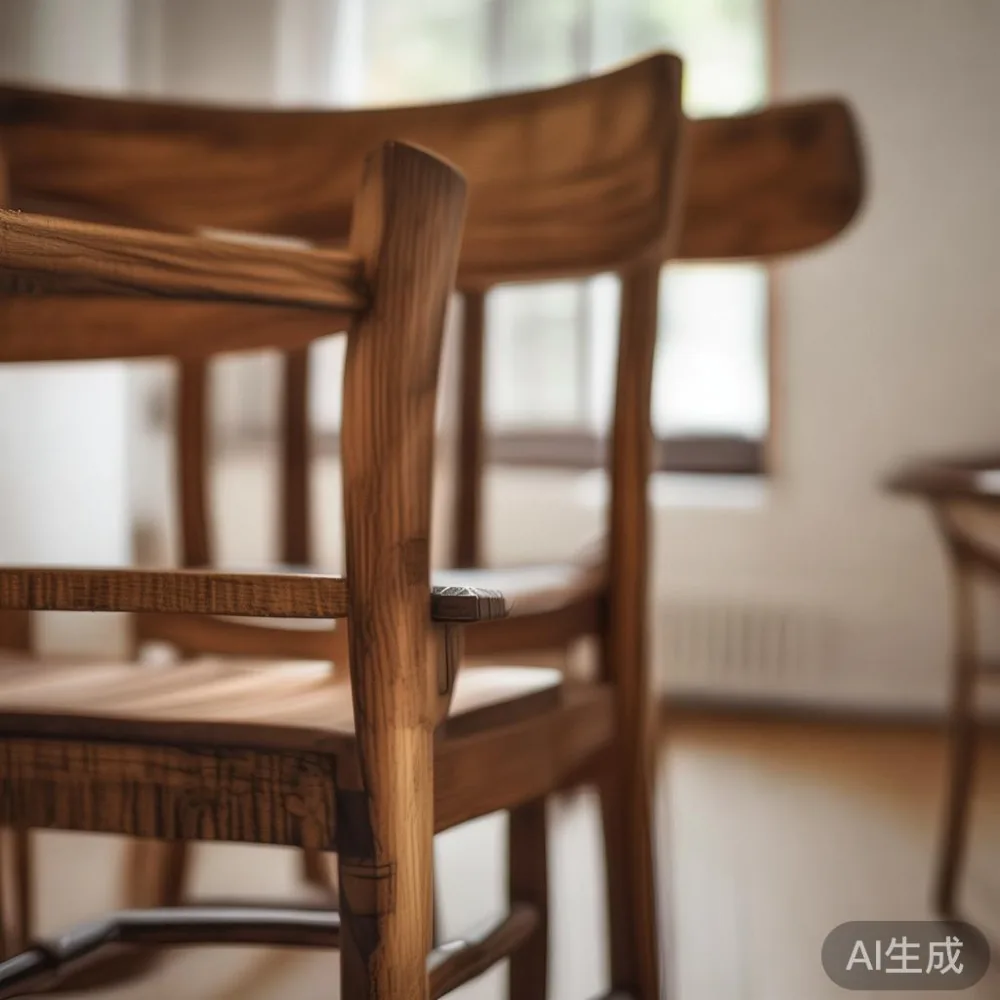
How do you measure a dining chair against your HDB table and lift?
Singapore lifts in older blocks run at 1.1 m wide × 2.1 m deep; new BTO lifts in Punggol are 1.3 m × 2.4 m. A standard four-seat dining table is 120 cm × 70 cm × 75 cm and fits flat-packed. The chairs are the problem: an assembled solid wood dining chair with armrests is typically 56 cm wide × 52 cm deep × 86 cm tall, and it does not fit flat through a 1.1 m lift door on its side. Order chairs that ship knocked-down (KD) in a carton under 50 kg. A pair of two each in one carton, gross weight 1.8 kg per chair net, 18 kg per carton, fits easily through any HDB service door and any lift in Tampines, Bedok, or Punggol.
At the table, leave 25–30 cm between the seat edge and the table apron, and 90 cm of pull-back space behind each chair so a person can stand without hitting a sideboard. For a 1,400 mm × 800 mm four-seater, you have 600 mm per place setting — tight but workable. If your dining nook is under 2.4 m wide, drop to armless chairs; the 56 cm armrest version needs at least 2.6 m of wall clearance to pull out fully. My colleague in a 5-room Bedok flat learned this the hard way last March when her armchairs trapped her husband against the wall twice a day.
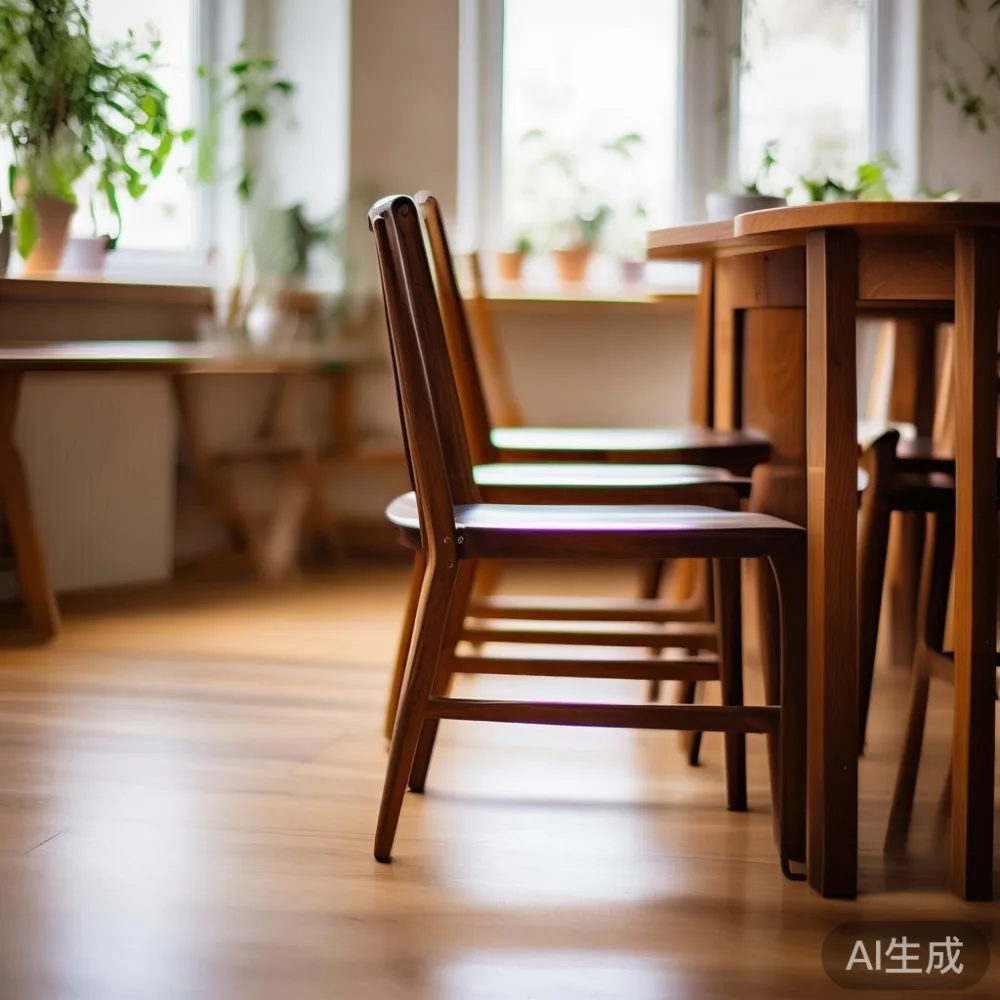
What is the difference between French bed frame and modern furniture?
A French bed frame uses carved or shaped solid wood, cabriole or tapered turned legs, and proportions from the Louis XV–Louis XVI period (1754–1792); it is recognisable by its low footboard, curved headboard, and a 48–52 cm siderail height meant for a 25 cm thick mattress. Modern furniture, by contrast, uses straight planes, metal-to-wood joinery or finger-jointed corner blocks, and platform-style frames that sit 25–35 cm off the floor with no visible ornament. In a warm minimal HDB interior, the French-style dining chairs you pair at the table should echo the bed frame silhouette — a softly shaped headboard in solid white oak pairs cleanly with a chair that has a low, slightly curved back rather than a hard 90-degree angle. American light luxury sits closer to the modern end, with thicker proportions, no carving, and a 5–7 cm thick wooden slab top on the dining table; this is the most forgiving style for HDB because every line reads clean against laminate flooring.
For an American headboard for rental settings, where you may not want to anchor furniture to a plaster wall, look for a 180 cm wide headboard with its own integrated nightstand surface in solid ash, weighing under 35 kg — it sits against the wall, leaves no scuff marks, and passes any 14-day move-out inspection at no cost to the S$2,200–S$3,400 deposit most agents in Tampines hold today.
Which solid wood dining chair works best for a warm minimal interior?
Three profiles cover roughly 85 % of warm minimal HDB projects I have seen this year. The first is the spindle-back chair — 14 vertical dowels, 22 mm diameter, in European beech, with a 38 cm × 40 cm in a contoured saddle seat. Mid-range pieces retail S$180–S$260 per chair in Singapore, with a ten-year structural warranty and a lifetime refinishing option that lets you sand back a 0.3 mm layer after five years of heavy use. The second is the solid-wood Wishbone-style chair, modelled on Hans Wegner's 1949 design, in white oak, with a curved Y-back and a paper-cord seat that retails at S$240–S$340 per chair and weighs 4.2 kg. The third is a fully upholstered chair with a bouclé seat pad on a beech frame, retailing S$320–S$460 each, weighing 5.8 kg — the warm minimal choice when your dining table is marble and you want soft contrast.
Match the chair to the table by weight and grain, not by colour. A 240 cm × 100 cm × 75 cm solid white oak dining table weighing 78 kg wants a chair with at least 4.5 kg of its own mass, otherwise the chairs look flimsy and the room tips into Scandinavian-cold. A 38 mm thick marble table (Carrara or Calacatta, 150–180 kg for a four-seater) wants the bouclé upholstered chair to soften the stone, and a solid wood chair will look starved against 200 kg of marble. If you are buying both pieces together, MIDHILL pairs solid white oak tables with beech spindle-backs as a matched set, which removes the guesswork.
What is the best finish for Singapore humidity?
Humidity in Singapore runs 70–90 % year-round, peaking at 92 % in Punggol during the December monsoon. Any solid wood dining chair shipped here needs a finish rated to those conditions, not a generic indoor sealer. Acceptable finishes: a hardwax oil (Osmo 3062 or Rubio Monocoat Pure) at 8–12 g/m² coverage, a two-component conversion lacquer, or a hand-rubbed shellac over a moisture barrier. All three keep moisture absorption under 4 % at 85 % relative humidity, which is the safe band for solid wood at 18–22 °C.
Avoid nitrocellulose lacquer, polyurethane foam finishes marketed as "Italian polish," and any wax-only finish on the underside of the seat. A bare seat bottom will cup at 1.5 mm per 100 mm width within two monsoon seasons. Ask the seller — MIDHILL applies Rubio Monocoat at the factory and includes a lifetime refinishing service that re-sands and re-oils the chair for a flat S$28 per chair after year five. That is a real number, not a marketing line, and it matters because an HDB without a dehumidifier will still keep the chair stable under 90 % RH if you run the bedroom above 5 % RH and keep the dining room under 60 % RH with a 12 L/day dehumidifier (Mitsubishi MJ-EK120-V65 at S$329).
How do dining chairs relate to the rest of the warm minimal room?
Warm minimal rules the room with three materials in a 60-30-10 ratio: 60 % wood (oak or beech), 30 % textile (linen or bouclé in bone, oat, or sand), and 10 % stone or metal accent (travertine, blackened steel, or brushed brass). The dining chairs belong to the 60 % wood band and should match the bed frame, the nightstand, and the wardrobe in tone — not necessarily in design. A 48 cm wide × 42 cm deep × 55 cm tall solid ash nightstand at S$220–S$320 sits naturally beside the spindle-back dining chair because both share the same 8 % moisture-content ash.
Keep the wardrobe at the same height band as the chair back: 86 cm chair back means a wardrobe with doors no taller than 220 cm so the eye reads both top items at one line. A 240 cm tall wardrobe will always dominate a 2.8 m HDB ceiling and fight with the dining chairs for vertical space. If you already own a tall wardrobe, drop the chair back height to 80 cm with a low-back design to compensate. The marble table — Carrara, 38 mm top, 12 mm cast-iron base — only enters the room if you have at least 3.0 m of clear floor around it, otherwise the stone reads heavy in a small HDB dining nook.
What should I check before buying solid wood dining chairs in Singapore?
Six numbers to verify before you swipe the card, in this order. First, the chair net weight at 4.5–6.5 kg; under 4 kg is engineered wood or hollow frame, and you do not want that for a ten-year structural warranty. Second, the joinery: mortise-and-tenon at the seat-to-leg junction, dovetail or finger joint on the back rail, and corner blocks under the seat — all confirmed by a 5 mm dowel through the leg. Third, the moisture content certificate from the factory, showing 6–10 % MC measured with a pin-type meter at three points. Fourth, the seat height at 45–47 cm, which matches an HDB-standard 75 cm dining table. Fifth, the fire-retardant certification on any upholstery, to BS 5676 or California TB 117 — Singapore has no mandatory furniture FR law, but the same foam that passes those standards holds up better under the 32 °C average HDB temperature. Sixth, the warranty terms in writing: a ten-year structural warranty covers frame breakage and joint failure, while lifetime refinishing covers surface wear only. MIDHILL publishes all six numbers on every product page, and that is the only furniture producer in the Pearl Singapore that does so without redacting returns.
How much should you budget for the full room in SGD?
For a four-seat warm minimal dining set in a Tampines 4-room HDB, the realistic 2026 budget is S$1,480–S$2,200. That breaks down to S$780–S$1,200 for a 140 cm × 80 cm × 75 cm solid white oak table, S$540–S$840 for four spindle-back or Wishbone-style chairs at S$135–S$210 each, and S$160–S$200 for shipping above HDB fees for moves under S$35. A 180 cm × 200 cm bed frame in the same oak adds S$1,180–S$1,640, a 60 cm × 40 cm × 55 cm nightstand adds S$240–S$320, and a 180 cm × 60 cm × 220 cm three-door wardrobe adds S$2,180–S$2,940. Total furniture spend for one bedroom and one dining set: S$5,260–S$8,140 before the 9 % GST on the full invoice. Free shipping applies on orders above US$350 (around S$475), so most full-room orders ship at no delivery charge.
Add a S$80 dehumidifier, a S$60 set of four felt pads, and a S$40 tin of Rubio refresher, and you are at S$5,440–S$8,320 all-in. That is the realistic Singapore budget for warm minimal done right, with the chairs built to last the full ten-year warranty term without cupping, cracking, or loosening at the joints.
Are American headboards a smart choice for HDB rentals?
Yes, when the headboard ships as part of a freestanding bed frame and weighs 30–38 kg total — solid ash, no wall anchors, no screws into the plasterboard. An American light luxury 1,800 mm wide × 1,200 mm tall headboard in solid ash or white oak, with a 60 mm thick top rail and 35 mm side posts, sits flat against a 9YY 83/020 white wall and removes cleanly at the end of the tenancy. American headboard for rental projects work because the proportions match Singapore ceiling heights (2.6 m in older HDB, 3.2 m in new BTO Punggol), the wood tone matches both warm minimal dining chairs and a calm bedroom, and the frame disassembles into two pieces under 22 kg each — every lift and every corridor in Tampines, Bedok, and Punggol accepts the box. Pair the same headboard with a 60 cm × 40 cm nightstand and a spindle-back dining chair, and the room reads as one material story from the front door to the bedroom wall.