Dining Chairs Singapore: The Honest Buyer’s Guide for HDB, Condo and Landed Homes
Singapore dining chair guide covering humidity, HDB sizes, comfort, materials, prices and where to buy. Honest picks for small spaces and big families.
- What dining chair actually works in a Singapore HDB or condo?
- Does Singapore humidity actually ruin solid wood dining chairs?
- Which dining chair material is the most durable for daily family use?
- How do I know a dining chair is actually comfortable before I buy?
- What should a Singapore dining chair actually cost in 2025?
- Will the chairs actually fit through my HDB or condo lift and door?
- How long should a quality dining chair last in a Singapore home?
- Where do Singapore buyers actually try and buy dining chairs?
- Should I buy matched dining sets or mix chairs in Singapore?
What dining chair actually works in a Singapore HDB or condo?
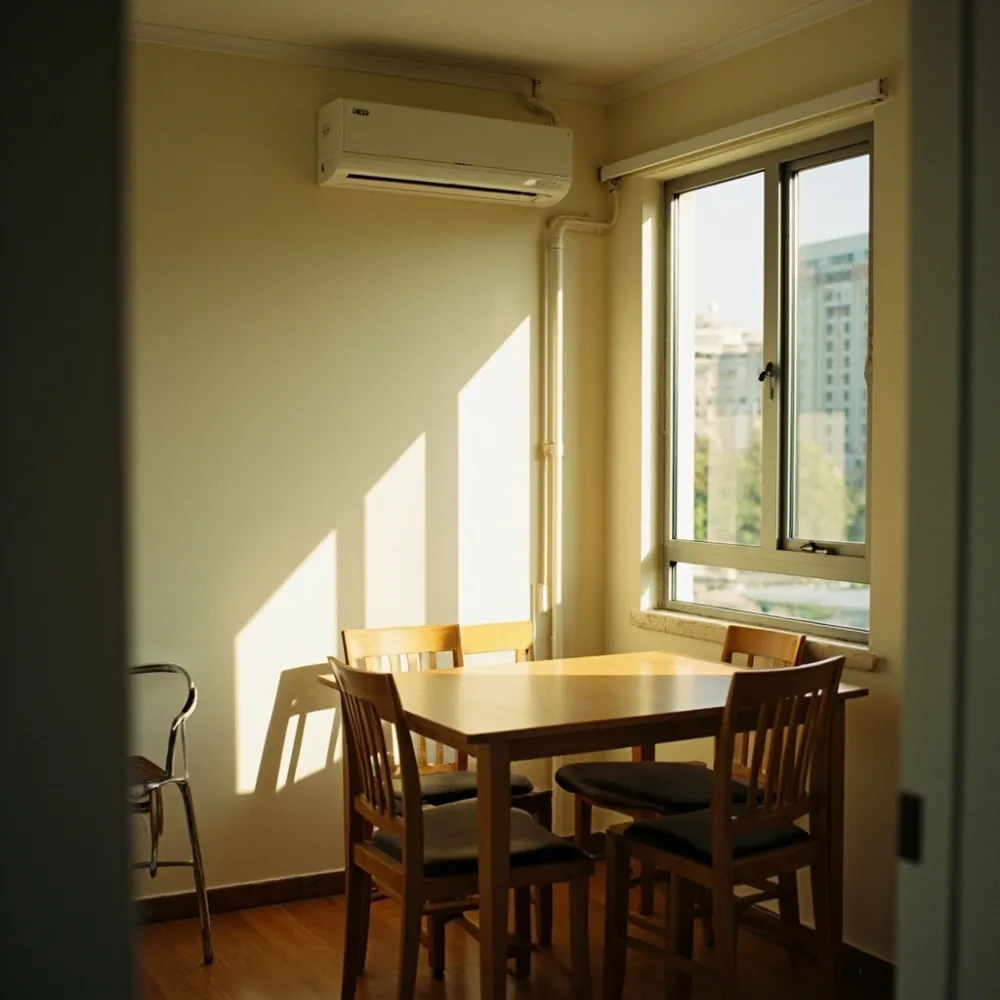
Standard HDB and condo dining footprints
Why chair-back height matters more than you think
I have measured more Singapore dining nooks than I care to admit, and the honest answer is that most homes need a chair narrower than 45 cm wide with a back under 95 cm tall. Three-room and four-room HDBs usually run a four-seater table at 120–140 cm long, which leaves a walkway of about 70–80 cm if you push the table against a wall, the minimum a grown adult needs to squeeze past.
A 4-seater table fits a 1.2 m by 0.8 m footprint comfortably; a 6-seater needs roughly 1.6 m by 0.9 m. In District 9 condos I have walked into dining rooms narrower than 2.2 m, and a chair with arms wider than 55 cm becomes unusable against the wall.
- Target chair seat width: 42–46 cm
- Target chair depth: 45–50 cm
- Target total height: 85–95 cm so it tucks under a standard 75 cm table
- Allow 25–30 cm of legroom per person between seat and table apron
Does Singapore humidity actually ruin solid wood dining chairs?

Why kiln-dried wood matters here
The finish line that protects the chair
Yes, badly made solid wood furniture can cup, hairline-crack or grow mildew joints within one monsoon cycle. The issue is rarely the species, be it teak, oak, ash or rubberwood; it is moisture content and finishing.
A chair built from wood dried to 8–10% MC (moisture content) and sealed on every face, including under-seat and inside stretcher joints, will sit fine in a HDB with daily AC and around 70–80% ambient humidity outdoors. I have owned an oak chair for four years in a Yishun HDB that is rock-stable because the maker kiln-dried the stock and finished all six sides. Cheaper chairs that skip the under-seat seal absorb humidity from mopping and slowly warp the stretchers.
- Ask if the wood is kiln-dried to under 12% MC
- Ask whether the underside and inner rails are sealed
- Wipe spills within 10 minutes; do not leave wet mugs overnight
- Keep a 30 cm gap from windows you open often so chairs are not in direct humid airflow
Which dining chair material is the most durable for daily family use?
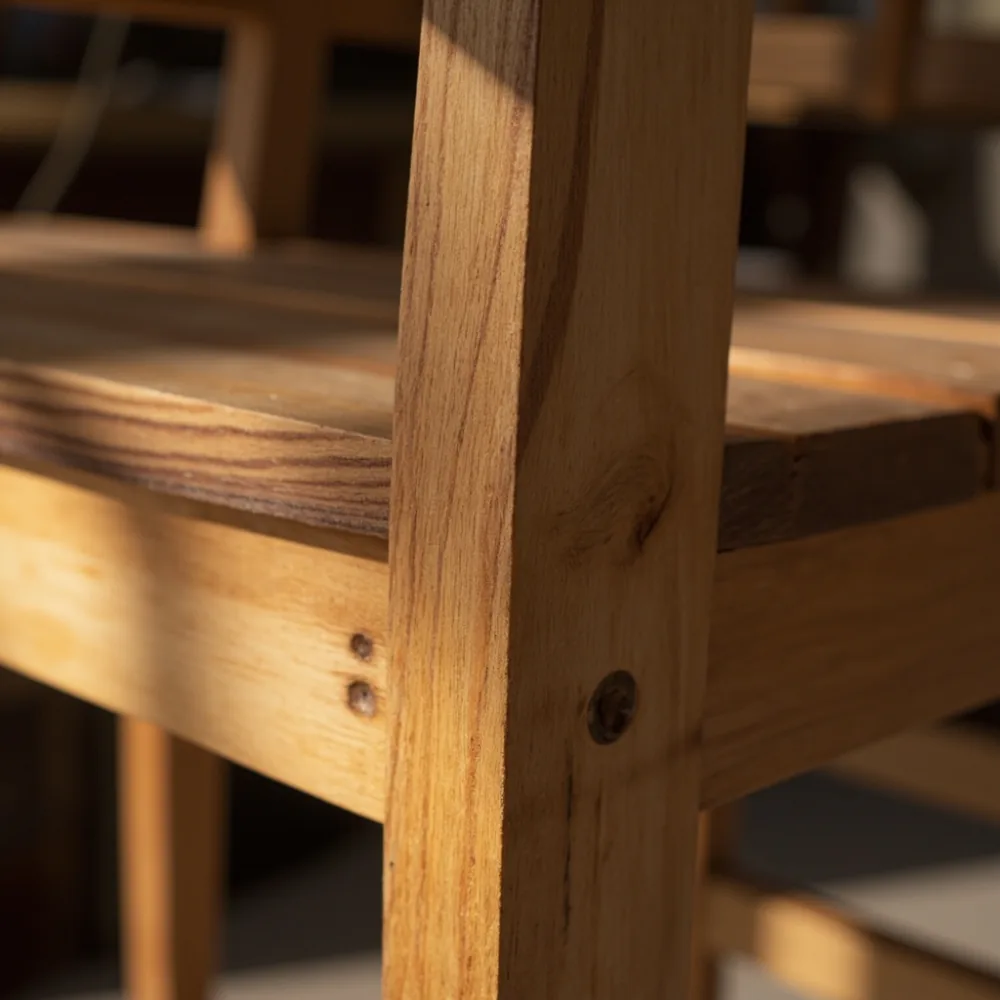
Wood vs metal vs upholstered frames
Comparing fabrics that survive kids and curry
If you have kids under 10, durability beats aesthetics, full stop. I rank frames this way for a Singapore household: kiln-dried solid hardwood > powder-coated steel > moulded plywood > plastic. Solid wood furniture with mortise-and-tenon joints and corner blocks has held up best in homes I have visited.
For seats and backs, performance fabric or top-grain leather beats woven fabric every time. Microfibre at 300 gsm or higher resists curry stains when blotted within five minutes; PU (polyurethane) faux leather looks tidy but tends to peel after 2–3 years in non-AC rooms.
| Material | Expected life in SG home | Stain resistance | Comfort in non-AC room |
|---|---|---|---|
| Solid hardwood frame | 10–20 years | High | Warm, breathes |
| Steel frame, powder-coated | 10–15 years | Very high | Cool to touch |
| Moulded plywood | 6–10 years | Medium | Neutral |
| Plastic (PP) | 3–6 years | Very high | Can feel sticky |
| Top-grain leather | 8–12 years | Wipe clean | Cool, then warms |
| PU faux leather | 2–4 years | Wipe clean | Sweaty in humidity |
How do I know a dining chair is actually comfortable before I buy?
Seat height and ergonomics
The 20-minute home test
I never judge a chair in a showroom for less than 20 minutes. Most cheap chairs feel fine for five minutes, then you start shifting. Seat height should sit 25–30 cm below the table top for elbow clearance; the seat itself should angle 3–5 degrees backward so weight sits on the sit bones, not the tailbone.
A solid back at 35–45 cm tall that curves inward at the lumbar beats a tall slat-back chair for long dinners. The seat depth sweet spot is 42–48 cm: shallower and tall diners feel perched; deeper and petite diners lose back support.
- Sit with feet flat, knees at 90 degrees
- Two fingers of space behind the knees
- Forearms parallel to the table without shrugging shoulders
- At home, eat a full meal on it before deciding
What should a Singapore dining chair actually cost in 2025?
Reading the price ladder
Where custom furniture starts to make sense
Realistic Singapore retail in 2025 for a set of four dining chairs runs from S$280 for flat-pack MDF to about S$2,400 for solid hardwood with performance fabric. Anything below S$70 per chair is almost always veneer over engineered wood with staples in the joints, fine for a spare room but I would not trust it daily.
Custom furniture from a Foshan workshop such as MIDHILL, in the solid-wood business since 2008 with a 10-year structural warranty, lands around US$180–S$260 per chair shipped to Singapore, duty included for orders above the S$400 import relief. You give up instant gratification for better joinery and a 6–8 week build-to-ship window.
| Tier | Per-chair price (SGD) | Typical lead time | Best for |
|---|---|---|---|
| Flat-pack (IKEA class) | S$60–120 | 1–7 days | Rental, first home |
| Mid-range (Nicesoulogy, Scanteak class) | S$220–450 | 2–4 weeks | Everyday family use |
| Designer (Space Furniture class) | S$600–1,400 | 4–10 weeks | Statement piece |
| Custom solid wood (Foshan direct) | US$140–220 (≈S$190–300) | 6–8 weeks | Long-term ownership |
Will the chairs actually fit through my HDB or condo lift and door?
Measuring the real entry path
Disassembly that survives delivery
This is the single most ignored step in Singapore furniture buying. A standard HDB door is 90 cm wide by 210 cm tall; most condo lift cars are around 120 cm deep by 160 cm wide with a 210 cm door. An assembled chair with arms outside 55 cm simply does not clear many of those openings on its side.
A solid chair should unbolt into fewer than six pieces, ship with labelled hardware, and re-assemble with one hex key. Anything that arrives fully welded or glued and is wider than 48 cm is a risk for a Bukit Batok walk-up or a Punggol HDB with a narrow service lift.
- Measure door: width 90 cm, height 210 cm is typical HDB
- Measure lift door: 80–90 cm wide on older blocks
- Measure the largest diagonal of the assembled chair
- Ask if the seller can ship knocked-down with hardware bag
How long should a quality dining chair last in a Singapore home?
Warranty versus reality
Care habits that double chair life
A well-built solid wood chair lasts 10–20 years in Singapore; I have seen Eames-style moulded plywood shells in Tiong Bahru shophouses pushing 30 years. The shorter numbers come from weak joinery and poor finishes, not the material itself.
Mid-range brands usually offer 1–3 year warranties; serious makers like MIDHILL offer a 10-year structural warranty that covers frame breakage and joint failure. Read the small print: a long warranty that excludes “commercial use, humidity damage and normal wear” is closer to a 2-year promise in practice.
- Tighten bolts at 6 months, then yearly
- Re-oil wood seats every 12–18 months with hard wax oil
- Rotate chair positions so the same chair is not by the sunny window
- Replace felt glides once they wear through to bare wood
Where do Singapore buyers actually try and buy dining chairs?
Showrooms worth the trip
What to ask before you pay
I split it into three buckets. Big box (IKEA Alexandra, Tiong Bahru), specialist showrooms (Eurospot, Scanteak at Joo Chiat, Nicesoulogy at Tan Boon Liat), and direct-from-factory via container or consolidated shipping from Guangdong. Each trades off selection, price and lead time differently.
At any showroom, sit in the chair for at least 20 minutes, lift it by one front leg to feel the weight, and open the seat cushion to look at the foam density (look for 30 kg/m³ or higher). Quality dining chairs weigh 4–6 kg each; under 3.5 kg usually means hollow frame or thin plywood.
- IKEA Alexandra: 317 Alexandra Road, widest range, weakest durability
- Hormeoffice Town: 1 Jalan Bumbong, ergonomic heavyweights
- Courts Furniture: multiple locations, financing available
- Foshan factory direct (MIDHILL and peers): online quoting, 6–8 week lead time
Should I buy matched dining sets or mix chairs in Singapore?
The small space furniture logic
When a leather sofa anchors the room
Mixing chairs is a design trend that works well in large landed dining rooms, but for a Singapore HDB it usually backfires. A consistent chair height reads calmer in a 2.4 m wide dining nook; mismatched heights make the room feel choppy.
Where mixing does help is pairing two armchairs at the heads with four armless chairs along the sides, freeing 12–15 cm of clearance per diner. Keep the finish language the same (all oak, all walnut) so the eye still sees one set.
- All-wood room: match species and tone
- Room with a leather sofa nearby: warm walnut chairs echo the upholstery
- Two-tone room: keep one accent chair per 4–6 main chairs, not 50/50
- Kids room: same model in 6 easy to replace later
Frequently asked questions
Are solid wood dining chairs really better for Singapore humidity?
Yes, when the wood is kiln-dried to under 12% moisture and sealed on all sides including the underside. Properly dried solid wood furniture moves less in daily humidity swings than MDF or plywood, and a hard wax oil finish lets the chair breathe through our monsoon months without cracking. Skip unsealed flat-pack and your chairs will cup within a year.
What is a fair price for a set of 4 dining chairs in Singapore?
A decent everyday set of four runs S$500 to S$1,400 in mid-range showrooms, while sturdy solid wood with performance fabric lands closer to S$900 to S$1,800. Direct-from-factory shipping from a Foshan maker typically lands around US$560 to S$760 for four chairs duty-paid, with a 6 to 8 week wait.
How do I measure my dining space before buying chairs?
Allow 60 cm width and 40 cm depth per chair, plus 25 to 30 cm of legroom between seat and table apron. Measure doorways, lift openings and the longest hallway turn to make sure the chair clears, and always confirm a knocked-down delivery if you live in an older HDB block.
Questions about sizing, fabric or delivery?
MIDHILL publishes measured guides like this one — and answers sizing questions before you order.
See the collection