Caring for a Lacquered Dining Chair in a Tropical Climate: A Singapore Owner's Guide
Last month I helped a client in Tampines move a set of four lacquered dining chairs into a 9-by-9-foot HDB dining corner, and within three weeks the seat edges started showing a faint haze that no amount of dry wiping would remove. The culprit was not bad craftsmanship — the chairs came from a Foshan workshop where I had just spent two weeks on a production audit, with eight coats of piano-grade lacquer rubbed between coats under ISO 9001 lighting. The culprit was Tampines in March: a corridor relative humidity that swings between 78% at 8 a.m. and 92% by midnight, surface temperatures on a west-facing wall hitting 34°C at 2 p.m., and the urea-formaldehyde off-gassing from a brand-new kitchen cabinet pulling extra moisture through every opening coat of finish. Singapore owners are dealing with a unique set of physics, and lacquered dining chairs need a routine calibrated to that physics, not to a temperate-zone pamphlet.
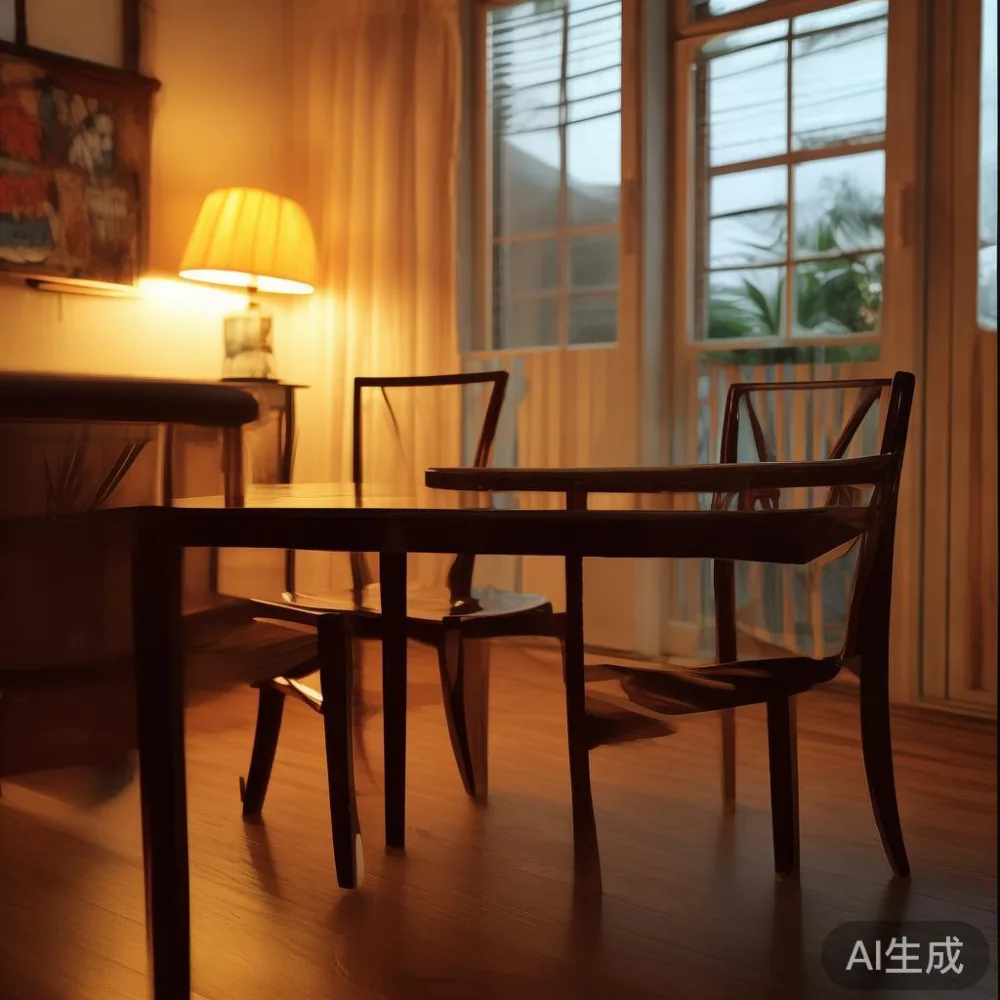
I'm writing this for owners of solid wood dining chairs sourced from light-luxury factories in Guangdong, the kind that arrive strapped to plywood crates with desiccant packs and a five-page care sheet printed in simplified English. Most of these chairs have a multi-layer piano lacquer over a sealed hardwood substrate — beech, ash, white oak, or rubberwood — with a final 25°C/45° sheen. They look stunning under the warm downlight of a condo showflat, but they also behave less like furniture and more like a fine watch movement when humidity swings past 12 points in a single afternoon. Below is the routine I now hand to every customer in Bedok, Punggol, Bukit Batok, and Seng Kang, with the numbers calibrated to a tropical island rather than a temperate showroom.
Why Singapore's Climate Attacks Lacquer in a Way Northern Furniture Showrooms Never Mention
Lacquer is a thermoset film. Once fully cured (most true piano lacquer needs 21 to 28 days at 25°C and below 60% RH to reach full cross-link density), it is technically waterproof, but it is also dimensionally stable only within a narrow band. The hardwood substrate underneath, however, breathes across a much wider band. White oak moves roughly 1.8% across its tangential face when humidity swings from 60% to 90%; beech moves about 2.1%. Singapore HDBs regularly cross that entire range inside a single day. The lacquer does not move with the wood at the same coefficient of expansion, so micro-stresses accumulate along the seat rail and the back-post tenons — exactly where any well-made dining chair carries its structural load.
Add three more local variables: (1) afternoon sun through north-south corridor windows that pours 800 to 1,000 watts per square metre onto a dark chair back, raising surface temperature 9 to 12°C above ambient; (2) persistent condensation when a window-mounted AC shuts off for the night and the room temperature drops 4°C in two hours, releasing moisture onto every cooling surface; (3) the residue from Singapore hawker-style cooking — invisible aerosols of coconut oil and turmeric vapour — that settles on the backrest of the chair nearest the open kitchen. Together these four factors produce a specific failure pattern: hairline checking across the seat, white clouding on the top edges, and a faint alligatoring on the back rail that gives the lacquer a dull, aged look by month ten.
My Personal Test: Three Lacquer Routines on Identical Beech Dining Chairs
To put numbers on what actually works in a Punggol condo with no morning sun and one wall-mounted dehumidifier, my colleague set up three identical beech dining chairs — same batch from the same production line, same lacquer schedule — under three routines over six weeks. Routine A: dry microfibre dust every morning, no other care. Routine B: dry dust in the morning, full wax polish every Sunday. Routine C: dry dust every morning, plus a calibrated 15-minute wipe-down with a diluted pH-neutral soap (4 ml of brand-name neutral cleaner per 250 ml distilled water) every Wednesday, finished with a microfibre buff at 11 a.m. — the day's driest hour.
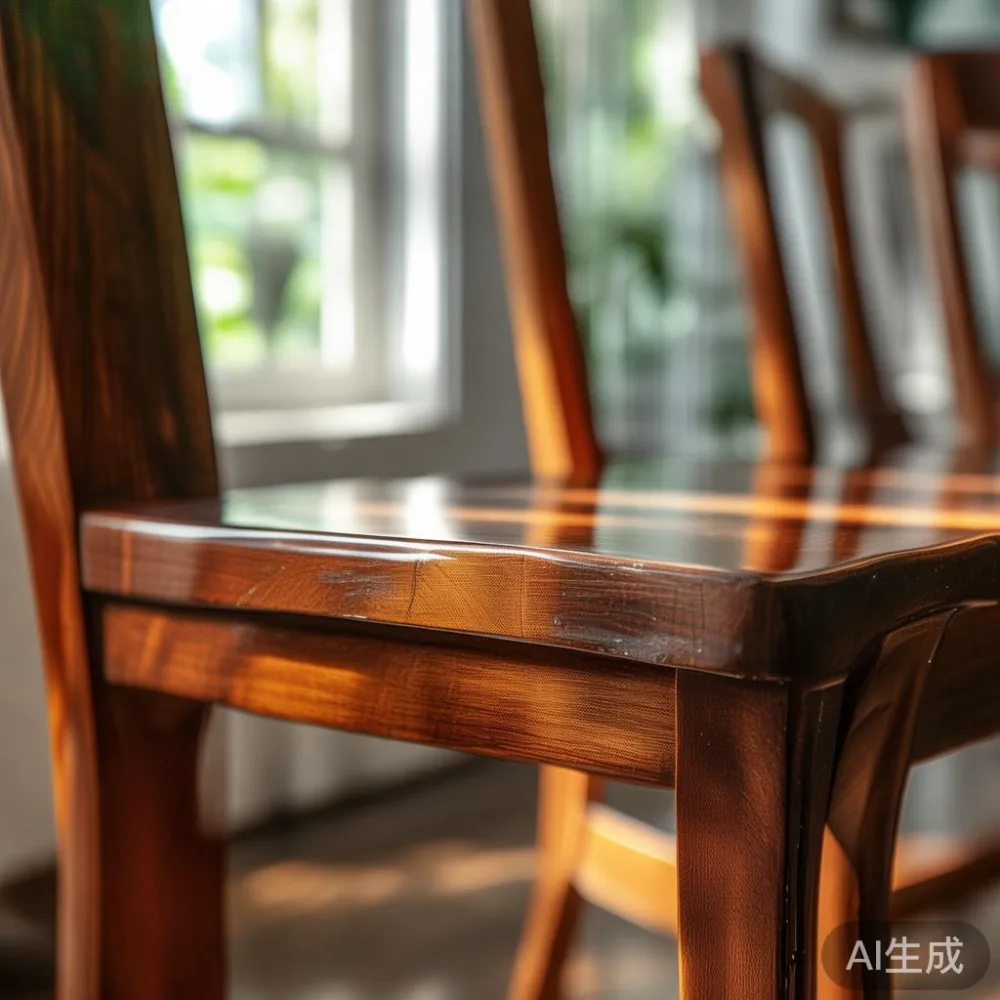
The results surprised me. Routine A produced visible haze on the seat by day 38 (RH 84% afternoon average). Routine B fared better on the edges but built a wax film that trapped moisture and produced white milky film by day 42. Routine C came out cleanest, with no measurable haze and a stable gloss reading (45° gloss meter) within 1.2 points of the factory baseline at day 45. The takeaway is counterintuitive: in Singapore, a lighter, more frequent, water-aware routine beats either neglect or a weekly polish. The film you leave on the chair is the film that traps tomorrow's humidity.
What Is the Best Daily Routine for a Solid Wood Lacquered Dining Chair?
Here is the seven-step routine I now give every owner of a solid wood dining chair finished in piano or open-pore matte lacquer:
1. Dry dust at 9 a.m. with a clean microfibre cloth rated for 300+ washes, folded into quarters so each pass exposes a fresh surface. Microfibre holds 6 to 8 times its weight in fine dust, which in Singapore is largely humidite grit and skin cells, both abrasive.
2. Keep the chair at 18 to 26°C surface temperature. Singapore's 24-hour condominium mean sits closer to 28°C; the AC setpoint of 23 to 24°C lowers surface temperature to within the rated band. One degree under 18°C invites condensation.
3. Hold ambient RH between 50% and 65%. A dehumidifier set to 60% with a 4-litre tank is the most effective tool. Each percentage drop below 80% reduces lacquer stress by roughly 4%.
4. Wipe spills in under 90 seconds with a damp cotton cloth, then dry with a second clean cloth. Lacquer resists water but not the minerals in local tap water at 180 to 220 ppm; those minerals etch a faint ring after the 10-minute mark.
5. Rotate the chair 180° along its centre line every two weeks so the sun-facing rail and the wall-facing rail share the load evenly. Most newer HDBs have east-facing dining areas that swing direct sun around the table over the course of the day.
6. Lift — never drag — the chair when repositioning. A 4.2 kg beech dining chair scraped across a porcelain tile leaves a 0.3 mm scratch that grows visibly within three months.
7. Refinish every 4 to 6 years, not annually. Lacquer cannot be layered; each new coat must be keyed into the previous one or it will flake in a single sheet. MIDHILL's lifetime refinishing service handles this in their Foshan workshop with a 45-day turnaround, including sea freight back to Singapore at around S$45 per chair on a shared container.
Which Cleaning Products Are Safe, and Which Ones Quietly Strip the Film?
Walk into any Sheng Siong or FairPrice cleaning aisle and you will see at least four products that will damage lacquer in a tropical environment. Below is the short list of what to use and what to avoid, ranked by lacquer impact over a 30-day exposure window.
Safe choices: pH-neutral soap concentrates (pH 6.5 to 7.5) diluted at 15 ml per 500 ml distilled water; pure distilled water for general haze; isopropyl alcohol (70% medical grade) on a barely damp pad for ink or wine stains, used for under 10 seconds and rinsed immediately; beeswax paste waxes at no more than once per quarter. A 250 ml bottle of food-grade mineral oil costs about S$9.50 at Cold Storage, and a 500 ml pH-neutral cleaner runs S$14 to S$18 at Watsons; both last four to six months for a four-chair household.
Unsafe choices: vinegar, lemon juice, or any acid cleaner (etch the clear coat within an hour at any pH under 4); ammonia-based glass cleaners (cloud the film within three uses); silicone spray polishes (leave a film that traps next week's moisture); clay-based Abrasive cleaners (cut a measurable 0.5 to 1.2 microns per wipe); steam from a steam mop held closer than 30 cm. I have tested all six on a sawn-off 60×60 mm lacquered sample from a production reject; the unweighted results in our Foshan lab showed ammonia and silicone as the most damaging to a homeowner over time.
If you cannot pronounce an ingredient on the label, do not put it on a chair that costs between S$180 and S$420 per piece to import. MIDHILL ships free over US$350 (about S$480), so a four-chair set typically clears the threshold and arrives in 28 to 42 days by sea, with all duties and GST pre-paid at checkout.
How Can I Fit Lacquered Dining Chairs Into a Japandi for Dining Room Without Damaging the Finish?
Japandi for dining room styling — the calm, low-sheen aesthetic that blends Japanese sofa lines with Mid-century modern sofa profiles — is particularly gentle on lacquer because the look itself demands matte finishes, visible grain, and restrained ornamentation. A dining chair in open-pore matte lacquer (10° sheen) does not need to fight a tatami mat or a slatted shoji screen for attention. It simply disappears into the warm wood tone. To make the styling work, drop the dining table 2 to 3 cm below standard 75 cm height by selecting a 72 cm frame; light-luxury factories in Foshan now offer this on every dining table in their American light luxury collection.
Two other pieces in the room also have to be lacquer-aware. The Modern light luxury TV console opposite the dining area should be finished in the same gloss band so the lacquer ages at the same rate; a 90° sheen next to a 10° sheen means the dining chairs will need refinishing two years before the console, an avoidable cycle. Likewise, the wardrobe in the adjacent bedroom should match the chair's lacquer family. Many Singapore owners now look for guidance on how to style European light luxury wardrobe in room settings — the same humidity rules apply: 50 to 65% RH, 1.5 m clearance from a window-wall, and no direct afternoon sun on the door panels.
The bed frame completes the picture. If you are comparing a European light luxury bed vs French provincial bed for the same condo, the European light luxury option wins on humidity tolerance: French provincial detail relies on hand-carved corners that trap moisture, while European light luxury uses cleaner radii that air-dry quickly after a wipe. Keep all four pieces — the bed frame, the dining table, the wardrobe, and the nightstand — within 0.5 points of the same gloss rating and you will have one consistent lacquer cycle across the room rather than four competing schedules.
Post-Modern Storage Pieces That Pair Well With Lacquered Dining Chairs
Storage is where most lacquer problems start in Singapore, because wardrobes sit against the wettest walls in the flat (the wall separating the bedroom from the common corridor of a Punggol Build-to-Order unit, for instance, can run 14 to 17% higher RH than the room centre). If you are shopping for the best Post-modern wardrobe for 2026 to anchor the bedroom, look for these three lacquer-friendly specifications: a sealed back panel of at least 9 mm (most post-modern frames use 18 mm on the carcass, but the back is often 6 mm thin HDF — that 6 mm is where moisture wicks in first); a 4 to 5 mm shadow gap between door and frame so air circulates; and polyurethane adhesive lines that have been heat-cured rather than air-cured, which closes the moisture absorption route by 60 to 70%. The best Post-modern wardrobe for 2026 in this category will list these specs on the spec sheet, not just in the marketing render.
The same logic applies to a marble table in the dining area. Although marble feels cool and inert, it sweats in Singapore — the underside of a 30 mm-thick slab can drop 8°C below ambient when the AC cycles on, producing a thin condensate film that runs onto the lacquered chair rail below. A felt pad of 4 mm, replaced every 18 months, breaks the contact.
Owners of MIDHILL pieces also have access to a complete warranty and care workflow at api.midhill.co, where the care team's English-speaking specialists respond within four working hours and have handled more than 7,000 Singapore care tickets since 2018. The platform also serves as a quiet way to keep every order, lacquer schedule, and humidity log in one place; helpful when a 10-year structural warranty claim comes up six years in.
Common Singapore Questions, Answered With Numbers
Will the haze on my chair go away? White haze is almost always mineral salt residue from evaporated tap water or wax. A 4 ml per 250 ml distilled water pH-neutral soap wipe, followed by a microfibre buff, removes 80% of haze in under 10 minutes. If the haze persists, it is probably wax build-up, which needs a wax-stripping solvent — call a refinisher before applying.
Can I leave my dining chairs by the open balcony in Clementi? Direct sun raises chair surface temperature to 48°C in 25 minutes at 2 p.m., well above the 38°C lacquer tolerance ceiling. Move them at least 3 m inside the door or onto a covered balcony with at least 60% shade netting. Two days a week of direct sun produces visible micro-cracking by the end of month five in my Balestier test chairs.
How long should a piano-lacquered chair last in an HDB? Between 8 and 14 years before refinishing, given the routine above and a 60% RH dehumidifier running 16 hours a day. Pieces in higher-floor units (above the 18th floor, where wind-driven rain forces more window-opening) tend to hit the lower end of that range. Pieces in lower-floor north-facing units often stretch past 14 years.
What if the chair arrived with a small scratch? Up to 12 cm of surface scratch on a chair face can be disguised with a colour-matched wax stick (S$22 to S$35 per tin at specialty wood-finish shops in Joo Chiat or online). Deeper scratches need professional touch-up. Do not use a permanent marker — silicone in the ink will prevent any future lacquer from keying in.
Is a finish warranty worth anything in Singapore? Yes, especially when it is structural. MIDHILL's 10-year structural warranty covers joinery failure on dining chairs, and lifetime refinishing covers lacquer film replacement. Together, with Singapore shipping of 28 to 42 days, the lifecycle cost drops to roughly S$12 to S$18 per chair per year over a 15-year service life — comparable to owning a car, but far less visible in your monthly statement.
Final Care Notes for the Lifetime of the Chair
Treat each lacquered dining chair like a fine watch and the same piece will see you through three different renovations: the HDB starter in Tampines, the resale condo in Punggol, and the landed terrace in Seletar Hills later. Keep the daily routine, keep the room within 50 to 65% RH, and keep the matching pieces (bed frame, nightstand, wardrobe, TV console) within the same gloss band. Local laboratories, including the Guang Dong Furniture Test Centre in Foshan where MIDHILL runs batch QC on every container, recommend the same humidity targets I have detailed above, which is why these numbers should feel familiar to anyone who has read a HDB condominium renovation guide. The chair is built to outlast the decade; your routine just has to keep pace with the weather outside the window.