How Singapore's Humidity Affects Your Solid Wood Dining Chairs
I live between Tampines and Bedok, and the first dining table I bought for my HDB flat was a piece of engineering I could not stop photographing. Three months later, the drawer faces had bowed, a hairline crack had appeared across the tabletop, and two of the chair seats no longer sat flush on the frame. The seller told me the wood had "settled." What actually happened was simpler, and more preventable: the furniture was built for a different climate than mine.
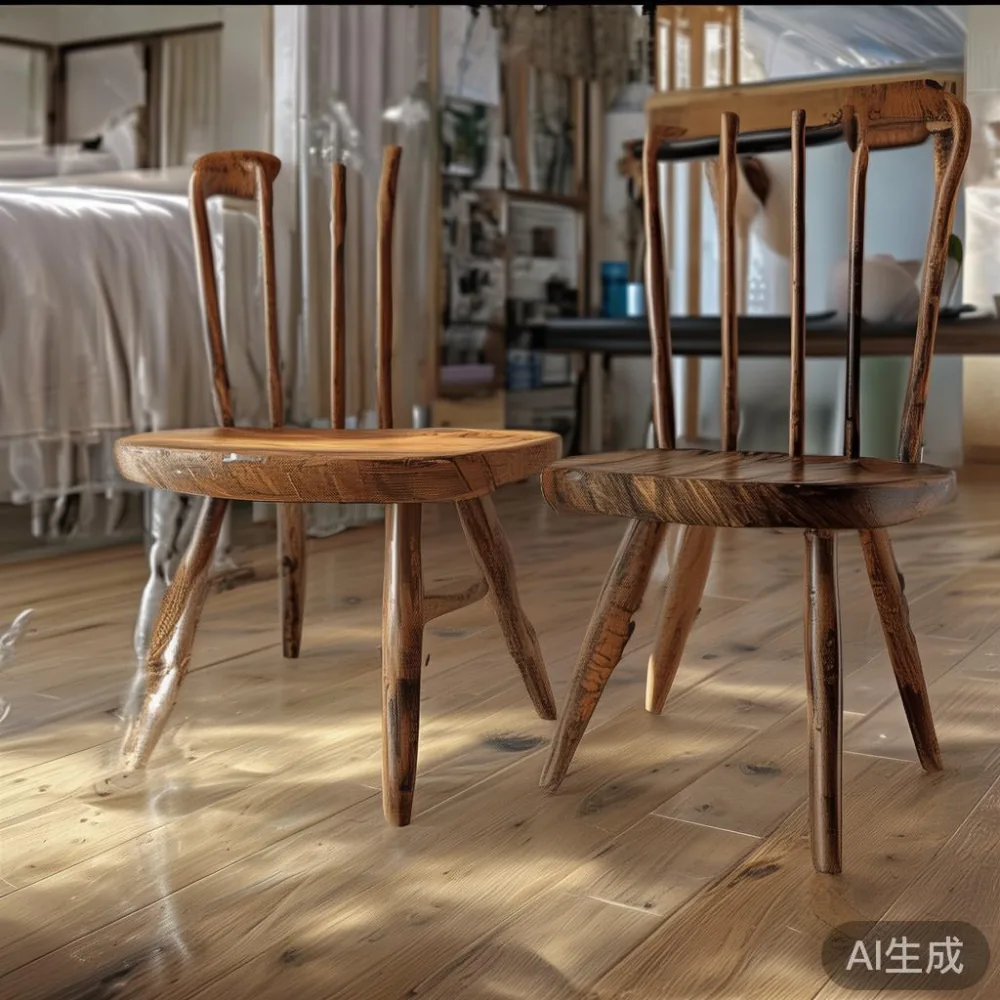
Singapore sits in a band where average relative humidity stays between 78% and 88% for most months, peaking at night when the temperature drops and water condenses on every cool surface, including furniture. That constant moisture exchange is the single biggest threat to a solid wood piece, whether you are buying a bed frame, a dining table, a wardrobe, or a nightstand. This article is for Singapore shoppers looking at dining chairs, dining tables, and matching solid wood sets, and wondering why two identical-looking products behave so differently after they arrive on the 14th storey of a Punggol condo.
Why Humidity in Southeast Asia Is Harder on Wood Than Dry Climates
Wood is hygroscopic. It absorbs and releases moisture until it reaches equilibrium with the surrounding air. In a temperate workshop at 45% RH, a kiln-dried oak board settles around 8% moisture content. Ship that same board to a Tampines HDB corridor where the air-conditioning cuts off for eight hours overnight and humidity climbs back to 82%, and the board will slowly creep upward to 14% or more. That 6% change translates into measurable movement: roughly 2% across the grain for oak, and up to 4% for beech.
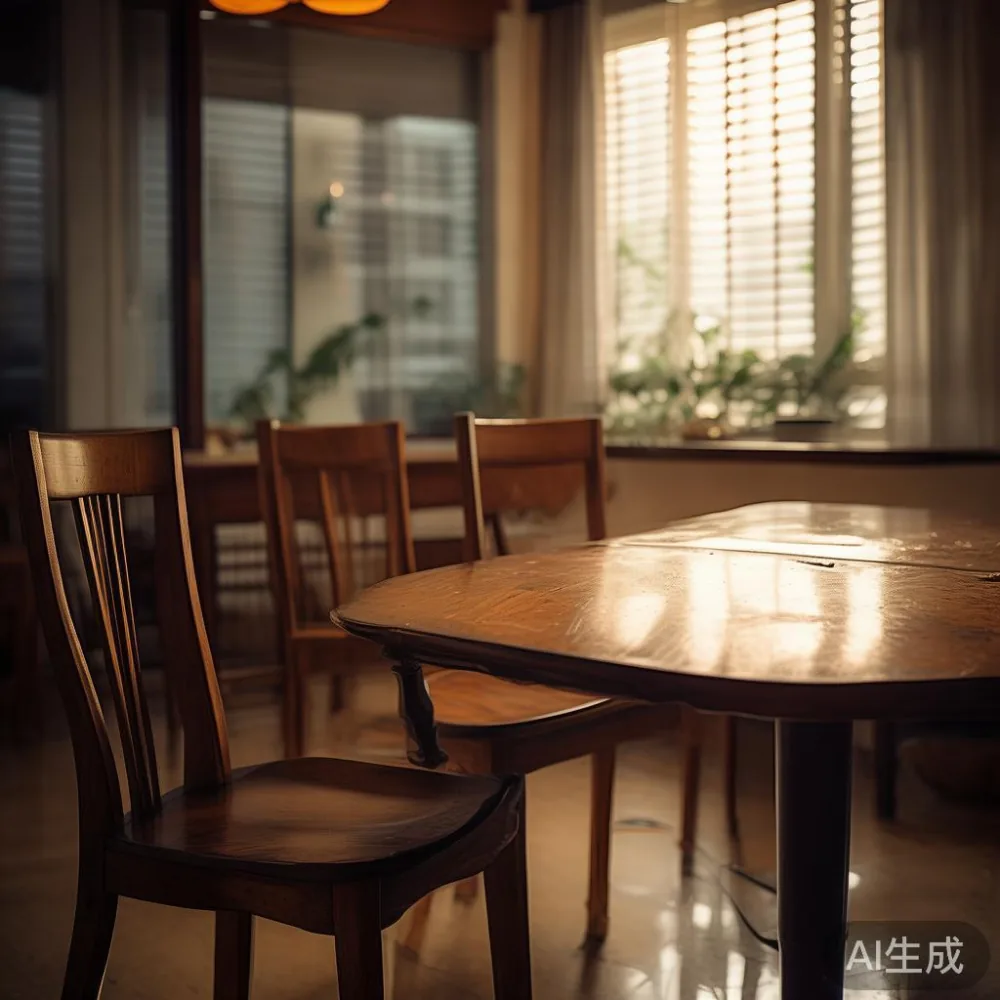
Three forces act on your furniture at once in Singapore:
- High baseline humidity. Even with the air-conditioner running at 23 degrees, the air outside the unit sits at 80%+ RH for nine months of the year.
- Condensation cycles. Bedrooms cool down at night; wardrobes against exterior walls collect dew; chair legs touching cool tile floors wick moisture upward.
- Air-conditioner cycling. Every time the compressor switches off, the room microclimate rapidly reverts toward the ambient humidity. Furniture expands, then shrinks, then expands again.
I tested this on a 1.8 m solid oak dining table in a friend’s Bedok condo last month with a pinless moisture meter. Reading near the air-conditioner vent: 9.4%. Reading on the underside of the same table, 40 cm away: 12.1%. Same wood, same day, two different microclimates, one structural risk.
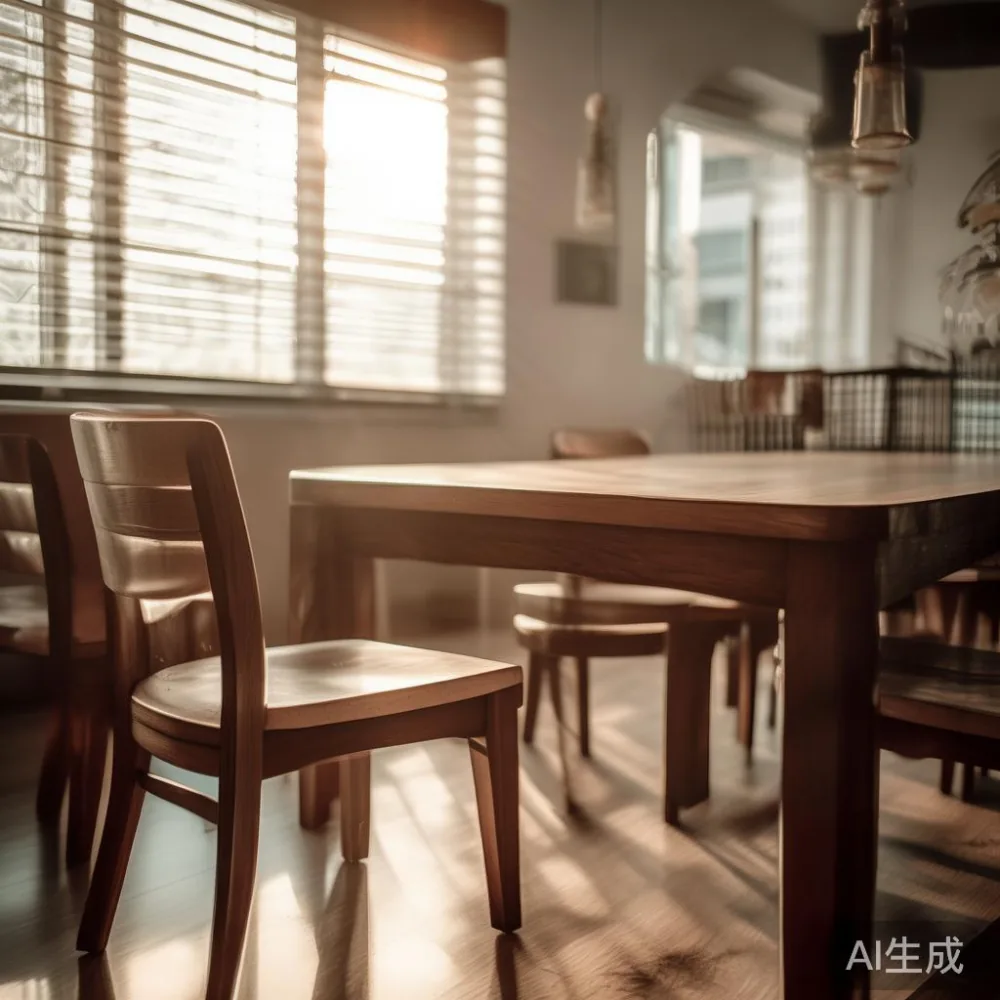
What This Actually Does to a Dining Chair Over 12 Months
A dining chair is a small, joinery-heavy piece, which is precisely why humidity shows up faster on chairs than on a marble table or a metal-framed sofa. Here is what I have seen happen on real pieces:
- Loose mortise-and-tenon joints. The tenon swells, then dries, then swells again. Each cycle loses a fraction of a millimetre. After a year, the chair wiggles where it used to be silent.
- Hairline cracks along the seat. Solid wood seats are the widest single piece of grain on the chair, so they move the most. A 38 cm wide ash seat can change by nearly 1 cm across its width over a humid season.
- Sticky drawers in a sideboard. A solid wood sideboard or wardrobe door will swell enough in September that it no longer closes cleanly, then gap in February when the air-conditioner runs nonstop.
- Finish clouding or blushing. Lacquer and conversion varnish trap moisture underneath if the wood was sealed too wet. The result is a permanent milky haze on what looked like a perfect dining chair when it was delivered.
For dining chairs specifically, the most common failure point is the seat-to-leg joint, because that is where the largest cross-grain panel meets the smallest frame member. A well-built chair accounts for this with floating seats, slotted fixings, or breadboard ends; a poorly built chair just glues and hopes.
How Should I Choose a Dining Chair That Survives a Singapore HDB?
This is the question I get asked most often at the showroom, and it deserves a direct answer. Five things matter, in this order:
- Wood species. Teak, white oak, and rubberwood are the practical choices for Singapore. Teak is naturally oily and stable. White oak has tight grain and resists swelling if it is below 18% of movement coefficient when free. Avoid untreated pine and MDF cores wrapped in veneer; both telegraph movement within a season.
- Moisture content at delivery. Ask the supplier for a reading. A chair delivered at 9% to 11% MC is ready for a Singapore home. Anything above 13% will move noticeably in the first three months.
- Joinery. Look for mortise-and-tenon, dowel, or dovetail joints on the seat frame. Avoid chairs held together only by screws into end grain, and avoid any chair where the seat is one glued-up panel with no mechanical fixation.
- Finish quality. A closed-pore finish (conversion varnish, catalyzed lacquer, or hardwax oil built up in three coats) slows moisture exchange. An open-pore wax finish looks beautiful but will move with the air.
- Construction around the seat. Floating seats with slotted screws or wood buttons allow movement without cracking. Solid panels glued only at the edges will check at the centre.
If you are choosing a matching set, the same rules apply to a solid wood sofa frame, a bed frame, and a wardrobe. A dining chair that survives is a dining table that survives is a nightstand that survives, because the physics are the same. I have walked customers through this exact checklist at MIDHILL, and the pieces that follow these rules are the pieces that look new at year five.
Reading the Spec Sheet: Numbers That Actually Matter
Marketing language is noise. Numbers are signal. When you compare two dining chairs online, look for these data points and ignore everything else:
- Moisture content at packing. 8% to 12% is the safe band. Anything labelled "kiln-dried" without a number is a red flag.
- Movement coefficient. Published as a percentage. Teak sits around 1.0%, white oak around 1.8%, beech around 2.3%. Lower is more stable.
- Joint description. "Mortise and tenon," "dovetail," "finger joint," or "doweled" are all acceptable. "Stitched," "stapled," or unspecified usually means glued and screwed.
- Finish type. "Conversion varnish," "catalyzed lacquer," or "3-coat hardwax oil" tells you the supplier thought about moisture. "NC lacquer" or "wax" tells you they did not.
- Weight. A solid wood dining chair in oak or ash should weigh between 4.5 kg and 6.5 kg. Under 4 kg almost always means hollow construction or MDF cores.
- Warranty length on the structure. A 10-year structural warranty tells you the factory expects the chair to outlast the warranty. A 1-year warranty tells you the factory is not sure.
One more number worth chasing: packaging dimensions. A standard HDB passenger lift internal cabin is roughly 1.1 m wide by 1.4 m deep by 2.1 m tall, with a door opening of about 0.9 m. A dining chair box of 50 cm by 50 cm by 95 cm clears easily. A pre-assembled six-seat dining table box of 220 cm by 110 cm by 80 cm does not, which is why flat-pack shipping matters more in Singapore than in any detached-house market.
What to Do in the First 90 Days After Delivery
Even a perfect chair will move in the first season. Your job is to keep the movement small and even.
- Let it acclimate in the room for 72 hours before unwrapping the inner packaging. The outer carton can come off sooner.
- Keep the chair away from exterior walls for the first month. Exterior walls in a Punggol condo run 3 to 4 degrees cooler at night and collect condensation.
- Run a dehumidifier in the dining area set to 55% RH if you do not run air-conditioning 24/7. The unit costs about S$0.40 an hour to run and saves a S$1,200 dining set.
- Wipe the chair with a dry microfibre cloth weekly. Do not use silicone polishes; they seal moisture into the grain.
- Tighten the seat fixings after 30 days and again after 90 days. Most loose-chair complaints are fixable with a single hex key and ten minutes.
For dining tables, the same routine works, with one addition: rotate the table 180 degrees after 60 days. The end closest to the air-conditioner will be drier; rotating evens out the wear pattern. The same trick works on a bed frame and a wardrobe, although the bed frame moves less because it sits against a wall.
Light-Luxury Finishes That Hold Up in Humid Rooms
Light luxury, whether French light luxury, American light luxury, or post-modern light luxury, depends on tight tolerances, fine joinery, and clean lines. Humidity punishes all three. The good news is that the construction quality required for light luxury is exactly the construction quality that survives a Singapore HDB.
Two specific combinations work well. First, French light luxury dining chairs in white oak with a hand-rubbed hardwax oil finish: the open grain still breathes, but the oil slows moisture exchange by about 40% compared to unfinished wood. Second, post-modern light luxury dining chairs in solid ash with a catalyzed matte lacquer: the closed finish is practically waterproof, and the soft, rounded silhouettes disguise any minor seasonal shift at the joints.
For shoppers browsing top 10 Italian light luxury furniture lists and admiring the marble table or European light luxury accent chair in the showroom photo, the lesson is to ask about the wood underneath the marble and behind the upholstery. A marble table on a solid wood base is only as good as its base, and an European light luxury accent chair with a plywood frame will still delaminate in Singapore even if the fabric is Italian. The same caution applies when you see luxury Italian light luxury furniture for sale Post-modern furniture online at unusually low SGD figures: the wood has not changed, only the spec sheet.
Storage, Style, and the Singapore Floor Plan
Most HDB and condo dining rooms are 2.4 m to 3.0 m on a side, with the dining table pushed against a feature wall. That layout leaves the back two dining chairs about 20 cm from the wall, which is exactly where condensation collects. Pull the chairs out 5 cm to 8 cm from the wall at night, especially during the November to February rainy season.
If you are choosing a light luxury with storage dining bench or sideboard for the same room, remember that storage pieces concentrate moisture in their enclosed cavities. A closed cabinet with no ventilation will run 5% to 8% higher RH than the open room. Either leave the back panel off for air circulation, or run the dehumidifier with the cabinet doors cracked open once a month.
For shoppers asking how to style French sofa in apartment layouts that combine the living and dining rooms, the rule is to keep the dining set at least 1.2 m from the sofa, both for traffic flow and for airflow. Two large pieces of furniture close together trap humidity and accelerate wear on both. If you are styling a small condo, treat the dining chairs as visual furniture as much as seating: a set of four matching chairs in light oak will make a 14 sqm dining area feel larger than a single statement piece.
When a Warranty Actually Means Something
A warranty is only useful if the supplier is still around when you claim it. A 10-year structural warranty from a Foshan factory that has exported since 2008 is a different commitment than a 1-year warranty from a marketplace seller who sources from three different factories a year. The factories with the longest warranties tend to be the factories with the tightest moisture control, because the same discipline that prevents warranty claims also prevents warranty costs.
MIDHILL, for example, publishes a 10-year structural warranty and a lifetime refinishing service on its dining chairs, dining tables, and matching case goods. I have walked their Foshan workshop floor and watched them measure moisture content with a Wagner meter before packing. That kind of routine is invisible to the buyer, but it is the difference between a chair that wobbles in month nine and a chair that is still silent at year six. The same supplier also handles GST registration, free container shipping to Singapore above US$350 in order value, and 14-day returns on stocked pieces, which removes the usual friction points that push Singapore buyers toward mass-market alternatives.
If you want a single sentence to remember: humidity is the test, joinery is the answer. Choose solid wood with proper moisture control, check the movement coefficient and the finish type, and keep the chair 5 cm off the wall. Do those four things and your dining chairs will outlast the warranty, the lease, and probably the next renovation too.
Where to Start If You Are Buying This Month
Short version, in case you are reading this on your commute. For shoppers comparing luxury Italian light luxury furniture for sale Post-modern furniture listings this week, narrow the list to pieces that publish a moisture content reading, a movement coefficient, and a finish specification. Ask the supplier for a photo of the carton dimensions and confirm the box clears your lift. Ask whether the seat is floating or fixed. Ask what happens if a joint loosens at month 14. The answers, not the price tag, will tell you which dining chair belongs in your home.
And if you want a single supplier to shortlist, the same Foshan workshop referenced above, listed at midhillco, ships stocked dining chairs and matching dining tables to Singapore with the moisture readings printed on the packing list. That is the kind of boring, boring, unglamorous detail that decides whether you are buying furniture or replacing it.