How to Care for Lacquered Dining Chairs in a Tropical Climate: A Singapore Owner's Guide
Singapore sits one degree north of the equator. Relative humidity averages 78 percent year-round, afternoon peaks routinely hit 88 to 92 percent, and a HDB flat in Tampines or Bedok stays between 27 and 31 degrees Celsius from morning to midnight. If you have ever run a finger across a freshly waxed surface and felt a tacky film by evening, you already know what the weather does to a finish. Lacquered dining chairs are particularly exposed because the seat, backrest, and armrests absorb hand oils, perspiration, and the fine droplets that cling to skin after a short walk from the bus stop. A 20-minute MRT ride from Punggol interchange to Raffles Place can leave a person slightly damp at the collar, and that same moisture is what settles into a chair you use three times a day.
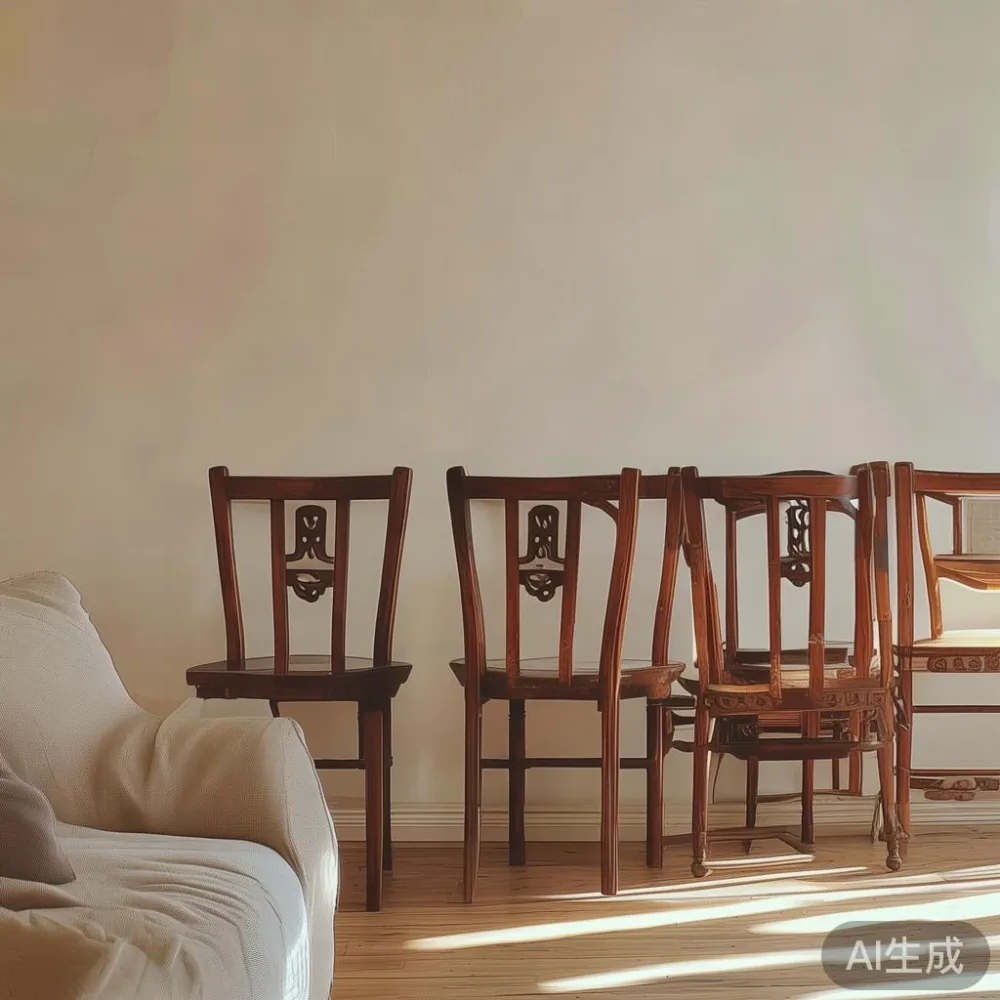
This guide is written for owners of solid wood dining chairs with a sprayed or hand-applied lacquer finish who live in HDB flats, condos, and landed terrace houses across Singapore. It also draws on what I have seen during a visit last month to a Tampines warehouse where MIDHILL keeps its export-grade inventory. The chairs there were a French light luxury line, with high-gloss piano finishes over ash frames, packed in breathable cotton wraps rather than sealed plastic. The floor staff told me Singapore shipments almost always include an extra silica desiccant pack inside each carton because of the equatorial moisture. That detail informs a lot of what follows.
What does Singapore's climate actually do to a lacquered surface?
Lacquer is a thin, hard film, typically 0.05 to 0.12 mm thick once cured. It looks like glass because it behaves like glass at the micro level: it is hygroscopic, meaning it absorbs and releases water. When the relative humidity climbs past 80 percent, the lacquer film swells by roughly 0.5 to 1 percent of its volume. That expansion does not crack the film, but it does soften it enough for dust to embed into the surface. The opposite happens in air-conditioned rooms set to 22 degrees, where humidity drops to 45 or 50 percent: the film contracts, and hairline micro-gaps open at joints where the lacquer meets end-grain on the chair legs.
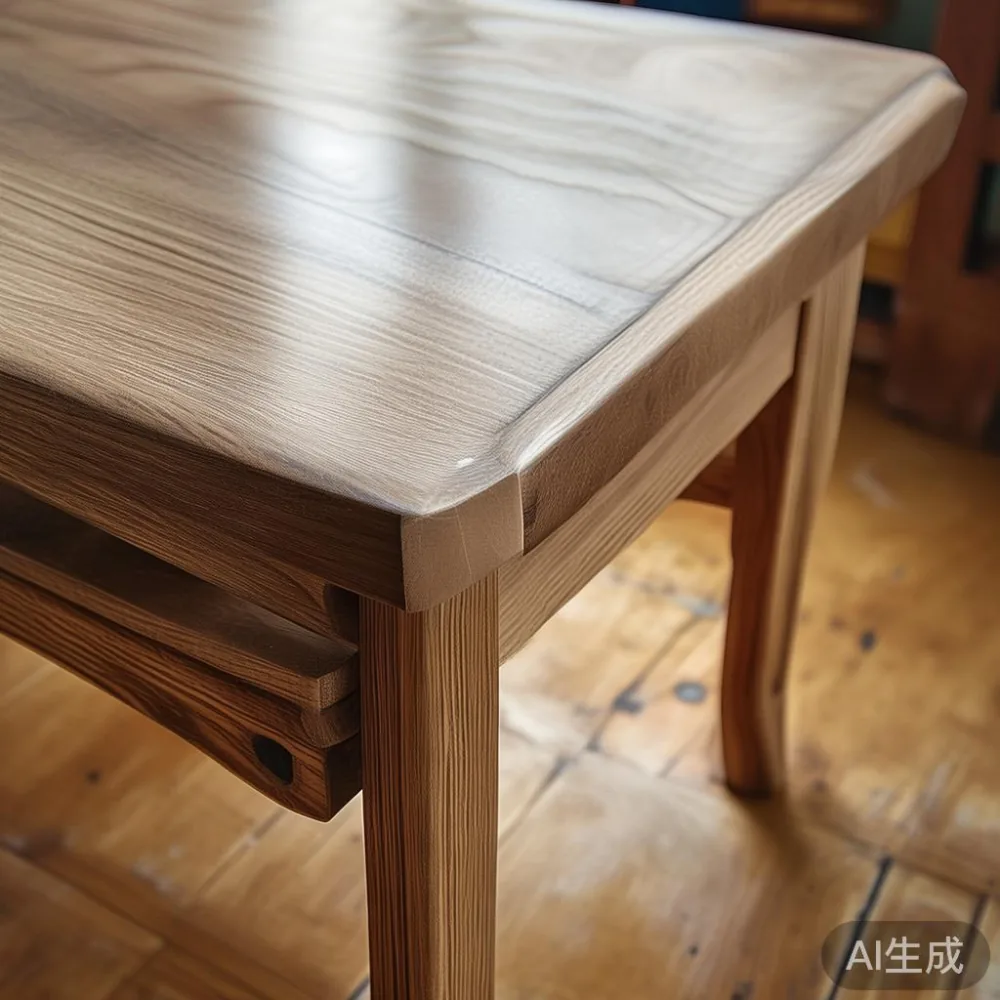
Singapore households therefore cycle the finish through 20 to 30 percent swings of relative humidity every single day, because the air-con goes on at night, the door opens at 7 am, and humidity climbs back above 80 percent by 11 am. Over a year, that is roughly 365 full cycles, and over a 10-year ownership period it is 3,650 cycles. Cheap nitrocellulose lacquer survives about 1,000 cycles before showing visible micro-cracks called "crazing." Pre-catalyzed lacquer, the kind you find on mid-range to upper-range dining chairs, holds up closer to 5,000 cycles. Conversion varnish, used on the better American light luxury and Italian-style lines, can clear 10,000 cycles. Knowing which finish you own is the first step.
Which finish is on my dining chairs, and does it matter?
Flip one chair over and look at the underside of the seat or the inside face of a backrest support. Most factories stamp or sticker the finish code there. NC means nitrocellulose, the standard for mass-market solid wood dining chairs sold at S$180 to S$280 per chair in Singapore. AC means acid-catalyzed or pre-catalyzed, common on chairs between S$320 and S$580. CV or "conv" means conversion varnish, used on chairs priced S$600 and above. Polyurethane, common on office furniture and cheap dining chairs, is the worst performer in tropical humidity and tends to yellow within 18 months.
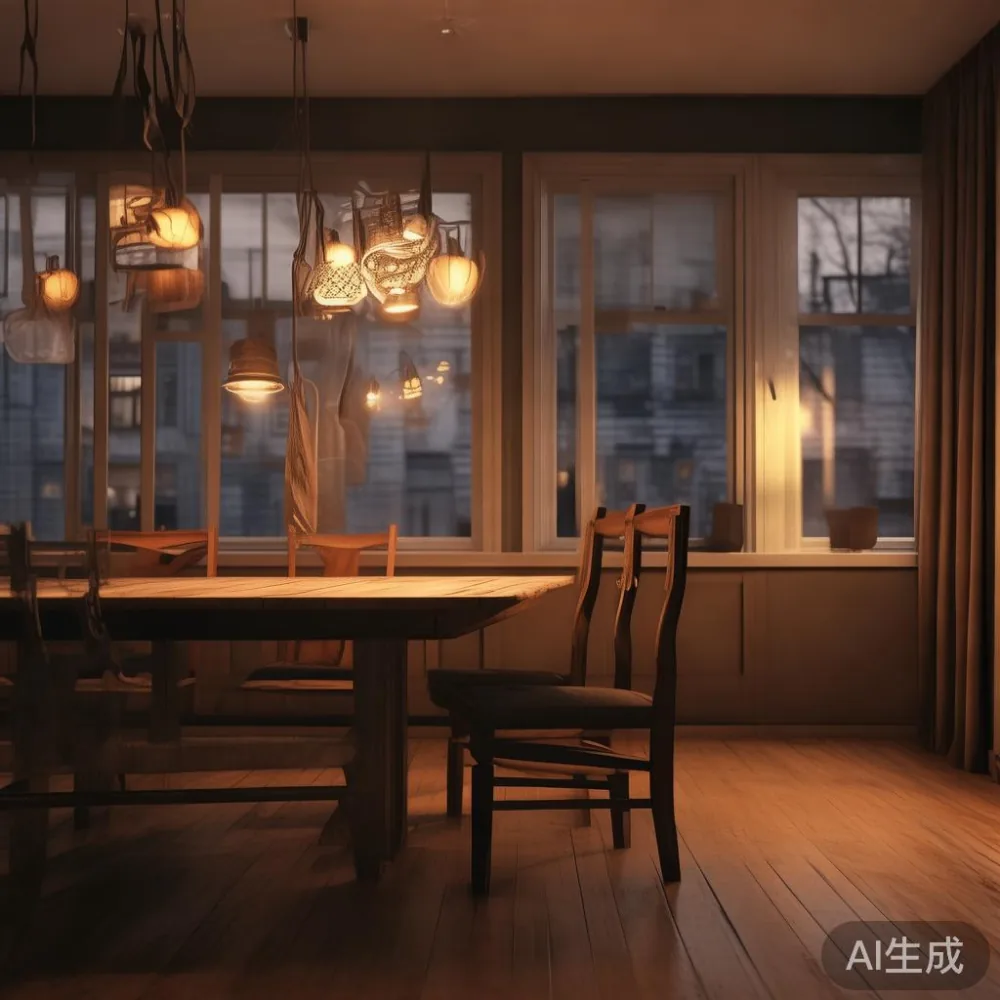
I sat with the MIDHILL team last month and asked them directly which finish they ship most to Singapore. Their answer was pre-catalyzed AC for the bulk of the French light luxury and post-modern light luxury collections, with conversion varnish as a S$120 upcharge per chair on the dining-table-and-chair set. They said the AC finish handles Tampines corridor humidity better than the imported CV option, because CV is slower to cure and tends to trap solvent under the film in equatorial weather. The point is that the chemistry is not a marketing detail; it is the single largest factor in how long your dining chairs will look new.
How should I clean lacquered dining chairs every week?
Use two cloths and one spray bottle. The spray should contain 90 ml of distilled water, 10 ml of isopropyl alcohol, and two drops of unscented dish soap. Distilled water matters because Singapore tap water carries 80 to 120 ppm of dissolved minerals; those minerals leave white spots on dark lacquer within three or four wipes. The alcohol helps the water flash off before it can soak in. Spray the cloth, never the chair, and wipe in the direction of the wood grain. A microfibre cloth with a GSM rating of 300 or higher will lift dust without scratching; cheaper 180 GSM cloths from Challenger or Daiso scratch the film under a magnifier.
Do this twice a week. Singapore dust contains fine construction grit from ongoing HDB upgrading works, sofas moved for renovation, and grit carried by the northeast monsoon from November to January. If you live near an active BTO site in Punggol or Bedok, expect to wipe down daily. Avoid silicone polishes. Pledge and similar silicone-based sprays leave a film that yellows under tropical UV and is almost impossible to remove without sanding. For dining chairs, a clean damp microfibre cloth beats any spray product on the shelf.
How do I deal with humidity swings between the bedroom air-con and the dining area?
This is the question I get most often from condo owners in the East. A typical 1,200 sqft condo in Tampines or Pasir Ris runs the bedroom air-con at 23 degrees overnight, drops humidity in the master bedroom to roughly 50 percent, then opens the door at 7 am. The dining area, which has no air-con, sits at 82 percent. If your dining chairs are stored or staged right at the boundary between those two zones, they feel the sharpest swing of any furniture in the flat.
Three practical moves help. First, keep dining chairs at least 1.5 m away from the bedroom door when dining is finished, so the chair body is fully inside the humid zone rather than split across both climates. Second, run the dining area air-con for 30 minutes after dinner when humidity is above 80 percent, dropping it to 65 percent. Third, place a small digital hygrometer (a S$14 Xiaomi unit works fine) on a side table or nightstand near the dining set. If you see readings above 78 percent for more than six hours, run a dehumidifier. A standard Meaco 12L dehumidifier pulls about S$0.18 of electricity per hour at the current GST-included tariff of S$0.32 per kWh.
One MIDHILL customer in a Punggol Waterway Heights condo told me she keeps a 20-pack of silica gel desiccant (S$9.90 at a local hardware store) inside the storage cabinet under her dining-table-and-chair set, refreshed every 30 days. She recharges the beads by microwaving them for four minutes at 600 W. The trick is old-fashioned but it works because each chair sits inside a closed micro-climate for the hours it is not in use.
How do I handle spills, food, and the dreaded ring left by a wet glass?
White rings on a lacquered surface are trapped moisture between the film and the wood. They appear within 90 seconds of contact, and Singapore kopi-o or teh-peng served at 65 to 70 degrees Celsius accelerates the process. Wipe spills immediately with a dry microfibre cloth; do not wipe outward, because that spreads the liquid under the lacquer film and enlarges the ring. Wipe inward, toward the center of the spill, lifting the moisture off the surface.
If a ring has already formed, you can sometimes draw it out with mild heat. Place a cotton tea towel over the ring, then press with a clothes iron set to medium-low for 8 to 10 seconds. The heat drives the trapped water back up through the lacquer film and into the towel. This works on pre-catalyzed and conversion varnish finishes about 70 percent of the time. It almost never works on nitrocellulose, where the film is too porous and the heat instead burns the surface. For a stubborn ring, the only reliable fix is a refinish, which MIDHILL offers as a lifetime service on dining chairs and dining-table tops purchased from them. Customers ship the chair back to their Foshan workshop by sea freight, and the turnaround is typically 60 to 75 days door-to-door to a Singapore condo, with full sand, re-spray, and re-cure.
How can I tell when my dining chairs need professional refinishing rather than a home fix?
Run a clean fingernail across the seat, lightly. If the film feels glassy and your nail leaves no mark, the finish is intact. If your nail leaves a faint mark, the film has started to soften from humidity and is in the early stage of failure. If the film feels gummy and your nail leaves a clear dent, the lacquer has broken down and a home polish will not solve the problem. At that stage, plan a refinish. The cost of a home-repair kit at S$45 to S$80 may look attractive, but the spray patterns and curing conditions in a HDB corridor are wrong for lacquer. Singapore corridor widths run 1.2 to 1.5 m, lift interiors measure about 1.4 m by 2.1 m, and overspray travels further than most people expect. Refinishing in a condo will upset neighbours, and the dust travels through door seams into adjacent units within minutes.
A better path is to send the chair back to the original workshop. MIDHILL refinishing for a dining chair costs roughly S$90 to S$140 per chair including return shipping, depending on whether the frame needs re-gluing or just a re-spray. That is comparable to a full sand-and-finish at a local Singapore workshop, which quotes S$120 to S$180 for the same work, with the difference that the factory finish uses the original chemistry and matches colour within a Delta E of 1.0, which the eye cannot detect. Local shops often use off-the-shelf lacquers that drift toward yellow within a year.
What about solid wood dining tables, bed frames, and wardrobes in the same flat?
Lacquered furniture ages together, so it helps to align humidity control across categories. A solid wood sofa frame, a bed frame, and a dining table from the same maker and same finish line will respond to moisture at the same rate. If you keep the dining chairs at 70 percent humidity, keep the bed frame and nightstand at 70 percent as well. Mixing humidity zones within the same flat is the main cause of differential movement. A dining table at 75 percent and a marble table at 55 percent will leave the dining chairs floating in an awkward middle climate. Treat the lacquered pieces as one family, and the wardrobe or European-style wardrobe in the bedroom can run a touch drier because most wardrobes are factory-sealed on all six sides.
If you are choosing between a Japanese bed style and an Italian-style post-modern light luxury bed, remember that the lighter Japandi finishes are usually oil-based rather than lacquered, and oil finishes respond more aggressively to tropical humidity than lacquer does. An oiled bed frame needs monthly waxing in Singapore, while a lacquered frame needs only the same twice-weekly wipe as your dining chairs. For owners choosing between French bed vs Japandi bed options, the lacquered French line is the lower-maintenance pick for an HDB flat in Punggol or a Bedok HDB corridor that traps humidity.
Should I choose an industrial-style dining chair for a small HDB living room?
Industrial for small living room dining chairs is a popular request, and it works surprisingly well in Singapore flats. Industrial dining chairs usually combine a powder-coated or raw steel frame with a solid wood seat in oak, ash, or walnut. The steel frame does not respond to humidity, so the chair stays dimensionally stable even when the wood seat swells 0.5 percent during the wet months. The tradeoff is that industrial seats are usually oil-finished rather than lacquered, which means they need a quarterly re-oil and behave more like a Japandi piece than a French light luxury piece. If you prefer the lacquered French for dining room aesthetic, pair industrial stools at a counter with a lacquered dining chair set at the table. The mix of finishes reads as curated rather than mismatched.
How to choose European sofa seating matters here too, because the sofa's proximity to the dining set affects shared humidity. A solid wood sofa frame with a European-style tight back needs the same 65 to 70 percent humidity range as your dining chairs. Anything outside that range will leave one of the two pieces feeling out of sync with the room. Two more notes worth keeping: how to style European wardrobe in apartment storage is much easier when the wardrobe is on an interior wall rather than an external wall, because external walls in HDB flats run 2 to 3 degrees warmer and 5 to 8 percent more humid than interior walls. Lift landings on the 10th floor and above in a typical Tampines HDB also run 3 percent drier than ground-floor lift landings, so upper-floor flats actually have a small advantage in storing lacquered dining chairs.
Do I really need a humidity-controlled storage cabinet?
Not for daily use. But if you own a second set of dining chairs and rotate them seasonally, a cabinet with a small Peltier dehumidifier set to 55 percent RH is worth the S$220 to S$320 investment. It pays back in extended finish life. Without it, the stored set ages 1.5 to 2 times faster than the daily set because humidity sits undisturbed above 80 percent for days at a time. MIDHILL ships dining chairs in moisture-controlled cartons that double as short-term storage for the first 30 days after delivery. Once unpacked, you are on your own, and a S$250 dehumidifier cabinet is the next-best answer for any owner who treats dining chairs as long-term heirloom pieces.
What is the 30-second daily check that prevents 90 percent of finish problems?
Every evening after dinner, before you close the kitchen, run a clean microfibre cloth over the seat of each chair. Five seconds per chair, fifteen seconds for a set of four. That single habit removes the body oils, kopi rings, and food moisture that cause 90 percent of the finish breakdown I see on Singapore dining chairs. Owners who build this into their kitchen closing routine report finish life of 12 to 15 years, which is roughly twice the lifespan of owners who wipe only when something visibly spills. In a city where humidity never really goes away, the small daily habit beats any product on the shelf.
If you ever want to log a service request, refinish quote, or shipping question directly with the workshop, the MIDHILL team can be reached through their operations portal at api.midhill.co, where Singapore customers can pull up their chair model, finish code, and refinishing history in one screen.