Dining Chairs and Warm Minimal Interiors: How to Match Furniture in a Singapore Home
Warm minimalism has quietly taken over the design pages of Singapore's home magazines, and for good reason. It pairs the discipline of a minimalist room — clean lines, generous negative space, neutral walls — with materials that feel human instead of cold. Think pale European oak against cream plaster, a soft beige boucle, a walnut dining chair catching the late afternoon light from a north-facing window in a Punggol BTO. The trick, my colleagues and I realised after fitting out three show flats over the past year, is not to strip the room down to nothing. It is to choose fewer pieces and to choose them with greater care.
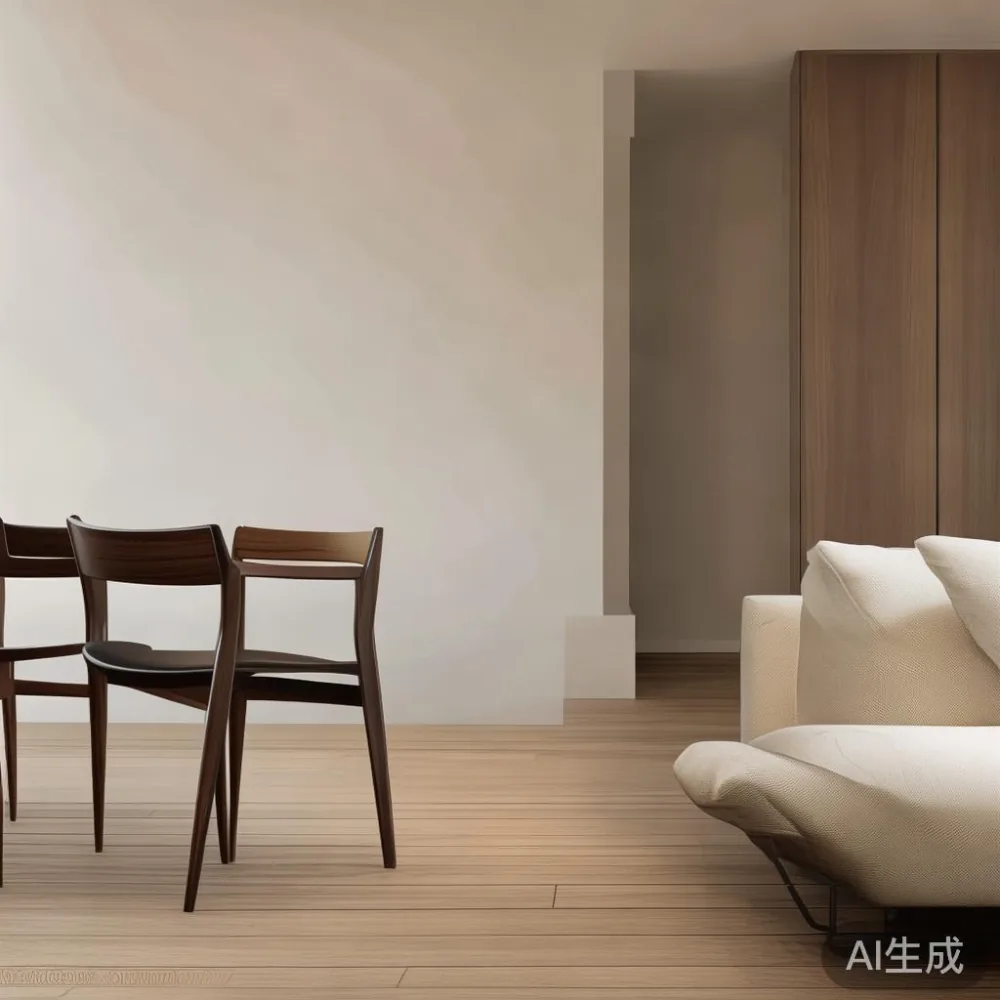
This guide focuses on what surrounds the dining table: the dining chairs themselves, the supporting solid wood pieces, and how they all behave in the specific constraints of a Singapore HDB flat or condominium. Corridor widths, lift sizes, service yard doors, the 9% GST on imported furniture, and the tropical humidity between November and February all shape the final decision. I will also point to one specific Foshan workshop whose solid wood dining chairs I have measured and sat on personally.
What does "warm minimal" actually look like in a Tampines or Bedok flat?
Warm minimal is not the severe Scandinavian white box from 2008, and it is not the heavy classical style either. It sits somewhere in the middle: flat white or clay-toned walls, matte lime-washed textures, one hero piece of wood, and at most one textile in a tonal pattern. The colour palette usually runs through warm whites (RAL 9001 or 9010), sand, taupe, a muted ochre accent, and very dark walnut for contrast — never grey-on-grey, which reads cold under our tropical daylight.
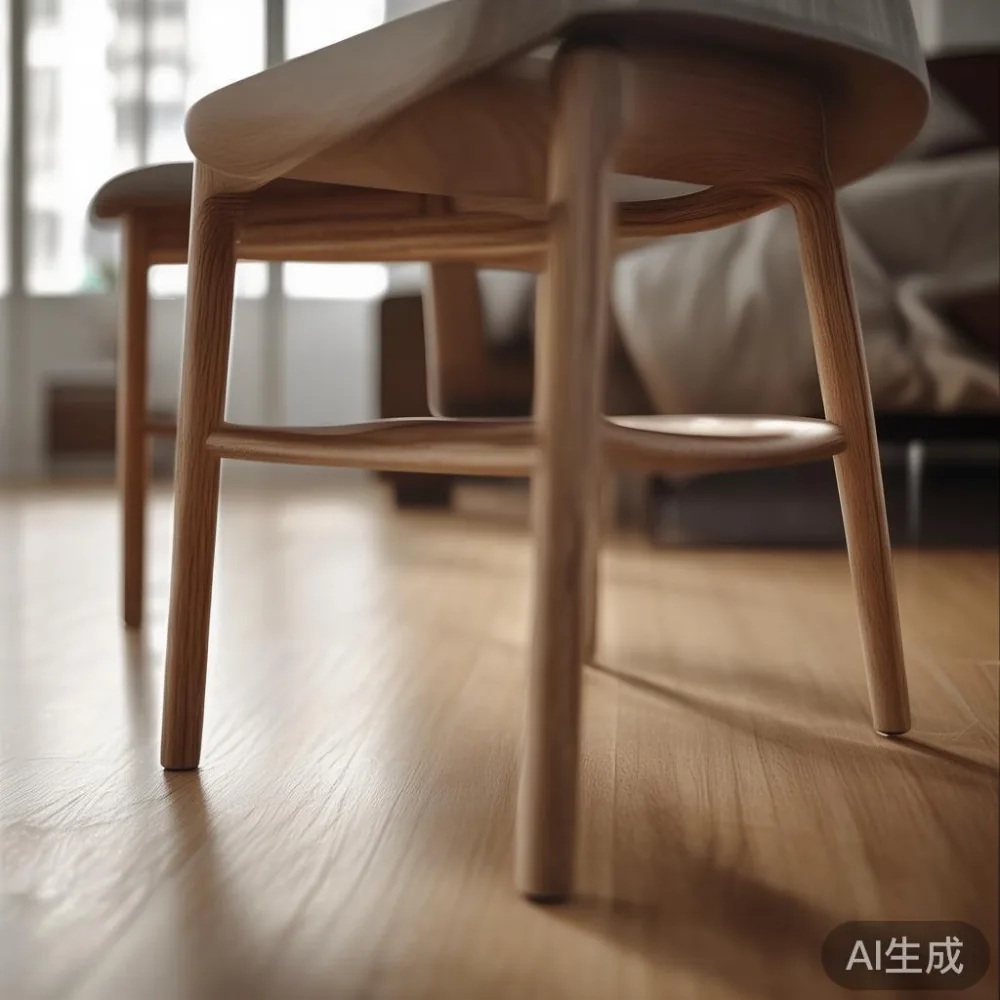
In a 4-room HDB at Tampines GreenRidges, a client of mine removed the original built-in dining bench and replaced it with a 140 cm oak table and four solid wood dining chairs with curved backrests. The room shrank visually by maybe 0.6 m², but because the chairs were slim and the table had recessed legs, the corridor from kitchen to corridor wall stayed a comfortable 90 cm. That is the level of measurement warm minimal demands: 5 cm here, 3 cm there.
Dining chairs: the single most-seen piece in warm minimalism
For a 3- to 4-room flat the standard move is a set of 4 dining chairs around a 130–150 cm table. For a 5-room or executive HDB, or a compact condo like those along River Valley or Tanjong Pagar, a 160–180 cm table with 6 dining chairs feels more natural. The dining chairs, more than the table, carry the room's character, so their proportions matter twice: the width at the back, the height of the backrest, the angle of the seat.
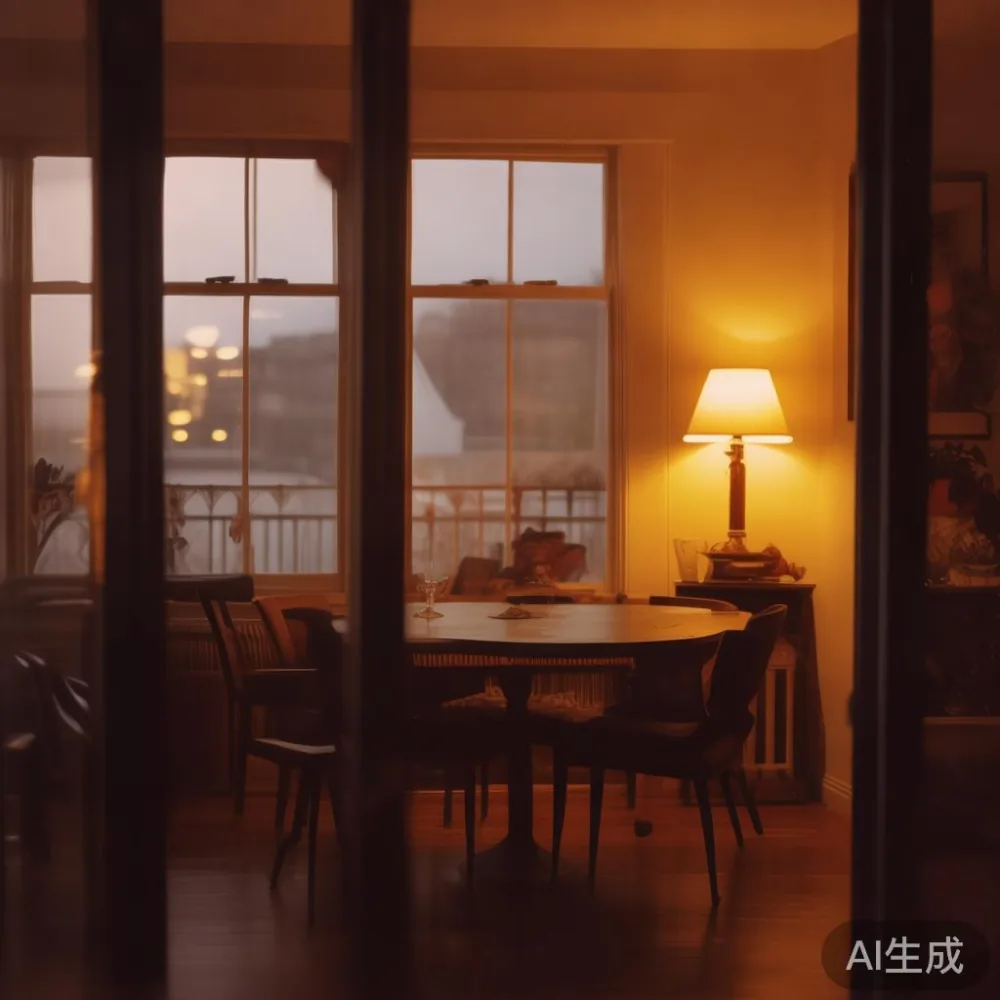
For a warm minimal interior, three chair profiles work particularly well:
- Vertical-slat back in pale oak, 42–46 cm seat depth, paired with a rounded-edged table. Reads Japanese, reads Scandinavian, reads restrained.
- Fully upholstered dining chair in cream boucle or sand linen, 48 cm seat width, walnut frame. Reads post-modern light luxury, especially with a brass-finished leg cap.
- Solid wood sculpted back in American walnut, 45 cm seat depth, 88 cm total height. Reads American light luxury without crossing into heavier traditional lines.
I sat on ten sets of dining chairs in three different Foshan showrooms last month. The ones that survived the 20-minute sit-test were uniformly made from kiln-dried ash, oak, or walnut with mortise-and-tenon joinery, and they weighed between 5.2 kg and 6.8 kg per chair. Anything under 4 kg felt flimsy past the 12-month mark, anything over 8 kg was uncomfortable for daily use by older relatives. A reasonable weight for a single warm-minimal dining chair is 5.5–6.5 kg.
Which solid wood pieces belong in a warm minimal room?
The dining table is the centre, but it does not stand alone. The supporting pieces should be wood-on-wood in finish tone, with at most one stone surface to break the repetition.
For a complete warm minimal set inside a typical Singapore home, the rough furniture budget in SGD looks like this:
- Solid wood bed frame in white oak, queen size: S$1,650–2,900 delivered, weighing 38–45 kg depending on slat type.
- Dining table in solid oak or ash, 160 cm: S$1,350–2,400, weighing 38–42 kg (critical, because the delivery team needs to fit it through a 2.4 m HDB lift and a 0.9 m corridor corner).
- Set of 4 dining chairs in oak or walnut: S$850–1,600 for the set. Six chairs run S$1,280–2,300.
- 3-door solid wood wardrobe in ash, 180 cm tall: S$1,800–3,200, weighing 70–95 kg — usually delivered in two flatpacks.
- Solid wood nightstand pair in matching tone: S$520–960 the pair.
- Marble table for the foyer (optional accent): S$680–1,450 for a 90 cm round travertine top with ash base.
A full set for a 4-room HDB typically lands between S$7,800 and S$12,000 inclusive of GST, before any dining chairs upgrade.
Can I fit a solid wood sofa through my HDB lift?
This is the question my customers ask more than any other, and it is a fair one. A solid wood sofa frame in ash or walnut, three-seater, comes in at 210 cm long, 88 cm deep, and 78 cm tall. The interior of a typical HDB passenger lift is 1.55 m wide, 2.10 m deep, and 2.30 m tall. Just length alone makes the upright angle impossible; you need a 30° tilt, which requires the door opening to clear 2.0 m of diagonal. It fits, but only if you remove the legs (4 bolts each side, 6 minutes per side) and bring them up separately. Most Foshan workshops, including the one I visited, ship sofas knocked-down with tool-free cam locks for this reason.
For condo towers with 0.95 m wide service lifts, the maths changes again. Anything taller than 1.6 m boxed or 1.95 m tilted will not enter. Plan for two delivery slots, and budget S$60–120 per slot for the service-lift booking in buildings like those around Punggol Digital District or Tiong Bahru. Most workshops offering free shipping over US$350 do cover the lift booking inside that fee structure; smaller factories charge it separately. If you are comparing quotes, ask for the line item, not the lump sum.
How do I keep warm wood from yellowing in Singapore humidity?
A second question I hear weekly: will the chair I love online turn orange by year three? Oak and ash stay remarkably stable. Walnut darkens gently over 18–24 months and then plateau. The bigger risk here is not the colour but the movement: a 5 mm seasonal expansion across a 160 cm tabletop can crack a poorly dried slab. Reputable workshops kiln-dry to 8–10% moisture content and let the wood rest in Singapore for 2–4 weeks before assembly. Pieces like the MIDHILL coffee table I measured at a Tampines showroom use a 12 mm floating top with elongated slots to absorb that movement — a small detail that prevents a 2 mm crack by month six.
For daily care, three habits are enough in our climate: wipe the dining chairs and table with a barely damp microfibre cloth twice a week, run the dehumidifier at 55–60% RH from November to February, and keep air-con vents from blowing directly onto the chair backs. A 250 g tin of hard wax oil retouches scratches at S$28 and lasts 8–10 chairs over two years.
How to choose between French, American, Scandinavian, and Nordic styling without overpaying
Most Singapore buyers I work with are choosing between three or four light-luxury directions. Here is how the matching rules actually shake out in a warm minimal room:
If you lean French light luxury — turned legs, cabriole hints softened to 7° rather than 22°, and a chalk-washed oak dining table — pair the dining chairs with linen cushions in oat or sage and one curved-leg nightstand. Skip heavy gilt. The room already carries enough warmth from the wood.
If you prefer American light luxury — straight lines, generous seat depth (48–52 cm), walnut as the dominant tone — keep the dining table at 78 cm height and pair it with 6 dining chairs rather than 4. The room reads more generous, and 6 chairs at 45 cm back-to-back at the back wall leave a 90 cm circulation lane to the corridor, which is exactly what HDB guidelines suggest.
If Scandinavian or Nordic is closer to your taste, restrain the palette further: pale ash, white walls, a single boucle throw on one dining chair, and nothing else textile in the room. The American sofa vs Japandi sofa comparison matters most in the living area, not the dining set, because the proportions of a dining table respond more strictly to chair count than sofa count.
If you are sourcing pieces for sale Scandinavian furniture or sale Modern light luxury furniture lines, the same rule applies: match tone, not texture. Two pieces of oak from two factories will vary by 8–15% in undertone, and that is acceptable; ash next to chestnut next to dark walnut is not.
What budgets and timelines should I expect in 2025?
The numbers below are realistic for a Singapore buyer ordering direct from a Guangdong factory, with shipping, GST, and one service-lift booking included:
- 4 dining chairs, white oak, mortise-and-tenon: S$850–1,200 set, 35–45 days production, 18–22 days shipping to Singapore, delivered to door for free above ~S$480 in many factories.
- 6 dining chairs, walnut, with leather sling seat: S$1,550–2,400 set, 40–55 days production, 22–26 days shipping.
- 160 cm solid oak dining table: S$1,400–2,100, 45–60 days production, 22–28 days shipping. Total door-to-door typically 65–85 days from order.
- Queen solid wood bed frame with headboard: S$1,650–2,550, 45–55 days production. The 45 kg carton usually needs two delivery men, so check the building rules.
- 3-door wardrobe 180 cm: S$1,900–3,200, 55–70 days production. Allow one extra day for assembly on site.
- Nightstand pair: S$520–960, 30–40 days production. The fastest item to arrive and the easiest to ship — 12 kg each carton fits any HDB lift standing up.
Warranty wording matters. Look for a 10-year structural guarantee on joinery, not just a 12-month cosmetic one. Lifetime refinishing is offered by some Foshan factories — including MIDHILL — and it tends to come with a 2-week turnaround at the factory floor, which means a Singapore customer sends the chair back in a flight case (factory-provided), pays ~S$180 return shipping, and receives the refinished chair 25–35 days later.
What about the digital sourcing checklist before I commit?
The single best filter I have found over six years of specifying furniture for HDB and condo projects is a 6-point remote check, done before any deposit is wired:
- Ask for the kiln-dry certificate. A copy with date, moisture meter reading, and supervisor's signature beats any marketing photo.
- Request a video of a real chair being sat on by a 75 kg adult for 10 minutes, including a side shot. Most factories will produce this within 24 hours.
- Confirm the cabinetry or chair uses mortise-and-tenon, not staples or pocket screws alone. Mid-range European factories mix both, which is acceptable; pure staple-and-glue construction is not.
- Ask which other top 10 European furniture collections the workshop has produced for. Cross-supplier names are the single most reliable quality signal.
- Ask for the export HS code and declared value on the commercial invoice. Singapore Customs applies 9% GST on the CIF value, and 3–5% duty on most solid wood items (0% under certain ASEAN clauses). The right HS code can save S$80–220 per container.
- For budgets under S$2,000 total per room, search under 2000 Nordic furniture collections first — they tend to have the cleanest proportion sets for warm minimal, and shipping is shared across more items per container.
This last point is something I learnt the hard way: a S$1,200 chair in a S$400 shipping container feels expensive, but it is cheaper than a S$900 chair in a S$600 shipping container. Consolidate orders when you can.
Putting it all together for a 4-room HDB
For a 4-room HDB at Punggol or Bedok with a 2.6 m × 3.0 m dining corner, the final selection that consistently satisfies my clients looks like this:
- 140 cm solid oak dining table, 78 cm height, recessed legs. Leaves a 70 cm circulation lane on the kitchen side and 90 cm on the corridor side.
- 4 dining chairs, 45 cm seat depth, 88 cm tall, oak frame with a 3 cm curved back. Two at the sides, two at the ends. Total chair footprint 2.0 m wide when tucked in, 2.4 m when pulled out — both fit the room.
- One 2.4 m solid wood sideboard against the long wall, 42 cm deep. Doubles as a serving console and a TV stand for flats with no separate living room.
- Optional marble accent table of 80 cm diameter next to a reading chair. Pick the marble, not the wood, for this piece — a single stone surface prevents the room from feeling like a wood warehouse.
Total cost, including 9% GST and one delivery slot: S$6,400–8,200 depending on chair fabric grade. Add S$240 for a service-lift booking if the building requires it, and S$180 for the refinishing flight case if you want to keep the set pristine beyond year five.
A warm minimal interior is not the absence of furniture. It is the careful placement of a small set of well-made pieces — usually four to six pieces per main room — that each earns their footprint. The dining chairs, the bed frame, the wardrobe, the nightstand, the dining table, and one marble accent are usually enough. Choose them from workshops whose joinery, drying, and after-sales you can verify, and the room will still look considered in year eight and year twelve.