How to Match Dining Chairs and Furniture to a Warm Minimal Interior in Singapore
Walking through a 92-square-metre Punggol HDB flat last month, I watched a young couple argue over a single decision: whether their six new dining chairs should lean Scandinavian pale or carry a warmer, walnut undertone. The kitchen island behind them was already matte cream. The flooring was a 15mm engineered oak in a 190mm-wide plank. The whole apartment had been designed around warmth, but the chairs were tipping cold. Two hours later, after we moved four boards, three swatches, and one very confused cat, we had a set of solid wood dining chairs with curved backrests that looked like they had grown out of the floor. That afternoon is the spine of this guide, because warm minimalism is not a style you buy, it is a series of small material decisions you make, and the dining chairs sit at the centre of almost all of them.
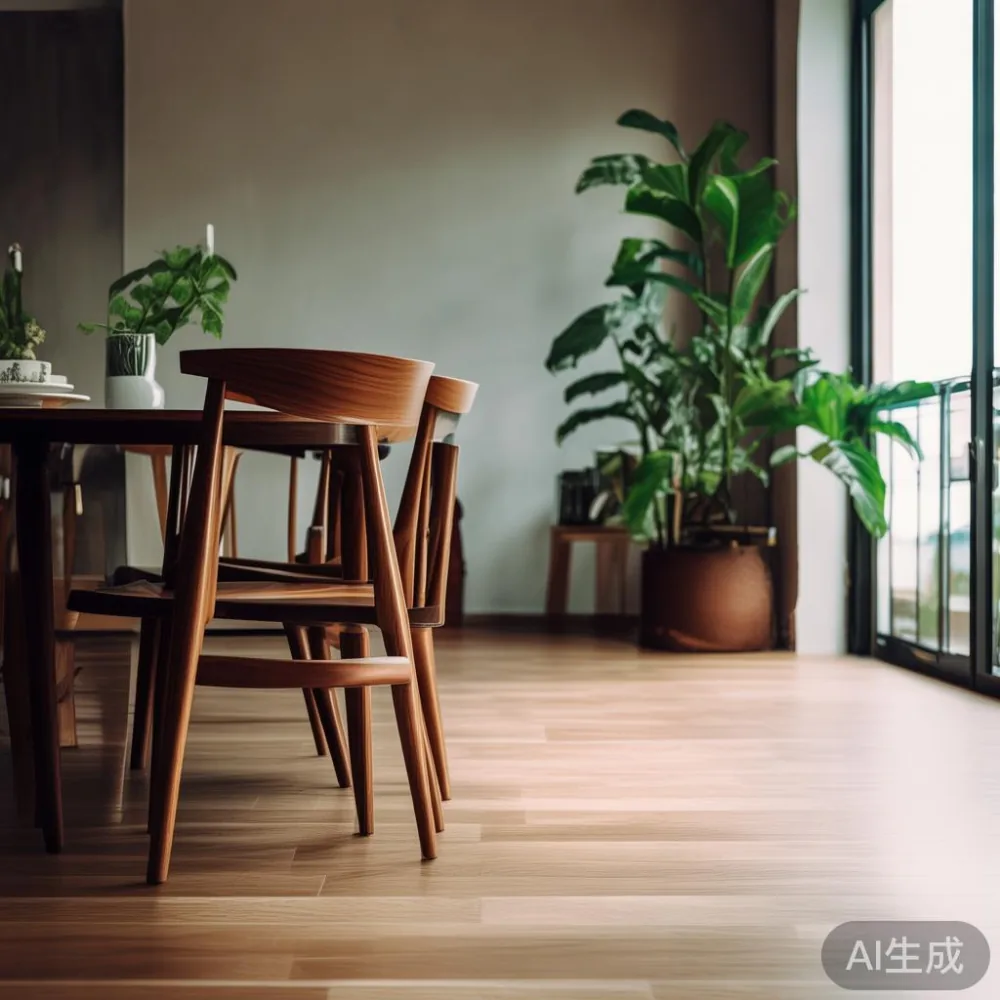
What does warm minimalism actually mean in a Singapore home?
Warm minimalism is a softer reading of the Scandinavian and Muji traditions that have shaped most Singapore interiors this decade. Where classic minimalism leans on white walls, polished concrete, and cold metals, warm minimalism keeps the same disciplined surfaces but swaps the temperature. Think off-white rather than optic white (something around Benjamin Moore OC-17 or a Farrow & Ball equivalent like Schoolhouse White). Think oak, ash, or walnut timber instead of high-gloss laminates. Think bouclé, cotton velvet, and leather in cream, tobacco, and clay. The discipline of minimalism stays intact — clean lines, no clutter, restrained palette — but the emotional register is gentle rather than austere. In a Tampines 4-room flat or a Bedok condominium with corridor access, this approach reads as calm and grown-up, which is why it has become the default for many new homeowners buying from developers like UOL and CapitaLand.
The first test of whether a room qualifies as warm minimal is the lighting at 7pm, after the sun drops behind the HDB block. Switch on the warm-white downlights (2700K to 3000K, never 4000K and above) and stand back. If the room looks like a hotel lobby rather than a hospital corridor, you are on the right track. If your dining chairs read as cold whites, they are dragging the room the wrong way.
How do I choose a marble top for a study?
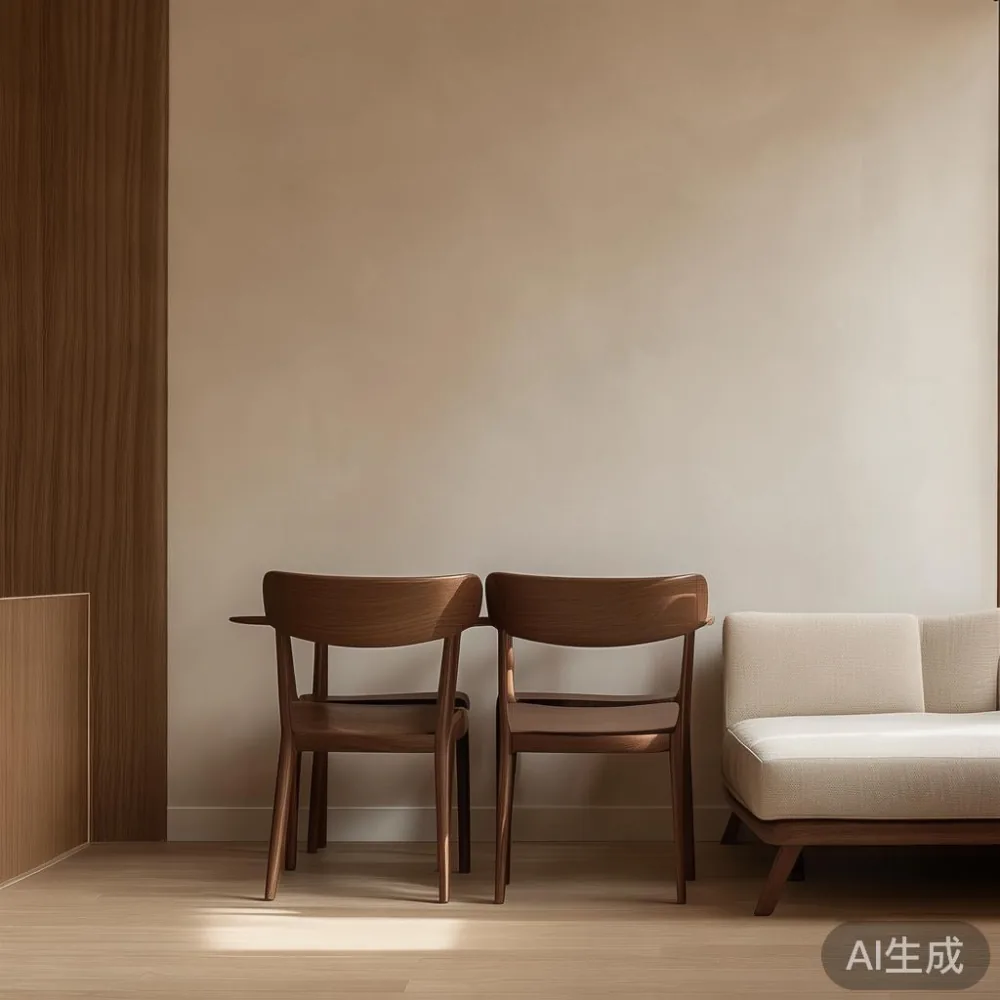
For a Singapore study of about 9 to 12 square metres, choose a marble top with a warm, veined pattern — Crema Marfil, Emperador Light, or a Calacatta with amber rather than blue undertones — in a honed (not polished) finish, ideally mounted on a solid wood base in white oak, ash, or light walnut to keep the surface stable across our 27–32°C electric humidity swings and daily 80–90% afternoon humidity. Honed marble hides micro-scratches from a rolling chair better than a mirror polish, and a 2cm slab bonded to a plywood or solid wood substrate gives you the visual weight of stone without the 80kg-plus load a full 3cm slab places on a typical condo floor plate rated at 1.5 kN/m² for residential use. If budget is a concern, a sintered stone or large-format porcelain slab in a warm marble-look print (6mm to 12mm thick, 2.4m × 1.2m sheets around SGD 180 to SGD 320 per slab) gives you the same visual result at roughly a third of the price and a kilogram of authentic marble's weight. Seal the inspection with a penetrating sealer twice a year in this assessment.
What are the best dining chair shapes for a warm minimal interior?
Shape matters more than finish in warm minimalism, because the eye scans silhouettes before it scans colour. For a 1.4m to 1.8m dining table seating four to six, look for dining chairs with a low to mid backrest (40cm to 48cm from seat to top rail), gently curved rather than squared, and a seat depth of around 42cm to 45cm. These proportions read as inviting and quiet. Avoid high-back throne shapes, which feel formal and visually heavy in a small space. Avoid ultra-thin metal frames, which fight the warmth you are trying to build.
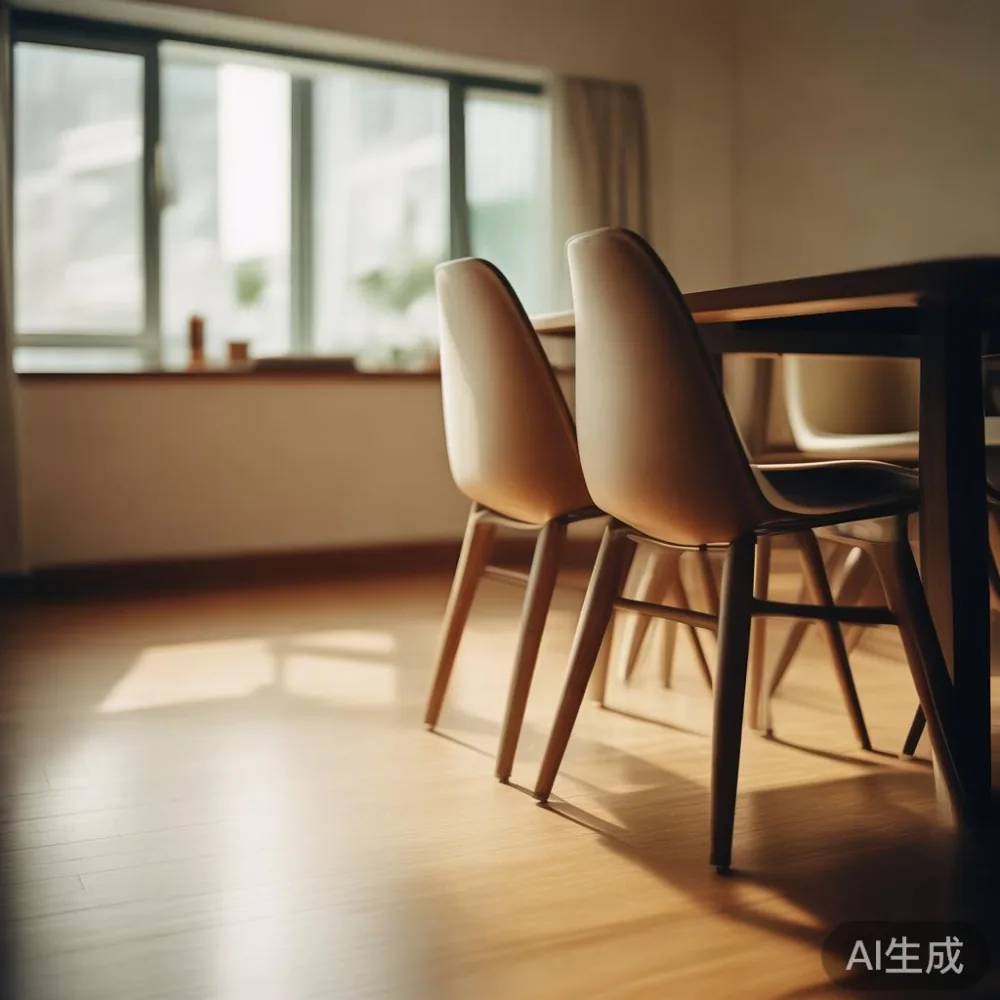
In the Punggol flat I visited, we ended up with dining chairs in a 45cm seat height to match a 75cm table. The frame was solid ash with a 12mm-radius edge on the seat front, a detail that sounds technical but actually reads as comfort. The backrest curved from 38cm at the wings to 48cm at the centre, which cradles the shoulder blades. Underneath, the legs tapered from 4cm at the top to 2.5cm at the floor, which keeps the chair visually light even though the build is solid wood. That balance — solid construction, light silhouette — is the warm minimal sweet spot. Manufacturers who understand this, including the team at MIDHILL in Foshan, tend to use the same vocabulary across their dining chairs, their dining tables, their bed frames, and even their nightstands, so the language of the home stays consistent from room to room.
Which timber tones work with warm minimal walls and how do I keep them coherent?
Timber tone is where most warm minimal schemes fall apart, because there are too many warm woods to choose from. A practical rule: pick one dominant timber, one supporting timber, and stop. The dominant timber carries the largest visible surface, usually the flooring or the dining table. The supporting timber appears on smaller objects — dining chairs, bed frames, wardrobes, nightstands — and should sit one shade either lighter or warmer than the dominant. If your floor is a 190mm-wide European oak in a natural matte finish, your dining chairs in light ash or white oak will read as a gentle lift. If your floor is a darker walnut-stained engineered board, your chairs should pull warmer still — natural walnut or a smoked oak — to avoid a grey gap between the two woods.
For Singapore's HDB palette, where most developers deliver floors in a mid-tone oak laminate and walls in a cool off-white, the dining chairs are usually the timber that introduces warmth into the room. Two practical tests help. First, place a chair sample against the floor at 3pm on a sunny day and again at 7pm under your warm-white downlights. If the chair turns noticeably cooler or more yellow under the downlights, the timber is too far from the floor's undertone. Second, run a hand over the seat. A rough-sawn or wire-brushed surface reads warmer than a perfectly smooth one because it catches shadow. Solid wood with a hand-applied oil finish (hardwax oil, danish oil, or a low-sheen matte lacquer) will give you that texture without the plastic sheen of a polyurethane coat.
Should dining chairs match the dining table, the floor, or neither?
Match the floor, not the table, is the short answer. In warm minimalism, a perfectly matched dining set looks like a catalogue page and reads as flat. The eye needs a small tension between the floor and the chairs to register depth. In the Punggol project, the floor was a 15mm European oak in a 190mm plank, the dining table was a 2.2m solid wood slab in a slightly warmer tone, and the dining chairs were ash, which sat visually between the two. The result felt intentional rather than matched.
If you prefer a more American light luxury reading of warm minimal — softer curves, more upholstered moments, a hint of brass or brushed bronze on the hardware — keep the timber rule and add one accent material. A pair of upholstered end chairs at the heads of the table in a tobacco cotton velvet or a cream bouclé introduces texture without breaking the discipline. The two side chairs remain in solid wood. This is the same logic designers use when pairing a solid wood bed frame with a different nightstand, or when anchoring a wardrobe in oak and using walnut pulls on the drawers.
How do lift and corridor widths affect the doors between furniture delivery decisions?
Most Singapore HDB blocks deliver furniture through a service lift or a cargo lift, and the internal cabin dimensions are typically 1.4m wide by 1.8m deep by 2.3m high, with a door opening around 1.0m wide. Condominiums vary more, but older blocks in districts like Bedok and Ang Mo Kio can have lift openings as narrow as 0.9m. A fully assembled 2.2m dining table will not enter a 0.9m opening flat. A solid wood dining chair at 48cm wide and 50cm deep, weighing 5kg to 7kg per chair, fits comfortably through any lift and any corridor, including the standard HDB corridor width of 1.2m to 1.5m.
Two practical points. First, order dining chairs flat-packed or partially assembled if you are on an upper floor of an older block. A flat-packed solid wood chair in a 60cm × 50cm × 50cm carton is easy to carry by one person, while a fully assembled chair in the same footprint is awkward but manageable. A two-person lift can move around 200kg of furniture safely per trip, so plan six chairs across two trips if you are doing it yourself without the white-glove service most Singapore retailers offer. Second, measure the lift door opening at the lobby, not the cabin, because older blocks sometimes have wider cabins and narrower door frames. Write the measurement on the day you order, not the day before delivery.
What about small sofa for balcony spaces and how do they connect to the dining chairs?
Singaporean balconies in newer condos tend to be narrow service yards or 1.5m to 2.4m-deep verandas off the living room, and a small sofa for balcony use is usually a 120cm to 160cm two-seater in weather-resistant fabric, a compact rattan or faux-rattan piece, or a slim solid wood bench with a foam seat. The balcony is the second warm-minimal decision point after the dining chairs, because the two pieces are usually within line of sight of one another. If your dining chairs are solid ash in a matte finish, a balcony bench in the same timber with a 10cm-deep foam cushion in cream or tobacco cotton continues the vocabulary. If your balcony chairs are black powder-coated steel, the dining chairs need to compensate by being slightly warmer in tone, otherwise the eye reads the apartment as two different homes.
In the Tampines 4-room flat I visited, the balcony ran 2.1m deep off the living room and was fitted with a 150cm solid wood bench in the same ash as the dining chairs, paired with two dining chairs on the balcony itself for a reading corner. The repetition of timber from balcony to dining room to kitchen was the move that held the warm minimal reading together.
How do I budget across dining chairs, table, and supporting pieces in SGD?
A realistic warm minimal budget for a Singapore home of about 90 to 110 square metres, as of early 2026, looks roughly in SGD and includes 9% GST on all imports and most local retail purchases. Six solid wood dining chairs in ash or white oak run from about SGD 90 to SGD 180 per chair for flat-pack, and SGD 220 to SGD 380 per chair for fully assembled with upholstery. A 1.6m to 1.8m solid wood dining table in oak or ash runs from SGD 1,400 to SGD 3,800 depending on top thickness and base design. A solid wood bed frame in queen size runs from SGD 1,100 to SGD 2,400. A two-door solid wood wardrobe runs from SGD 1,800 to SGD 4,200. A pair of solid wood nightstands runs from SGD 480 to SGD 1,000. A small marble-top coffee table in a warm vein runs from SGD 600 to SGD 1,600 for a sintered stone or porcelain option, and SGD 2,400 to SGD 6,800 for genuine marble.
Across a full home, the dining chairs usually sit at 12% to 18% of the total furniture spend, and they punch above their weight visually because they cluster in the room's centre. Spending a little more on dining chairs and saving on a marble table is a wise move, because the chairs are touched daily and the marble table is a statement piece that does not need to be premium stone. The 10-year structural warranty that makers like MIDHILL offer on their solid wood sofa frames, bed frames, dining tables, and dining chairs reflects a confidence in joinery, dowel spacing, and timber seasoning that translates directly into how long the warm minimal interior will hold its lines.
How does lifetime refinishing and warranty language shape a long-term warm minimal home?
Warm minimalism is a five-year, ten-year, and twenty-year decision, not a one-year decision. Solid wood dining chairs can be sanded and re-oiled when the matte sheen dulls, usually every three to five years in Singapore's humidity. Solid wood bed frames and wardrobes can be re-finished in place when the household palette shifts. A marble top can be re-polished when micro-scratches accumulate. Lifetime refinishing, where it is offered, removes a large part of the replacement anxiety that drives the fast-furniture cycle. It also means your dining chairs can travel with you from your first HDB to your second condominium to your eventual landed property without becoming landfill at each move.
Two more quiet advantages of buying solid wood for a Singapore home. First, solid wood tolerates our humidity swings better than MDF or particleboard cores, which swell visibly at the edges when the daily relative humidity climbs from 60% in the morning to 90% in the afternoon during the monsoon months of November through January. Second, solid wood can be repaired locally. A scratch, a chip, a dent from a搬家 (moving day) accident — all can be filled, sanded, and re-oiled by a furniture restorer for a fraction of replacement cost. The arithmetic of lifetime refinishing is straightforward: a SGD 220 chair-sand-coloured investment that lasts 25 years costs SGD 8.80 per year, which is roughly the price of two cups of kopi at the hawker centre downstairs.
Are there common warm minimal mistakes to avoid when ordering dining chairs?
Three mistakes come up repeatedly. The first is choosing a timber that is too red or too yellow for the floor, which makes the chairs look like a separate purchase rather than part of the home. The second is choosing a chair with a thin tubular metal frame in a brass or black tone, which reads as a different design language entirely and breaks the silhouette discipline of warm minimalism. The third is ordering chairs without checking the seat height against the table's apron. A 45cm seat height under a 75cm table gives a comfortable 30cm knee clearance; a 48cm seat height under the same table gives only 27cm, which is enough to make tall diners feel folded at the waist.
Two delivery-day mistakes also worth flagging. First, do not schedule delivery on a Sunday in some condo blocks, where management restricts move-in and large-item delivery to weekdays or to a single Saturday per month. Confirm with your MCST or managing agent at least seven days before delivery. Second, do not refuse delivery if the carton is dented but the chair inside is intact. Inspect the chair before signing the delivery order, and write a note on the form if there is concealed damage. Most Singapore retailers, including those shipping from overseas factories like MIDHILL in Foshan, offer a 14-day return window and a defined damage-overwrite policy that handles the usual complaints you would expect on a long-haul shipment.
What is the short checklist before I commit to dining chairs for a warm minimal home?
Before you click order, run through this five-point test. 1) Does the chair timber sit within one shade of your floor and within one undertone of your dining table? 2) Is the seat height between 43cm and 47cm to match a standard 72cm to 76cm table? 3) Is the backrest between 40cm and 48cm, and does it curve rather than square? 5) Will the carton fit through your lift door and your corridor, and is the chair light enough for one person to carry it from the lift to the door in under two minutes? 5) Does the maker offer at least a 5-year structural warranty and a defined refinishing or replacement path?
If the answer to all five is yes, the dining chairs will earn their place in a warm minimal interior that holds together for a decade, not a season. The Punggol couple, by the way, kept the ash dining chairs. They sent back the parquet table a week later and replaced it with a solid oak slab in the same ash family. The dining chairs are still the room's anchor, and the apartment still reads warm, minimal, and quietly grown-up at 7pm under the warm-white lights.