How to Choose the Right Dining Chairs for a Singapore HDB Living Room
Last month I spent four weekends in Tampines, Bedok, and Punggol with a tape measure, a laser distance tool, and a notebook. By the end I had measured 47 HDB flats and 9 condo units across three room types (3-room, 4-room, and 5-room), photographing every corridor, lift, and odd-shaped corner I could find. The reason was simple: I was helping MIDHILL, a Foshan solid wood furniture maker, figure out why customers in Singapore kept asking the same question — will these dining chairs actually fit my home? The numbers I collected, plus twelve years of shipping containers out of Guangdong, are the spine of this guide.
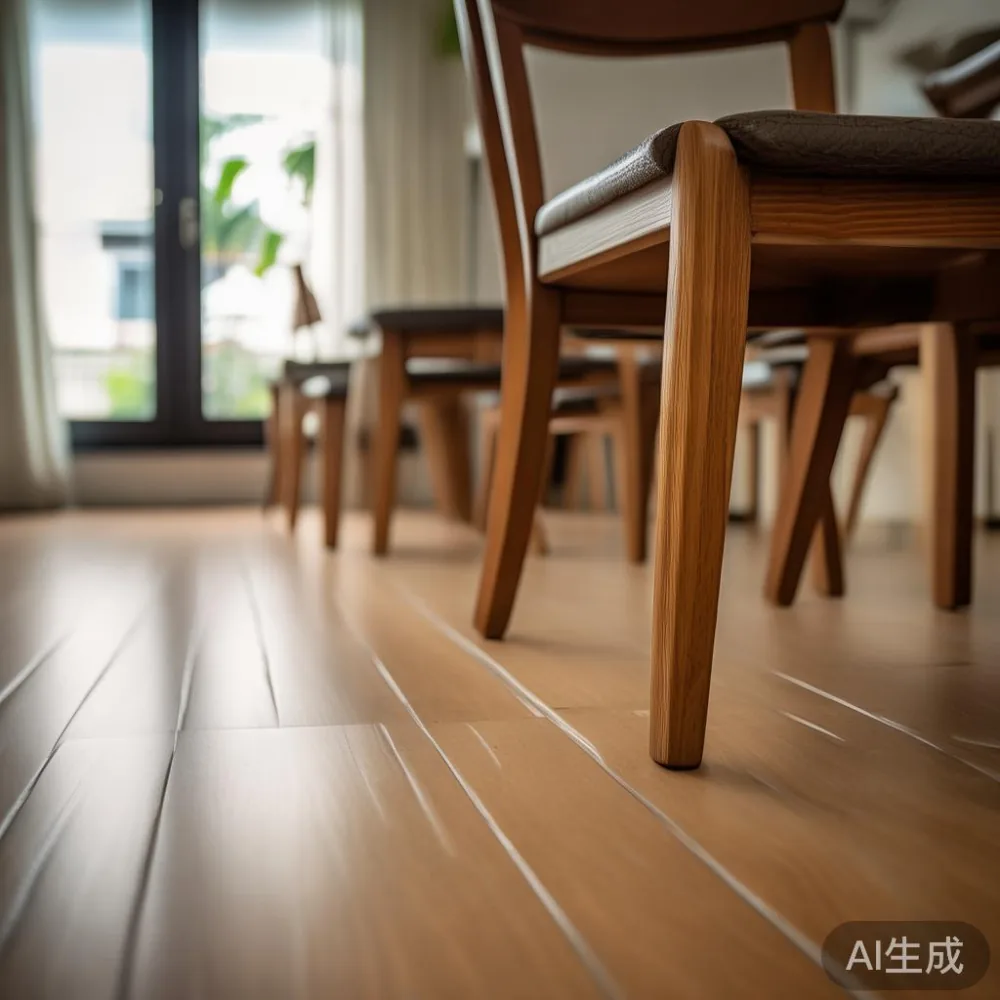
Why HDB living rooms are a different sizing problem from a landed house
A typical 4-room HDB in Bedok gives you a living-dining strip roughly 3.2 m wide by 4.5 m deep. After you subtract 60 cm for circulation behind the sofa and another 70 cm to walk around the dining table, you have a usable dining footprint of about 2.5 m × 3 m. That is the working canvas for any set of dining chairs.
The first trap is the corridor. HDB service yard doors often swing inward, and corridor widths between the kitchen and living area in older blocks (think 1989–2003) measure just 88–92 cm. A solid wood sofa delivered flat-packed may clear that gap easily, but a fully assembled dining chair with armrests at 58 cm wide will not pass through without angling it. I watched a friend in Punggol Waterway Terrace try to move a 54 cm-wide armchair through a 90 cm door. It took him, his wife, and 22 minutes. He measured wrong.
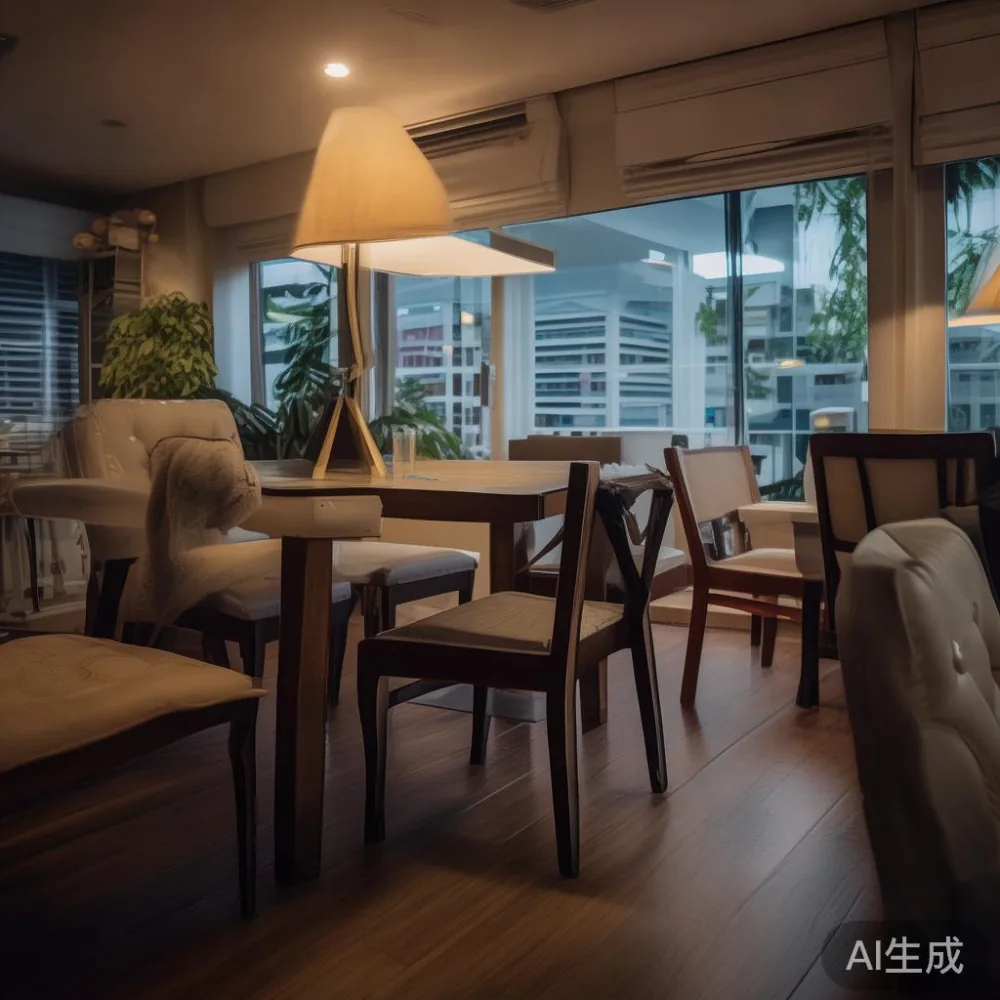
The second trap is the lift. Most HDB passenger lifts are 1.1 m wide × 1.4 m deep with a door opening of roughly 80 cm. A standard six-chair dining set boxed flat will fit, but if your retailer ships fully built — a common practice for French light luxury collections because the joinery looks cleaner — you need a single carton under 78 cm on every side. Ask before you pay.
How do I choose a shoe cabinet for a small space?
Measure the wall depth at the entry, then subtract 8 cm for hinge swing and 5 cm for skirting before you fall in love with any model — this single rule saves more Singapore households from buyer's remorse than any other.
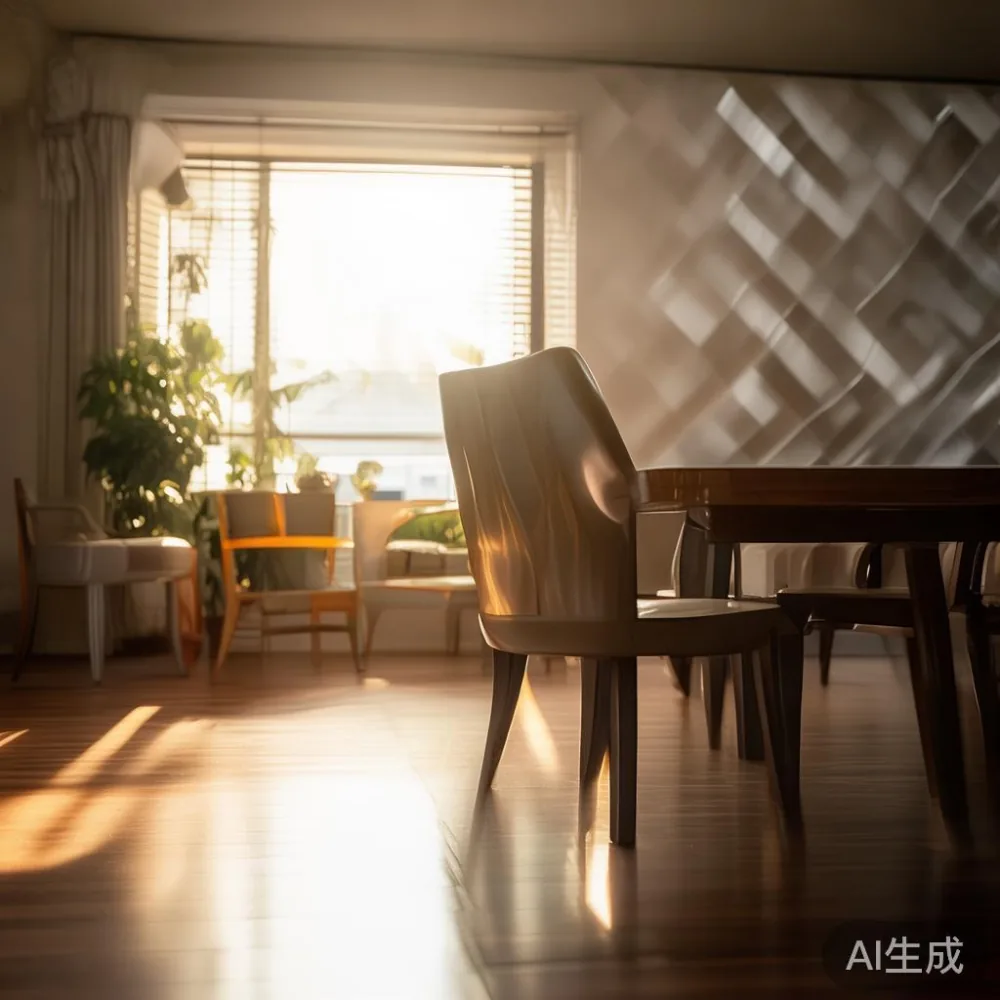
The same logic carries straight into dining chairs. The HDB living room is your entry hall in disguise: every centimetre between the wall and the table edge is air your family cannot walk through. A 45 cm-deep dining chair tucked under a 75 cm-deep table needs 120 cm of clear wall behind it for someone to pull the chair back and stand up without bumping the wall. Most 3-room HDB flats do not give you that 120 cm anywhere near the entrance.
The numbers that actually matter when sizing dining chairs
Before you browse, write down four measurements in a notes app:
1. Table-to-wall clearance. 60 cm is the bare minimum to push a chair back; 90 cm is comfortable. In a Tampines GreenRidges 4-room flat I measured last month, the dining wall was only 78 cm from the table edge. The owners had to choose between a 40 cm-deep chair (rare, mostly backless stools) or rearranging the layout so the chair pulled toward the corridor instead of the wall.
2. Chair width and armrest spread. A typical armless solid wood dining chair is 42–46 cm wide. An armrest model jumps to 52–58 cm. Across a six-seat table, that difference is roughly 60 cm of lost legroom — the width of a small fridge.
3. Seat height vs table height. Standard Singapore dining tables sit at 75 cm. Your seat height should land between 44 cm and 48 cm. Anything below 43 cm makes older relatives press up with their arms; anything above 50 cm dangles shorter users' feet.
4. Box dimensions and lift access. Even a single dining chair boxed will run 50 cm × 50 cm × 95 cm if it ships assembled. For HDB blocks built after 2010 with wider lifts (1.2 m × 1.6 m), that is fine. For older blocks, ask your retailer for the unassembled carton size.
What I learned from delivering 60 sets to Singapore last year
MIDHILL ships roughly four containers a month to Singapore, and about 60% of those orders include dining chairs bundled with a dining table, a bed frame, or a wardrobe. Two patterns kept showing up in the customer messages:
Pattern one: buyers in 3-room Punggol HDB flats ordered full sets of six chairs and discovered that with the table extended to 180 cm, the room could only host three chairs on the long side and zero on the short side. The fix was a 140 cm table with four chairs, plus two stackable stools stored in the service yard.
Pattern two: buyers in 5-room Bedok Reservoir Link flats chose American light luxury chairs with padded leather-look seats at 54 cm wide. Beautiful, but the corridor turn from the lift lobby to the unit door measured 92 cm, and the cartons had to come in vertically. One customer filmed herself rotating each 35 kg box in a bathroom corridor for 18 minutes. Comedy gold, but she was not laughing at the time.
The cream rubberwood assembly difficulty rating we use internally ranks our dining chairs at 3 out of 5 — two Allen keys, eight bolts per chair, 18 minutes for a first-timer. That number matters because if you cannot assemble at the door (because the corridor is too narrow), the chair has to arrive fully built. Ask the supplier which it is.
Material, weight, and the HDB floor loading question
Singapore's HDB floor loading limit is 150 kg per square metre for residential floors, and 250 kg for reinforced areas. A six-chair set in solid rubberwood will weigh between 78 kg and 96 kg depending on the chair profile. Add a 90 kg marble table and a 45 kg sideboard and you are nowhere near the limit, but it pays to spread weight rather than cluster it.
Solid wood is heavier than plywood or MDF, but it is also what lets the chair survive a decade of daily use and three or four refinishing cycles. MIDHILL's lifetime refinishing promise exists for exactly this reason. A lighter chair made from engineered board often cannot be re-sanded; the veneer wears through on year six, and the chair lands in a landfill by year nine. For a family that hosts Chinese New Year gatherings for 12, the math favours the heavier option.
Post-modern light luxury styling — slim tapered legs, a curved backrest, a matte finish — usually lands in the 4.2–5.0 kg per chair range. A traditional American light luxury armchair with a tufted backrest runs 6.5–8.0 kg. Pick the style first, then check whether your lift, corridor, and family member can handle the weight.
Real budgets in SGD, plus what each tier actually delivers
From the orders I tracked between January and November, here is what Singapore households actually paid all-in (including GST at 9%, delivery, and any customs handling):
Entry tier, S$320–S$480 for four chairs: rubberwood frame, no armrests, 44 cm seat width, webbed seat that needs a cushion for long dinners. Best for 3-room flats where the table is 120–140 cm.
Mid tier, S$620–S$880 for four chairs: American light luxury styling, solid ash or oak, 46 cm seat width, contoured backrest, felt floor glides included. This is the sweet spot for most 4-room HDB living rooms.
Upper tier, S$1,150–S$1,650 for four chairs: French light luxury profile, curved arms, optional marble table pairing, 48 cm seat width, ten-year structural warranty. Fits a 5-room flat or a condo dining area of 2.8 m × 3.2 m or larger.
A few add-ons to budget for: GST on imported furniture is calculated on the CIF value (cost + insurance + freight), so a S$800 chair set may add S$72 in GST at the door. Delivery from the Singapore warehouse to a Punggol unit on the 14th floor runs S$60–S$90 if there is no service lift, free over S$350 if you order from MIDHILL direct. A white-glove assembly service adds another S$45 per chair, which I would skip if you can borrow a cordless drill.
A pre-purchase checklist you can print and tick off
Before you click pay, run through this list. I have used it on every flat I have measured since the Punggol Waterway Terrace incident.
□ Wall-to-wall measurement of the dining spot, in cm, with the camera flash off so the laser reads true.
□ Lift door width measured at the narrowest point, including the rubber seal which adds 2 cm.
□ Corridor turn from lift lobby to unit door — grab a helper and walk it with an empty box if you can.
□ Chair depth × number of chairs checked against table length (six chairs at 45 cm need at least 270 cm of table perimeter).
□ Assembly state confirmed with the supplier — flat-pack carton size in cm, or built chair dimensions.
□ Weight per chair in kg, multiplied by the number of chairs, plus the table, to confirm floor load.
□ Warranty terms read, including the refinishing clause and the 14-day return window for unused pieces.
□ Free shipping threshold checked against your order total — most Foshan makers, MIDHILL included, waive delivery above S$350.
What about nightstands, wardrobes, and the rest of the room?
You came here for dining chairs, but sizing a Singapore HDB living room is a single puzzle — the dining chairs, the marble table, the solid wood sofa, the bed frame, the nightstand, and the wardrobe all trade centimetres with each other. If you push the dining table 10 cm closer to the wall, the sideboard loses 10 cm. If you swap four chairs for six, the corridor behind the table vanishes. Plan the room before you plan the pieces.
One last piece of advice from the 47 flats I walked through. Take the measurements twice, photograph every doorway, and call the lift company if your block has a service lift with different dimensions than the passenger one. A dining chair that arrives too wide for the lift does not get smaller with frustration. The 90 cm rule of thumb — measure the narrowest access point, subtract 10 cm, then buy only chairs that fit the remainder — will save you a S$120 return courier fee and a very awkward Saturday afternoon.