Humidity and Your Wood Dining Chairs: A Southeast Asia Owner’s Guide
I still remember the Saturday morning I walked into a client’s resale HDB flat in Bedok with a moisture meter in my pocket. The reading on her dining set was 19%. Outside, in the corridor, it was 86%. That gap — 67 percentage points — is the silent force shaping how every solid wood dining chair in Singapore eventually ages. After seventeen years fitting out homes from Tampines to Punggol, and a long stretch sourcing from Foshan workshops, I’ve learned that humidity is less a background detail and more a co-author of your furniture’s life story.
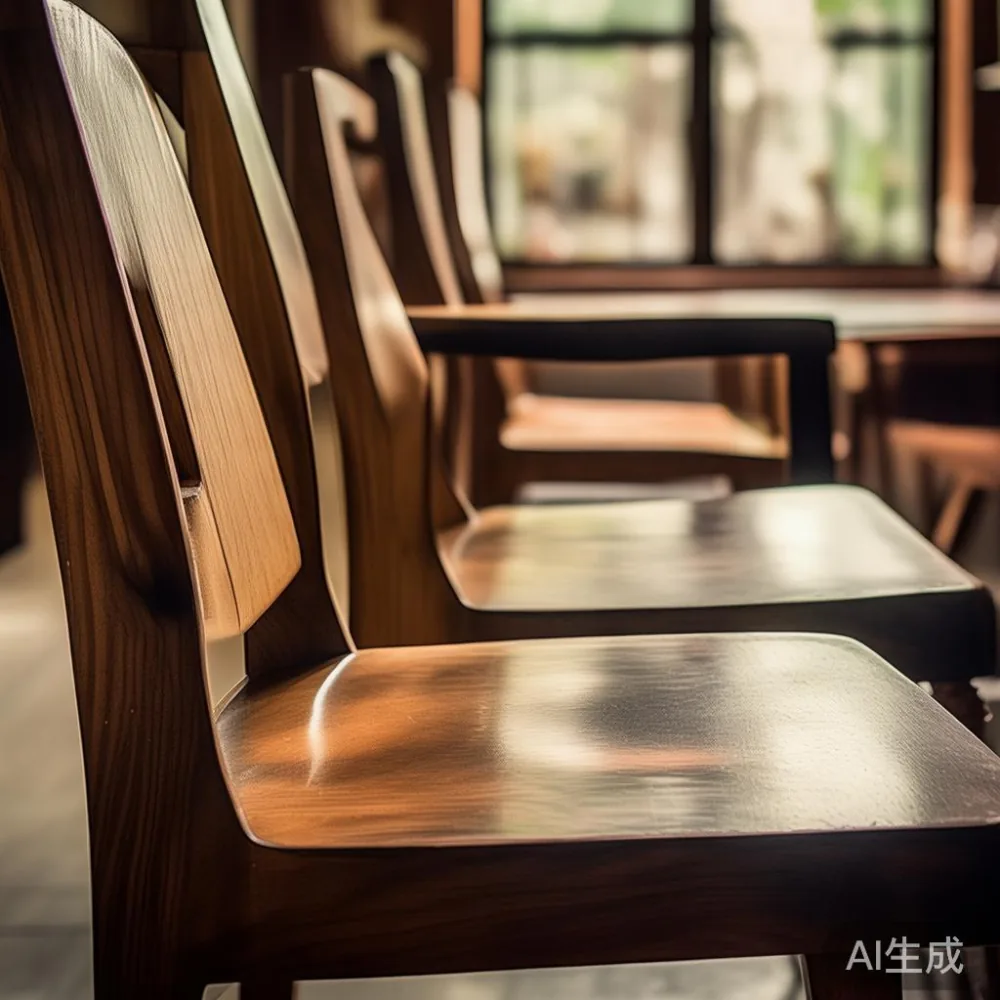
Why does Southeast Asia’s humidity punish wood dining chairs so quickly?
The short answer: tropical humidity keeps wood in constant slow motion. Average relative humidity in Singapore sits between 78% and 82% year-round, with afternoon peaks above 90% during the December to February monsoon phase and again in June. Solid wood is hygroscopic — it absorbs and releases moisture to match its environment, swelling roughly 1% to 3% across the grain for every 5% swing in RH. On a typical four-seater dining table, that translates into 4–8 mm of seasonal movement, which is enough to stress loose tenons, lift veneer edges, and make a chair creak where it never used to.
Local conditions make the stress worse. Many HDB blocks in mature estates like Bedok and Toa Payoh use cross-ventilation rather than mechanical dehumidification, so indoor RH can mirror outdoor readings for hours at a time. Air-conditioning helps, but it only treats the living room; the moment you switch off the compressor at night, humidity rushes back into the wood fibres. That cycling — dry, humid, dry, humid — is what causes hairline cracks along the seat rails of dining chairs and micro-gaps at mitred corners.
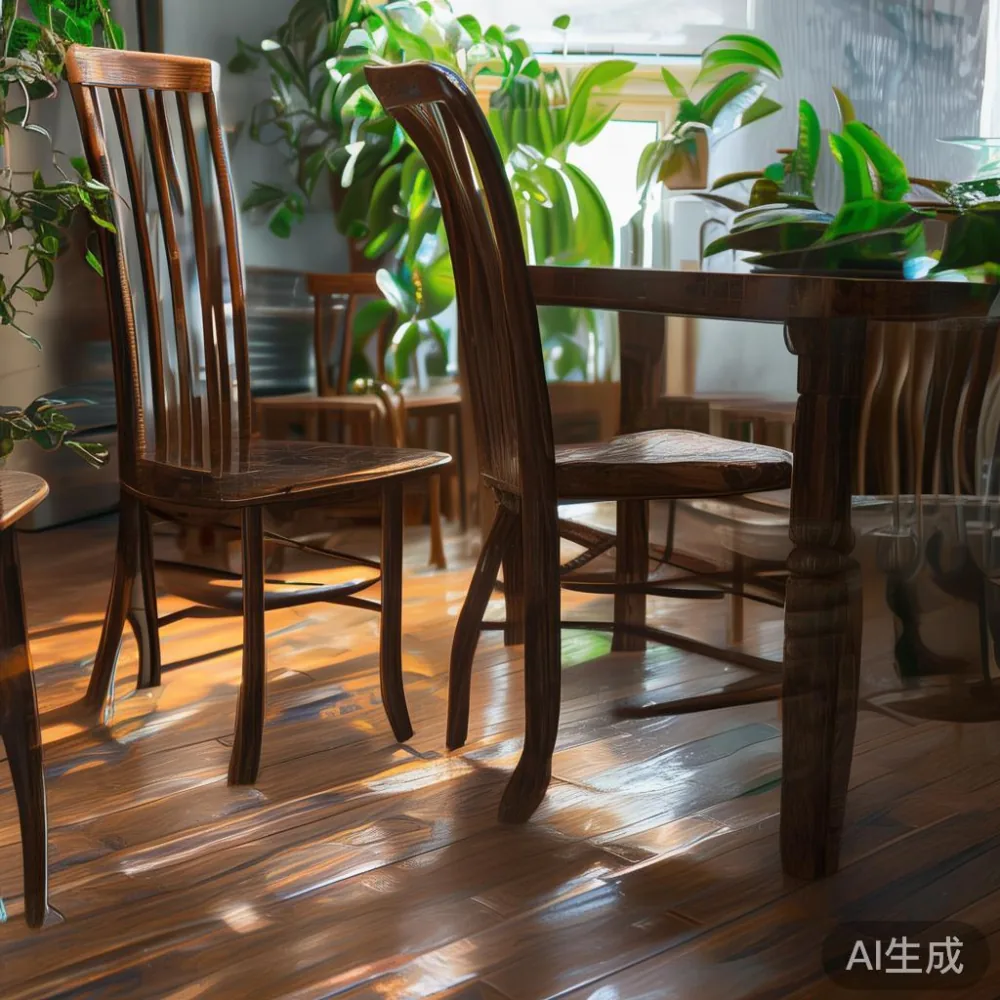
Which wood species actually survive a Tampines or Punggol condo?
Not all timbers behave the same way. After testing dozens of chairs in local homes and in our Foshan workshop’s conditioning rooms (held at 80% RH for 60 days as a quality gate), three species consistently outperform others:
1. White oak (Quercus alba): open grain, stable, takes a French light luxury finish beautifully. Quartersawn stock moves only 1.2% tangentially per 5% RH change.
2. Burmese teak (Tectona grandis): high natural oil content resists fungal staining common in HDB bathrooms that share walls with dining areas. Movement around 1.5%.
3. European beech (Fagus sylvatica): tight grain, less dramatic movement, ideal for painted or post-modern light luxury frames in compact condo dining nooks.
Rubberwood, common in budget pieces, moves up to 2.8% and tends to blacken under persistent humidity if the kiln-dry schedule was rushed. Ash performs like white oak but is harder to source in longer 1.8 m lengths needed for dining chair rails.
What humidity range should I keep my house at for a solid wood sofa and matching dining set?
Target 45% to 60% RH, with a temperature band of 22°C to 26°C. Below 40% RH, joints shrink and dowels work loose; above 65% RH, you invite mildew and joint swelling. A calibrated hygrometer costs about SGD 25 to SGD 45 from local electronics chains and is a smarter purchase than any wood polish on the market. Place it on the dining wall, away from the kitchen doorway, and check it weekly for the first six months.
Pair the meter with a small dehumidifier in the dining zone if your flat lacks cross-ventilation. A 12 L/day unit suitable for a 25 m² HDB dining area runs at roughly SGD 0.18 per hour in electricity. Run it on a humidistat so it cycles automatically — this single habit extends the life of your dining chairs, solid wood sofa frames, and any bed frame or wardrobe doors by years.
How does MIDHILL build dining chairs to handle equatorial humidity?
Last month I visited the MIDHILL factory in Foshan and watched the kiln schedule in real time. White oak and ash are dried to 8% moisture content over 28 days, then acclimatised for a further 14 days in a controlled 65% RH room before machining. That two-stage conditioning matters: a chair built straight from a 28-day kiln will still move once it lands in a Punggol condo corridor that hits 80% RH on a wet August afternoon.
Joinery is where most cheap chairs fail and where this kind of construction earns its keep. Mortise-and-tenon joints are glued with a marine-grade PVAc adhesive and pinned with 8 mm beech dowels, then clamped for 24 hours. The seat rails use a through-tenon you can spot from underneath — a small detail, but it stops the rail from cupping when humidity climbs. Finished chairs sit in a 75% RH chamber for a final 7-day stress test; any joint that moves more than 0.5 mm under that load is rejected before crating.
Their shipping process also helps. Chairs are wrapped in breathable cotton instead of plastic film, and a 50 g silica desiccant pack is tucked inside every carton. On a recent Singapore-bound container, internal loggers showed crate humidity holding at 62% across the 12-day sea voyage, well below the 75% that would re-wet the timber.
Where can I buy a bed in Singapore?
You can buy a bed in Singapore directly from MIDHILL’s Singapore distribution arm, which stocks solid wood bed frames in king and queen sizes from SGD 1,680 to SGD 3,240, with free delivery above SGD 350 and a 14-day return window. Orders placed before Thursday ship from the Foshan hub and arrive in 18 to 24 working days, with full lift-access delivery to HDB blocks in Tampines, Bedok, and Punggol included in the price. Every bed frame carries the same 10-year structural warranty as the dining chairs, so the joinery standards above apply to the headboard posts, side rails, and slat supports too. Showroom visits can be arranged by appointment at the Defu Lane warehouse, where you can pair a bed frame with a matching nightstand, a marble table for the foyer, and a wardrobe without paying GST on the inter-tier assembly.
How should I acclimatise dining chairs the day they arrive?
Don’t unpack straight onto the dining floor. Keep the cartons sealed in the room for 48 hours so the timber equalises to your indoor humidity. After unpacking, leave a 10 cm gap behind each chair for the first week and avoid pushing them flush against an air-conditioner wall, where cold dry air on one face and humid air on the other can cup the backrest.
If you’re moving into a freshly painted HDB flat in Punggol or a new condo in Tampines North, wait at least 14 days after painting before placing the chairs. Emulsion paint off-gasses moisture for the first week, and that extra humidity has nowhere to go but into your furniture. The same rule applies to new marble tables or a solid wood sofa delivered in the same shipment.
What daily habits actually protect wood dining chairs in a HDB or condo?
Wipe, ventilate, rotate, and inspect. Four small habits, none costing more than a few minutes a week:
1. Wipe with a barely damp microfibre cloth, never a wet one. Water left on a chair leg for two hours in 80% RH air can raise the surface moisture content enough to lift a lacquer finish.
2. Ventilate the dining area for 20 minutes after cooking. Singaporean cooking releases 500 g to 1 kg of water vapour per meal into the room, and most of it migrates straight into nearby wood.
3. Rotate the chairs 180° every two months so the backrest facing the air-conditioner doesn’t dry unevenly. Uneven drying causes the small back-splits that owners often mistake for defects.
4. Inspect the tenons under the seat once a year. A 5 mm gap appearing in summer is normal; a 5 mm gap appearing in winter means the joint is drying out faster than it should and needs a humidifier adjustment.
Does lift and corridor access really matter when ordering dining chairs?
More than most realise. Standard HDB passenger lifts are roughly 1.1 m wide by 1.4 m deep with a 1.9 m door opening, while newer condo service lifts in Punggol can stretch to 1.5 m by 2.1 m. A fully assembled solid wood dining chair with arms is typically 58 cm wide, 60 cm deep, and 92 cm tall — fine for any HDB lift, but the 2.2 m long marble table most couples also order needs a service lift or stairwell access. Knowing this upfront saves a failed delivery fee of SGD 80 to SGD 150, and it’s why any good supplier should ask for your block number, floor, and lift dimensions before confirming dispatch.
What about the American sofa for first home that matches these dining chairs?
If you’re fitting out your first HDB flat and want the living and dining zones to feel like one continuous interior, pair the dining chairs with an American sofa for first home in the same white-oak tone. The American style leans on clean lines, low arms, and neutral linen-blend upholstery — a soft counterpoint to the structural joinery of the chairs. Locally, a matching three-seater runs from SGD 2,400 to SGD 3,800 depending on fabric grade, and finishing the lounge with a nightstand or small marble side table pulls the room together without crowding a 90 m² HDB floor plan. The visual continuity also helps humidity management: when timber, fabric, and stone share the same RH band, they age at the same pace, and the room looks intentional five years down the line instead of pieced together.
When should I call in a professional for a creaky dining chair?
Call a furniture technician when a chair creaks at every seating cycle, when a leg wobbles more than 3 mm under load, or when the seat rail shows a visible crack longer than 5 cm. Annual tightening of the four seat-rail bolts costs about SGD 40 per chair and prevents the slow loosening that turns into a split joint. Refinishing, when the original lacquer has worn through to bare wood, costs SGD 120 to SGD 180 per chair and is offered as a lifetime service by a handful of Foshan-trained workshops in Singapore — including the refinishing programme run by MIDHILL for original owners. Keeping the original joinery intact and refreshing only the finish is the most sustainable path, both for the timber and for the structural integrity you paid for on day one.
Humidity is the one variable you cannot control by spending more on furniture, but you can control it by spending smarter on your habits. A hygrometer, a dehumidifier on a humidistat, and a yearly joint inspection will do more for your dining chairs than any sales pitch ever could.