Humidity and Your Dining Chairs: How Singapore's Climate Affects Solid Wood Furniture
Walk into any Tampines HDB kitchen on a humid Tuesday afternoon and you will notice something subtle. The dining chairs pulled up to a four-seat table feel just slightly different under your palms. They are a touch tackier than the same set sitting in a Jurong condo showroom or our Foshan factory floor. That tackiness is not a flaw in the wood; it is water vapour doing exactly what physics says it should. Singapore's relative humidity averages 78 to 88 percent year round, and indoor humidity in flats without mechanical dehumidification often climbs above 70 percent for eight months of the year. For solid wood furniture, that single number governs almost every behaviour you can observe in the material.
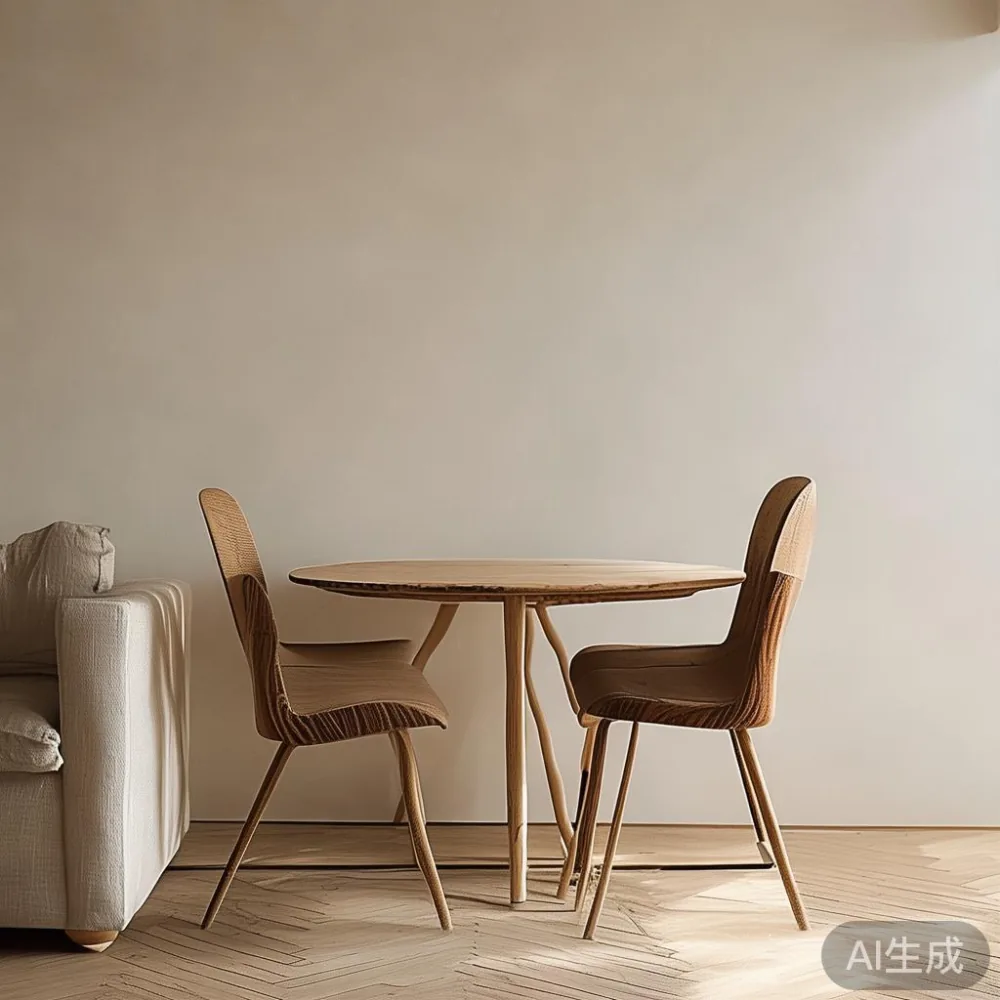
Solid hardwood is hygroscopic. It absorbs and releases moisture in response to the air around it. A 1 percent change in moisture content causes roughly 2 percent change across the grain in most temperate hardwoods, and that expansion is what produces the small cracks, sticky doors, and stubborn drawers that worry owners of dining chairs, bed frames, dining tables, and wardrobes. None of these problems are defects. They are predictable responses to a humid tropical environment, and they are manageable once you understand the pattern.
Why Singapore's Climate Is Harder on Solid Wood Than Most Buyers Expect
I visited a four-room HDB in Punggol last month to inspect a five-piece dining set the owners had owned for less than nine months. The homeowners had wrapped each dining chair in a plastic drop cover because they read online that wood "doesn't like humidity." Inside those sealed covers, relative humidity was holding steady at roughly 86 percent, well above the 50 to 55 percent wood prefers. The chairs had developed a faint musty smell and one stretcher had cracked 4 cm along the grain. The plastic had not protected them; it had created a private tropical greenhouse. When we removed the covers, wiped the frames with a dry microfibre cloth, and moved the set 60 cm away from the air-conditioner duct, the stickiness dropped noticeably within two hours.
The numbers that matter for Singapore homes are simple. Outdoor humidity here ranges from 65 percent on a dry January afternoon to 98 percent during a December monsoon surge. Indoor humidity in a non-air-conditioned flat tracks the outdoors almost exactly, while a flat that runs a split-unit air-conditioner for six to eight hours a day can hold 55 to 60 percent in the living area. That 10 to 15 percent difference is the entire game for wood furniture. The wood in a 5 kg dining chair starts the manufacturing process in our Foshan workshop at 8 to 10 percent moisture content, which is tuned for stable indoor use.
Do You Really Need a Dehumidifier to Protect Your Dining Chairs?
Yes, but with a caveat. A domestic dehumidifier set to 55 percent relative humidity is the single most effective step a Singapore owner can take. A standard 12 L/day unit costs around S$189 to S$249 and runs on about 0.3 kWh, roughly S$8 to S$12 a month on the residential tariff. For a 90 sqm four-room flat that covers the air-conditioner-cooled zone, which is also where you keep your dining chairs, solid wood sofa, and most nightstands. Bedrooms usually hold 60 to 65 percent without active dehumidification, and that is fine for a closed wardrobe and bed frame.
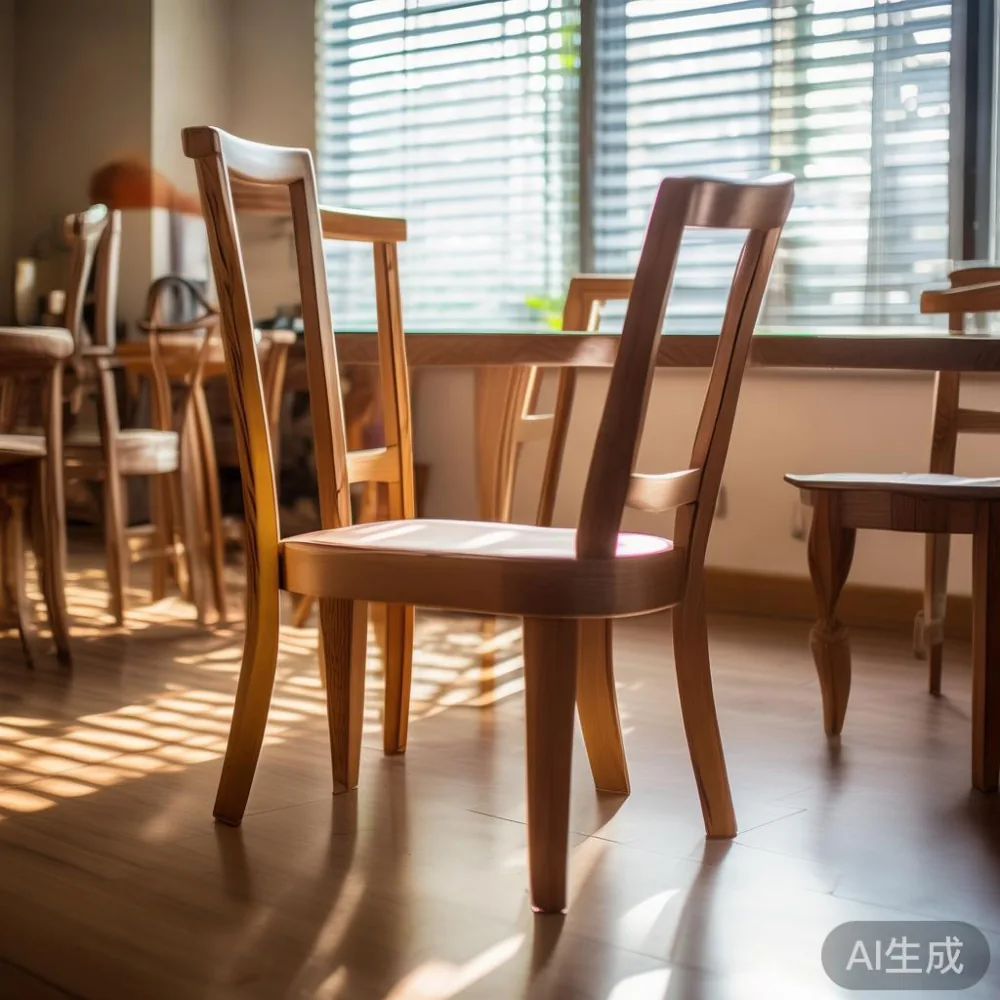
The caveat is about what a dehumidifier cannot do. It cannot rescue a chair that was built from poorly dried timber, and it cannot stop the wood from moving at all. What it can do is keep that movement inside a narrow band, roughly 1 percent of moisture content across the year, so the movement at every joint is small enough to stay silent. When our quality control team in Foshan tests a shipment destined for Singapore, we set conditioning rooms to 28 degrees Celsius and 80 percent relative humidity for 14 days and check for any joint movement above 1.5 mm. Pieces that pass are then vacuum-packed in barrier film rated to 0.05 g/m²/24h water vapour transmission.
How Climate Affects Specific Furniture Categories in Singapore Homes
The challenges vary by category, and the priorities for an HDB living-dining area are different from those in a landed terrace in Bukit Timah. Here is what we observe across our shipments to Singapore each month.
Dining chairs are the most responsive piece in the room. Each chair has roughly 8 to 12 mortise-and-tenon or dowel joints, and every joint absorbs and releases moisture independently. Lifted onto a marble table surface, a chair feels solid because the marble has no grain movement; the chair itself is reacting to the air. American light luxury designs with thinner back posts show movement first, while French provincial styles with thicker turned legs and heavier skirts hold their shape a little longer but are heavier to move.
Dining tables are usually the most expensive piece in the set and deserve the most attention. For a 1.8 m six-seat table, plan on 6 to 8 mm of seasonal width change across one panel set, which is built in as a floating panel or with slotted screw holes by MIDHILL and any other responsible maker.
Bed frames and nightstands sit in bedrooms that often run 60 to 70 percent humidity, cooler and slightly drier than the common area. Slatted headboards will shrink 2 to 3 mm in width through a dry spell and expand again in monsoon season. A bed frame with a solid wood platform shows the same movement but slowly.
Wardrobes are large and heavy, often 180 to 220 cm tall and 90 to 120 cm wide, holding between 90 and 140 kg of timber for a three-door design. Once a wardrobe is filled with clothes, internal humidity rises, so a 10 mm rear gap behind the unit is not optional; it is the only space that allows the back panel to breathe.
What Is the Real Cost of Buying Cheap French Provincial Furniture in a Tropical Climate?
Cheap French provincial furniture and other low-cost solid-wood imports are often dried only to 14 to 18 percent moisture content, not the 8 to 10 percent our workshop specifies. That 6 percent gap looks small on paper, but it translates to roughly 3 percent across-the-grain expansion in a chair seat or table apron. In Singapore, that is the gap between a quiet piece and one that develops a 2 to 3 mm crack by the second Lunar New Year.
The pattern our service team sees repeatedly: a customer buys a S$480 dining set, sees cracks and sticky drawers within a year, pays S$150 to S$220 for a handyman repair, then replaces the set. Total cost over three years approaches S$700 to S$800, which is higher than buying a properly dried set with a 10-year structural warranty in the first place. This is why anyone searching for cheap French provincial furniture should check the moisture-content specification, not just the price tag.
Which Design Style Ages Best in a Tropical Home?
Post-modern light luxury designs with clean lines and flush joinery handle humidity swings gracefully because there are fewer protruding rails and ornament to catch moving grain. American light luxury pieces sit in the middle: comfortable proportions, visible structure, predictable behaviour.
Japanese-Japanese-Danish hybrids (Japandi) are popular in Punggol and Tiong Bahru for a reason. Many buyers looking for for sale Japandi furniture end up choosing the category because of how tolerant the joinery is. Sliding doors on a sideboard, exposed tenons on a dining chair, platform base on a bed frame — every design celebrates wood movement rather than fighting it. If you are hunting for pieces in this category, our shop-floor finishes the Japandi line in oak and ash, both of which are dimensionally more stable than rubberwood under tropical conditions.
Practical Maintenance Habits That Extend the Life of Your Furniture
Five habits, ordered by impact:
1. Run a dehumidifier in the dining area to hold 55 percent RH where practical. A S$15 hygrometer on the wall tells you whether it is working.
2. Keep dining chairs and your dining table 60 to 100 cm away from the air-conditioner duct. Direct cold air over wood causes surface cracking faster than ambient humidity does.
3. Wipe every dining chair and tabletop down with a dry microfibre cloth twice a week. Do not use silicone polishes; they seal the surface and trap moisture inside.
4. Rotate dining chairs 90 degrees weekly if one side sits closer to a window, so UV exposure and humidity are absorbed evenly across the set.
5. Schedule a refinishing service every 8 to 12 years. We offer lifetime refinishing on qualifying pieces from our Foshan workshop, charged in SGD at the prevailing rate, with collection and delivery arranged through our Singapore logistics partner.
How Delivery Logistics Affect What Arrives at Your Flat Door
Singapore buildings have constraints buyers in landed homes rarely consider. A typical HDB corridor is 1.2 to 1.5 m wide, and passenger lifts in blocks built before 2015 measure 1.1 m wide by 1.4 m deep internally. A four-seat solid-wood dining table, boxed, can run 1.95 m long and 90 cm wide, so the box must go in on its end and on its side at different stages of the route. Our delivery team reports that roughly 12 percent of HDB deliveries require partial assembly in the corridor, then reassembly inside the flat. Knowing this in advance prevents the awkward moment of unboxing in the lift lobby.
MIDHILL provides free shipping above US$350, but for Singapore we simplify the conversation by quoting door-to-door delivery in SGD. Standard delivery to mainland Singapore addresses takes 18 to 28 working days from our Foshan workshop, including maritime transit from Shekou port to Singapore and last-mile handling. Pre-ordered marble table tops ship in a separate crate to reduce the risk of stone-on-wood damage in transit.
Where to Buy a Solid Wood Dining Set From MIDHILL and What to Compare
Anyone asking where to buy sofa from MIDHILL or a matching dining set should start with three numbers: moisture content specification, structural warranty length, and factory-direct pricing. Our catalogue lists a six-seat American light luxury dining set in white oak at SGD 1,840 with a 10-year structural warranty, kiln-dried to 8 to 10 percent moisture content. A comparable French provincial dining table and four dining chairs runs SGD 2,260. A six-seat post-modern light luxury set in ash is SGD 2,090. All three quotes include GST and door-to-door delivery for addresses above S$500 order value on our Singapore promotions.
The category of products available runs deeper than dining sets. Best European wardrobe for 2026 shortlists are dominated by three- and four-door designs in white oak from our workshop. Best Minimalist sofa for 2026 buyers find our stocked oak-frame sofa with linen-blend cushions easier to maintain in humidity than full-leather options. A Mid-century modern coffee table in walnut or ash (catalogued under our Saarinnen-inspired line) completes a living area without introducing a piece that fights the climate. Browse the current collection at midhillco to see what is in production this quarter, since pieces move through kilns and shipping slots in batches of 30 to 60 sets.
Returns, Refinishing, and the 14-Day Inspection Window
Our 14-day return policy applies to pieces that arrive with manufacturing defects, which our QC team defines more strictly than Singapore consumer law requires. Visible cracks over 5 mm, joint gaps wider than 2 mm, and any infestation evidence triggers automatic return eligibility. Damage caused by humidity-related movement after delivery is not a defect, because post-delivery movement is a property of solid wood, not a fault of the maker. For those cases, lifetime refinishing is the right answer, not return.
Refinishing cost in Singapore typically runs S$180 to S$320 per dining chair and S$420 to S$680 for a six-seat table top, depending on whether you change the stain colour. Send measurements and three reference photos to our customer team and we will return a fixed quote in SGD within two working days. Collection from door to our local workshop partner takes about 4 working days, refinishing 14 to 21 days, return delivery another 4 days. Plan on three to four weeks total without your dining chairs in the house.
Final Numbers to Remember Before You Buy
Here is the short list that should sit next to your hygrometer: target indoor humidity 55 percent, acceptable range 50 to 65 percent; kiln-dry moisture specification 8 to 10 percent; dehumidifier budget S$200 to S$300 upfront and S$10 to S$15 a month; expected seasonal width change 6 to 8 mm on a 1.8 m dining table; refinishing interval 8 to 12 years; structural warranty 10 years on qualifying pieces; delivery window 18 to 28 working days to Singapore door. Anyone shopping a six-seat solid-wood dining set above S$1,800 should expect all of the above and ask for the moisture-content certificate on request.
Good dining chairs, chosen carefully and maintained patiently, will outlast three or four replacements of an inferior set. Solid hardwood becomes more beautiful with each humidity cycle once the wood has settled into your home. Match that patience with a dehumidifier, a microfibre cloth, and the willingness to read the warranty before you sign, and the rest takes care of itself.