Veneer vs Solid Wood Dining Chairs: A 5-Year Cost Reality Check for Singapore Homes
Last month I visited a friend in a 4-room HDB flat in Bedok who had just finished her BTO renovation. She picked out four dining chairs from a Jurong East furniture mall at S$119 each, walked out happy, and called me two weeks later because one of the chair legs had started peeling at the joint. The outer layer was a thin sheet — what the industry calls veneer — bonded to a particle core. Her dining chairs looked identical to mine next door in our Tampines resale condo, but mine are solid wood from MIDHILL, a Foshan factory that has been making solid wood pieces since 2008 and ships them with a 10-year structural warranty and lifetime refinishing. Five years apart in design language, very different five-year stories. If you are weighing the cost of a set of dining chairs in Singapore, here is the honest math, in SGD, for two parallel households in the East.
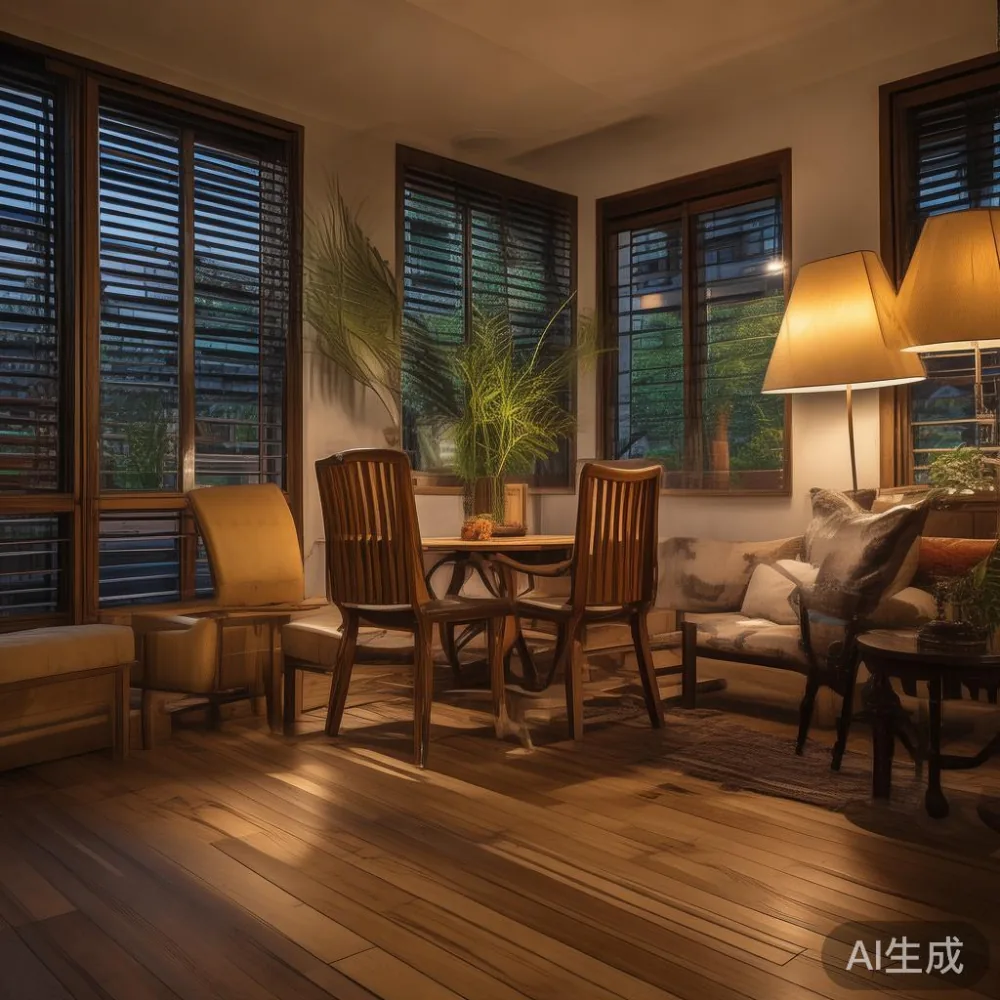
What is the real 5-year cost of veneer dining chairs in an HDB flat?
Let me price a realistic scenario for a standard HDB dining area of roughly 1.5 m x 1.8 m, which is the tight footprint most Tampines and Punggol BTOs leave you.
Four veneer dining chairs at S$119 each: S$476. Delivery from a Jurong or Tai Seng warehouse to a Bedok block typically runs S$35 to S$60, depending on whether the lorry can use the loading bay. Lift access in most HDB blocks handles pieces up to about 1.2 m x 0.8 m x 0.8 m, so four flat-packed chairs fit comfortably. GST 9% on the subtotal brings the first-year total to about S$560.
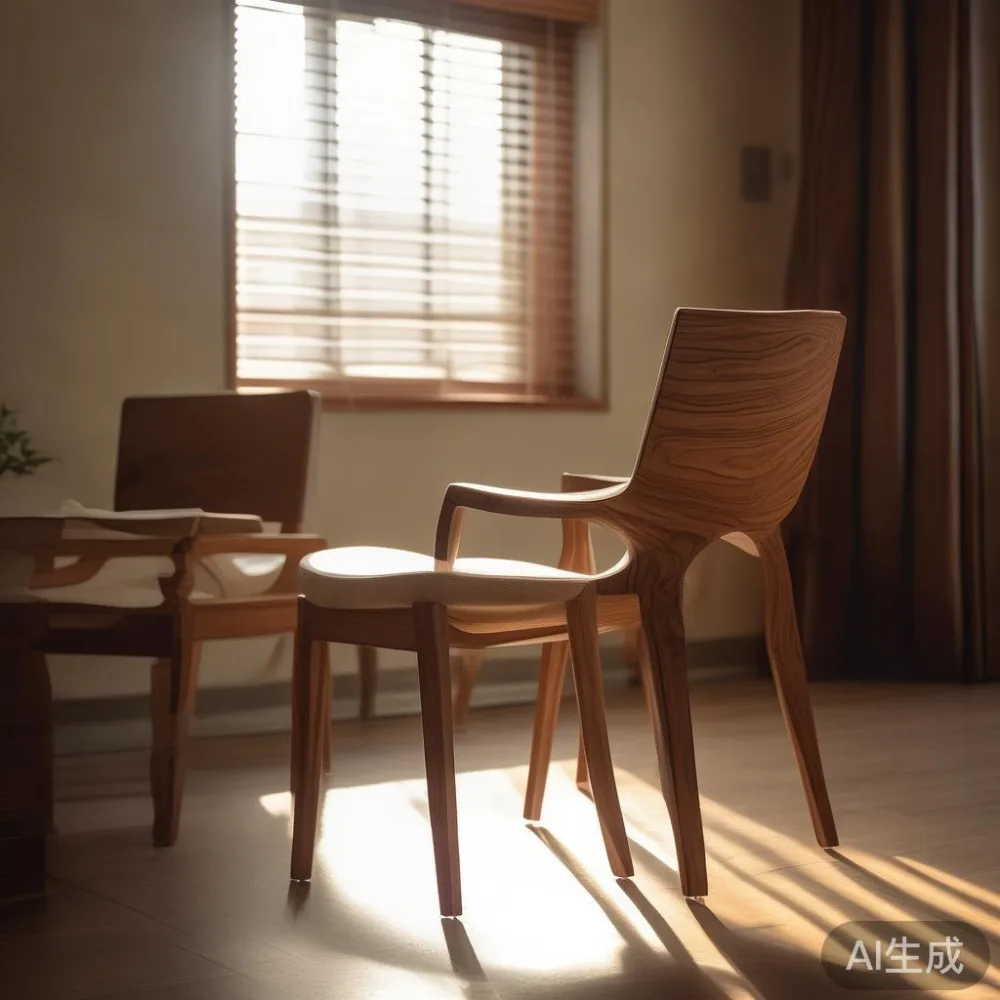
Now fast forward. Veneer dining chairs in Singapore's humidity — average 80% RH year-round, peaking above 95% during the December monsoon — start showing swelling at the edges and lifting at the corners in 18 to 30 months. By month 36, you are usually replacing at least one chair. By year 5, you have either replaced the whole set once or you are staring at peeling corners, sunken seat foam, and wobbling joints every mealtime. Including one full mid-cycle replacement of the set at the same S$476 sticker, plus two minor touch-up deliveries at S$45 each, the realistic 5-year outlay lands between S$1,050 and S$1,250 — and you still own chairs that look tired.
What is the real 5-year cost of solid wood dining chairs in the same flat?
A set of four solid wood dining chairs from MIDHILL, made of ash or oak with a Nordic fabric wood finish seat, starts around S$480 to S$560 per chair in Singapore. For four chairs, the furniture alone is roughly S$1,920 to S$2,240. Add one consolidated delivery at S$80 (free above US$350, which equates to about S$470, so most sets qualify), and GST 9%: the year-one total is roughly S$2,200 to S$2,550.
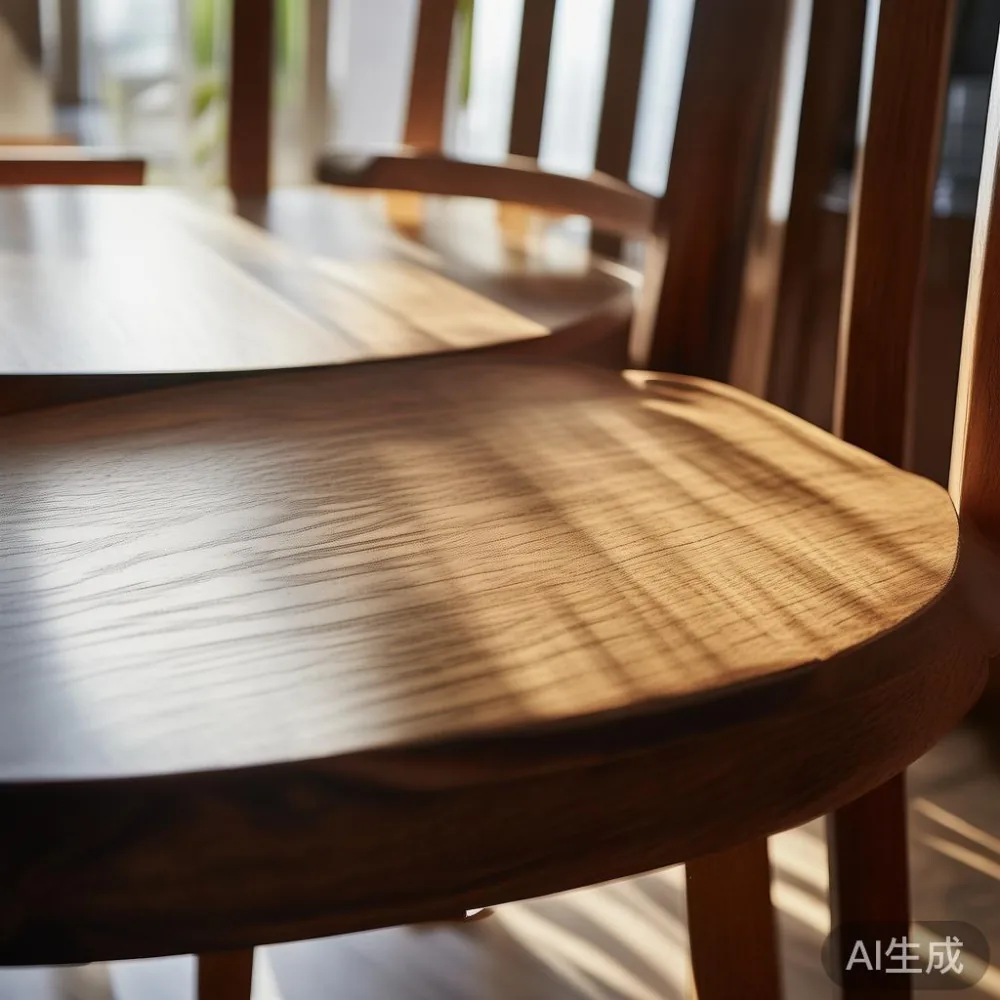
That sounds heavier on day one. But here is what five years actually looks like. Solid ash weighs about 680 kg per cubic metre and absorbs Singapore's humidity changes without the surface delamination that plagues veneer. The chair frames keep their joints. The seat pads, wrapped in a Nordic fabric wood finish blend that breathes in our climate, can be reupholstered locally for about S$60 to S$90 per chair at Year 3 if you want a refresh. The lifetime refinishing benefit from MIDHILL means the factory will sand and re-oil the frames once in that five-year window — you only pay the courier, roughly S$60 round-trip to the consolidator in Tuas. After five years, the chairs still look like the dining chairs in a French light luxury editorial, and they have cost you about S$2,380 to S$2,820. Higher upfront, yes. Lower cumulative risk, yes.
How do I choose a color mismatch for a living room?
Pick the dining chairs first and let the rest of the room meet them, not the other way around — a solid wood frame in warm ash or natural oak pairs with almost any neutral wall, and the chair becomes the anchor instead of the afterthought.
That is the shortest answer. Here is the longer one. Most Singapore homeowners start with the wall paint or the marble table top and then hunt for dining chairs that match. The trouble is that tile, paint, and fabric swatches all read differently under our tropical LED light at night versus the cooler morning tones filtering through a north-facing window in a Punggol unit. Solid wood behaves more predictably: an ash frame photographs close to true-to-life across different Kelvin temperatures, and a Nordic fabric wood finish seat in oatmeal or muted sage will tolerate a colour mismatch on the adjacent sofa or bed frame without clashing. If you already own a piece in a cool grey or a post-modern light luxury brushed bronze, a warm honey oak chair reads as intentional contrast rather than a mistake. The trick is to treat your dining chairs, your dining table, and your wardrobe doors as one palette conversation, not three separate ones.
Why does veneer peel faster in Singapore than in temperate climates?
Two physical reasons. The first is humidity cycling. Singapore sits between 70% and 95% relative humidity all year. The veneer sheet on a particleboard or MDF core expands and contracts at a different rate than the core underneath. Each cycle opens the glue line a little more. In a dry climate like Beijing or Berlin, the same chair might last eight to twelve years. Here, expect 18 to 36 months before you see lifting at corners or seams.
The second is heat. Kitchens in HDB flats regularly run at 28 to 32 °C, and balcony-adjacent dining areas catch afternoon sun that pushes surface temperature higher. Veneer finishes — usually a thin polyurethane or NC lacquer — yellow and craze faster under that thermal load. Solid wood handles both stresses differently. The 8 to 12 mm grain runs through the entire chair leg, so even if the surface oxidises, the structural piece beneath is unaffected. I have sat on solid ash dining chairs in a friend's Punggol condo for six years now; the patina has deepened, but the legs have not moved a millimetre.
What about lift access and corridor widths for delivery?
A standard HDB passenger lift in a Block 634-type layout has an internal cabin of about 1.1 m deep x 1.4 m wide x 2.1 m tall, with a door opening of roughly 0.9 m. A condo service lift is usually wider, around 1.5 m x 1.8 m, but the door stays at 0.9 m on older blocks. Solid wood dining chairs from MIDHILL arrive fully assembled in protective cartons sized approximately 0.55 m x 0.55 m x 0.95 m per chair. Four cartons stack diagonally in an HDB lift without tilting the cabin. Veneer flat-packs are flatter, often 0.15 m x 0.45 m x 1.0 m, but you still need a screwdriver, an Allen key, and about 90 minutes to assemble all four.
Corridors are the other gate. Most HDB common corridors measure 1.2 m to 1.5 m wide; corner turns near the lift lobby narrow to about 1.0 m. A fully assembled solid wood chair pivots through that space without scraping the walls. A flat-pack going the other direction means you also need storage space under your bed frame or in the spare wardrobe zone for the carton for at least the 14-day return window if anything is wrong.
Is the warranty gap really that wide between the two?
Yes, and it is worth looking at the paperwork before you pay.
Most Singapore retailers of veneer dining chairs offer a 6-month to 1-year warranty against manufacturing defects. Manufacturing defects, however, rarely include peeling veneer or sagging seat foam — those are classified as wear and tear or humidity damage, which sit outside the warranty line. By the time the chair fails in month 20, you are outside the cover period and inside the replacement cycle.
Solid wood dining chairs from MIDHILL carry a 10-year structural warranty on the joinery and the wood itself, which is the part most likely to fail if anything is going to fail. Lifetime refinishing means the factory will refresh the surface finish at any point in the chair's life for the cost of courier transport only. For a Singapore owner who plans to stay in the same flat for at least five years — which is the median HDB occupancy window according to the latest HDB resale statistics — that warranty gap translates directly into the cost numbers above.
What about the rest of the room — does the chair decision cascade?
It does, more than people realise. A dining chair is the piece you touch most often in a Singapore home — three meals a day, plus weekend mahjong and family gatherings. Its quality sets the standard your eye applies to the next purchase. Once you live with a 7 kg solid ash chair that does not wobble, you start noticing the wobble in your nightstand. You start eyeing the wardrobe doors that do not close flush. You replace them next, and the bill climbs.
This is also why retailers often bundle the room. The same Foshan factories that make solid wood dining chairs also make solid wood bed frames, dining tables, wardrobes, nightstands, and the occasional marble table accent piece. Buying the dining chairs first from one maker, then adding a bed frame and a wardrobe from the same maker two years later, gives you a consistent grain, a consistent finish, and one warranty point of contact. A my-colleague story: a designer in a Rivervale Shores condo in Punggol furnished her entire 1,050 sq ft unit over eight months — dining chairs, dining table, bed frame, two nightstands, and a three-door wardrobe, all from MIDHILL — and the consistency of the ash tone across the dining chairs and the wardrobe doors is what guests comment on first when they walk in.
Will American light luxury or French light luxury styling suit a HDB dining space?
Both work, with caveats. French light luxury leans on curved cabriole-style chair backs, brushed brass nail-head trim, and a softer linen upholstery. In a 4-room HDB dining area of about 6 sq m, one or two such chairs add elegance without crowding, but a full set of four can feel fussy. American light luxury is cleaner — straight lines, slightly tapered legs, neutral fabrics, and an emphasis on proportion over ornament. It suits HDB and condo dining footprints particularly well because the silhouettes stay slim. Post-modern light luxury sits between the two: warmer wood, softer edges, occasional boucle or wool-blend seats. All three styles are available from solid wood makers like MIDHILL because the construction method — mortise and tenon joinery, solid timber frames — is style-agnostic. The chair can be dressed French, American, or post-modern without changing the bones.
How should I budget over five years?
Set aside the chair budget in two tranches. Tranche one, year one: spend on the four dining chairs and one matching dining table, because these are the pieces that anchor the room and take the most daily abuse. Tranche two, years two to five: layer in the bed frame, the wardrobe refresh, and the nightstands once the dining chairs have proved themselves in your climate. That sequencing also keeps your GST 9% payments spread across multiple financial years, which matters if you are self-employed or running a small business out of the condo.
For a Singapore household choosing between the two paths, the five-year numbers are clear. Veneer dining chairs cost roughly S$1,050 to S$1,250 across five years and deliver a tired-looking set by year five. Solid wood dining chairs cost S$2,200 to S$2,550 up front and S$2,380 to S$2,820 across five years with refinishing — and they still look like the chairs you chose on day one. The total premium for solid wood over five years is roughly S$1,300 to S$1,570, or about S$22 to S$26 per month per chair. For a piece you sit on three times a day, every day, in a climate that punishes anything but solid timber, that is a defensible number.