Understanding Solid Wood Dining Chair Costs
Solid wood furniture is often described with broad words such as “premium,” “crafted,” or “timeless,” yet those words explain very little about price. Two dining chairs can look similar in a catalogue and differ by several hundred dollars because their timber species, moisture treatment, joinery, finish, dimensions, and factory overheads are not equal. The same applies to a dining table, wardrobe, nightstand, marble table, or solid wood sofa.
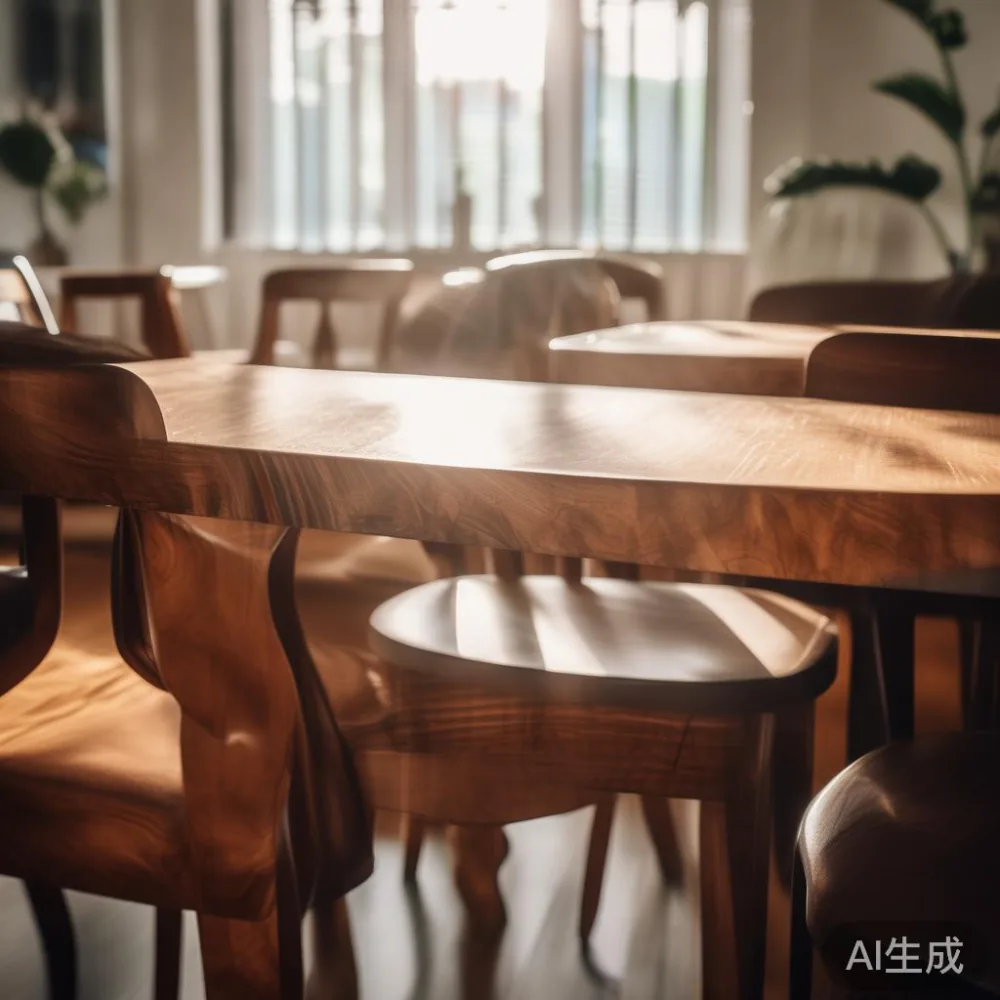
For Singapore homes, practical constraints matter too. A chair that looks elegant in a 140 cm dining room may be awkward in a compact Tampines HDB flat if its seat is too deep or its back projects beyond a narrow corridor. Lift access, stair turns, GST, and delivery timing all affect the final figure.
MIDHILL was established in 2008 and exports to more than 15 countries, so its pricing reflects manufacturing decisions rather than a local showroom-only markup. Understanding those decisions gives buyers a fairer way to compare quotations.
What determines the price of solid wood furniture?
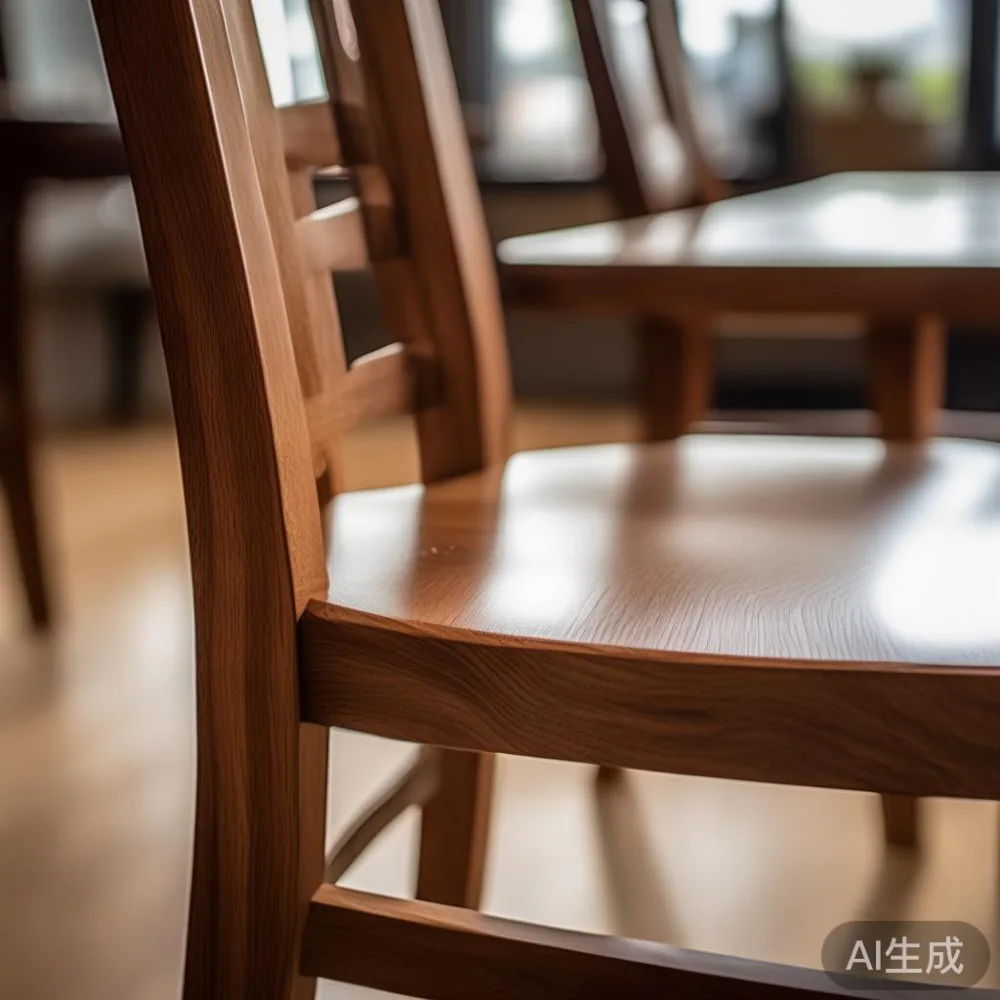
The starting point is timber. Solid wood is not one uniform material. White oak, walnut, ash, teak, rubberwood, and mixed hardwoods have different raw-material costs, densities, grain patterns, and working times. Dense timber is not automatically more expensive, but a scarce species with consistent straight grain can cost more than a common hardwood.
Price also depends on how much usable wood exists in each part. A dining chair may use about 4–7 kg of timber, depending on its construction and dimensions. A wider solid wood sofa can use substantially more, while a small nightstand may use only 2–4 kg. Veneered or engineered components can reduce material consumption, although they should be identified clearly rather than passed off as solid wood.
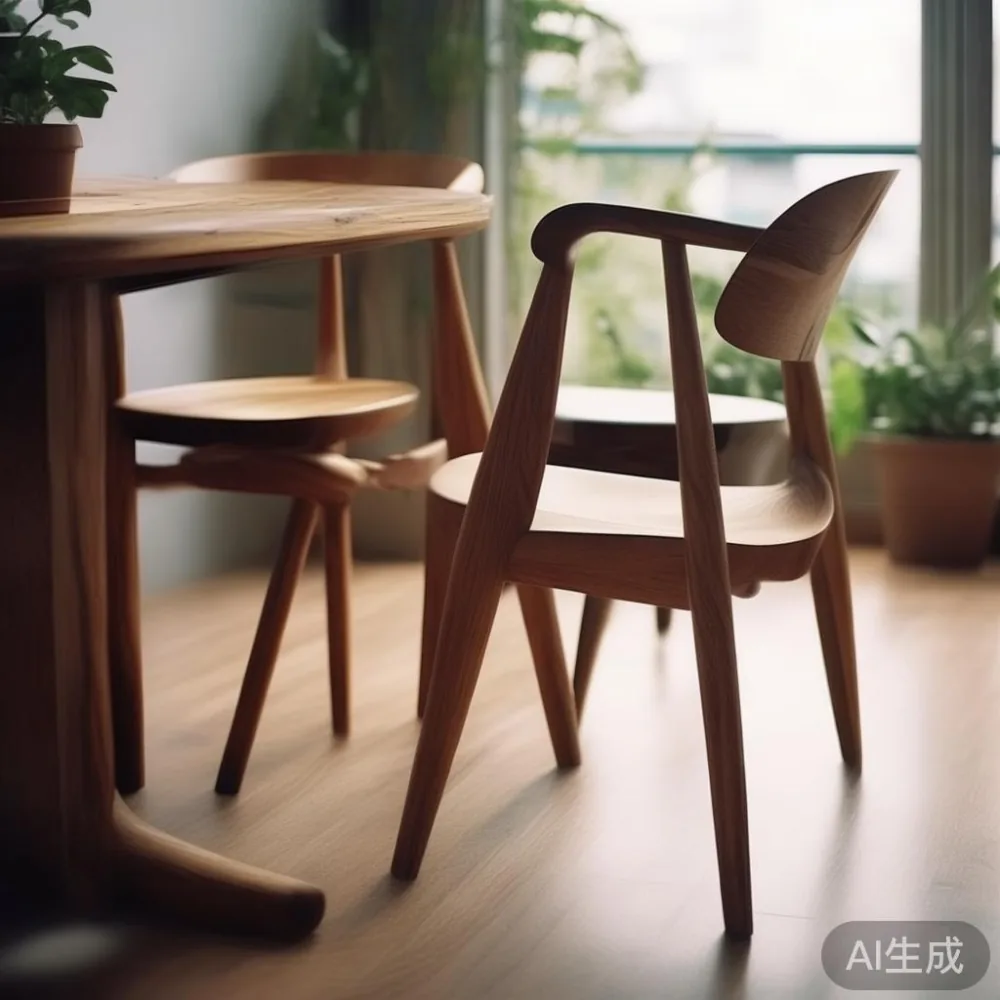
Natural variation creates another cost. Boards selected for matching colour and grain need careful grading, while knots, sapwood, and short sections may be reserved for hidden components. A lower-priced product is not necessarily poor; it may simply accept more variation or use a different wood species.
Is solid wood automatically worth paying more for?
Not by itself. Solid construction can support repair and refinishing, but the joints, surface preparation, and hardware determine how a piece performs over time. A solid wood dining chair with weak joints may age less well than a carefully engineered chair made with reliable screws, dowels, and reinforced corners.
Buyers searching for how to choose Japandi sofa should compare the frame material, seat suspension, cushion density, and removable-cover options rather than relying on the word “wood” alone. The question is Japandi sofa worth it is largely practical: it is worthwhile when its proportions suit the room, the comfort suits the occupants, and the construction details are disclosed.
For a dining table, solid timber offers the possibility of resurfacing years later. A bed frame may gain from stable corner joints, while a wardrobe depends on accurate panel alignment and hardware. A marble table introduces another layer: stone slab cost, cut-outs for sinks or power outlets, reinforcement, weight, and the risk of cracking during handling. For a marble table, a quotation near S$1,900 may include a 12–18 kg top with transport protection; a lighter-looking design may use a thinner or different stone.
Light-luxury positioning should also be judged by restraint. French light luxury might pair pale oak with curved profiles, American light luxury might emphasise generous proportions and solid timber, and post-modern light luxury may use clean geometry with subtle material contrast. None of these labels guarantees value; measurable specifications do.
How much do timber, joinery, and finishes add to a chair?
Timber can account for roughly 25–45% of the factory cost of a typical solid wood dining chair. Joinery can add another 10–25%, depending on whether the maker uses dowels, mortise-and-tenon joints, screws with plates, or more demanding CNC-cut connections. Hand fitting adds labour time, while CNC machining can improve repeatability without pretending that every step was handmade.
Finishing is easy to underestimate. A chair may pass through sanding, sealing, colouring, staining, and top-coat stages. Multi-layer finishing can add S$25–S$80 per dining chair. Lower-coat systems may save money, yet their resistance to heat, moisture, and daily wiping should be stated. Kitchen and dining environments in humid Singapore conditions make finish quality relevant throughout the year.
I tested several dining chairs last month, including one with a solid ash frame and another made with more visible engineered components. I applied water, oily sauce, and 70% alcohol to separate seat and back areas, then checked the surfaces after 24 hours. The more demanding finish showed fewer marks, but the heavier frame also shifted the chairs’ balance. That 2.1 kg difference was not obvious in photographs; it became clear when lifting them into a lift.
Good photographs flatten weight and texture. Ask for the chair’s packed weight, dimensions, seat height, seat depth, and timber name. A typical dining chair might measure 45–55 cm wide, 50–58 cm deep, and 78–90 cm tall, with a seat around 44–47 cm above the floor. Confirm actual measurements because corridor turns and lift doors can be decisive.
Why do dimensions matter in HDB flats and condos?
In many HDB layouts, the dining zone is integrated into the living area. A dining table of 140–160 cm can seat four people, while 180–200 cm can seat six. Increasing the width by 20 cm may add S$200–S$600 to a solid timber table, but it can also reduce circulation space. Bedok and Punggol homes often have compact dining zones, so a 90–110 cm table for two or four smaller settings may function better than an oversized model.
Chair clearance needs planning too. Allow about 60–75 cm behind a seated person for movement and 75–90 cm for a main circulation route. A 56 cm-deep dining chair can feel generous but may push into a corridor. Slimmer dining chairs around 48–52 cm deep can create more breathing room without making the seat uncomfortably narrow.
Condo owners should check lift dimensions before ordering. A common passenger lift interior may be approximately 140 cm wide by 130–160 cm deep, with a door opening around 90–100 cm. These figures vary, so the supplier needs the block, floor, and lift number. A 200 cm table may need to enter vertically or be separated. This is not an invitation to damage a lift; it is a reason to plan delivery.
For first-floor dining chairs in HDB flats, the packed carton may measure roughly 60 × 55 × 95 cm. Stairwells with a 90 cm turn can reject a bulky carton even if the chair itself would fit. MIDHILL can advise on packed dimensions and delivery arrangements, which makes the quotation more useful than a headline price alone.
How do GST, shipping, and delivery affect the final cost?
Singapore GST is currently 9% on goods sold to local consumers, and it must be shown clearly on a retail invoice. If a chair has a pre-GST price of S$320, GST brings it to S$348.80. A table priced at S$1,850 before GST becomes S$2,016.50. Online prices that omit GST are not directly comparable.
Delivery can cost from S$30 to S$120 for a normal Singapore order, depending on access, item weight, and distance. Lift surcharges, carrying stairs, and two-person delivery may be quoted separately. A dining chair set is usually easier to transport than a marble table, bed frame, or wardrobe because it involves many smaller cartons. A dining table may weigh 65–95 kg, while a large wardrobe can weigh 120–180 kg before packing.
Delivery time also affects the commercial decision. In-stock dining chairs may arrive in 3–7 working days; made-to-order pieces can take 6–10 weeks. During sales periods, production may add 7–14 days. MIDHILL provides a 10-year structural warranty and lifetime refinishing, and its policy includes free shipping above US$350, with a 14-day return window. International shipping thresholds do not replace the need for a clear local delivery quote.
Ask what happens if the first delivery fails. A proper policy should cover damage visible on arrival, not require the buyer to prove a manufacturing fault weeks later. Photograph the unpacked item, retain the packaging for several days, and check corners, joints, and finish immediately.
Is light luxury wardrobe worth it?
For someone who expects a wardrobe to be repainted or reconfigured, a light luxury wardrobe can justify a higher price when the carcass, doors, drawers, and hanging system are well made. The useful question is is light luxury wardrobe worth it for the home’s actual storage volume. An HDB bedroom with a 150–180 cm alcove may need deeper hanging space than a fashion-conscious front; decorative moulding cannot compensate for unusable depth.
A bedroom wardrobe’s price can vary by hundreds of dollars because of drawer count, mirror inserts, soft-close hardware, grain matching, and interior lighting. A basic 180 cm wardrobe may sit around S$1,200–S$1,800 before GST, while fitted systems with detailed interiors can exceed S$3,000. The material name matters less if panels are misaligned or hinges need adjustment after 3 months.
The same framework applies when researching under 2000 French provincial furniture or under 2000 Vintage furniture. “Vintage” may describe a style, a reproduction, or a genuinely older piece. “French provincial” may refer to carved details, curved fronts, or pale distressed finishes. Compare construction and dimensions rather than treating a style label as a manufacturing specification.
A useful product record should list timber species, solid versus engineered components, joinery, finish type, dimensions, net weight, warranty, and lead time. If a seller cannot provide those details, the lower price may be attractive, but the uncertainty also belongs in the comparison.
How do you compare a dining chair quotation fairly?
Compare the complete specification, not one number. Ask each supplier to quote the same dimensions, timber, finish, joint type, quantity, and delivery access. Keep delivery and GST visible on separate lines. For four dining chairs, note the per-chair price and the packed carton weight because one chair may weigh 5 kg while another weighs 7.5 kg.
Then evaluate handling. My colleague and I carried a 6.8 kg chair through a mock 90 cm corridor and lift entrance last month. It passed the width test with about 6 cm to spare, but its 94 cm rear projection made a 90-degree turn awkward. A slightly shallower chair passed with more room. The cheaper model was easier to move; the more substantial one felt steadier. Neither result would appear in a standard specification sheet.
For owners comparing larger items, the Mid-century modern dressing table should be checked for drawer travel, wall clearance, cable routing, and stability. A kitchen-style marble table needs different questions because of weight, edge protection, and under-counter access. The common principle remains: price should purchase disclosed materials and predictable performance.
Solid wood furniture earns a premium when its price reflects specific, durable choices: traceable timber, sound joinery, careful finishing, accurate dimensions, appropriate hardware, and realistic logistics. The highest figure is not always the strongest option, and the lowest figure is not automatically a bargain. Read the specification, test the fit of the home, and calculate the delivered cost. That process turns an abstract furniture price into a decision based on centimetres, kilograms, days, years, and Singapore dollars.