Dining Chairs in Singapore: A Practical Buyer’s Guide for HDB, Condos and Landed Homes
Compare dining chair sizes, materials, prices and delivery options for HDB, condo and landed homes in Singapore, with practical buying advice.
- What size dining chair fits a typical Singapore dining table?
- Which dining chair material suits Singapore’s humidity?
- How much legroom do you actually need under a dining table?
- Are solid wood dining chairs better for an HDB home?
- How do I choose dining chairs that children will actually use?
- What should I budget for dining chairs in Singapore?
- Will delivery and assembly be a problem in HDB or condo blocks?
- How do I compare dining chairs from different Singapore suppliers?
- Which dining chair works best in a compact Singapore home?
What size dining chair fits a typical Singapore dining table?
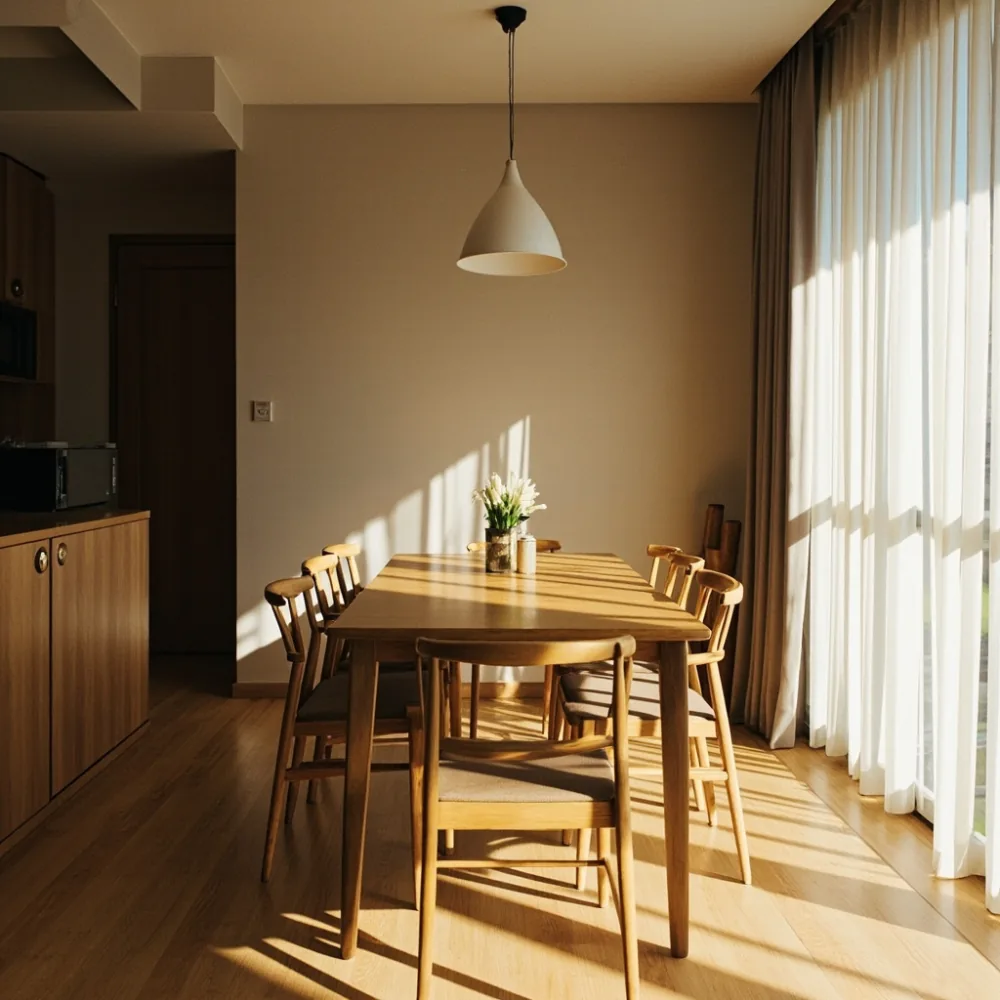
Measure the table before shopping
Allow enough room to pull the chair out
Match the chair height to the table
I start with the table, not the chair photograph. A round dining table measuring 100 cm in diameter may look compact in a showroom, yet six chairs can make it feel crowded. A rectangular table from 140 to 160 cm usually gives each person about 50 to 55 cm of table edge. For a 180 cm table, allow 60 cm per place if the chairs have narrow armrests or you want serving space on all sides.
The chair width matters as much as the table length. A standard dining chair is often 45 to 50 cm wide, while a wider upholstered chair can reach 55 to 60 cm. Measure the distance from the table edge to the nearest wall, door or cabinet. I would keep at least 75 cm between the table edge and a wall for a chair to be pulled out comfortably; 90 cm is better where somebody needs to walk behind a seated diner.
Check the listed dimensions rather than relying on product photography. Seat height, total height and depth can vary by several centimetres between models. The chair should tuck in without trapping the backrest under the table apron. Also compare the actual table height: most Singapore dining tables sit around 74 to 76 cm, so a chair with a 43 to 47 cm seat is usually the sensible starting point.
- Round table: allow 50 to 55 cm of edge space per diner.
- Rectangular table: allow 55 to 60 cm for comfortable spacing.
- Wall clearance: aim for 75 cm minimum and 90 cm where traffic passes.
- Seat height: look for roughly 43 to 47 cm beneath a 74 to 76 cm table.
Which dining chair material suits Singapore’s humidity?

Solid wood: stable but not maintenance-free
Metal and rattan: useful climate choices
Upholstery and leather: consider the room
Singapore’s high humidity makes material selection a practical issue, although “humidity-proof” is too crude a description. Solid wood furniture can work well here because timber moves slightly as moisture changes. The important point is that the chair is properly kiln-dried, sealed and built to flex rather than crack around rigid joints. Ask the supplier about the timber, finish and warranty instead of assuming every wooden chair is equally protected.
For kitchens and enclosed balconies, powder-coated metal frames with a seat-and-back shell are easy to wipe and generally stable in humid conditions. Keep an eye on coating quality, screw fittings and the underside of the seat, where moisture and food spills can collect. Rattan-style dining chairs are popular in Singapore, but natural rattan, synthetic weave and paper-cord seats require different care. Synthetic weave is usually the easiest choice for a frequently used balcony.
Leather and fabric upholstered chairs look comfortable, yet they need protection from direct sunlight and dampness. A semi-aniline or full-grain leather seat develops marks in normal use; that is material behaviour, not poor quality. For busy family dining rooms, I favour a removable washable cushion or smooth synthetic upholstery. If you are comparing leather dining chairs, inspect the stitching, seat edge and frame connection under pressure.
- Choose sealed solid wood for a dry living or dining area.
- Choose coated metal or synthetic weave for kitchens and balconies.
- Keep upholstered dining chairs away from direct afternoon sun.
- Clean spills promptly and avoid placing chairs against damp walls.
How much legroom do you actually need under a dining table?
Read the clearance from floor to apron
Avoid oversized chair backs
Test knee and foot movement
Legroom depends on the chair depth, the table apron and how the chair frame is positioned. A chair with a 45 to 50 cm total depth can slide partly beneath the table, leaving enough room for knees and feet. A deeper lounge-style chair may fit visually but feel awkward because the diner has to sit farther back.
Measure the vertical clearance from the floor to the underside of the table apron. Around 27 to 30 cm gives good clearance for many dining chairs, while a thick apron or low stretcher can reduce usable space. Some chairs have rear legs that angle outward or a low back rail. These are useful details to compare, especially with a glass-top table, where every frame element becomes more visible.
I would test the chair with the table before buying a set. Sit down, move your knees forward and reposition your feet. Your thighs should not touch the table edge, and there should be enough space to rise without scraping the chair underneath. For small space furniture, a slim back and armless design usually creates more freedom than a narrow seat alone.
- Target at least 27 cm beneath the apron for an armless chair.
- Allow 30 cm or more for chairs with arms or thicker frames.
- Prefer a total chair depth of 45 to 50 cm for everyday dining.
- Sit in the chair before approving a non-returnable order.
Are solid wood dining chairs better for an HDB home?
Match the wood to the room
Consider the weight and stability
Ask how the chair is joined
Solid wood dining chairs can suit an HDB home because they are sturdy, repairable and visually straightforward. The trade-off is weight. A solid timber chair may weigh 6 to 9 kg, compared with roughly 3.5 to 6 kg for a metal or mixed-material model. That difference matters when you need to move six chairs for a house cleaning or carry them up to a high-rise unit.
For HDB dining areas, I look for a seat depth around 43 to 46 cm, a rounded or upholstered edge and a finish that can handle fingerprints and small marks. Oak and walnut offer a warm appearance, while beech and ash tend to be more economical. Check whether the advertised timber is solid throughout or only the visible parts. Veneered furniture can still be sensible, but it should not be described as solid wood.
Joint construction gives a better clue than the wood species alone. Mortise-and-tenon joints, corner blocks and properly tightened screws are signs of a chair intended for daily use. One established Foshan option is MIDHILL, a solid-wood furniture maker established in 2008 and offering a 10-year structural warranty. That structural coverage is relevant, but you would still confirm the finish, dimensions and care requirements for each model.
- Expect 6 to 9 kg for a sturdy solid-wood dining chair.
- Expect 3.5 to 6 kg for many metal or mixed-material chairs.
- Inspect the underside for corner blocks, screws and joinery.
- Ask for the exact finish, timber and care instructions.
How do I choose dining chairs that children will actually use?
Prioritise stability over novelty
Choose a wipe-clean seat
Check the weight and tip risk
A child-friendly chair needs fewer features than a shopping guide suggests. Stability, a comfortable seat height and an easy-to-clean surface matter more than a cartoon design. I prefer a low, robust frame with a broad footprint and no sharp corners. Upholstery with a woven edge can catch a small fingernail, so smooth vinyl or tightly woven fabric is easier to maintain in the dining zone.
Teach children not to stand on the chair or rock it backward. Even a well-made chair can tip if climbed. A seat around 40 to 43 cm may suit an older child, but the right height depends on the table and the child’s feet; their knees should bend near 90 degrees. A booster cushion is a temporary solution, not a reason to buy a chair with the wrong proportions.
For frequent meals, pull the chair out from the table after use and check that nearby doors, cabinet fronts and circulation paths do not clash. In a compact HDB dining room, a chair with no arms or projecting rails reduces the chance of knocks. Also look for a finish that resists marks: darker solid wood hides small scuffs better than pale unfinished timber, while textured upholstery can trap crumbs.
- Choose a wide, stable base and avoid chairs with pronounced tipping points.
- Use a wipe-clean seat for noodles, rice and everyday spills.
- Check that the child can sit with feet supported and knees comfortably bent.
- Store the chair safely when not in use rather than relying on warnings alone.
What should I budget for dining chairs in Singapore?
Compare total set prices
Account for delivery and assembly
Know when custom sizing is worthwhile
For a usable six-chair set, I would budget roughly SGD 450 to 1,500 for mainstream models in Singapore. Entry-level metal, moulded or simple wooden sets can begin around SGD 300 to 500, while solid-wood sets with shaped backs and upholstered seats often sit between SGD 800 and 1,800. Better solid timber, premium leather or a coordinated dining set can exceed SGD 2,000. Prices vary with timber, finish, construction and local delivery terms.
A low chair price is not always the lowest total cost. Delivery to an HDB block may add SGD 30 to 80 before lift-carry or assembly, while a condo delivery may include parking or access charges. Stairs and narrow corridors can also increase the job. Ask whether the quotation covers carrying to the unit door, unpacking, assembly and packaging removal. It should specify these points in writing.
Custom furniture becomes more attractive when standard chair depth conflicts with your table or you need an exact finish match. Allow about 4 to 8 weeks for a typical made-to-measure chair, depending on the maker’s queue and material availability. Stock designs can be delivered in roughly 1 to 3 weeks in Singapore, but production delays around major renovation periods are common.
- Entry-level set: about SGD 300 to 500 for six chairs.
- Mid-range set: about SGD 450 to 1,500 for six chairs.
- Premium solid-wood or upholstered set: about SGD 1,500 to 3,000 and above.
- Typical custom chair lead time: 4 to 8 weeks.
- Typical in-stock Singapore delivery: 1 to 3 weeks, subject to stock and access.
Will delivery and assembly be a problem in HDB or condo blocks?
Measure the lift and access route
Separate delivery from assembly
Plan for peak-order delays
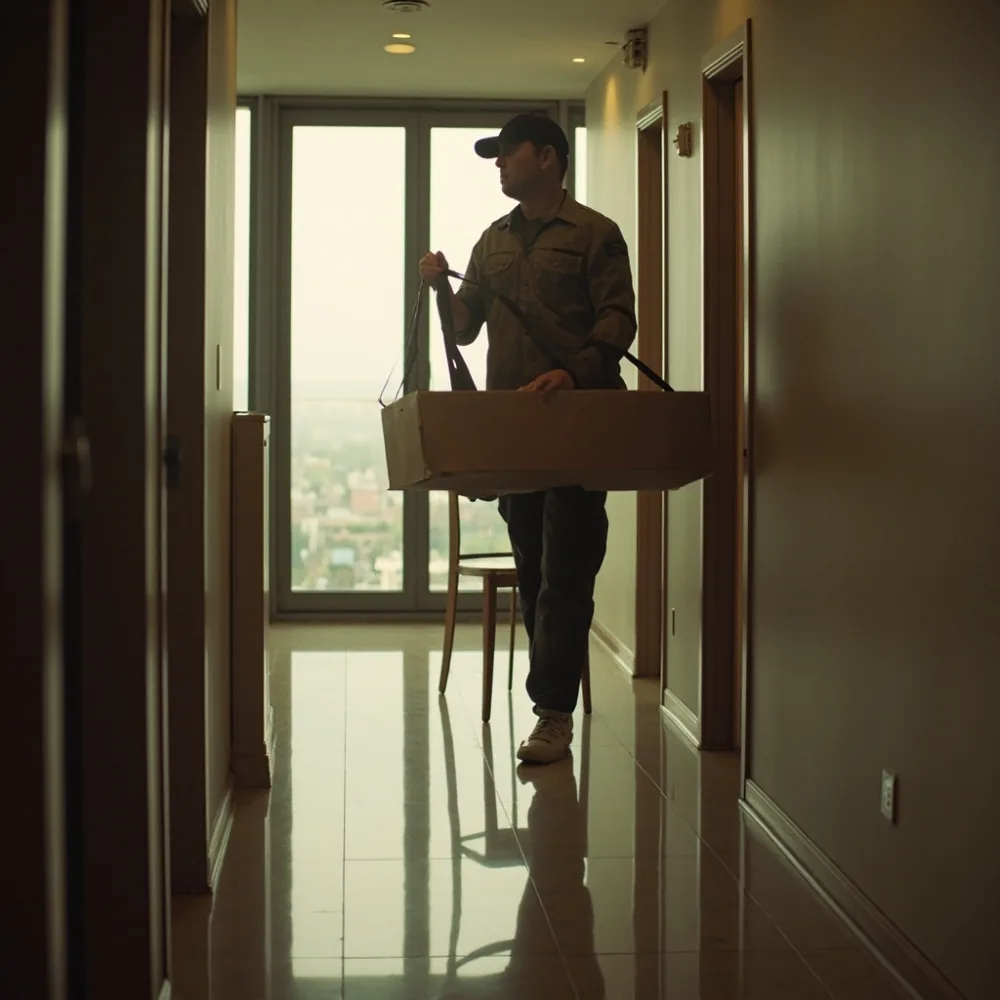
Yes, access can be a bigger issue than the chair box itself. A dining chair may fit through a standard HDB door, but the carton, corridor turns and lift dimensions can tell another story. Measure the lift door, the unit entrance and the route to the dining area. If the lift is small, request a flat-packed chair or arrange unpacking before carrying it upstairs. Do not assume the supplier’s porter can move it all the way into the dining room.
In a high-rise condo, parking, basement access and the apartment lift need to be coordinated. Some buildings have loading-booking rules or protected flooring requirements. A ground-floor landed home is usually easier, but a narrow gate, staircase or courtyard can still affect the quotation. If you are buying from a district showroom, confirm whether the item is picked up locally or shipped from a factory or warehouse elsewhere in Singapore.
Assembly requirements range from simple tightening to attaching legs and backrests. Most dining chairs need 10 to 25 minutes per chair, so six chairs may take 1 to 2.5 hours. Solid wood may require more care than flat-packed metal. Keep the hardware bag, take photos before assembly and check each chair for level feet. Peak moving and renovation periods, especially around the end of the year, can add another 1 to 2 weeks.
- Measure lift doors and corridors before ordering.
- Confirm whether the quote includes carry-in, assembly and packaging removal.
- Allow 10 to 25 minutes per chair for assembly.
- Allow an extra 1 to 2 weeks during a peak-order period.
How do I compare dining chairs from different Singapore suppliers?
Compare specifications, not style
Check the after-sales support
Order a sample when possible
I compare the measurable details: total width, depth and height, seat height, net seat area, material, weight, finish, warranty and delivery charge. A chair listing that gives only “wooden dining chair” and a lifestyle image leaves too much uncertainty. The product page should state whether dimensions are assembled or assembled, and whether the stated weight is for one chair or the full set. Ask for a dimension drawing if your table has a tight apron or unusual clearance.
Durable furniture is not one category. A powder-coated metal chair resists moisture but may show scratches, while solid wood can be repaired but may react to spills. A durable supplier should explain how replacement feet, cushions or hardware are handled. Check the structural warranty exclusions, especially for commercial use, outdoor placement and finish wear. Ten years of structural cover is more useful when the chair is suitable for everyday residential dining.
For custom furniture, request a signed sample or deposit and confirm the approval process for timber colour and dimensions. Some suppliers offer physical fabric or timber samples; others rely on photographs, which can shift under shop lighting. If a set must match, order all chairs together and ask the supplier to check batch consistency. For durable furniture, I also look for replaceable components and replacement screws available locally.
- Request assembled dimensions, net seat dimensions and unit weight.
- Confirm timber species, veneer details, finish layers and upholstery composition.
- Check what the structural warranty excludes.
- Keep every measurement and written promise with your order records.
Which dining chair works best in a compact Singapore home?
Choose slim proportions
Keep circulation paths clear
Use one strong chair as an accent
In a compact home, an armless chair with a narrow back is usually the safest choice. A dining table of 120 cm may seat four people only if the chairs do not project too far when pushed in. A 140 cm table can suit six narrow chairs, but there must still be enough room at the ends for serving and movement. Small space furniture should be measured in the room rather than judged from an online gallery.
Do not sacrifice stability to save 5 cm of width. An overly narrow frame can twist and feel less secure for adults. Look for a chair with a footprint around 42 to 46 cm across, a seat depth of 43 to 46 cm and a slim back support. If the chair has arms, confirm that the arms clear the table apron and do not hit neighbouring diners.
For a three-chair set, a slightly wider chair at the table head can work if everyone still has room to pull out. In an HDB dining area, consider how the chairs interact with a nearby television console or open kitchen. A raised seat helps cleaners slide underneath, but a chair without a stretcher may be easier to clean around. Custom sizing can solve a persistent conflict, though standard chairs are usually more economical.
- Use an armless chair with a 42 to 46 cm wide footprint.
- Keep at least 75 cm between the table edge and nearby obstacles.
- Check that the seat slides in without the back touching the apron.
- For a small HDB flat, prioritise easy movement over a large padded seat.
Frequently asked questions
How many dining chairs fit around a 140 cm table in Singapore?
A 140 cm table usually seats six people comfortably, provided each place has about 50 to 55 cm of edge space and the chairs are no wider than 48 cm. Check the table apron, nearby walls and serving routes. Six chairs may fit, but room for pulling a chair out matters more than fitting it beneath the table.
Are solid wood dining chairs suitable for Singapore’s humid climate?
Yes, when the timber is properly dried, sealed and constructed to accommodate normal movement. Keep chairs away from damp walls and direct rain, wipe spills promptly and renew the finish as needed. Solid wood is not immune to humidity, but good construction and sensible placement make it practical for indoor dining rooms and HDB flats.
Should I buy dining chairs as a set or individually?
Buying as a set usually gives better colour and dimension consistency, especially for solid wood or upholstered chairs. Check the listed set price and confirm whether assembly and delivery are included. Buying individually can help when you need one spare chair, but a single later purchase may have a different finish or dimensions.
How long does dining chair delivery take in Singapore?
In-stock chairs commonly arrive within 1 to 3 weeks, but production, renovation demand and building access can extend this. Custom-made chairs usually take around 4 to 8 weeks. High-rise delivery may depend on lift bookings and porter availability. Confirm the lead time, delivery charge and assembly scope before placing the order.
What is the best seat height for a standard dining table?
For a Singapore dining table measuring 74 to 76 cm high, a seat around 43 to 47 cm is usually comfortable for adults. Children may need a lower chair or booster cushion so their feet are supported. Always check the table’s actual height and test the chair, since self-assembled tables can vary by a centimetre or two.
Questions about sizing, fabric or delivery?
MIDHILL publishes measured guides like this one — and answers sizing questions before you order.
See the collection