The Long-Term Value of Dining Chairs: Veneer or Solid Wood?
In Singapore, where living spaces are often compact and every purchase is scrutinised for value, the choice of dining furniture extends beyond aesthetics. It is a financial and practical decision. For residents in Tampines, Bedok, and Punggol HDB flats and condos, where corridor widths are narrow and lift space is at a premium, the durability and lifespan of a dining chair are paramount. This article provides a detailed, 5-year cost comparison between veneer and solid wood dining chairs, using concrete figures, local context, and a focus on long-term ownership. We will examine not just the initial purchase price, but the costs of maintenance, repairs, and eventual replacement, to understand which material offers better value in the Singaporean context.
What Exactly Are We Comparing? Understanding Veneer and Solid Wood
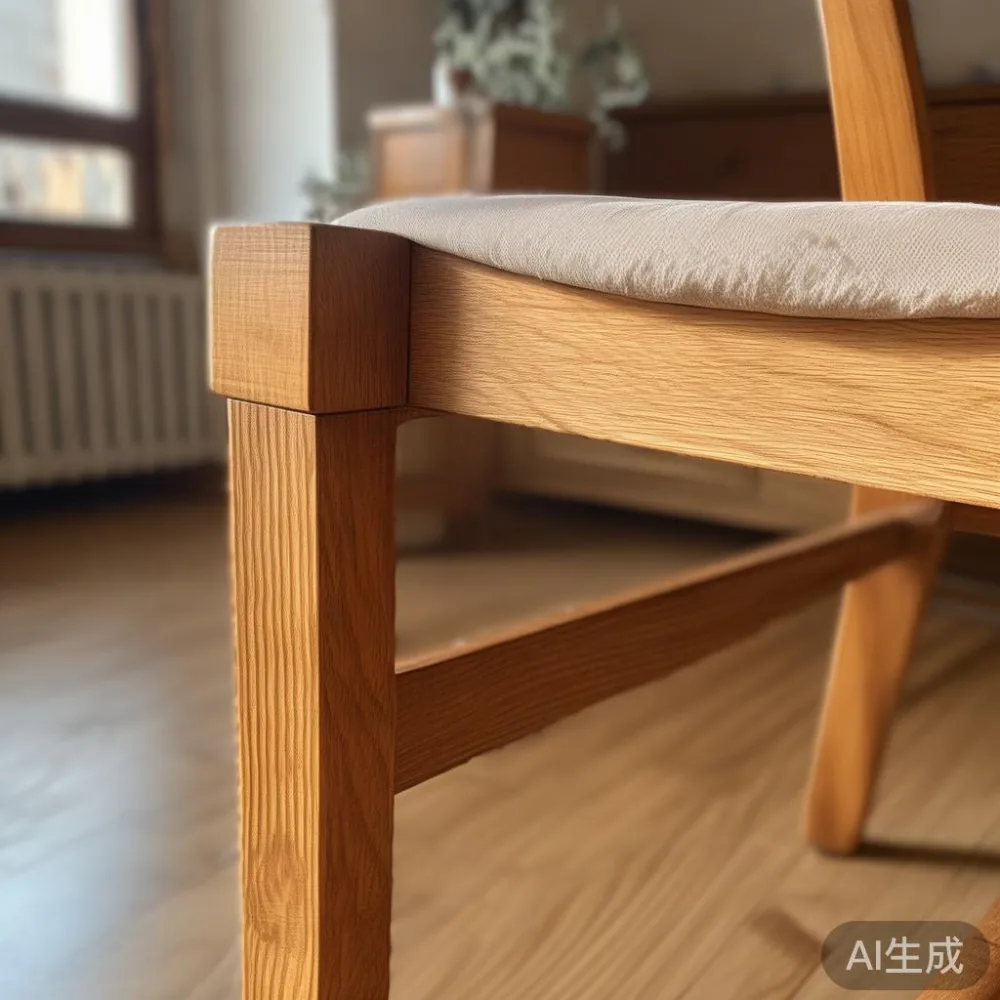
To begin, it is necessary to define the two materials. Solid wood dining chairs are constructed from a single piece or multiple pieces of solid timber, such as oak, rubberwood, or mahogany. The entire structure, from the legs to the backrest, is made of this natural material. This results in a heavier, more substantial piece of furniture, often weighing between 8 to 12 kg per chair. The dimensions are typically consistent, with a seat height of 48 cm and a backrest height of 80 cm, making them a significant presence in any dining area.
Veneer dining chairs, on the other hand, have a core made of a less expensive material like particleboard, MDF (Medium-Density Fibreboard), or plywood. A thin layer of real wood, typically 0.6 mm to 2 mm thick, is laminated onto this core to give the appearance of solid wood. The weight of a veneer chair is significantly lower, usually around 4 to 6 kg, making them easier to manoeuvre through Singapore's standard 80 cm wide HDB corridors. The visible dimensions are often similar to solid wood chairs, but the internal structure is fundamentally different, impacting long-term performance.
The Initial Investment: Breaking Down the Purchase Price
The most straightforward difference between veneer and solid wood dining chairs is the initial cost. Let us consider a standard set of four dining chairs. In the Singapore market, a set of four veneer dining chairs can be purchased for approximately SGD 450. This places the cost per chair at around SGD 112.50. These chairs are often imported or locally assembled, with a delivery time of about 7 to 10 business days. For a resident in a Punggol condo, this means a straightforward delivery to the doorstep, with no significant logistical hurdles given the lighter weight.
A comparable set of four solid wood dining chairs, such as those from a reputable maker like MIDHILL, will cost significantly more. A quality set typically starts at SGD 1,200, putting the cost per chair at SGD 300. This higher price reflects the cost of premium, sustainably sourced timber and the more intensive labour involved in crafting a solid piece. The delivery window might be slightly longer, around 10 to 14 business days, due to the heavier weight and more careful handling required. For a Bedok HDB flat, delivery personnel will need to account for the 10 kg weight per chair when working through the building's lift and corridors.
Year 1-2: The honeymoon phase and minor wear and tear
For the first two years, both types of dining chairs will likely perform well under normal use. A veneer chair's surface is protected by a durable melamine or lacquer finish, which resists minor scratches from daily meals. Spills can be wiped away without issue. The structural integrity remains sound, as the particleboard core is stable in the climate-controlled environment of a Singaporean home. The total cost of ownership during this period is negligible, perhaps SGD 20 for a can of wood polish to maintain the sheen.
Solid wood dining chairs also require minimal maintenance in this phase. The natural wood may develop a slight patina, which many owners find appealing. A periodic wipe with a damp cloth followed by a dry cloth is sufficient. The primary maintenance cost might be a simple silicone-based wood conditioner to prevent the wood from drying out in the air-conditioned environment. This could cost around SGD 30 for a good-quality product that lasts for years. The structural stability is inherently superior, with no risk of the core material degrading under the weight of an average Singaporean adult.
Year 3-4: The turning point and the first major repairs
This is where the paths of the two materials begin to diverge significantly. For veneer dining chairs, the third year often marks the beginning of visible decline. The constant stress on the joints, where the legs meet the seat, can cause the thin veneer to chip or delaminate. A common issue is the bubbling of the surface finish around the edges of the chair seat. Repairing this is not a simple DIY task. A professional furniture repair service in Singapore might charge SGD 80 to SGD 120 per chair to fix a delaminated section, provided the underlying MDF core is not damaged. If the core is water-damaged or crushed, the chair is often beyond economical repair.
My colleague, Sarah, who lives in a Tampines HDB, experienced this firsthand. Last month, she noticed one of her four-year-old veneer dining chairs had a large crack on the seat edge. The chair wobbled slightly. She called a repair service, and the technician confirmed the MDF core had been compromised from a heavy pot placed on it years ago. The repair cost of SGD 100 was almost a third of what she originally paid for the chair. She decided it was not worth fixing and began shopping for replacements.
Solid wood dining chairs, in contrast, show remarkable resilience at the four-year mark. Joints remain tight, and the wood itself may have minor dings or scratches, but these add character rather than signal failure. The structure is sound. The only potential cost might be for professional refinishing if the owner wishes to restore the original finish. A full refinishing service for one chair costs approximately SGD 150, which is a restoration service, not a repair of a defect. This cost is optional and is more about aesthetic preference than structural necessity. A solid wood chair from a brand like MIDHILL, with its 10-year structural warranty, would have any joint issues resolved under warranty, adding zero cost to the owner.
Is veneer furniture really more affordable in the long run?
This is the central question many Singapore homeowners ask when faced with the price difference. The answer, as our analysis shows, is a definitive no. Let us construct a 5-year cost scenario for a household that started with four veneer dining chairs purchased for SGD 450. By year four, as seen with Sarah's experience, one chair is deemed unusable. The owner replaces it with a new veneer chair at SGD 112.50. By year five, another chair might show signs of structural weakness, requiring another replacement purchase of SGD 112.50. The total 5-year cost is the initial SGD 450 plus two replacement purchases of SGD 112.50 each, totaling SGD 675.
Now, consider the solid wood option. The initial investment is SGD 1,200 for a set of four chairs. Over five years, the chairs require no structural repairs. The only maintenance cost is perhaps SGD 30 for wood conditioner. The total 5-year cost is SGD 1,230. While this is higher, the owner still possesses four high-quality, structurally sound chairs. If we extend the timeline to 10 years, the veneer owner might have to replace two more chairs, adding another SGD 225 to their total, bringing it to SGD 900. The solid wood owner, protected by a 10-year structural warranty, faces zero repair costs. Their total remains at SGD 1,230. The value proposition becomes clearer when considering the longevity and peace of mind.
The Hidden Costs: Space, Disposal, and Resale Value
Beyond the direct repair and replacement costs, there are hidden factors to consider. When a veneer chair breaks, disposal is a minor inconvenience in Singapore. It can be left at the designated HDB recycling point or scheduled for bulky item collection, a service provided by the town council at a small fee of SGD 10.50. However, for a condo resident in Tampines, this might involve a trip to the chute or a collection point in the basement.
The disposal of a solid wood chair is more complex. Its weight of 10 kg makes it a bulky item. The SGD 10.50 town council fee still applies, but the sheer heft makes moving it more of a challenge. However, this inconvenience is offset by a critical advantage: resale value. A well-maintained set of solid wood dining chairs retains a significant portion of its value. After five years, an owner might be able to sell the set for 40-50% of the original price, perhaps SGD 480 to SGD 600. A set of five-year-old veneer chairs, on the other hand, has virtually no resale value. They are often given away for free or discarded.
Final Verdict: Which Dining Chairs Offer True Singaporean Value?
The 5-year cost comparison reveals that while veneer dining chairs have a lower initial price tag, their long-term value is significantly lower. The cycle of replacement, repair, and eventual disposal creates a hidden cost that, over time, exceeds the initial savings of solid wood. For a Singaporean family, the choice is between a product that is disposable and a product that is an investment.
When considering the context of Singaporean homes—where space is limited and furniture is a long-term fixture—the durability of solid wood becomes a key feature. A solid wood dining chair does not need to be replaced every three to four years. It becomes a part of the home's history, able to withstand the rigours of family life. The initial higher cost is amortized over a decade or more, not just five years. For those exploring how to choose light luxury bed or looking for wholesale French provincial furniture, the same principle of long-term value applies. A piece that lasts is ultimately more economical and sustainable. The decision, therefore, is not about which chair is cheaper today, but which one will still be serving your family in Tampines or Bedok a decade from now, without adding to your expenses.