Dining Chairs for Small Singapore Apartments: A Light-Luxury Guide
A compact dining area can still feel deliberate, warm, and generous. The trick is not to fill every centimetre, but to give each dining chair enough breathing room to be comfortable while keeping the room visually connected to the rest of the home. For residents of HDB flats in Tampines, Bedok, or Punggol—and for condo owners working with narrow corridors and compact lifts—that balance matters.
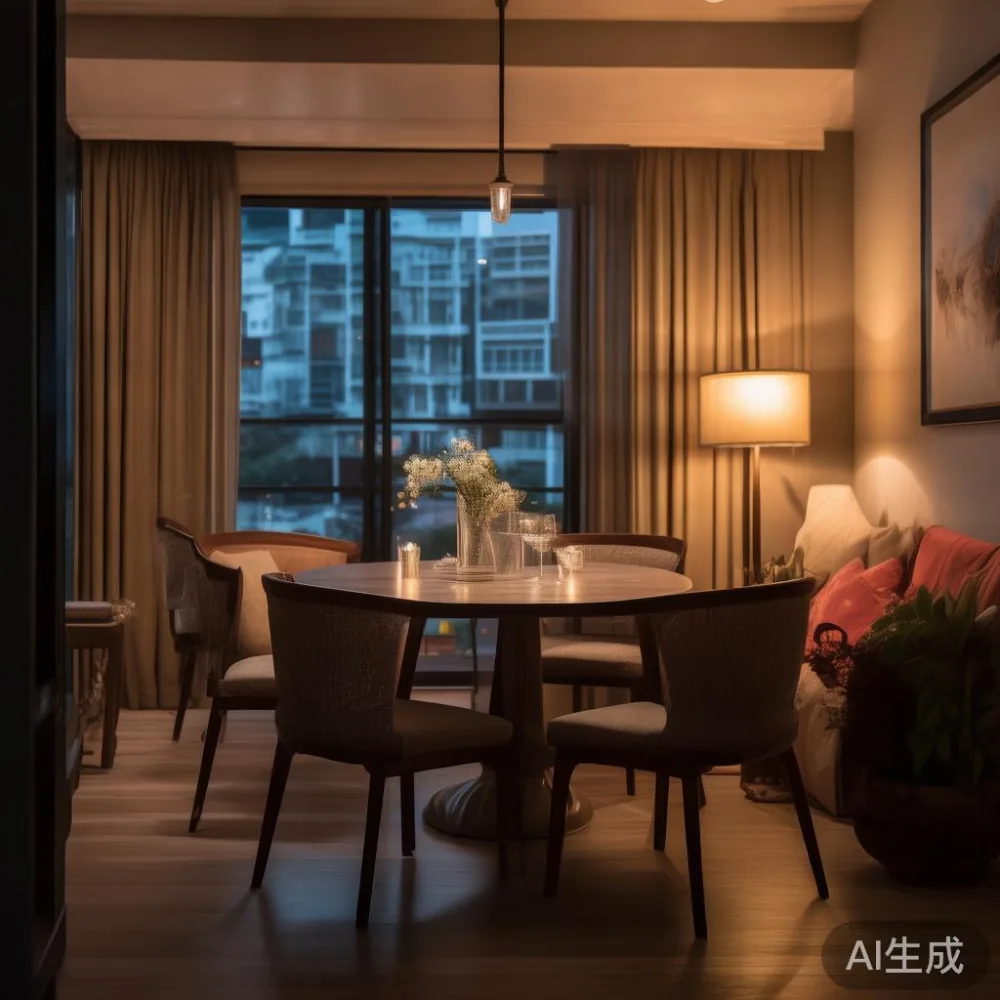
I visited a friend’s three-room BTO last month. Her dining zone measured only 180 cm by 220 cm, yet four dining chairs made the area feel comfortable because the table was slim, the chairs had open frames, and the palette stayed pale. A narrow 90 cm table with four slim dining chairs preserved roughly 45 cm on each long side, while a bulky set would have pinched the route from the kitchen to the balcony. That experience shaped the measurements and recommendations below.
How do you choose dining chairs for a small Singapore apartment?
Start with the clearances that you need every day. For a table used only by family, allow at least 75 cm of pulling-out space behind each chair. For a table that also hosts guests, plan 90 cm. If those numbers are impossible, consider a narrower table, chairs with a compact footprint, or a round table that can be centred away from the main circulation route.
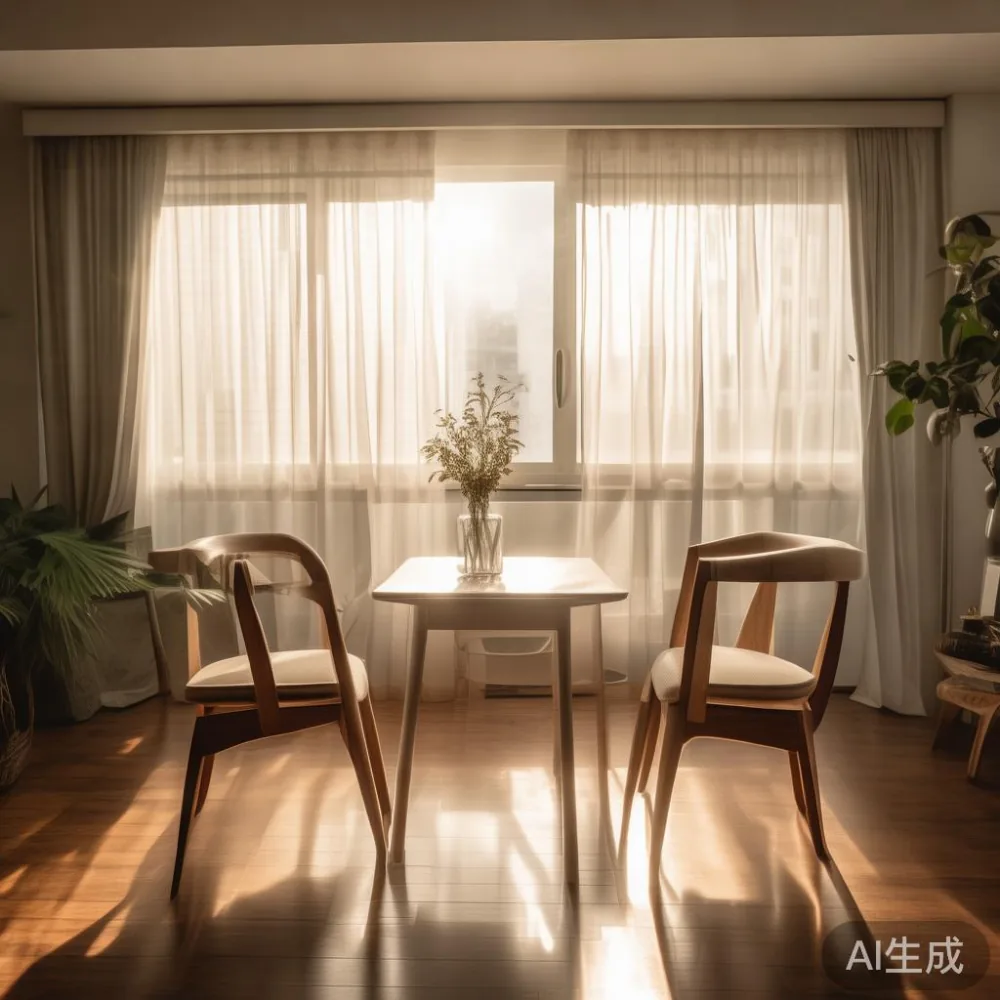
Chair width matters as much as table length. A slim dining chair of about 42–48 cm across the back can be tucked beneath a table with less visual noise than a broad upholstered seat. Seat height should generally match the table apron: 44–47 cm is suitable for many dining tables. The finished seat-to-table gap should be around 25–30 cm, so measure before ordering rather than relying on showroom impressions.
Measure the route from the lift to the front door as well. A chair box wider than 70 cm may struggle through an older HDB corridor, while a condensed package below 65 cm can be easier to handle. Check the building’s lift dimensions and turning space too. A chair that looks graceful in a showroom can become awkward when it has to pass a corridor bend or fit into a compact utility area.
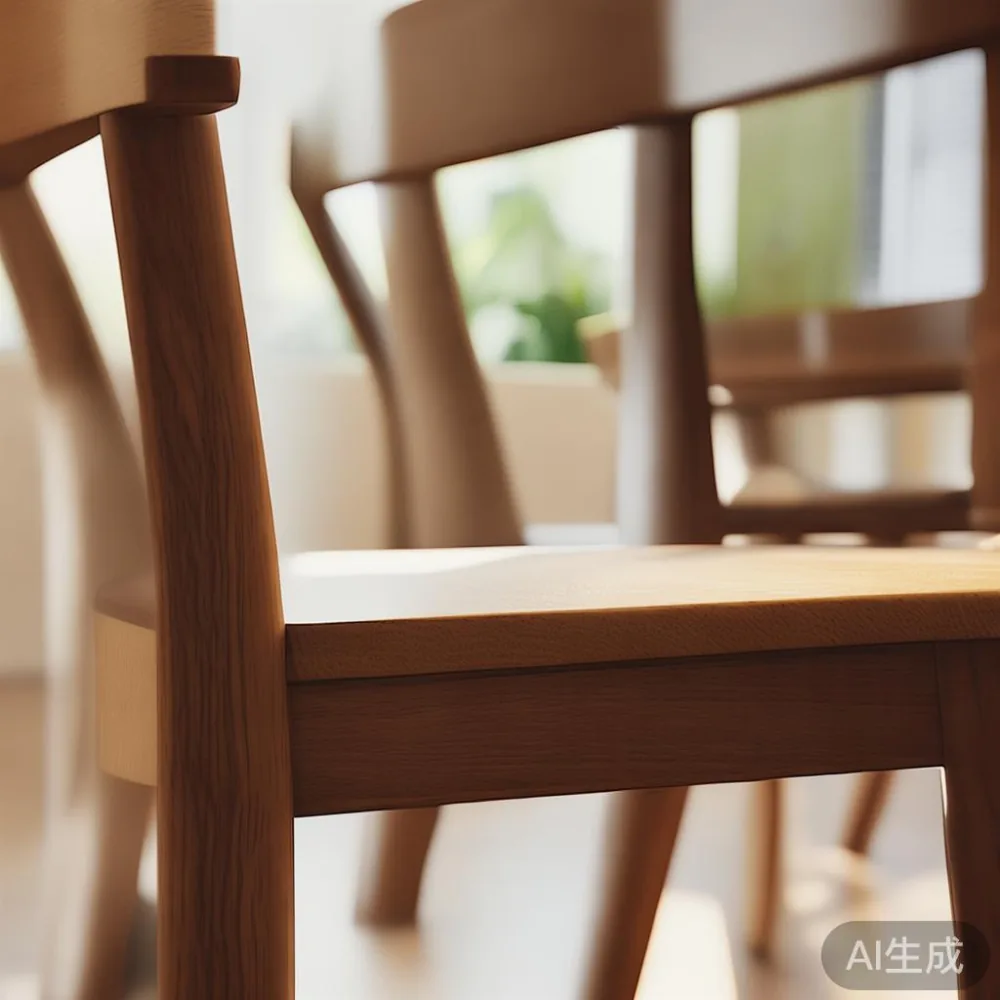
Solid wood gives small dining chairs a useful combination of strength and visual lightness. Frames made from solid oak, ash, or beech can support daily use without looking heavy when the profile is restrained. MIDHILL’s dining chairs use solid wood constructions selected for stability and a refined finish, with a 10-year structural warranty for added reassurance. The collection also reflects French light luxury, where pale timber, gentle curves, and restrained detailing create an airy rather than ornate effect.
Which dining table shape works best in a narrow HDB dining zone?
A rectangular table of 120 cm by 70 cm can seat four people in a modest space, but it demands careful placement. Position the long side parallel to the wall or cabinet run, not across the room’s main access path. Leave at least 90 cm from the table edge to a wall on chair-pulling sides. Where a corridor passes behind seated diners, 100–110 cm would be more practical.
A round table of 90–100 cm diameter often works better in a square dining zone. It removes sharp corners from circulation and makes conversation more balanced. Four dining chairs around a 100 cm table can still look uncrowded, provided the room’s minimum usable diameter is about 280 cm. If the available area is closer to 220 cm by 220 cm, a 80–90 cm round table is a sensible compromise.
For an open-plan condo, a round table can separate the kitchen visually without introducing a bulky partition. Place it 90–110 cm from the kitchen counter so the route remains usable, and use one pendant light over the centre rather than several ceiling fixtures. A slim ceiling pendant also gives the dining area a focal point without consuming floor area.
Keep the table finish coordinated with the chairs. Pale oak or warm ash creates continuity, while a light lacquered surface can reflect daylight and make the area appear larger. Because the Singapore climate is humid, specify a moisture-resistant finish and wipe spills promptly with a damp cloth. For product advice, the MIDHILL team can also discuss matching pieces such as a solid wood sofa, bed frame, wardrobe, nightstand, or marble table without requiring the whole apartment to follow one uniform style.
Can slim dining chairs still feel comfortable for everyday meals?
Yes, if the support is designed around the body rather than reduced to a few narrow lines. Look for a seat approximately 40–44 cm wide and 38–42 cm deep, with a gently curved back that supports the lower back. The best balance comes from a seat that is firm enough for meals and soft enough for a 60–90 minute conversation, not an exaggerated cushion that makes the chair look larger than its frame.
Armless dining chairs save the most space. They slide beneath the table more completely and create a continuous visual rhythm around it. Slim backrests, open frames, and tapered legs make the chairs less imposing, but avoid frames so thin that they feel flexing under load. A well-made solid wood chair should remain steady when someone leans back or shifts position.
Upholstery changes the equation. A fabric seat in oatmeal, mist grey, or pale taupe softens the look without requiring a loud pattern. At the same time, pale fabric shows food marks more readily in a busy household. Performance fabric with stain resistance is practical, and removable covers can simplify cleaning. In humid conditions, leave at least 5 cm between the upholstered seat and the table apron when the chair is tucked in, allowing air to circulate.
American light luxury offers another useful route: clean joinery, rounded edges, and neutral upholstery rather than ornate carving. This style works well in Bedok and Tampines interiors because it can sit comfortably beside plain white walls, pale laminates, and warm timber kitchen cabinets. The goal is a room made from a few coherent details, not a crowded display of trends.
What colours and lighting make a compact dining corner feel larger?
Keep the largest visible surfaces pale. A warm off-white wall reflects more light than a deep colour, while light-toned dining chairs keep the lower half of the room visually open. If the dining table has a darker finish, repeat that tone in one small object—such as a low bowl or a narrow picture frame—so the arrangement still feels connected.
Aim for three related colours rather than many contrasting ones. For example, pale oak, warm white, and muted sage can make a 160 cm-wide dining zone feel calm. If your flooring is cool grey stone, warm timber dining chairs and oatmeal textiles provide a measured contrast. Small round coasters add pattern without the visual weight of a large table runner.
Lighting should be layered but compact. One pendant centred 70–80 cm above the table creates a clear focal point. Use a shade around 25–35 cm wide for a 90 cm table, or 35–45 cm for a 120 cm table. Warm light at approximately 2700–3000K flatters timber and skin tones. If the dining zone lacks natural light, add one wall light at seated eye level and keep the ceiling flush to the slab simple.
Mirrors can assist, but placement matters more than size. A narrow mirror on a perpendicular wall can borrow depth from the living room. Avoid fixing it directly opposite a bright window if reflected glare is an issue. A 40–50 cm-wide framed mirror beside the dining area is often enough to introduce reflection without making the wall feel busy.
How do you keep furniture from blocking HDB and condo access routes?
Sketch the room at actual scale on graph paper with a 1 cm grid. Mark the door swing, kitchen opening, balcony door, lift-entry direction, and any corridor bend. Then place the dining table and chairs as movable shapes rather than as a vague rectangle. This reveals whether a chair can be pulled out without obstructing the main path.
Maintain a primary route of at least 80–90 cm where possible. Secondary routes may narrow to 70 cm, but a continuous 60 cm passage is difficult with bags, laundry, or a trolley. Dining chairs should not remain permanently angled into the passage. When the table is not in use, push the dining chairs fully under it or store two slim pieces elsewhere.
For condo delivery days, check the loading bay, parking approach, lift dimensions, and reservation rules with the management office before furniture arrives. Confirm the item’s assembled and boxed dimensions, not merely its product dimensions. If a dining chair has a detachable back or legs, the package may fit through a tight lift more easily. Keep protective wrapping on until the piece reaches the room to prevent scratches.
Budget for local delivery and installation rather than assuming every HDB lift is free. A two-person delivery to a high floor may cost from SGD 80 to SGD 160, with additional service depending on the lift and access conditions. Ask for the exact quotation, including carrying charges and any stairs. This level of planning matters because a beautiful chair is not useful if it has to be abandoned in the corridor.
Can I mix light-luxury pieces without making a small flat look crowded?
Yes. Limit each zone to one dominant material, one supporting colour, and a few small accents. In the dining area, solid timber dining chairs can be the dominant material, with a pale wall and one upholstered element. If a marble table occupies another part of the apartment, its veining will naturally attract attention, so keep nearby dining pieces quieter rather than adding another patterned focal point.
For broader planning, it helps to understand how to choose European wardrobe, how a European bed vs Mid-century modern bed differs in proportion, and what the best Nordic bed for 2026 might mean for a compact bedroom. Those are bedroom decisions, but the same visual rules carry through the home: clear circulation, modest scale, and material coherence. A Minimalist for guest room scheme can also share the dining area’s pale palette without making either space feel anonymous.
French for small living room searches often produce layered schemes, yet a restrained apartment needs fewer layers. Use one full-length curtain on a slim track, two coordinated dining chair finishes, and a single sideboard if there is 90–110 cm of free wall space. For anyone browsing for sale Minimalist furniture listings, check every dimension and delivery term before treating a low price as the deciding factor.
For project specifications or cross-category questions, contact MIDHILL at +86 188 2788 2512. Founded in 2008 and exporting to more than 15 countries, the company has practical experience with international packaging and furniture production. The 10-year structural warranty, lifetime refinishing service, 14-day returns, and free shipping over US$350 are useful points to verify against your project, including GST and delivery arrangements for Singapore. Clarify the exchange rate, local taxes, lead time, and lift-access terms before placing an order.
What should I check before ordering dining chairs?
Measure the table underside, the room, and the delivery route. Then check the chair list in a fixed sequence. Confirm the width, depth, seat height, and the amount of space required to tuck in. Ask whether the back can be removed for transport, whether assembly tools are included, and whether replacement glides are available for tiled HDB floors.
Ask for a finish sample if colour matching is important. Screens can distort timber tones, and daylight in a Tampines or Punggol home may differ from showroom lighting. For solid wood dining chairs, a clear matte or low-sheen finish is easier to maintain than a highly reflective coating. Confirm that the finish has been applied to all exposed surfaces and that care instructions cover humidity, sunlight, and cleaning.
Review the warranty in writing. A 10-year structural warranty should define what structural failure means and what is excluded, while lifetime refinishing should clarify the scope, return charges, and turnaround time. The 14-day return period is useful only if you understand the condition requirements, so keep the chairs unused and retain the packaging where possible.
Delivery should be scheduled after the building’s moving restrictions are known. Ask for the production time, dispatch estimate, and realistic Singapore arrival window in days rather than relying on a generic shipping range. For orders above US$350, free shipping may apply under the stated terms, but local GST, customs treatment, lift charges, and assembly may still need separate confirmation.
The most successful compact dining arrangement is usually restrained: a 120 cm by 70 cm table or a 90 cm round table, four slim dining chairs, one light, and enough open space to walk through. In a carefully measured Singapore home, fewer pieces can provide more comfort than a crowded collection. The furniture should support meals, conversation, and movement while allowing the apartment to breathe.