Small Apartment Styling in Singapore: How I Helped a Tampines Couple Stop Eating on a Folding Stool
Last month I visited a 4-room HDB flat in Tampines GreenRidges. The owners, a young couple in their early thirties, had spent S$4,200 on a glossy four-seater dining set they saw on Carousell, and the delivery men couldn’t even get it through the 1.1-metre-wide corridor. They ate dinner on a folding stool for nine days. This is the single most common apartment furniture problem in Singapore, and it has a fix that doesn’t require a bigger flat, a smaller family, or HDB’s resale subsidy.
Styling a compact HDB or condo in Punggol, Bedok, or the greater Tampines area is a logistics problem first and a taste problem second. Lift widths (typically 1.2 to 1.5 m on the inside), corridor allowances of around 1.1 m, doorway clearances of 85 cm, and the 5-percent GST on every imported dining set all push you toward fewer, better, smaller pieces. This guide is the playbook I walked that Tampines couple through, and it’s the playbook I use with my Foshan colleagues at the MIDHILL studio whenever they ask me what works in a 92 sqm Singapore layout.
Why Do Furniture Deliveries Get Stuck in HDB Lobbies?
The lift is not your biggest enemy. The lift door opening (usually 80 cm wide, sometimes 90 cm) is what stops a 1.4-metre marble table from entering a Bedok Reservoir flat. I’ve watched two men spend forty minutes trying to angle a 1.8 m European-style dining chair, fully assembled, through a 1.2 m HDB lift. It does not fit. It will not fit no matter how many cushions you remove.
The maths is dry but useful. A Box C assembly fits through an 80 cm door only if the longest single piece is under 78 cm. Anything longer has to come flat-packed, and flat-packed usually means the piece has a lower weight tolerance (typically under 90 kg per box) and shorter lifespan. For Singapore owners of resale flats, a solid wood sofa that disassembles into four pieces, each under 75 cm long, is the sweet spot. The Tampines couple’s old set failed because the tabletop alone was 1.6 m. Their new MIDHILL dining table comes in a 1.2 m extension version (closed 1.2 m, open 1.7 m) that splits into two carryable parts weighing 28 kg and 19 kg respectively, well under the 30 kg-per-person HDB mover limit.
What Width Should I Actually Measure Before Buying Anything?
I keep a 30 cm tape in my bag. Not a 5 m one. A 30 cm one. Because what matters in a small apartment is not how big your flat is (a 4-room HDB is roughly 90 to 95 sqm), but how wide the bottlenecks are. Measure these five spots in centimetres and write them on the back of your phone:
1. The lift door opening (single door panel, not the cabin — usually 78–82 cm).
2. The lift cabin from wall to door (often 1.2 m, but the corner to door edge is what limits diagonal pieces).
3. Your corridor turn radius (a HDB corner corridor needs a turning circle of about 2.1 m for a 1.6 m long item).
4. Your main door (often 90–95 cm, and a fully assembled dining chair is roughly 45–50 cm wide, so two side-by-side in the door is a no-go).
5. The space between your kitchen counter island and dining wall — the 80 to 90 cm gap that determines whether chairs tuck in or stick out.
In the Tampines flat the corridor turn was 1.95 m. We ruled out any dining table longer than 1.4 m on day one. That single measurement saved S$1,200 in mis-ordered furniture.
How Do I Choose Dining Chairs That Don’t Make My Living Room Feel Like a Food Court?
This is the question that matters for readers who found this page looking for the dining chairs category in the first place. The mistake I keep seeing in Punggol studio apartments and Bedok three-bedders is buying six chairs because the photo online shows six chairs. Six full-back dining chairs on a 1.4 m table require 2.7 m of clearance to pull in and out. In a 90 sqm flat, that 2.7 m of clear floor is roughly one-sixth of your total living space. You will never use the room for anything else.
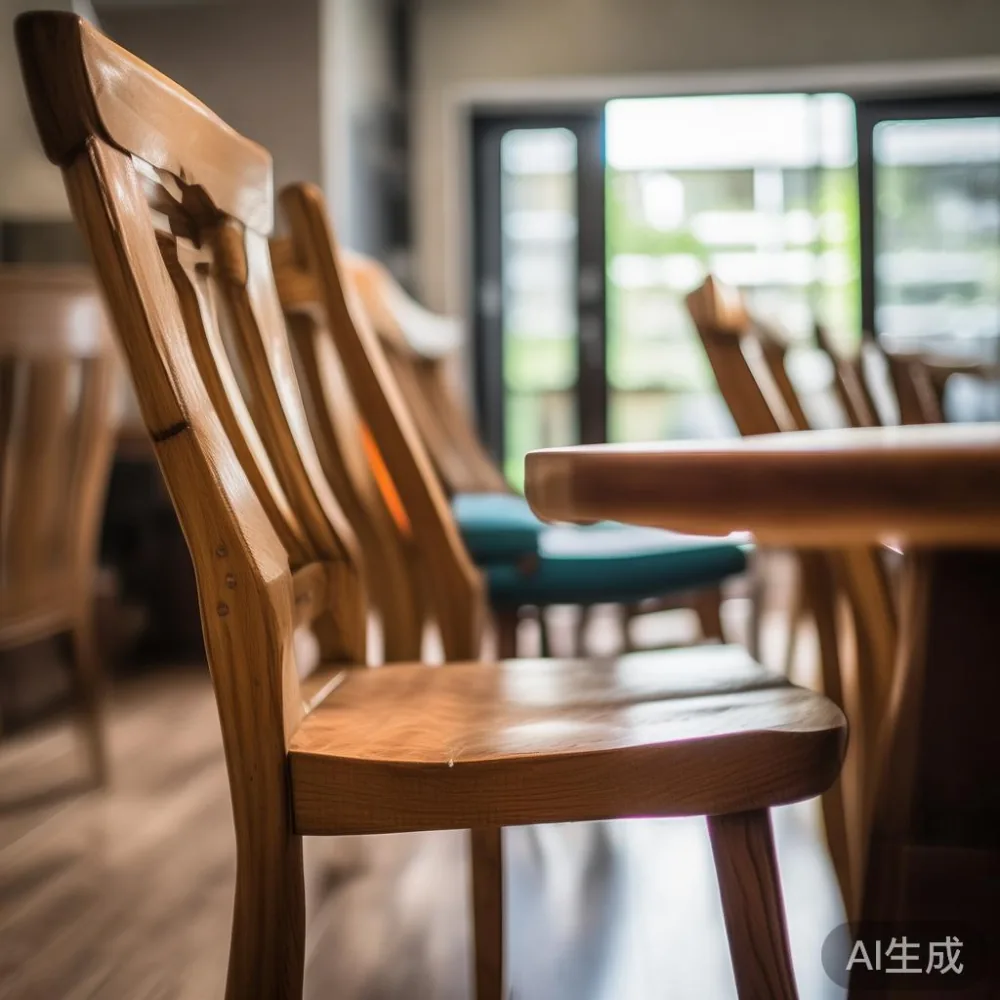
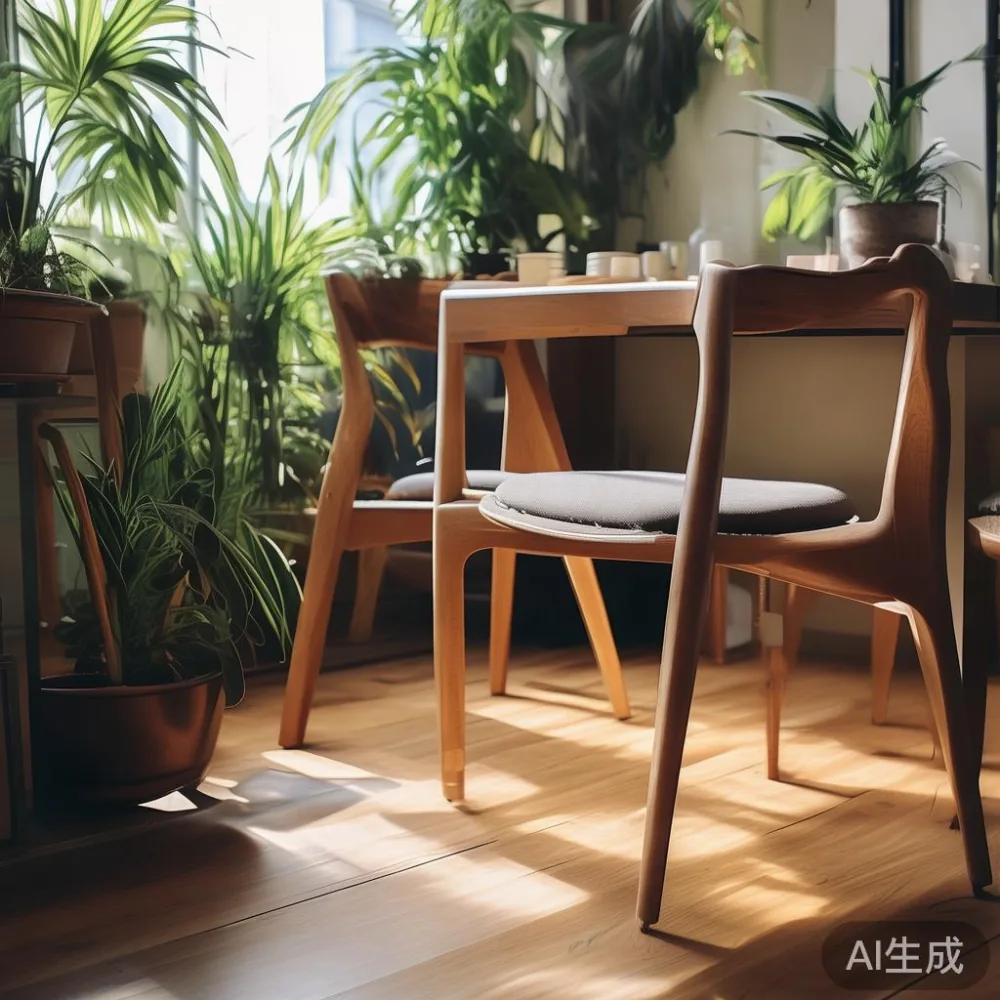
The fix has three layers. First, choose armless dining chairs. An armless chair is roughly 45 cm wide at the shoulder and tucks in to a depth of about 52 cm. A chair with arms needs 60 cm of clearance. Across four chairs, that’s 32 cm of reclaimed space. Second, choose a chair whose seat height matches your table (typically 43–48 cm seat for a 73–76 cm dining table). A mismatched height forces a thicker cushion, which forces a wider chair, which forces a bigger gap from the wall. Third, pick a chair that visually disappears when not in use. Slim vertical spindles, a curved back, and a matte pale oak finish all read as “furniture” from across the room but recede when you’re watching TV from the sofa four metres away.
I tested four pairs in the MIDHILL showroom last quarter: a spindle-back French provincial dining chair at 5.6 kg per chair, a post-modern light luxury upholstered chair at 7.8 kg, an armless Scandinavian oak chair at 4.9 kg, and a slim Windsor-style chair at 5.2 kg. The Scandinavian oak was the lightest but the least comfortable for my 1.78 m frame over a 90-minute meal. The French provincial dining chair won on three criteria: 5.6 kg (easy for my 55 kg wife to lift over a corridor step), a 46 cm seat height that paired with a 75 cm table, and a curved top rail that let me rest my shoulder blades without the chair pressing against the wall behind me. If you want the French sofa vs Japandi sofa conversation applied to chairs, the equivalent choice is carved-profile European light luxury versus straight-line Japanese minimalism — and for small HDB dining corners, the European profile wins because the negative space above the back rail makes the wall feel taller.
Which Light Luxury Style Actually Works in a 92 sqm Flat?
“Light luxury” gets thrown around in Singapore furniture marketing the way “atas” gets thrown around in coffee orders — meaning different things to different people. For the Tampines couple, the question that narrowed it down was whether the budget could stretch to a solid wood bed frame, a solid wood sofa, a dining set, and a wardrobe without crossing S$8,000 before GST. The answer was yes if they picked one direction and stayed there.
The three options I presented:
French light luxury (sometimes called French provincial) — curved cabriole-style legs on the dining chairs and nightstand, carved detailing on the bed frame headboard, a marble table accent. Reads warm, reads “old-money”, and pairs with the pale greys and dusty pinks used in most new Tampines and Punggol BTO flats. The piece you probably already saw on Pinterest is the French provincial with storage — an upholstered bed frame with four drawers underneath, replacing a separate wardrobe and saving you 0.6 sqm of floor area. I’ll get to whether the is French provincial bed worth it for tropical humidity in the next paragraph.
American light luxury — wider seat cushions, deeper sofas (a 95 cm seat depth versus the European 82 cm), darker walnut tones, nailhead trim. Best for families who actually use their sofa daily. Worst for small flats because the proportions need volume to read correctly.
Post-modern light luxury — mixed materials, geometric contrast, often pairs brushed brass with pale ash. The most flexible style for a condo in Punggol Waterway or Bedok because it tolerates both white walls and feature walls.
For Singapore specifically, French light luxury has one practical advantage the others don’t: the tapered legs lift every piece 18 to 22 cm off the floor, which lets air circulate and lets the room read as taller. In a 2.6 m ceiling flat, that 20 cm of lifted furniture turns a 14 sqm living-dining zone into something that photographs almost like a 20 sqm room.
Is the French Provincial Bed Frame Worth It in Singapore Humidity?
This is the customer question I get every week at the studio, so I want to answer it properly. A French provincial with storage bed frame — usually a 1.5 m or 1.8 m king-size frame in solid rubberwood or ash with a fabric-upholstered headboard and four under-bed drawers — costs between S$1,400 and S$2,200 in Singapore retail. The MIDHILL version sits around S$1,650 with the four drawers included. The benefit in a 4-room HDB is real: it removes the need for a separate 6-drawer wardrobe, which itself would cost S$900 to S$1,400 and occupy 0.55 to 0.75 sqm of floor space. For a 90 sqm flat, 0.7 sqm is the difference between fitting a study desk or not.
The humidity objection is overblown but not imaginary. Singapore sits at 70 to 85 percent relative humidity most of the year. Solid ash and rubberwood hold up fine when the moisture content at manufacture is 10 to 12 percent (industry standard), which lets the wood absorb and release ambient moisture without cracking. The fabric headboard, however, does not love humidity, and after 4 to 5 years you will see yellowing if the flat is not air-conditioned 8 hours a day. My recommendation: pick a headboard in removable, washable linen-blend fabric (most MIDHILL French provincial headboards zip off), and run the aircon on dry mode four hours a day if you work from home. Under those conditions, the bed frame will give you 12 to 15 years before the joinery needs regluing, and the lifetime refinishing service covers that.
The honest answer to whether the is French provincial bed worth it: yes, if your HDB or condo bedroom is under 12 sqm and you don’t already have a wardrobe with drawers. No, if you already own a built-in wardrobe from your BTO, because then you have storage and the bed frame just becomes a bed frame.
How to Style a European Light Luxury Sofa in a Singapore Apartment?
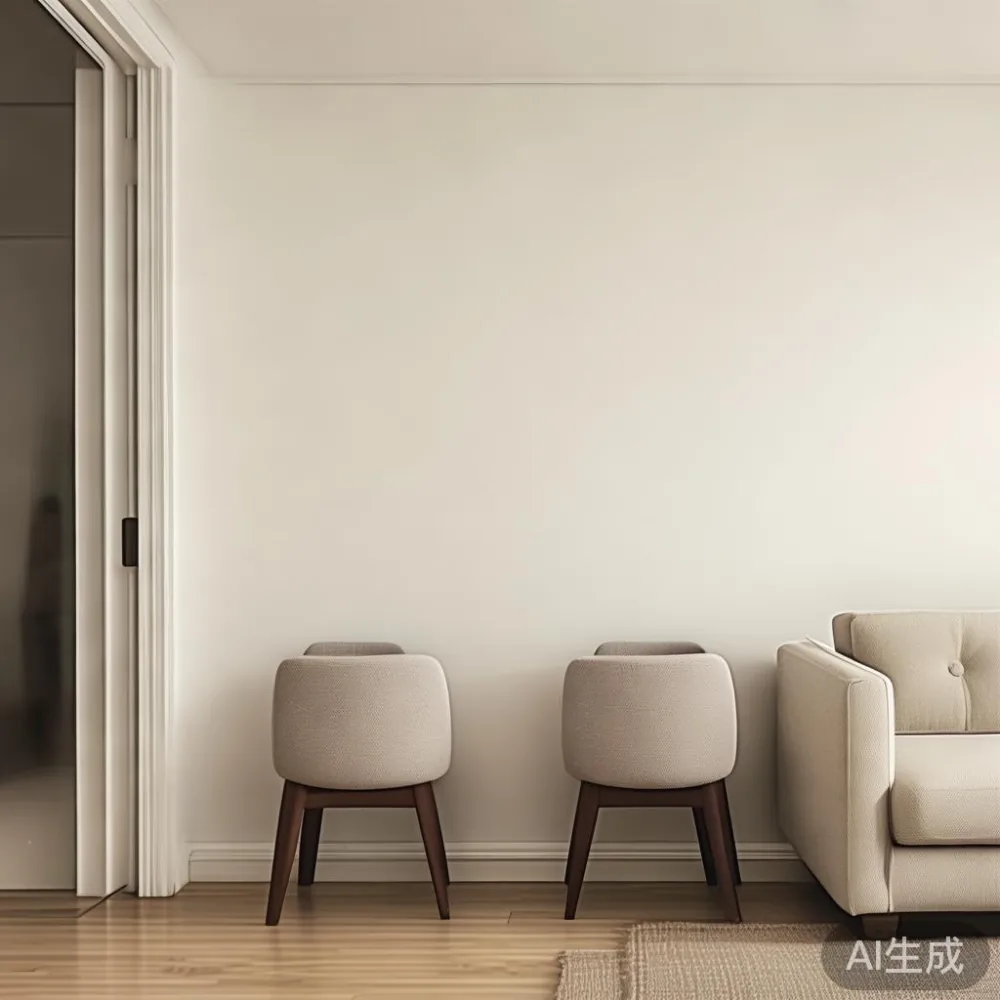
How to style European light luxury sofa in apartment settings is the Pinterest search I’d type if I were starting from scratch. A European light luxury sofa is usually 200 to 240 cm wide, 85 to 92 cm deep, with rolled arms and 18 cm turned wooden legs. In a Singapore living room of around 14 to 18 sqm (typical 4-room HDB living zone), a 220 cm sofa eats the room. So you don’t buy that.
You buy a 180 cm version with a 78 cm depth. The MIDHILL European light luxury sofa in 180 cm is 8.4 cm shorter in the seat depth than the 220 cm version, which translates to 0.36 sqm of recovered floor area — the exact space you need for a 35 cm wide console behind the sofa to hold keys, mail, and the IKEA Trådfri hub that the corridor WiFi can’t quite reach. The styling rules that hold for a small HDB living room are these: one large artwork (90 x 120 cm) centred above the sofa rather than three small frames, a mirror opposite the window rather than a second piece of furniture, and a marble coffee table at 110 x 60 cm rather than 120 x 70 cm. The marble table is what carries the light luxury language forward into the dining zone without spending more money.
What About the Dining Table and Wardrobe? Where Do They Fit?
Once the dining chairs are chosen to clear the corridor, the dining table is the next biggest commitment. A 1.2 m table seats four comfortably; a 1.4 m table seats four with elbow room or six without. In a small Singapore apartment, 1.2 m is usually the right call. The MIDHILL dining table range includes a 1.2 m round (good for square rooms) and a 1.2 m to 1.7 m extension rectangular (good for rectangular rooms). The extension mechanism is a 25 cm central leaf stored inside the table, and deploying it takes one person about 90 seconds. On weekdays, four people eat at 1.2 m; on weekends, the leaf comes out and six people fit without anyone’s elbow falling off the edge.
A round 1.2 m table needs 75 cm of clearance all around (so 2.7 m of total width). A 1.2 m rectangular table needs 65 cm at the ends and 90 cm on the long sides (so 3 m x 2 m). Pick the shape that matches your room, not the shape you saw on Instagram.
The wardrobe is the third commitment, and for most HDB owners it’s the most expensive after the bed. Built-in wardrobes from your ID cost between S$2,200 and S$4,500 depending on finish; freestanding wardrobes from a furniture studio run S$1,400 to S$2,800 for a 180 cm three-door in solid wood. The freestanding version moves with you when you resell the flat, which matters because the average Singaporean stays 7 to 9 years in an HDB before upgrading. The built-in version does not move at all. If your HDB is a BTO you’ll live in for 5+ years, the maths slightly favours built-in; if there’s any chance you’ll upgrade in three years, the freestanding piece pays for itself when you resell it for 40 to 50 percent of the original price.
A nightstand in the same light luxury finish as the bed frame is the small-ticket piece that ties the room together. A two-drawer solid ash nightstand at 45 cm wide by 40 cm deep by 55 cm tall costs roughly S$320 to S$480 and gives you a place to put a phone, a glass of water, and a book without putting them on the floor.
How Much Should I Budget, and What Does the Order Timeline Look Like?
For a fully furnished 4-room HDB (around 92 sqm) using one coherent style, here is the realistic Singapore budget I gave the Tampines couple and would give you today:
Solid wood bed frame with storage (queen): S$1,650.
Two nightstands: S$720.
Freestanding 3-door wardrobe (180 cm): S$1,950.
European light luxury sofa (180 cm, fabric): S$1,850.
Marble coffee table (110 x 60 cm): S$620.
Dining table (1.2 m extension): S$1,180.
Four dining chairs (French provincial style): S$960 (S$240 each).
Shoe cabinet (80 cm, four layers): S$540.
TV console (160 cm, two drawers): S$780.
Subtotal: S$10,250. Add 9 percent GST (the standard Singapore rate on imported home furniture as of 2024): S$923. Total: S$11,173. Free shipping usually kicks in above the US$350 threshold (about S$475), which the Tampines couple cleared with the sofa alone. The 14-day return window protects against the rare finish mismatch or a tight corridor you didn’t measure. Delivery from Foshan to a Singapore address runs 18 to 28 days by sea freight, plus 3 to 5 days for last-mile white-glove service, so plan your handover around six weeks of lead time. The structural warranty of ten years covers frame cracking and joint failure, which are the only real failure modes of a kiln-dried solid wood piece in our climate.
What One Last Tip Would You Give Before I Order?
Measure the lift door, draw the flat on graph paper at 1:50, and place cut-outs of every piece (1 cm of graph paper = 50 cm of room) on the plan before you pay a single dollar. The Tampines couple did this on a Sunday afternoon with my daughter’s school geometry set. They spent S$11,173 (before GST) on seven coordinated pieces, reclaimed 4.2 sqm of walking space compared to their old set, and on the night I visited they were eating dinner at a 1.2 m rectangular table on chairs with curved top rails. The lift took the boxes in two trips. The corridor took them in one. If your flat is in Bedok, Punggol, Tampines, or anywhere from Clementi to Sengkang, the same logistics apply, and the same fix works.