What Drives the Price of Solid Wood Furniture (And Why Dining Chairs Cost What They Do in Singapore)
I learned more about furniture pricing in one afternoon in a Foshan factory than I had in ten years of buying it. A colleague of mine was sourcing dining chairs for his new Tampines HDB, and last month I joined him on a buying trip to Guangdong. We walked through kilns, gluing stations, and assembly lines, and the question that kept nagging at us was deceptively simple: why does one chair cost S$129 and another S$890 when both call themselves solid wood? The answer turned out to be eight specific things, and once you understand them, the price tags on dining chairs, dining tables, bed frames, and wardrobes stop feeling random. Here is the breakdown, told in the same order I learned it on the factory floor.
The Species of Wood: Why Oak Costs More Than Rubberwood
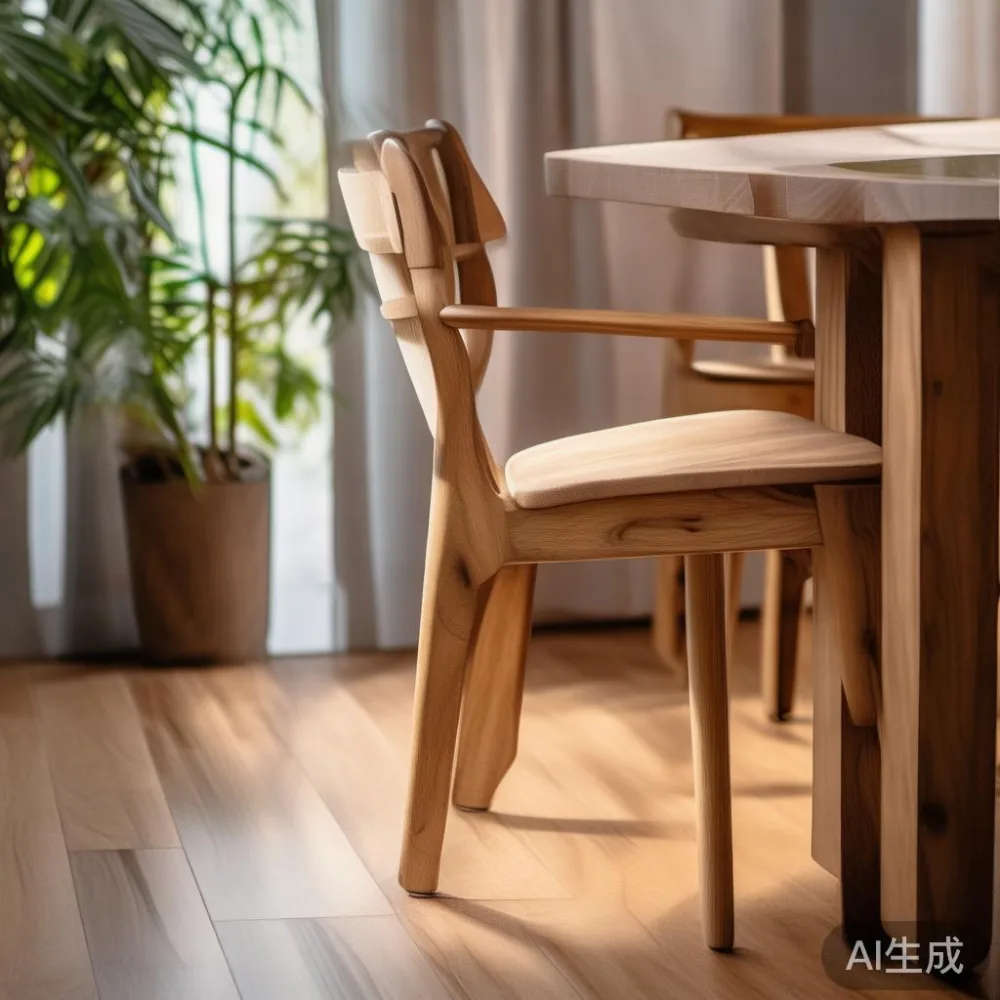
The first number on any furniture invoice is wood, and wood price is driven almost entirely by species. Rubberwood (also called parawood) is a byproduct of latex production in Thailand and Malaysia, so it grows fast, is harvested young (around 25 years), and lands in Singapore wholesale at roughly S$420–S$600 per cubic metre. North American white oak, by contrast, takes 60–80 years to mature and trades at S$3,800–S$4,500 per cubic metre once FSC-certified. That 6–8× raw material gap flows directly into the chair you sit on at your Punggol kitchen counter. Mid-grade Chinese ash sits comfortably in the middle at around S$1,600–S$2,100 per cubic metre and is what most exports from Foshan use for value-tier pieces.
There is also a grading layer most shoppers never see. A1 grade timber has tight, even grain and minimal knots — typically 70–80% of a usable board. A2 grade allows small sound knots and short grain runs, dropping yield to 50–60%. Common grade, which is what makes "cheap solid wood" cheap, can fall to 35% yield, meaning 65% of the board ends up as offcuts. When a dining chair made from 1.2 kg of net white oak is priced at S$280, the math actually works. When the same chair is priced at S$89 and advertised as "solid oak," something is off — usually the species, the grade, or the "solid" claim itself.
How Thick the Wood Is, and Whether It Runs All the Way Through
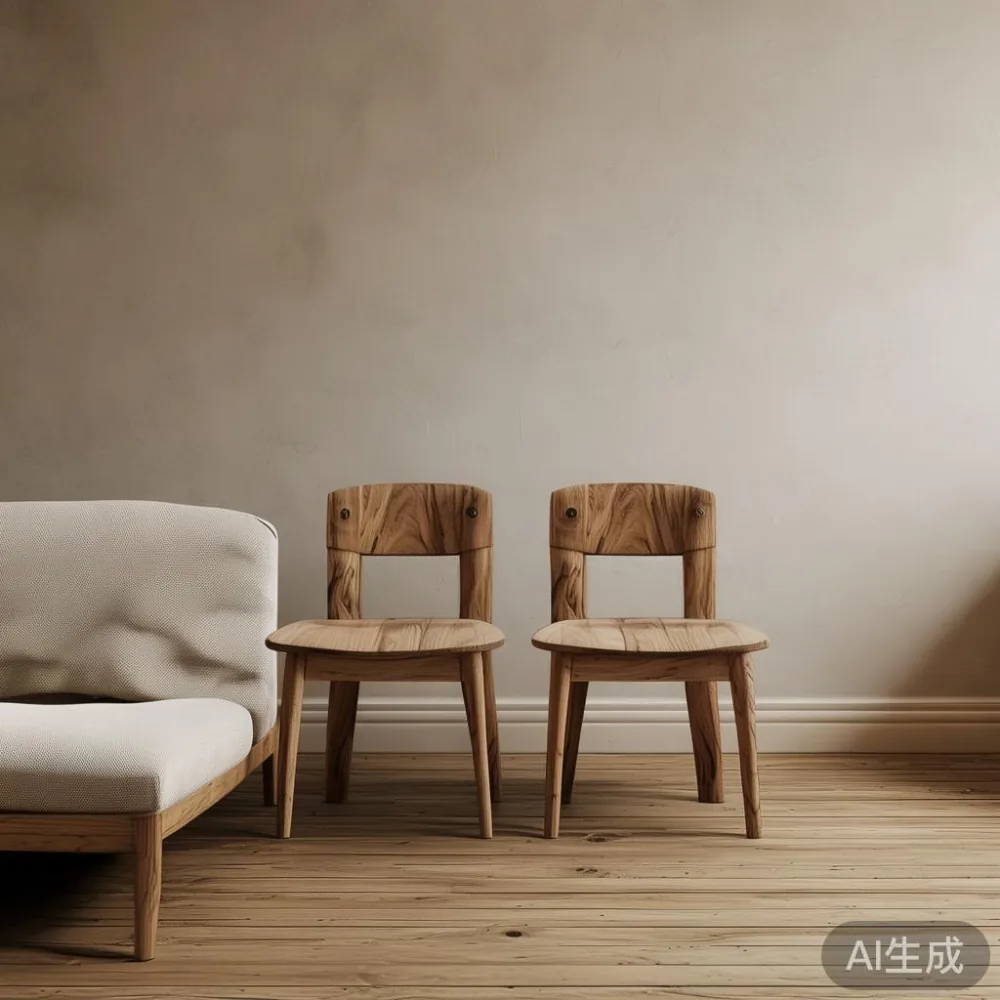
Thickness sounds boring until you calculate it. A dining chair seat base made from 18 mm oak uses about 0.009 cubic metres of timber; the same seat in 25 mm oak uses 0.0124 cubic metres — a 38% jump in raw wood for one component. Add the legs (typically 35–45 mm square stock), the backrest spindles (25–32 mm), and the stretchers, and a single chair can swallow 0.05–0.08 cubic metres of solid stock. That is why a six-chair set using thicker cut parts can jump the material cost by S$180–S$260 versus a thinner counterpart, even with the identical species.
The bigger honesty test is through-tenon versus dowel-and-glue. Traditional Chinese export workshops, including the kind that supply brands like MIDHILL with their dining chairs and matching dining tables, still cut mortise-and-tenon joints by CNC and lock them with hide glue or water-resistant PVA. A chair built that way uses 15–20% more wood per joint than a doweled one, but it can be re-glued and refinished decades later. Last month in the Foshan workshop I watched a craftsman tap a through-tenon into a 38 mm leg with a wooden mallet — three precise strikes, no screws visible on the stretcher. That joint alone adds roughly S$14–S$22 of labour per chair.
The Finish: Lacquer, Oil, Wax, and Why Each Adds a Different Number
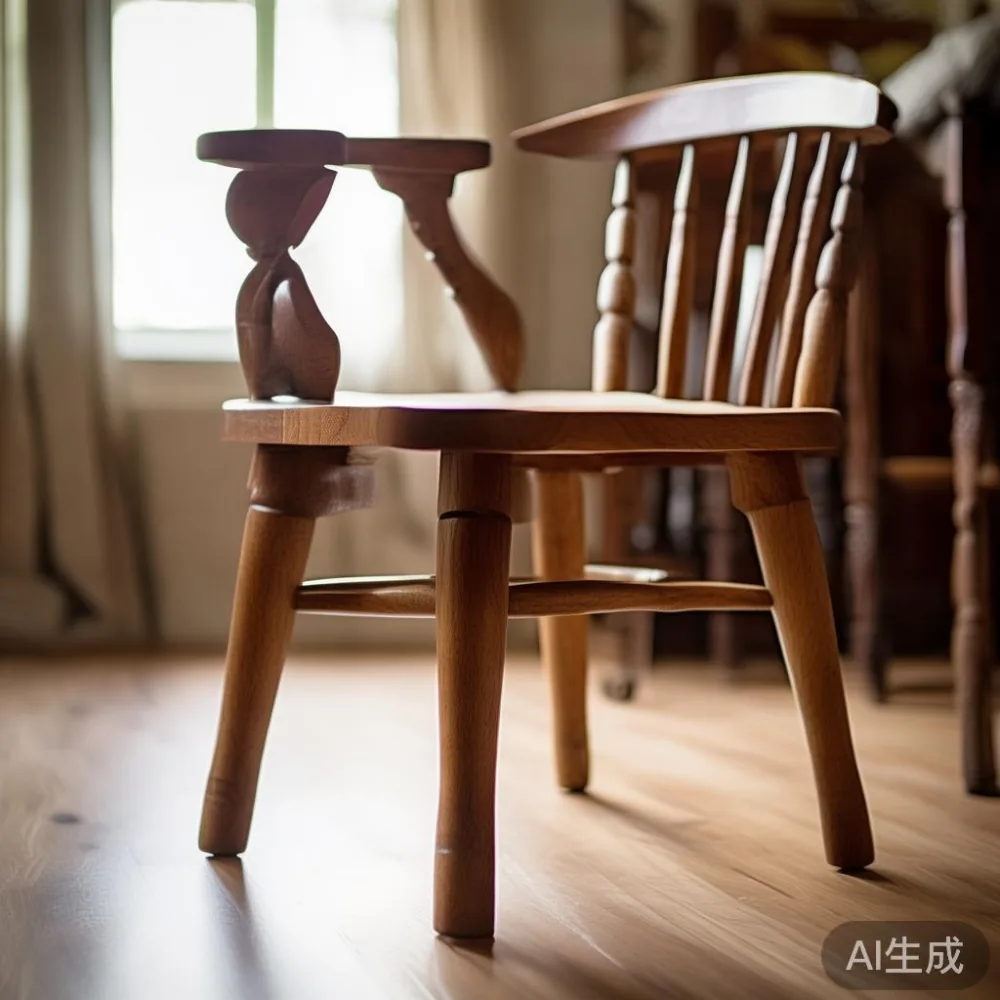
Finish is where sofas, nightstands, wardrobes, and chairs all share the same hidden cost curve. A basic NC (nitrocellulose) lacquer spray line applies three coats and sands between each, totalling 0.2–0.3 kg of finish per square metre and adding about S$22–S$35 per chair in materials plus labour. A conversion varnish (acid-catalysed) finish, the kind you find on American light luxury dining tables and bed frames, uses a two-part chemical system that dries harder and resists ring marks from curry oil or red wine — common stains in a Bedok HDB kitchen. Conversion varnish adds roughly S$55–S$85 per dining chair but lasts 8–12 years before needing refinishing.
Hardwax oil, popular on European oak pieces, penetrates 0.5–1.5 mm into the grain and gives a matte, tactile surface that ages like leather. It costs S$40–S$70 per chair in oil and labour, and a 50 ml touch-up bottle for home use sells for around S$18. For households wanting something close to French light luxury in tone — soft, slightly chalky, with the wood still readable through the colour — hardwax oil is usually what creates that effect. Glossy piano-black lacquer, the post-modern light luxury finish you see on nightstands and marble-top coffee tables, is the most expensive at S$90–S$140 per piece because it requires 7–9 coats, dust-free rooms, and 400-grit wet sanding between every layer.
Hardware, Joinery, and the Hidden Steel Inside
Solid wood dining chairs rarely contain much hardware, but dining tables, bed frames, and wardrobes do — and that hardware is usually metal. Cold-rolled steel drawer slides rated for 45 kg cycles cost S$4–S$9 per pair; soft-close hydraulic hinges run S$3–S$6 each; and a five-piece connector set for a king-size bed frame adds S$18–S$32. A four-door wardrobe with six drawers and slow-close hinges easily carries S$220–S$340 of metal hardware alone, before a single hinge cup is fitted to a wooden panel.
Joinery consumables also add up. A single 250 ml bottle of Titebond III or equivalent water-resistant PVA covers roughly 40 chair joints, at a bottle cost of S$14–S$18. Stainless steel screws, necessary on bed frame centre rails and wardrobe back panels, are S$0.08–S$0.22 each, and a king bed typically needs 32–48 of them. None of these numbers feel large in isolation, but a dining chair uses 1,800–2,400 individual components in its full bill of materials when you count dowels, biscuits, glue, felt pads, and packaging. Multiply by six chairs, add a dining table that needs its own hardware pack, and a S$180 "accessories overhead" is realistic on a 6-seater set.
What Is the Difference Between American King Bed and Modern Furniture?
American king and Asian/SG king are actually different sizes — American king is 76 × 80 inches (193 × 203 cm), while the mattress Singapore retailers call "king" is usually 183 × 190 cm — and American light luxury bed frames are typically built for that larger 203 cm length, with internal slats running the full span and a centre support leg rated for 350–450 kg of dynamic load.
The "modern" part matters too. Modern furniture, including post-modern light luxury silhouettes, deliberately exposes joinery rather than hiding it: through-tenons on bed posts, finger-pull channels rather than knobs on wardrobes, and 12–18 mm floating gaps between drawer fronts and carcases that require extremely precise CNC tolerance (within ±0.3 mm). Older American traditional bed frames often use 6–9 mm overlay doors and routed mouldings that forgive ±1.5 mm of slop. That tolerance gap is part of why modern pieces sometimes cost more even when the wood weight is identical — tighter tolerance means more rejected parts, more setup time on the CNC, and slower cycle times per piece.
For a first-home buyer looking at a post-modern king bed for first home ownership, the practical takeaway is to check whether the listed dimensions are 183 × 190 cm (SG king) or 193 × 203 cm (US king), and to confirm slat spacing (ideally 35–55 mm) and centre rail presence. Those three numbers decide whether your mattress warranty stays valid and whether the frame quietly carries 350 kg of sleeping family for the next 15 years.
Do I Need to Worry About Getting It Up the HDB Lift?
Yes, and this is one of the few reasons a Singapore buyer should care about packaging dimensions as much as wood species. Most HDB passenger lifts in Tampines, Bedok, and Punggol blocks built between 2008 and 2024 have an internal cabin of approximately 1.6 m deep × 1.4 m wide × 2.3 m high, with a clear door opening around 0.9 m wide. A flat-packed king bed frame in its delivery cartons usually arrives in two boxes of around 215 × 35 × 25 cm each — fine for the lift but tight on a 1.2 m-wide HDB corridor turn. A dining table for six, fully assembled, measures roughly 150–180 cm long and 80–90 cm wide, which will not fit through a 0.9 m door standing upright; it needs to go in on its side, and the box must clear the corridor at an angle.
Reputable Foshan exporters, MIDHILL among them, publish carton dimensions and a fully-assembled weight per piece so you can plan ahead. A solid wood dining table for six typically weighs 38–55 kg; a six-piece dining chair set ships at 26–34 kg in two cartons; a king bed frame lands at 48–62 kg across multiple boxes. None of those are unmanageable, but if your block has a cargo lift with a 1.0 × 1.6 m cabin and a 1.0 m door, get the supplier to confirm the assembled table width before you commit. The cheapest delivery quote on the website is meaningless if the box physically cannot make the turn at your corridor.
GST, Delivery, and Why "Free Shipping Over US$350" Actually Matters in SGD
Since 1 January 2023, Singapore has charged 9% GST on imported goods valued at S$500 or below via the Overseas Vendor Registration regime, and the same 9% applies to higher-value goods at customs. A S$1,200 dining set imported directly attracts S$108 in GST, which the seller usually absorbs into the advertised price or itemises separately. Many Foshan exporters keep dollar-equivalent thresholds — "free shipping over US$350" translates to roughly S$475 at current rates, meaning a single solid wood dining chair above US$350 often ships free, while a six-chair set above that line qualifies for free shipping regardless of weight.
Where buyers get burned is the second-order question: what is the landed cost per cubic metre of shipping? Sea freight from Yantian or Shekou to Singapore runs S$140–S$220 per cubic metre for LCL (less-than-container-load) at current rates, plus a S$45–S$85 destination handling fee. A 6-seat dining set plus a matching dining table typically occupies 0.6–0.9 cubic metres of volume, putting door-to-door shipping at S$140–S$260 before GST. Suppliers who refuse to break out freight separately are usually baking a margin of S$80–S$150 into the line item. Ask, and the answer often knocks 8–15% off the advertised price.
Warranty, Refinishing, and Returns: The Cost You'll Only Feel in Year Five
A 10-year structural warranty is unusually long for solid wood furniture, and most brand-tier Foshan exporters offer it because the underlying construction supports it. Through-tenon joinery, kiln-dried timber at 8–12% moisture content, and stainless or brass fasteners do not fatigue the way particleboard dowel joints do. The piece that costs S$1,800 today should still be solid in 2035. Free lifetime refinishing sounds like a marketing line until you realise what refinishing actually involves: stripping the old finish, sanding to 180-grit, re-oiling or re-lacquering, and reassembling any loosened joints. Valued piece-rate in Singapore, that service runs S$280–S$520 per dining chair and S$420–S$780 for a full dining table — so the lifetime offer can save a serious sum over decades of use.
Returns are the underrated line. A 14-day return window with the seller covering the return freight is meaningful because a dining chair that looks fine in the showroom can arrive with a 2 mm leg wobble or a 4 mm colour variation across a set. Without a return window, you eat the freight and the restocking fee, which together come to S$70–S$160 per chair. With one, the only cost is your time. Multiply that across a six-piece set and the return policy is worth around S$420–S$960 in risk reduction — a number that should logically be subtracted from the sticker price when you compare two offers that look identical on wood species and dimensions.
Putting It Together: The Real Price of One Solid Wood Dining Chair
Take one realistic mid-range dining chair built from Chinese ash, 22 mm seat thickness, through-tenon joinery, conversion varnish finish, and stainless connectors for the stretcher. Material cost: roughly S$52 in timber, S$18 in finish, S$6 in hardware, S$4 in packaging. Labour at Foshan rates for cutting, sanding, assembling, and finishing: around S$38–S$46 per chair. Overhead, QC, and factory margin: S$18–S$28. Freight to Singapore per chair in a six-pack: S$26–S$44. GST, handling, and warranty reserve: S$14–S$22. That puts a fair, unsubsidised chair at roughly S$176–S$218, which lines up neatly with what you see on quality mid-tier brands. Anything priced far below that is cutting on wood thickness, species, finish, or joinery; anything far above is paying for design premium, brand overhead, or a marble-topped accent piece rather than a plain wooden chair.
The same arithmetic applies to a dining table, a bed frame, a wardrobe, or a nightstand — every line item changes, but the eight drivers stay the same. Wood species, thickness, joinery, finish, hardware, logistics, GST, and after-sale cover. Memorise those eight line items and the next time you walk into a showroom in Singapore — whether you're furnishing a 4-room HDB in Tampines, a condo in Punggol, or a landed terrace in Bukit Timah — the price tag stops being a question and starts being a transparent build-up. That single shift is worth the flight to Foshan I took last month.