Humidity in Southeast Asia and Your Dining Chairs: A Solid Wood Owner's Guide
I learned the hard way that Singapore's humidity does not negotiate. Two Aprils ago, in a 9th-floor walk-up along Bedok Reservoir Road, I watched a friend's imported oak dining chairs swell across the joints, the stretchers pinching outward like a fishbone pulled apart. The room had no air-conditioning, only ceiling fans, and the wood had arrived flat-packed from a kiln in a drier province. Within nine weeks, the chairs sat a quarter-inch taller than spec, and two of the seat rails had cracked along the grain. That single afternoon shaped how I now spec, store, and finish every set of solid wood dining chairs I recommend to homeowners in Tampines, Punggol, Toa Payoh, and the rest of this very wet island.
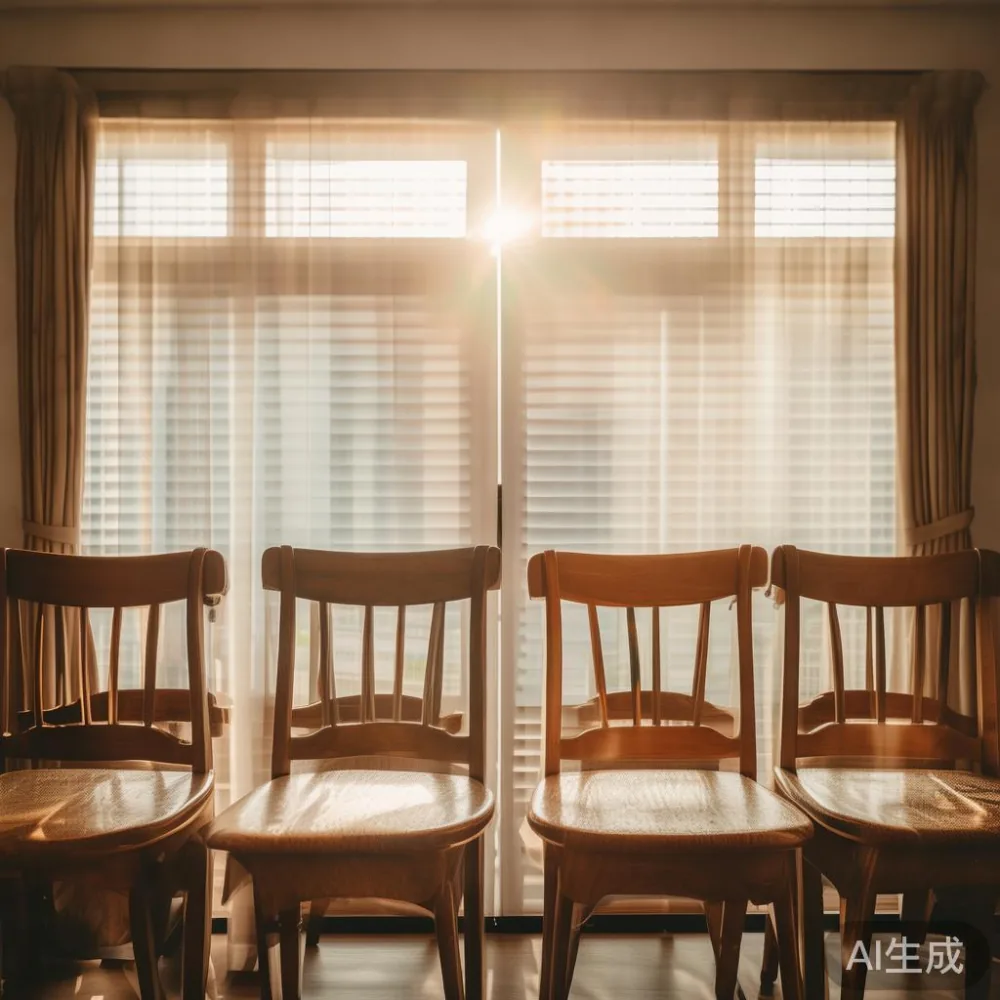
Climate is the silent partner in every solid wood purchase. Average relative humidity across Singapore, Johor Bahru, Kuala Lumpur, and Bangkok sits between 78 and 84 percent for most of the year, dipping only during the brief January-February dry window and again briefly in the southwest monsoon break in June-July. Indoor humidity in an HDB flat without daily air-conditioning rarely drops below 70 percent. Solid wood is hygroscopic: it absorbs and releases moisture to match its surroundings. When you bring a kiln-dried chair from a 45-percent-RH factory into a 78-percent-RH Tampines flat, the chair wants to grow. The question is whether that growth is managed.
Why does my dining table wobble every September?
This is the question I hear most often from owners in Singapore HDB flats, and the answer is almost always humidity. When the Southwest monsoon pulls wet air across the island from late May to September, indoor RH in a non-air-conditioned flat in Punggol or Sengkang can spike to 82-86 percent. Solid wood furniture responds predictably: panels cup, tenons swell in their mortises, and stretchers push outward. A dining table that was perfectly flat in February suddenly rocks by 1-2 mm at one corner in August. The good news is that this movement is rarely structural; the bad news is that ignoring it for two or three seasons can crack a rail or blow a glue joint.
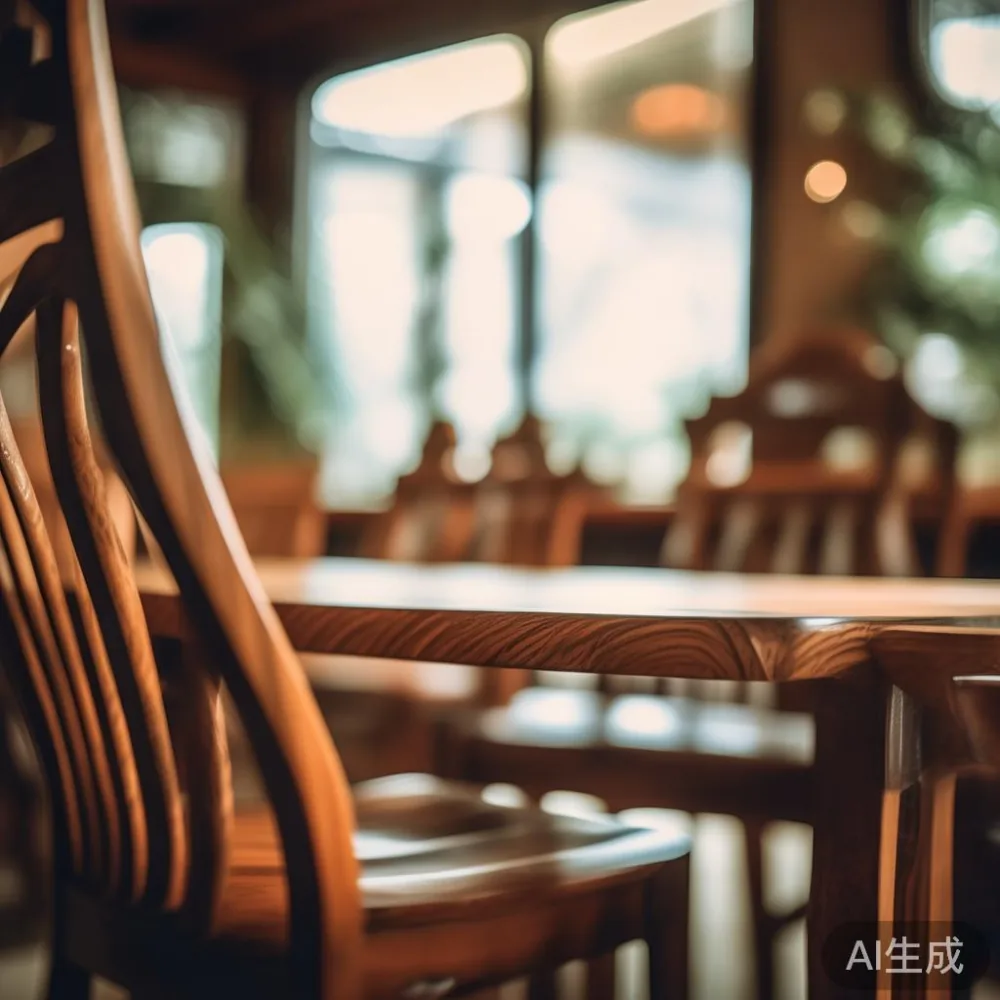
The fix is rarely a repair. The fix is acclimatization. Let your new dining chairs sit in the room they will live in for at least 14 days before you tighten any hardware. Stack them off the floor on cardboard, leave a 10 cm gap on every side so air circulates, and run a dehumidifier set to 55 percent RH for the first month. At MIDHILL, every set of solid wood dining chairs ships with a target moisture content of 8-10 percent, which is what equilibrium looks like at roughly 60 percent indoor RH. That 10 percent number is not a marketing line; it is the value your home needs to feed it.
How much humidity can a real wood dining chair actually take?
Plenty, if the species and construction are right. Teak, white oak, ash, and walnut all behave well in tropical conditions, but each has a sweet spot. Teak, the same species used in your grandmother's Peranakan cabinets, on Jurong boat decks, tolerates 60-80 percent RH indefinitely. White oak, the workhorse of mid-century modern for dining room sets shipped out of Foshan, holds its shape between 45 and 65 percent RH and tolerates Southeast Asian humidity if the drying was done properly. Ash is similar to oak but slightly more reactive. Walnut is the most dimensionally sensitive of the four and will cup if you let your flat climb above 75 percent RH for weeks on end.
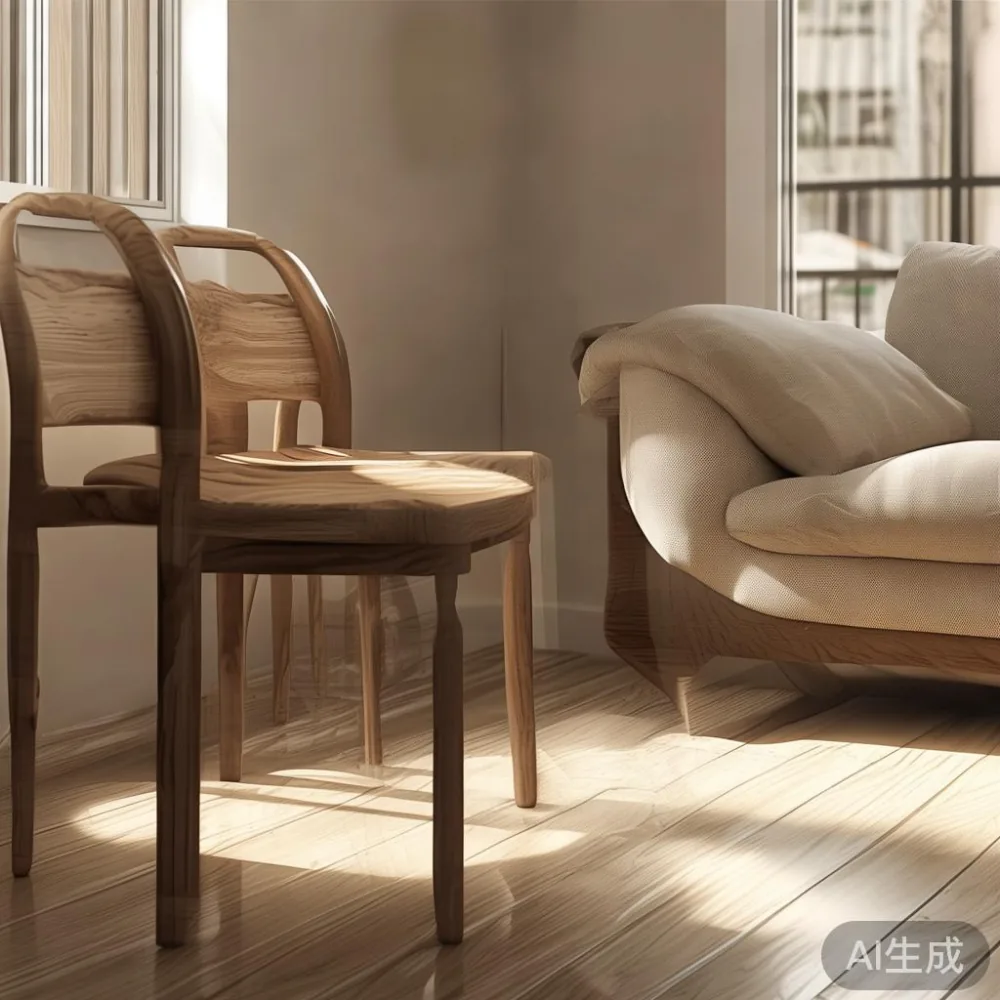
Construction matters as much as species. A solid wood dining chair built with traditional mortise-and-tenon joinery, the same joinery used in the classic American light luxury and French provincial TV console silhouettes, will move as a system. The joints open and close seasonally instead of cracking. A chair held together with staples, hidden brackets, or pocket screws will fight that movement and eventually split. Look for chairs where you can see the joinery at the shoulder, where the seat rail meets the leg. If it is glued and pegged, you have a chair that will outlast your lease.
What should I actually measure before a chair arrives at my HDB flat?
Three numbers, all of them free. First, relative humidity. A SGD 25 thermo-hygrometer from any neighbourhood shop in Bedok or Tampines Mall is enough. Mount it at chair-seat height, not at the ceiling, because humidity pools low. Log the reading for seven days at three times a day: 8 am, 1 pm, 8 pm. Second, temperature. You want a stable 23-26 degrees Celsius with less than 5 degrees of swing per day, which is normal in a flat with daily air-conditioning. Third, the doorway and lift dimensions. Most HDB passenger lifts in blocks built after 2000 measure 1.1 m wide by 1.4 m deep with a 1.95 m ceiling. A fully assembled dining chair that is 48 cm across the seat and 92 cm tall fits comfortably. A pair in a flat-pack box measuring 110 cm by 60 cm by 40 cm also fits, with 10-15 cm to spare.
Older HDB blocks in Queenstown or Tiong Bahru, the walk-ups built between 1965 and 1985, sometimes have lifts only 0.9 m wide. Measure first. If the lift is tight, order flat-pack. A solid wood dining chair flat-pack from MIDHILL ships in a single carton weighing between 14 and 22 kg depending on the model, which is well within Singapore's typical household lift load limit of 800-1000 kg. I have personally carried three such cartons up to a 12th-floor unit in Punggol via the service lift without a booking, which is unusual for furniture deliveries in Singapore.
Do air-conditioned condos really need dehumidifiers for wood furniture?
Yes, and here is why. Air-conditioning cools air but does not, by itself, remove moisture unless the unit has a dedicated dry mode. Many condo units in District 9, 10, and 15 run cool and damp at the same time, with windows closed against afternoon haze and walls condensing against the building's thermal mass. A reading of 24 degrees Celsius and 72 percent RH is comfortable for you and dangerous for a dining chair. The wood will still absorb moisture until it finds equilibrium, and equilibrium at 72 percent RH means a moisture content north of 12 percent, which is where mould spores wake up.
A small dehumidifier rated at 10-12 litres per day, available in Singapore for SGD 220 to SGD 350, will pull the flat down to 55 percent RH and keep your solid wood dining chairs at their target 9-10 percent moisture content. The electricity draw is roughly 0.2 kW per hour, which works out to about SGD 18 per month if you run it 8 hours a day on a timer. That is cheaper than refinishing a chair, and refinishing once a decade is the realistic maintenance load on a well-built piece. For homeowners searching Japandi for small living room ideas, the same logic applies to a low-profile solid wood sofa, a walnut nightstand, or a marble dining table; humidity does not care which room you sit in.
Can Singapore humidity warp a brand-new chair in a single week?
Not if the chair was built right. But I have seen it warp in two. Last month I visited a colleague's new condo in Punggol, a 62 sqm two-bedder on the 18th floor with floor-to-ceiling windows facing the northeast. He had bought dining chairs from a local showroom that displayed them under bright lights and constant air-conditioning. The moment they reached his flat, which had been empty and un-air-conditioned for six weeks while renovations finished, the chairs absorbed 3 percent moisture content in roughly ten days. Two front legs bowed outward by 3 mm, the seat rails twisted, and the chairs rocked on a flat floor. The showroom refused to refund under their 7-day return policy because the chairs were technically not defective, just acclimated to the wrong room.
This is why I now insist on a 14-day in-home acclimatization window for any solid wood dining chairs I recommend, the same window MIDHILL offers alongside its 14-day return policy and free shipping above US$350. A chair that survives two weeks of your actual living conditions, with your actual air-conditioning habits, your actual window-open time, your actual cooking moisture, will survive the next ten years. The extra patience is worth more than the discount you might get by rushing.
How do I refinish or repair a chair that has already reacted?
First, do not sand it. The cupped or bowed shape is almost always recoverable. Move the chair into the driest, most stable room in your flat, ideally an air-conditioned bedroom kept at 22-24 degrees Celsius, and let it rest for 30 to 45 days. Pair this with a dehumidifier set to 50 percent RH. Solid wood is patient; it will give back the water it borrowed. If the chair was well-built, mortise-and-tenon, kiln-dried to 9-10 percent MC, it will return to within 1 mm of its original geometry. If it does not, then you sand.
For surface mould, which appears as a fine white dust on unfinished oak or ash, wipe with a cloth dampened in diluted white vinegar (one part vinegar to four parts water), then dry immediately. Never use bleach on solid wood; it raises the grain and stains the tannins in oak black. For a deeper refresh, MIDHILL ships lifetime refinishing service on qualifying orders, which means you can send the seat or the back slats back to the Foshan workshop every ten years or so and receive them with fresh oil, fresh wax, and tight joints for a small handling fee. That is a different conversation than buying a chair, but it matters when you are spending SGD 380 to SGD 720 per dining chair, the typical landed range for a four-seater set of solid wood dining chairs in Singapore after GST.
What about Japandi sofa pieces and other solid wood furniture in the same flat?
The same rules apply, scaled up. A solid wood sofa frame built in the Japandi idiom, with low arms, walnut or ash, and a removable seat platform, breathes more than a fully upholstered piece because the wood is exposed on the sides, the legs, and often the back rail. When you are researching how to choose Japandi sofa for a Singapore condo, treat the frame the same way you would treat dining chairs: kiln-dried construction, mortise-and-tenon corners, target moisture content 8-10 percent, and a 14-day in-home settle. The cushions will swap out every five to seven years; the frame should last thirty.
A bed frame follows the same logic. A solid wood bed frame in white oak or ash, sitting against an exterior wall in an air-conditioned master bedroom, will move less than a dining table sitting in a sunny, cooking-active kitchen. A wardrobe against an internal wall, well away from the bathroom, is the most stable piece of solid wood in the flat and the easiest to live with for decades. A nightstand next to the bed cycles with the room's daily AC swing and is usually the first piece to show movement at the drawer fronts; budget for one minor adjustment per year. A marble dining table, by contrast, is dimensionally stable but is its own subject: stone reacts to thermal shock, not humidity, so always use coasters and trivets. Each piece has its own conversation with the room.
Which species and styles actually cope with Singapore's climate?
Teak first. Teak is the local standard for a reason: it tolerates the 75-85 percent RH range that defines the Singapore climate and sheds it without splitting. A teak dining chair costs more, usually 20 to 30 percent above oak, but it will look the same in year ten as it did on day one. White oak is the Foshan workhorse and the species behind most American sofa vs Modern sofa comparisons in solid wood; it is the right choice if you want the clean lines of mid-century modern for dining room silhouettes, including tapered legs, exposed joinery, and a low back. Ash behaves like oak and is a touch cheaper in Singapore. Walnut is the most photogenic and the most demanding; reserve it for air-conditioned rooms.
For style, three threads work especially well in HDB and condo interiors. The first is French provincial TV console styling, applied to a dining chair: curved top rails, hand-carved crests, slightly cabriole front legs. The second is American light luxury, which means clean lines, soft upholstery on the seat, and a walnut or oak frame. The third is post-modern light luxury, a bit more playful, often mixing an oak frame with a fabric or leather seat in unexpected colour. All three share the same underlying requirement: kiln-dried solid wood, traditional joinery, and a finish that breathes. Lacquer that seals the wood completely will trap moisture inside and invite mould. Hardwax oil, the finish used on most Foshan-made solid wood chairs, lets the wood move and rebuffs water at the surface.
What does a smart Singapore order look like in practice?
Here is the order I sketched for a couple moving into a four-room HDB flat in Tampines North last quarter. They wanted four solid wood dining chairs to match an existing 1.6 m white oak dining table, plus a matching bench for the corridor that doubles as a guest seat. Total spend came in at SGD 1,420 including 9 percent GST and lift-level delivery. They chose American light luxury dining chairs in white oak with a removable leather seat pad, ordered flat-pack to fit the 1.1 m lift, and added a SGD 35 in-home assembly option. The chairs arrived 12 working days after order confirmation, including sea freight from Foshan and last-mile white-glove delivery to the 14th floor. They stacked the cartons in the dining area with the air-conditioning set to 23 degrees for 16 days before assembly. Six months later, after one full monsoon cycle, the chairs sit flat on the floor with no rocking and no audible creak.
The same approach scales to a full dining room set, a wardrobe for the master bedroom, a nightstand pair, and even a marble dining table if the household prefers stone over wood. The principles do not change: measure your lift, measure your humidity, kiln-dry the wood, give it 14 days to settle, and choose construction over decoration. If you are also browsing rustic for guest room pieces or weighing American sofa vs Modern sofa for the living area, remember that the building envelope is the same and the climate response is the same. Furniture that breathes well in Singapore is furniture that breathes well everywhere in this region, from Johor Bahru to Bangkok to Manila. Your dining chairs will tell you, season after season, whether the maker respected the wood. Listen to them.