Solid Wood vs Veneer Dining Chairs in Singapore: A 5-Year Cost Reality Check
I still remember the afternoon last month when I visited a friend's new BTO in Punggol. She had just moved in and was showing me her dining area, which sits roughly 2.4 metres wide between the kitchen counter and the living room wall. Her set of four dining chairs had started to peel along the seat edges after only 18 months. They were a popular flat-pack brand from a Tampines mall clearance, finished in a walnut-look veneer over engineered board. The total she paid was SGD 280 for the set. She looked at me and said, "I thought I saved money." That sentence is the entire reason I wanted to write this piece.
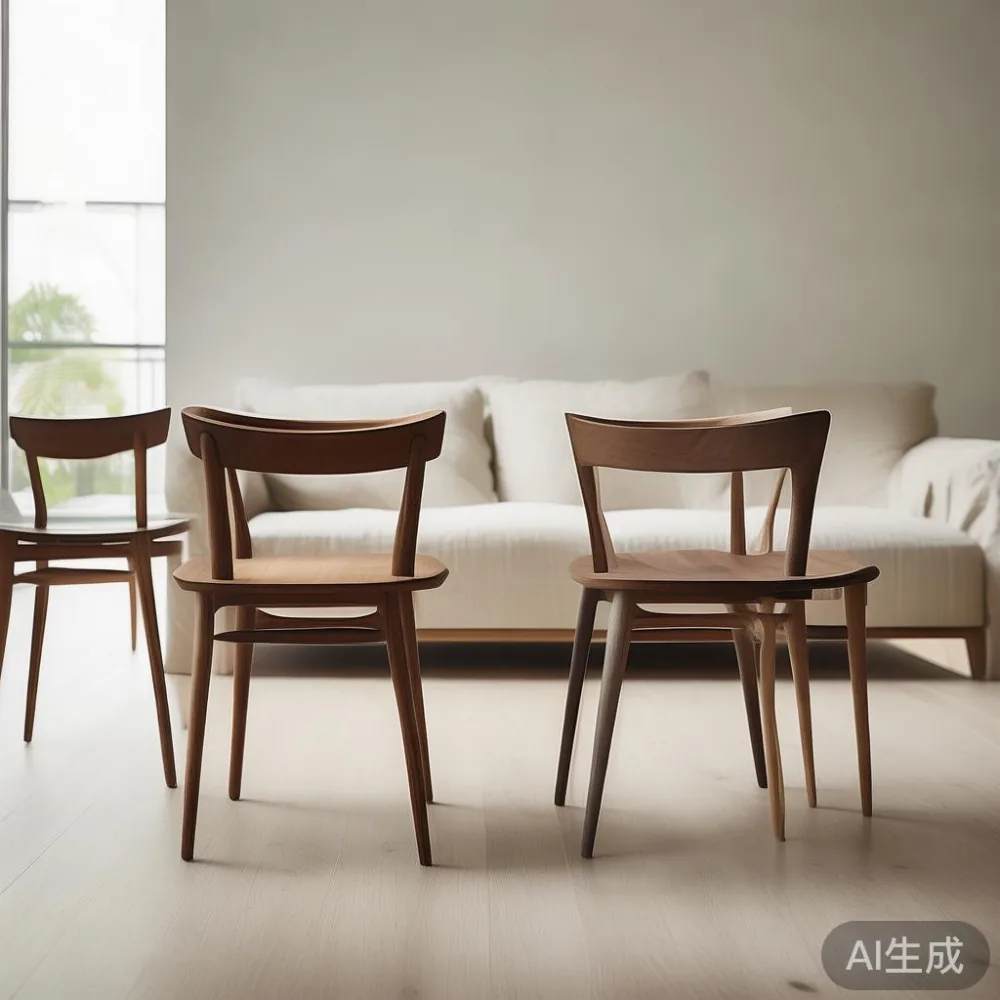
Veneer dining chairs almost always look like the more affordable option at the checkout. In Singapore, a typical four-seater veneer set from a big-box retailer runs between SGD 220 and SGD 550, and you can often walk out of a furniture showroom in Bedok or Jurong with something for around SGD 180 during a sale weekend. Solid wood dining chairs from a maker like MIDHILL, which has been producing solid wood pieces out of Foshan since 2008 and exporting to more than 15 countries, start closer to SGD 160 per chair, or about SGD 640 for a set of four. The sticker shock is real. But sticker price is the worst way to judge furniture. What matters is what the chair costs you across five years of nasi lemak breakfasts, weekday dinners, and weekend gatherings with relatives who always stay one hour longer than expected.
What is the difference between American nightstand and modern furniture?
The difference between American nightstand and modern furniture is that American nightstand pieces follow a traditional, often bulkier silhouette with raised panels, turned legs, and dark stained finishes rooted in 18th and 19th century craftsmanship, whereas modern furniture uses cleaner lines, slimmer profiles, lighter wood tones, and minimalist hardware that suits smaller floor plans like Singapore HDB three-room flats and newer Punggol BTOs.
That distinction matters when you shop for dining chairs, because the same logic applies to whether you choose veneer or solid wood. Traditional flat-pack veneer dining chairs are in effect the "American nightstand" of the seating world: heavier in look, cheaper per unit, and built to a price rather than a lifespan. Solid wood dining chairs in a post-modern light luxury style, by contrast, use cleaner lines, tapered legs, and visible grain patterns that suit the compact proportions of a Singapore condo. The dining chairs you pick should match the visual language of your dining table, your bed frame, your wardrobe, and your nightstand, not fight against them.
How much does a veneer dining chair actually cost in Singapore over 5 years?
Let us run the numbers carefully, because Singapore buyers usually only see the front-end cost. A four-seater veneer dining chair set at SGD 320 sounds cheap until you account for what happens in years 2, 4, and 5.
Year 1 purchase: SGD 320. Year 2 typical repair: chips and peeling on the seat edge, around SGD 60 to SGD 120 for a touch-up kit or a carpentry visit to your Tampines flat. Year 3: one chair usually needs a full re-cushioning or re-glue because the joint where the backrest meets the seat starts to wobble. That runs SGD 80 to SGD 150 per chair, so call it SGD 200 across the set if you catch it early. Year 4: you replace one or two chairs entirely because the others no longer match in colour after sun exposure on the balcony. A single replacement chair in the same discontinued model often runs SGD 120 to SGD 180. By year 5, you have usually replaced the whole set once, which is another SGD 320 to SGD 360. Add GST at 9 percent on each purchase and you are easily looking at SGD 1,150 to SGD 1,400 across five years for a set that started life at SGD 320.
There is also a hidden logistical cost. Singapore HDB corridors are typically 1.2 metres wide and lift cabins range from 1.1 to 1.6 metres deep depending on the block. A flat-pack veneer chair usually fits easily, but a replacement set that arrives in a different box dimension sometimes does not, and that one failed delivery can cost you a SGD 40 redelivery fee or a trip down to the Void Deck with a frustrated delivery crew.
How much does a solid wood dining chair cost in Singapore over 5 years?
Now flip the lens. A set of four solid wood dining chairs from a maker such as MIDHILL, delivered free above a reasonable order threshold, sits between SGD 640 and SGD 960 depending on whether you go with oak, ash, or walnut. With GST, call it SGD 700 to SGD 1,050. That feels like a lot compared to the veneer number. But the five-year picture is different.
Year 1 purchase: SGD 800 for the set, roughly. Year 2: nothing required. The wood has acclimatised to Singapore humidity, which runs 70 to 85 percent most months, and a proper kiln-dried hardwood holds its shape without cracking. Year 3: a light oil rub, perhaps SGD 20 in product and 20 minutes of your Saturday morning. Year 4: still nothing structural. You might tighten the same bolts you tightened in year 1, which is free with an Allen key. Year 5: many owners take advantage of lifetime refinishing offers, which resand and re-oil the chairs for a service fee of around SGD 80 to SGD 150 for the full set. Total five-year cost: roughly SGD 900 to SGD 1,030, depending on whether you refinish or simply live with the patina.
On top of that, solid wood dining chairs hold resale and reuse value. When we did renovation they transferred a set of oak dining chairs from their old Bedok flat to their daughter's new Punggol HDB and used them with a new dining table. The chairs were six years old at the time and still looked correct, because the wood had aged rather than degraded. You cannot do that with a peeled veneer set.
Why does veneer fail faster in Singapore humidity?
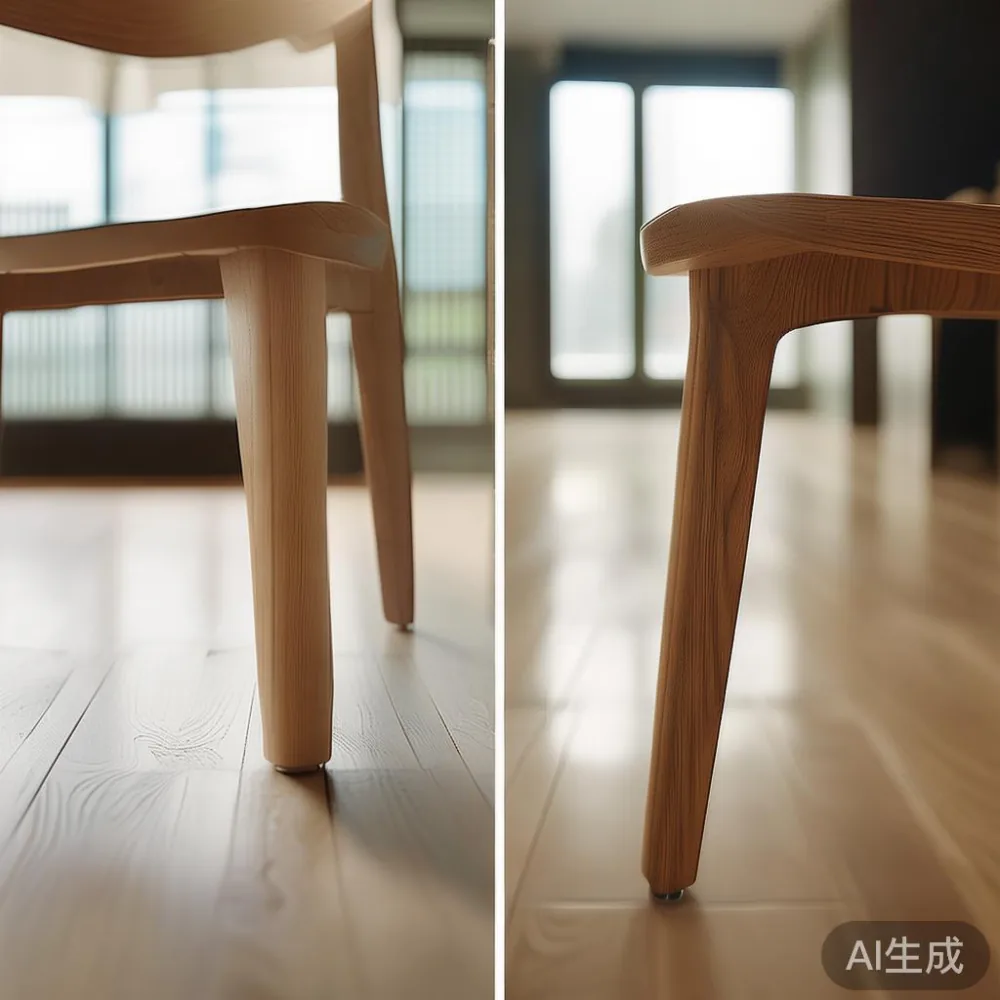
The answer is in the construction. A veneer dining chair is usually a 0.6 to 1.5 millimetre slice of real wood glued onto an engineered board core, often MDF, particle board, or plywood. When the indoor humidity of a Singapore flat swings from 65 percent on a dry-air-con day to 90 percent after an afternoon storm, the wood veneer expands and contracts at one rate and the core substrate expands at another. The glue line takes the stress, and after a few hundred cycles it gives up. You see this first as lifted corners on the dining chairs you pressed on, then as bubbling on the seat, then as full delamination along the curved backrest profile.
Solid wood dining chairs are milled from a single piece or from properly joined boards of the same species. The fibres move together. A good maker will kiln-dry the wood to 8 to 12 percent moisture content before fabrication, which is the safe range for tropical climates. That is the difference between a dining chair that lasts 15 years and one that looks tired by month 18. The same principle applies to solid wood sofas with exposed timber arms, bed frames, wardrobes, and dining tables. The piece either breathes as one piece of material or it fights itself, and the glue always loses.
Is light luxury solid wood worth the upfront premium for a small HDB?
Yes, and here is why the math actually favours solid wood once you factor in space. A Singapore three-room flat dining area is usually around 4 to 6 square metres. A marble table or solid wood dining table in that footprint already sets a certain expectation. Pairing it with veneer dining chairs that peel in 18 months drags the whole room down. French light luxury and American light luxury styles both lean on warm wood tones, slim profiles, and visible grain. A solid wood dining chair in ash or walnut fits that visual language exactly, while a veneer imitation reads as a shortcut.
Post-modern light luxury, which is the current MIDHILL house style, uses tapered cylindrical legs, gently scooped backs, and warm matte finishes that look right against a marble table or a low-slung solid wood sofa in the adjoining living room. If you are already investing SGD 1,800 to SGD 4,000 in a dining table, the chairs should not be the weakest link in the room.
What about warranty, delivery, and the practical Singapore details?
This is where the comparison gets sharper. Most flat-pack veneer retailers in Singapore offer a 1-year warranty on structural integrity and very little on finish wear. A solid wood maker such as MIDHILL provides a 10-year structural warranty on its dining chairs, dining tables, bed frames, wardrobes, and nightstands, plus a lifetime refinishing option that lets you refresh the same chairs in year 8 or year 12 for a service fee rather than a replacement cost.
Delivery in Singapore is also a real factor. A typical HDB lift in a block like those along Tampines Street 21 measures around 1.4 metres deep and 1.1 metres wide with the inner panel, and the doorway is roughly 0.9 metres. A fully assembled solid wood dining chair, with a seat height of 45 centimetres, a back height of 85 centimetres, and a weight of 4.5 to 6 kilograms per chair, fits comfortably through that opening. Many solid wood makers also include free shipping above a reasonable order threshold, which removes a SGD 60 to SGD 120 white-glove fee that local furniture shops often add for stairs or corridor manoeuvring. Returns within 14 days are standard at reputable workshops, which removes the risk of an online purchase that arrives and does not match your floor.
Can I mix solid wood dining chairs with other pieces I already own?
Absolutely, and this is where a lot of Singapore buyers save real money. If you already own a solid wood bed frame in oak, a vanity nightstand in ash, and a marble table in the dining area, adding solid wood dining chairs in the same wood family ties the whole flat together. You can also pair solid wood dining chairs with a darker walnut dining table for a two-tone French light luxury look that hides minor stains from the kids, with a lighter ash set against a smoked oak table for an American light luxury mood, with a matte grey finished chair set near a marble table for a post-modern light luxury room. Your Singapore designers at firms often do exactly this: one anchor piece in marble, the surrounding dining chairs and bed frame in matching solid wood, and a vanity nightstand in a slightly lighter tone for contrast.
The point is not to match everything in a flat. The point is to avoid the weak link. A SGD 320 veneer dining chair set next to a SGD 3,500 marble dining table is the weak link. A SGD 800 solid wood dining chair set next to the same marble table is the right call, and it survives the nasi lemak spills, the humid months, and the move from Bedok to Punggol without a second thought.
So what should a Singapore buyer actually choose?
If you rent a room in a condo for under 24 months and plan to leave the chairs behind, veneer is a defensible choice. The SGD 180 to SGD 320 outlay is reasonable for a short stay. If you own your HDB or have a multi-year horizon, the five-year cost of solid wood dining chairs is genuinely lower than veneer once you add repairs, replacements, and delivery friction. The numbers I shared: SGD 1,150 to SGD 1,400 across five years for veneer, SGD 900 to SGD 1,030 across five years for solid wood. The solid wood path also leaves you with chairs you actually want to keep, which is the part no spreadsheet can price.
One last note from the field. When we tested samples from a two Sengkang BTO and a Bedok resale last month, we sat on six different dining chair styles for 20 minutes each. The three solid wood chairs all stayed comfortable and silent. Two of the three veneer chairs developed a faint creak within 10 minutes, which is the same sound you hear when the glue at the seat joint begins to move. That creak is the chair telling you what year five will sound like. Listen to it before you swipe the card.