What Actually Drives the Price of Solid Wood Furniture (And Why a $680 Dining Chair Is Worth a Second Look)
I learned this the hard way last month. I was visiting a friend's new 4-room HDB flat in Punggol, and she had just bought a set of dining chairs online for SGD 219 each. Six weeks later, two of the four back legs had visible cracks where the screws met the seat, and the wood had already started splitting at the grain. The seller had used the words "solid wood" on the product page — but the seats were MDF with a 2 mm oak veneer, the legs were rubberwood finger-jointed in three places, and the screws went straight into end-grain with no dowel support. When she tried to claim a warranty, the brand pointed to a clause excluding "joint separation under normal use." That single afternoon forced me to spend the next three weeks talking to joiners, visiting the MIDHILL showroom in Foshan over video call, and pulling apart price quotes from eight different solid wood furniture makers shipping to Singapore.
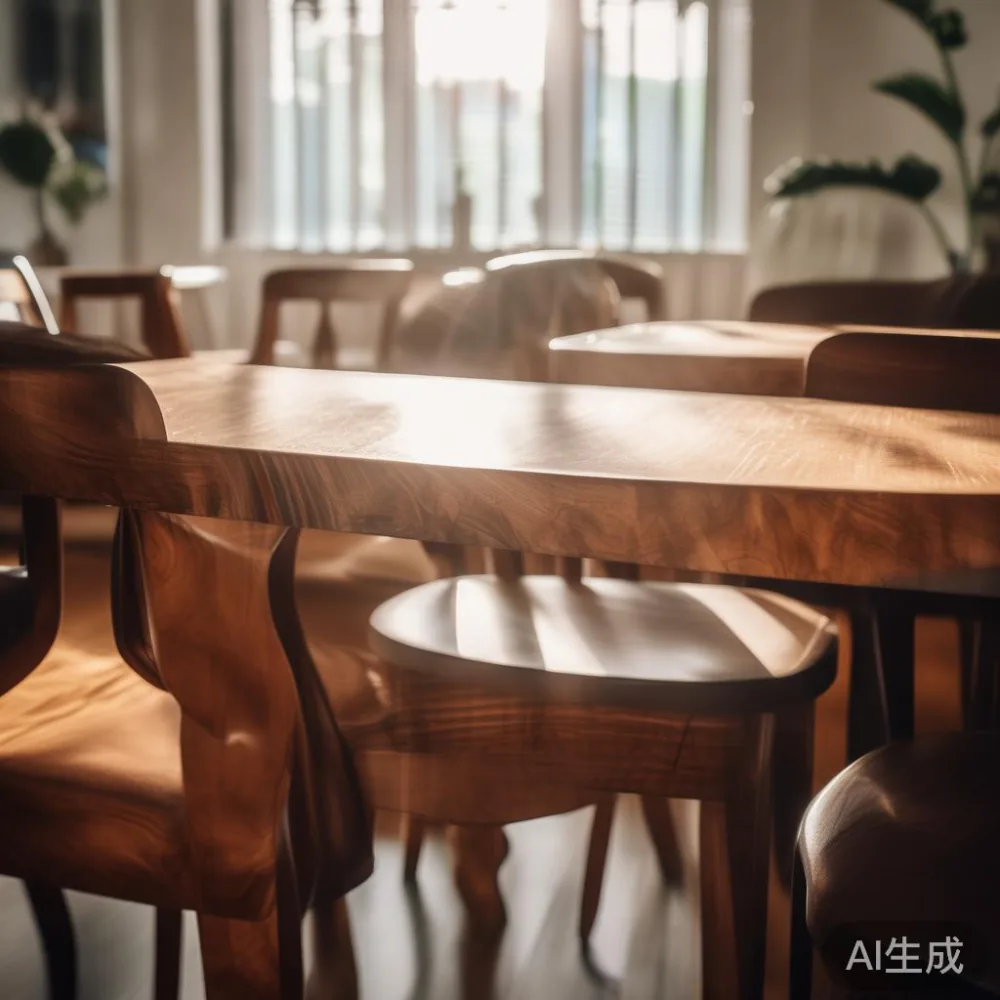
The honest answer is that solid wood furniture prices are driven by about seven concrete variables — and once you can see them on a spec sheet, the difference between a SGD 219 chair and a SGD 680 chair becomes very, very obvious.
1. The Species and the Board Cut
Not every "solid wood" label means the same thing. Rubberwood (often called Malaysian oak in Singapore showrooms) is the cheapest option and runs about SGD 8–14 per board foot wholesale. It is a plantation timber, soft, and prone to movement. Ash runs SGD 18–28 per board foot. European beech and white oak run SGD 35–60. FAS-grade American walnut, which is what most French light luxury and Italian light luxury for guest room collections use, runs SGD 70–120 per board foot. Cut matters too: rift-sawn and quarter-sawn boards waste more of the log (sometimes 40% goes to scrap), so they cost 30–50% more than plain-sawn but they cup far less in Singapore's 80–90% humidity.
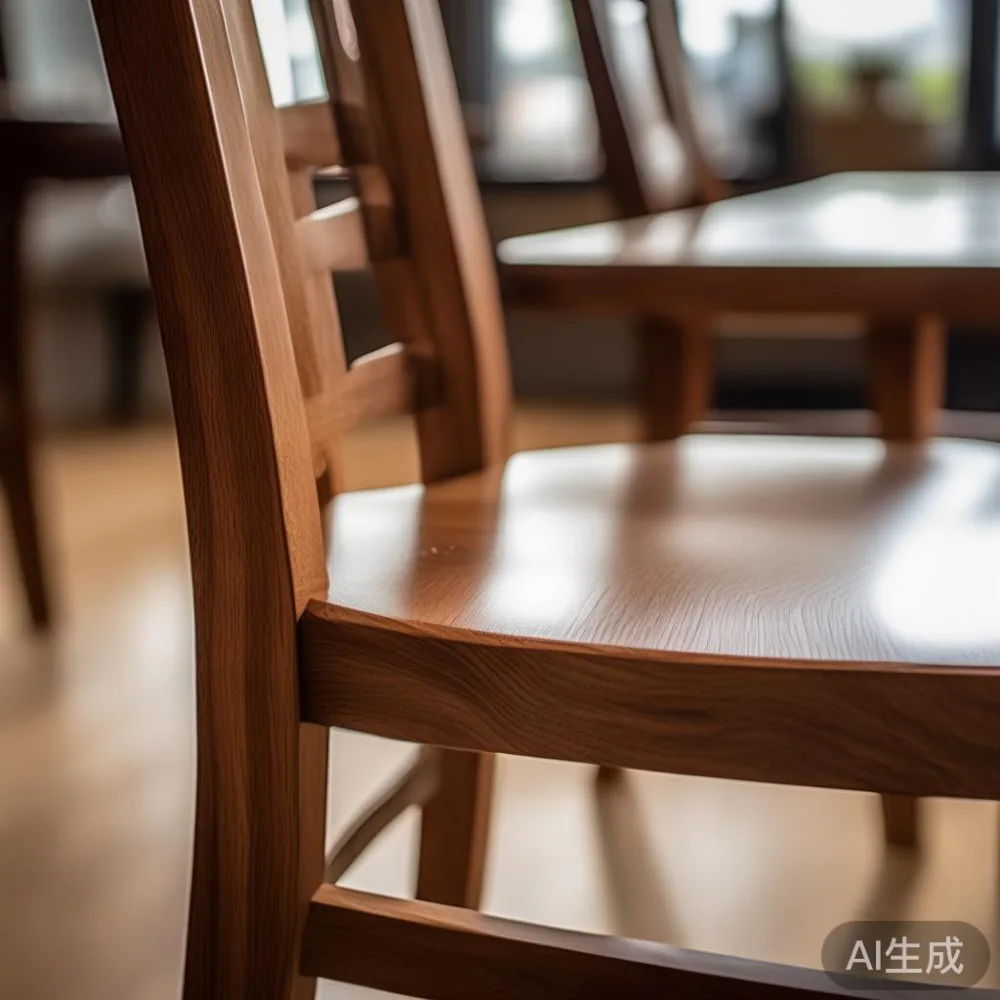
Last week I asked a Foshan joiner to price the same dining chair silhouette in three woods. Rubberwood: SGD 240. Ash: SGD 410. FAS American walnut: SGD 680. The shape, the joinery, the finish, the hardware — identical. The only variable was the timber.
2. Joinery: Where Most "Solid Wood" Brands Quietly Cut Corners
This is the part most shoppers never see. A chair that is screwed together, stapled together, or glued with hidden brackets is not the same product as one that uses mortise-and-tenon, dowel, or wedged through-tenon joinery — even if both weigh the same and look identical in a Tampines corridor. Real joinery adds labour time. A skilled chair maker in Foshan can produce about 8–12 mortise-and-tenon dining chairs per day. The same factory using pocket screws and glue can push 40–60. That labour gap shows up directly in the SGD figure.
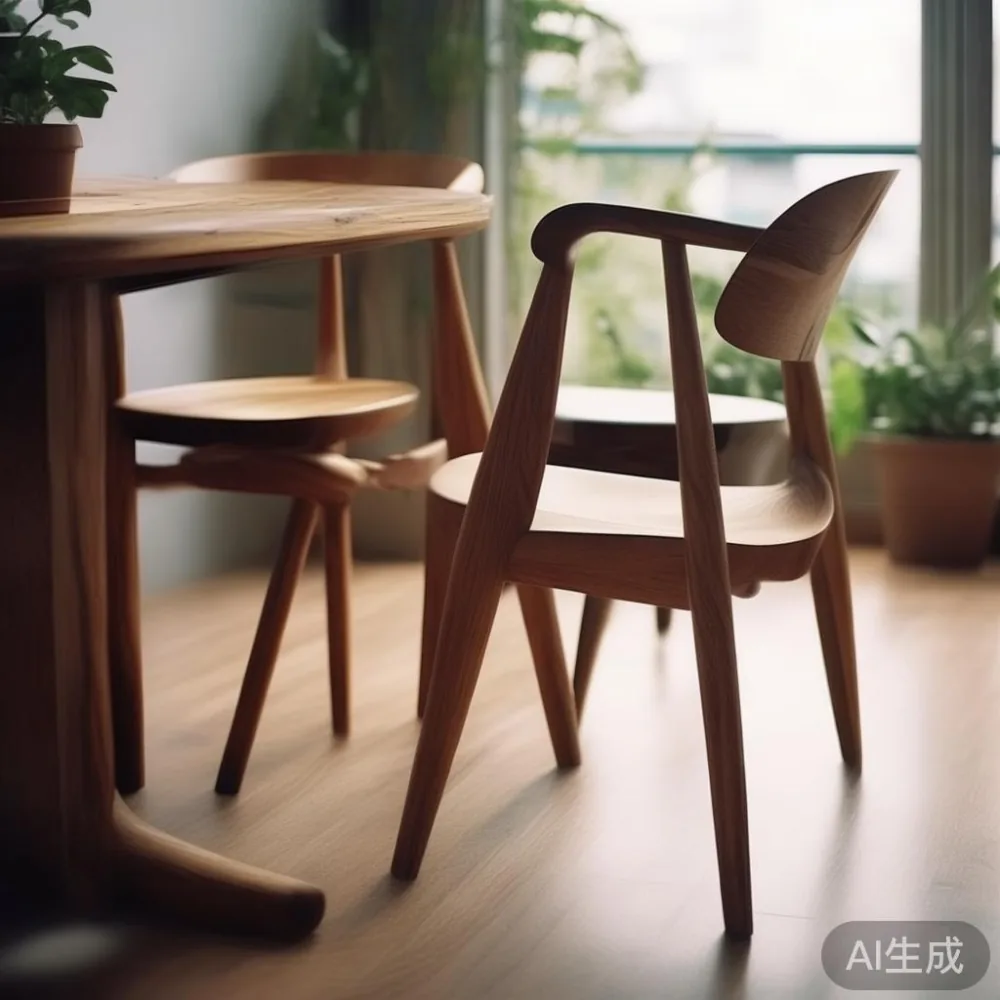
Look for these markers on any spec sheet or product page: "mortise and tenon," "double dowel," "corner block," "finger-jointed" (acceptable for internal rails, not for primary structure). If a listing only says "solid wood" with no joinery detail, treat it as a red flag. Brands confident in their construction — including the MIDHILL team I spoke with, who offered a 10-year structural warranty on their seating — usually publish their joinery methods on the product page.
3. Moisture Content and Kiln-Drying
Singapore sits at the equator. Outdoor humidity runs 70–90% for most of the year, and even with air-conditioning, indoor humidity rarely drops below 55%. Wood that was kiln-dried to 6–8% moisture content (the European furniture standard) will swell, cup, and crack in this climate if it is not acclimatised properly. The fix is two-stage drying: kiln-dry to 8–10%, then let the boards rest in a controlled warehouse for 2–4 weeks before cutting.
Cheaper brands skip the resting period and kiln-dry straight to 6–8% to save warehouse time. The boards feel light and stable in the Foshan factory — then they arrive at your Bedok flat 21 days later and start moving. A proper kiln-drying and rest cycle adds about SGD 30–60 per chair to the production cost. You never see this line item, but it is the single biggest reason some solid wood pieces last 30 years and others split in 18 months.
4. Hardware: The Hidden 8% That Quietly Doubles in Cost
On a typical dining chair, hardware — the screws, dowels, corner brackets, glides, and any metal-to-wood connectors — accounts for 5–10% of the unit cost. But if you want a chair that does not wobble in year three, the hardware matters. Stainless steel dowels cost about 4× what softwood dowels cost. Steel-reinforced corner brackets cost 2× what stamped aluminium brackets cost. Felt or thermoplastic glides cost more than plastic nails but save your tiles.
If you are buying a solid wood sofa, a bed frame, or a dining table from the same maker, ask whether the hardware spec is consistent across the range. Inconsistent hardware is a classic sign of white-label outsourcing, where one factory makes the seating and another makes the case goods.
5. Finish: Lacquer, Oil, Wax — and Why It Changes the Price by SGD 200–400
There are three mainstream finishes on solid wood furniture sold in Singapore. NC lacquer (nitrocellulose) is the cheapest, dries fast, and gives that high-gloss "American light luxury" sheen — but it sits on top of the wood like a plastic film and chips along the grain. PU lacquer is tougher, more flexible, and is what most mid-to-upper-range brands use; it adds SGD 60–120 per chair. Hardwax oil (such as Osmo or Rubio Monocoat) penetrates the grain, lets the wood breathe, and is the finish you want in HDB flats where humidity swings between day and night air-conditioning — but a proper hardwax oil finish adds SGD 150–250 per piece because each coat is hand-applied and hand-buffed.
Last month I visited a friend's condo in Tampines where she had a six-seater dining table finished in hardwax oil. Two years in, three kids, daily use — she just wipes it with a damp cloth, and the marks buff out. Her sister's identical table from a different brand, finished in NC lacquer, was chipped at every corner and starting to peel along the edges.
Is the Most Expensive Chair Always the Best One for a Singapore HDB Flat?
This is the question I get most often, and the answer depends on three Singapore-specific constraints most overseas guides ignore.
Corridor and lift dimensions. A standard HDB passenger lift in a 4-room or 5-room block is about 1.1 m wide by 1.4 m deep, with a door opening of roughly 0.9 m. A large dining chair (say, 52 cm wide with a tall back) usually clears this easily. But a fully assembled dining table over 1.4 m long often does not. Measure your lift before you order, and ask the seller whether flat-pack assembly on-site is included. This is one of the small details MIDHILL handles cleanly — they ship flat-packed with hardware and a paper template, which matters when the alternative is paying a contractor SGD 80–150 to carry a 60 kg table up nine floors.
Condo service lift restrictions. Many new condos in Punggol, Sengkang, and the Greater Southern Waterfront zone have service lifts that require booking 48 hours in advance and forbid deliveries after 6 pm or before 9 am. Check your MCST rules. A brand that quotes a 21-day production and 14-day sea shipping timeline to Singapore is realistic; one that promises "3-day delivery" is either air-shipping samples or not shipping from mainland China at all.
GST and landed cost. Since 1 January 2023, GST applies to all imported goods above SGD 0. A dining chair landed at SGD 450 will incur 9% GST, plus a customs clearance fee of about SGD 15–25 per consignment if you use a Singapore-side clearance agent. Factor that in before comparing an overseas quote to a local showroom price.
6. Shipping Volume, Container Math, and Why a "Cheap" Chair Sometimes Costs More
This is the part no one explains. A 40-foot high-cube container from Shenzhen or Guangzhou to Singapore holds roughly 55–60 cbm of usable furniture volume once you account for pallet and crating loss. A dining chair takes about 0.18 cbm when flat-packed with proper cardboard corner protection. That means one container holds about 300 dining chairs. The ocean freight alone (Port Klang to Singapore is cheaper, but Shatoujiao to Singapore direct runs about USD 1,800–2,400 per 40HC at current rates) works out to USD 6–8 per chair before insurance, customs, and last-mile delivery.
Brands that order a full container amortise freight across the load. Brands that consolidate — mixing your four chairs with 200 other small orders — pay 2× to 3× per chair in freight, then quietly absorb it into the retail price. This is also why a "free shipping over US$350" promotion (which MIDHILL runs for the US market) translates, for Singapore buyers, into an SGD 80–120 flat delivery fee rather than truly free shipping — sea freight plus customs plus a Singapore-side lorry cannot be free at this order size.
7. Warranty, Refinishing, and the Lifetime Cost Equation
A dining chair that costs SGD 220 and lasts 3 years costs SGD 73 per year. A dining chair that costs SGD 680 and lasts 25 years costs SGD 27 per year. That is the real comparison — and it is one Singapore buyers under-use because most people only price the first purchase.
Structural warranties matter, but so does the willingness of the maker to refinish the piece. Solid wood is one of the few materials you can sand back and re-finish when the surface gets tired — something you cannot do with a solid wood sofa upholstered in fabric, a bed frame with a painted MDF headboard, or a marble table with a stone top. This is why light-luxury positioning — French light luxury, American light luxury, post-modern light luxury — tends to anchor on case goods and seating where the wood itself is the design feature.
If you are also looking at complementary pieces — a solid wood sofa for the living area, a bed frame for the master bedroom, a wardrobe for the walk-in, a nightstand, and a marble table for the entry — buy them from one maker so the wood species and finish match. This is the same logic that drives luxury European light luxury furniture collections to coordinate across a full room: you want consistent grain, colour, and ageing.
How Do You Read a Quote Without Getting Burned?
Here is the checklist I now use whenever anyone in the office asks me to vet a furniture quote. Ask for the timber species and grade in writing. Ask for the joinery method. Ask for the moisture-content spec at the point of packing. Ask for the finish brand and the number of coats. Ask whether the price includes flat-packing, crating, and Singapore-side customs clearance. Ask what the structural warranty actually covers (and what it excludes). Ask whether refinishing is offered and at what cost. If any of those seven answers is vague, walk away — or at least halve your expectations on lifespan.
One last thing worth mentioning for design-conscious buyers in Singapore: the same construction principles that drive a great dining chair also drive every other piece in the collection. The joinery, the moisture control, the finish — they apply to a dining table exactly as they apply to dining chairs. So when a brand tells you their dining chairs are built one way and their wardrobes another way, that inconsistency is itself a price signal you should read.
For reference, a reliable Singapore-side spec sheet and current price list for a full Foshan-made light-luxury range is available through the api.midhill.co integration used by several local ID firms — though always validate the spec with the seller directly rather than relying on a cached feed.
And if you are cross-shopping aesthetics while you are at it, two pieces worth a longer read: the breakdown of Italian light luxury for guest room styling (because guest rooms have different humidity and use patterns than a master bedroom), and the side-by-side of a Japanese bed vs Japandi bed — both decisions turn on the same wood-and-finish logic, just applied to a different piece. If your living room is the harder puzzle, the guides on how to style Japanese sofa in apartment layouts and how to style Japanese sofa in bedroom corners both come back to the same theme: the wood underneath the upholstery is doing more work than the cushion on top.
Finally, for commercial buyers — boutique hotels, serviced apartments, short-stay operators in the Duxton or Tanjong Pagar area — the volume math shifts again. A consistent Modern light luxury for hotel specification across 40 rooms is a different conversation than a single HDB purchase, and most Foshan factories offer tiered pricing once you cross 20–30 pieces of one SKU. Ask for the tier-2 sheet before you commit.